
Homesick Nation: A Conversation with Linda Qian
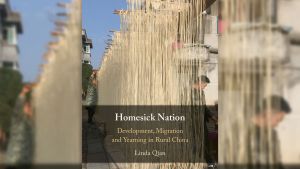
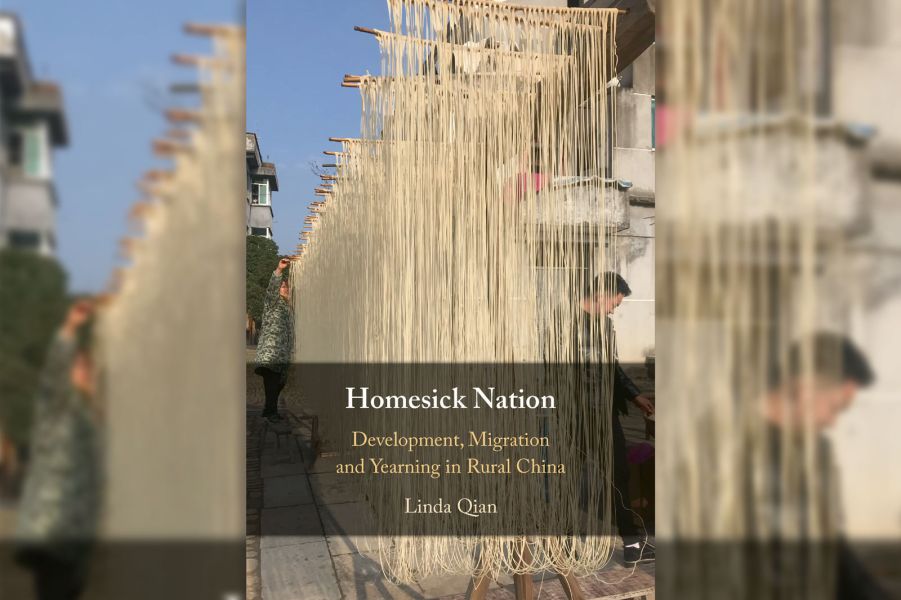
Linda Qian’s Homesick Nation: Development, Migration and Yearning in Rural China (Cambridge University Press, 2026) examines rural development in contemporary China through the lens of 乡愁 xiangchou, a concept connoting homesickness and rural nostalgia. Centred on Heyang, a heritage village in Zhejiang, the book employs hometown ethnography to trace the complex return flows of people, policies, capital, and desire that reshape the village and the wider cultural imagination of rurality. Moving between macrolevel political discourse and the micro-narratives of everyday life, Qian reveals how xiangchou functions both as a pervasive ‘structure of feeling’ and as a potent tool of affective governance. Her analysis compellingly unpacks how xiangchou is constructed, experienced, and negotiated by differently positioned actors in the context of state-led rural revitalisation and persistent urban–rural inequality. In so doing, the book opens new space for rethinking the place of rurality within modernity, both in China and beyond.
Mozhuo Chen: Homesick Nation focuses on 乡愁 xiangchou, a complex affective structure encompassing ‘nostalgia, homesickness, and topophilia for the countryside’ (p. 6). What led you to choose xiangchou as your central analytical concept? What does this affective lens reveal that more conventional approaches to rural China may overlook?
Linda Qian: I’m an ethnically Han Chinese person with roots in rural China. I’m also someone who was born and raised outside mainland China who somehow found their way to another country to pursue Chinese Studies. My own feelings—at the time, probably unnamed—inevitably influenced my eventual direction of research.
Perhaps more concretely, however, my academic interest in xiangchou began around the early 2010s, when a series of events and reflections seemed to lead me back to this term. Notably, in 2015, I became aware of a CCTV-produced documentary series titled Jizhu Xiangchou (记住乡愁). (As a short aside, when I wrote the book, the English name for the series was ‘Nostalgia in Mind’, but I just learnt that now it is commonly translated as ‘Rediscovering Home Truths’!) This documentary series not only aimed to highlight and document the cultural and historical particularities of different villages across the country, but also seemed to serve as a form of cautionary reminder to viewers of the people, places, and practices that were at risk of being ‘left behind’.
Heyang was one of the 100 villages selected for the first season of the show. During CCTV’s annual Spring Festival Gala of that same year, Heyang was again selected to feature in a video montage that accompanied the performance of the song Xiangchou. An analysis of this song and its lyrics became the focus of my master’s thesis. Through that research, I became more intrigued not only by the meaning behind the concept of xiangchou, but also by how it had become a frequently used term within official language, including in developmental policies directly implemented in villages like (and unlike) Heyang. Over the following years, I saw more appearances of the term within Chinese scholarship and in various popular media platforms as well.
This made me think more about questions of ‘rurality’ and the place of the ‘countryside’ within contemporary China. In effect, xiangchou—which is a term used to convey a form of nostalgia, longing, or homesickness—seemed to sit at the intersection of individual sentiments and multilayered policymaking. A focus on the affective not only helps to spotlight the lived experiences of people such as Heyang’s residents, who are directly impacted by the various changes of ‘development’ (the ‘everydayness’), but may also provide insight into the intentions, agency, and even humanity of the officials who make such decisions within a complex political-economic machinery. Put differently, perhaps, a focus on the affective can help one see both the forest and the trees.
MC: Your book draws on ‘hometown ethnography’—a method rooted in your choice of Heyang, your own ancestral village, as your primary field site. As a ‘Third-Culture Kid’, you entered the field as a researcher, a foreigner, and a local all at once. How did these positions shape your understanding of xiangchou? And how did they affect your fieldwork and your interpretation of the materials?
LQ: By choosing to do a ‘hometown ethnography’ and centring the study on a somewhat ‘slippery’ emotional and affective landscape, I was forced to be transparent about my own positionality and subjectivity, as I discuss in depth in Chapter 3. There, I describe how my own xiangchou led me back to Heyang as a familiar face and how a hometown ethnography afforded me access to essential social, material, and even ancestral resources that greatly facilitated my access to the field and also temporally expanded my understanding of the village beyond the time I was there.
At the same time, perhaps having a certain knowledge of and relationship with the village risked making me less sensitive to some of its ‘everydayness’. I wondered whether there were things that I took for granted, despite my best intentions. It was challenging and essential to suspend my preconceptions, assumptions, and knowledge. Through my imperfect navigation of my own positionality, I learnt a lot about Heyang, many of its residents, other stakeholders, and myself as well. There were also moments when I felt overwhelmed by ‘too much’ information, often finding it necessary to carefully separate the information to which I was made privy, as a relative, a neighbour, a researcher, a friend, or sometimes a combination of the above.
I also came to realise that these shifting positionalities were not only methodological considerations, but also valuable analytical resources. The way people articulated their attachment to xiangchou depended on their own experiences and social positions and on who I was in relation to them. My positionality thus helped me understand the ways in which xiangchou itself is fundamentally relational.
For instance, many of my most revealing encounters were characterised by an assumed familiarity. Some local villagers presumed I already knew Heyang, making remarks such as ‘Don’t you remember how this used to be?’, ‘Your grandmother always …’, or even ‘When you were little …’. This familiarity allowed them to air frustrations they might not otherwise have expressed to an ‘outsider’. They lamented what had changed, what had been lost, and what they felt had been taken from them. Some elderly neighbours scoffed at the term xiangchou, insisting that ‘xiangchou is something the government does’ and that it ‘isn’t ours’. Yet, beneath that rejection lay a profound sense of grief over disappearing marketplaces, altered village life, and fractured social relations.
Government officials, by contrast, often received me simultaneously as a foreign researcher and as someone with ancestral roots in Heyang. They immediately translated xiangchou into the language of ‘the taste of one’s childhood’ (小时候的味道) or the proverbial ‘old home’ (老家)—precisely the affective sensibility they hoped to cultivate and package through rural revitalisation and tourism.
Through these encounters, I came to see that xiangchou was not only an attachment to home, but also something enacted through relationships. References to family names, particular houses, childhood visits, and ‘grandma’s home’ situated me within Heyang’s social memory through different people’s eyes. Looking back, I wonder whether these conversations were themselves acts of xiangchou by co-creating memories, belonging, and place through our shared, if uneven, relationship to Heyang.
MC: You reveal a critical gap between the promise of xiangchou-driven development and its effects on village life. Governments have mobilised xiangchou to promote local tourism and encourage return migration, yet these efforts do not generate sufficient work or sustainable conditions for people to stay, and they may even disrupt existing livelihoods. How do you understand the tension between xiangchou as affective attachment and xiangchou as a tool of governance? Does the appeal to xiangchou risk masking the absence of deeper structural change?
LQ: In a way, I now see Heyang as an example of genuine desires for change from the top down meeting genuine longings for return from the bottom up, but without the institutional capacity and resources to bring those aspirations together in a meaningful and sustainable way.
When I was conducting my fieldwork, there was considerable enthusiasm across different levels of government for transforming Heyang into both a successful tourism destination and what officials often described as an ‘authentic’ and ‘living’ village. The ambition was to preserve Heyang as a heritage site, but also to revitalise it as a place where people could continue to live, work, and raise families. It appears xiangchou was expected to carry much of this work, theoretically and in practice. That is, it was meant to attract visitors, encourage former residents to return, generate new economic opportunities, and simultaneously preserve the village’s distinctive cultural character. In practice, however, these aspirations proved difficult to realise. One of the main challenges seemed to be the fragmented governance structures and limited institutional capacity needed to translate that vision into a coordinated and durable reality.
As I allude to throughout the book, underlying many of Heyang’s tensions was a disorganised and fragmented governance system, as well as certain figures in leadership positions who had generated considerable mistrust among village residents. Although some of these ‘bad eggs’ were no longer directly involved in village affairs during my fieldwork, they had left a legacy of bitterness that the subsequent village leader and village party secretary could not immediately undo. More broadly, there appeared to be no clearly shared vision for mobilising local resources—particularly the village’s own people—in a collaborative and sustainable way. Above the village itself, competing priorities and ambitions from the township and county further complicated implementation.
As an aside, I reflected further on these issues after watching the documentary My People, My Devotion (我们是第一书记) (Ren 2021), a film about the care, devotion, and sacrifices made by four village party secretaries to lift their respective villages out of poverty. Each was a moving feature about not only their personal efforts to ‘do their job’, but also how doing so required them to earn the respect and trust of village residents. I thought about the production of this film in relation to Heyang’s complicated and fragmented governance structure and in the broader context of Party-State organisation. In fact, although local trials started as early as 2002, it was not until January 2019 that the Chinese Communist Party began to implement nationally a policy that merged the previously separate roles of village council director (村主任 or 村长) and village party secretary (村书记)—a policy that now applies to about 95 per cent of Chinese administrative villages.
I have since wondered what this could mean for Heyang, a place where xiangchou could indeed mask issues with fragmented village governance that made finding the people to get things done even more challenging, despite individual intentions. For now, however, I echo Ben Hillman (2025: 645), who opines that it is ‘too early to assess the full consequences of the Party’s restructuring of village governance and it is not yet known whether new Party-sanctioned village leaders will succeed where popularly elected village leaders apparently have failed’.
MC: You show that the economic opportunities generated by rural return are deeply uneven and often more accessible to urbanised, better-resourced returnees than to village residents. How can we understand this uneven distribution of opportunity in relation to both the urban–rural divide and emerging hierarchies within the village?
LQ: Heyang was certainly no ‘model village’ in terms of providing equal opportunities for returnees or correcting existing structures of inequality—at least at the time. This case revealed several facets of both sustained and perceived inequalities, many of which were organised around how people understood their own positions along the urban–rural spectrum.
For instance, Chapter 6 touches on a misunderstanding among certain village residents that policymakers and local authorities only allowed ‘well-educated’ outsiders (外地人) to benefit from a new initiative to invite entrepreneurs to what was intended to be the village’s renewed social and commercial street. They criticised local officials, particularly elected village committee members, for discriminating against their ‘own’. They often cited their ‘ruralness’ as being devalued by the officials, reaffirming their self-perception of somehow being ‘lesser than’.
Moreover, another issue was the fact that these very residents were the ones who still owned the use rights to the properties that were being considered for commercial development. Their compliance in renting out a portion of their homes was therefore necessary for the success of the project, yet they were the ones seemingly excluded from this chance of directly participating in the new economy as entrepreneurs. The regulations, however, did not specifically exclude locals from applying. Again, this was a misunderstanding that became a rumour and, eventually, a perceived truth for most of the residents to whom I spoke about this issue.
What the application did specify, however, was that those who applied must be university educated and have some form of entrepreneurial or sales experience within the platform economy. So, while the policy did not explicitly exclude ‘locals’, it did reveal a gap in skills, knowledge, and experience that many older and lower-class locals were unable to bridge. At the same time, the stories of the young entrepreneurs from the same chapter illuminate how some of these inequalities are levelling out while new chasms are being produced in new forms.
MC: Your analysis of returnees gestures towards a gendered dimension of rural return: for women, returning home is often tied to care responsibilities, which can channel them into flexible but poorly paid local work. This makes me wonder how existing gendered structures might shape the production and experience of xiangchou?
LQ: Gender can shape both the production and the experience of xiangchou. One of the arguments implicit in the book is that the ability to ‘return home’ is never equally available to everyone. For many of the women I encountered in Heyang, return was not only a freely chosen lifestyle or a nostalgic desire to reconnect with place, but also something closely intertwined with responsibilities for childcare, elder care, and sustaining family life, which are themselves often gendered. As the conversations with women in Chapter 5 illustrate, home could simultaneously represent belonging, responsibility, and constraint.
This was reflected in the kinds of opportunities available to women returnees at the time. While local tourism and service sector work offered forms of flexible employment that could accommodate domestic responsibilities, these jobs were often relatively insecure or poorly paid. As a result, the promise of xiangchou-driven revitalisation did not necessarily translate into greater economic independence. Instead, existing gendered divisions of labour could be reproduced within the new rural economy, even as they were reframed through the language of return and rural revitalisation.
The experience of xiangchou was also shaped more broadly by different gendered relationships to labour mobility and social reproduction. The women I encountered were often the most visible interlocutors in the village precisely because many working-aged men were away engaging in wage labour migration (打工) elsewhere. Women were often the ones physically sustaining everyday village life, while men’s relationships to home were frequently maintained through absence, remittances, and periodic returns during holidays such as Spring Festival. At the same time, many men who returned during these periods expressed a desire to work closer to their families and communities rather than continue migrating elsewhere for work. Their aspirations were not necessarily so different from those of the women returnees I encountered.
While gendered structures shape the experience of xiangchou, they do not necessarily determine its outcomes. One of Heyang’s most accomplished returnees, for example, is a well-known woman tour guide, whom I discuss in the book. Since my research, she has continued to build a successful livelihood by drawing on her extensive local knowledge, storytelling abilities, and close engagement with visitors to become one of the public faces of Heyang’s tourism industry. Her experience is an example of a woman who is actively shaping the developing economy. I have encountered many other examples of women returning to rural areas not as employees but as business owners, allowing them to negotiate their responsibilities as entrepreneurs, wives, mothers, and daughters with greater autonomy than might otherwise have been possible. Thus, one’s xiangchou can reproduce inequalities while also creating new forms of agency, livelihood, and belonging.
MC: In the book’s conclusion, you call for a ‘rural modern’ rather than a ‘modern rural’. The latter still defines modernity from the standpoint of the city. What might a ‘rural modern’ look like in concrete terms? Beyond Heyang, have you observed any emerging models that come closer to this possibility?
LQ: This is a great question. As you pointed out, the distinction between a ‘modern rural’ and a ‘rural modern’ is the standpoint from which modernity is conceptualised. A ‘modern rural’ framework continues to position the countryside as a site that receives ‘modernity’ from elsewhere—for instance, through processes of urban expansion or policy-led integration. Even when critically framed, this perspective can retain an implicit (and even unconscious) hierarchy in which the urban remains the primary locus of the contemporary and the rural is understood as catching up or being incorporated. By contrast, a ‘rural modern’ approach aims to reorient the analytical frame away from the city as the ‘implicit norm’. It asks instead what forms of modernity can be produced when rural institutions, land relations, logics of production, modes of governance, relationships with nature, and so on, are treated as constitutive.
I return to Kate Merkel-Hess’s (2016) interpretation of rural reconstruction in Republican China, wherein the countryside was not simply a passive recipient of ‘modernisation’, but an active site through which competing visions of Chinese modernity were articulated. That is, rural reconstruction movements neither directly extended urban models into village contexts nor did they ‘import’ Western blueprints. Modernity, in this sense, was not spatially anchored in the city (or the ‘West’) but distributed across rural spaces as a set of contested institutional and social projects. This framing could be very interesting to consider when applied to observing the contemporary moment.
In contemporary terms, rural spaces across China and the ‘global village’ are increasingly characterised not by a dominance of primary production, but by the co-presence and entanglement of primary, secondary, tertiary, and even quaternary activities within the same territorial formations. The phenomenon of ‘digital villages’ across parts of Zhejiang and Fujian, for instance, illustrates how platform-mediated commerce can reorganise rural production and entrepreneurship without fully detaching it from local social and institutional structures. Agricultural production, light manufacturing, logistics coordination, and digital intermediation operate simultaneously within village economies, producing hybrid forms of labour and value creation that cannot be reduced to an urban–rural transfer model. What is notable, to me, is not necessarily the replacement of rurality with ‘modern forms’, but the co-constitution of multiple sectoral logics within rural space.
Interestingly, there is a concept in Chinese state and academic discourse that captures this pattern of co-presence: 叠加态发展, which I believe can be translated as ‘superposed development’. Borrowed metaphorically from quantum terminology, the term is used to describe developmental configurations in which multiple economic and institutional logics coexist within a single spatial unit. While often framed in optimistic terms through slogans such as ‘1 + 2 + 3 > 6’, the concept appears to capture a form of non-sequential layering. Perhaps, unlike ‘compressed development’—which implies temporal acceleration and could reasonably characterise reform-era China—‘superposed development’ points to the simultaneous presence of heterogeneous systems without full substitution or linear progression. In analytical terms, this resonates with a view of rural modernity as structured by stratified co-presence rather than developmental sequence.
However, such layering should not be assumed to produce harmonious or necessarily additive outcomes. The interaction between coexisting regimes of production, governance, and value creation can be uneven, conflicting, and deeply political. This is a space that warrants further observation. I wonder, for instance, whether configurations that initially appear flexible and hybrid may stabilise into fixed institutional arrangements, reproducing new forms of hierarchy, exclusion, or dependency. Heyang seemed to embody some of the tensions inherent in the concept. Its development represented an attempt to layer multiple forms of value and economic activity upon one another, yet it was also constrained by the very cultural, economic, and symbolic assets that rendered it ‘valuable’ in the first place. The challenge was not simply how to modernise, but also how to continue evolving without undermining the foundations from which that ‘value’ was derived.
One case of a ‘rural modern’ that immediately came to mind was from a recent visit to rural Poland. The site is a family-owned and operated household that is gradually evolving into a centre for agricultural tourism and rural education. The owner, who also serves as the elected village leader, and her extended family have spent more than a decade transforming their land into a functional home for an intergenerational household while simultaneously developing it into an increasingly viable economic enterprise. Their activities now encompass a range of functions that cut across conventional sectoral boundaries: agricultural production, heritage preservation, education, tourism, community engagement, and local governance. What struck me was not simply the diversification of economic activities, but also the way these activities remained embedded within local social relations and place-based forms of knowledge. The site includes farm animals, collections of historical and agricultural artefacts, and educational programming that attracts everyone from local schoolchildren to international visitors. At the same time, it benefits from growing municipal support aimed at preserving regional heritage and sustaining rural livelihoods. Rather than replacing rural practices with urban ones, or treating tradition and development as oppositional, the project appears to layer multiple functions and temporalities onto the same landscape.
I hesitate to present this as a model in any prescriptive sense, but it offers an example of what a ‘rural modern’ could look like in practice. It is neither a nostalgic ‘return to’ nor a straightforward incorporation into an urban-centred vision of progress. Rather, it is a form of development that draws on rural-based institutions, identities, and landscapes as productive and ‘valuable’ resources, while simultaneously engaging with contemporary markets and technologies, and even mobilising governance structures. In this sense, the question is perhaps not whether the rural becomes ‘modern’, but whether there can be spaces for the envisioning of different forms of modernity.
References
Hillman, Ben. 2025. ‘Shouldering the Burden: The Communist Party’s Deepening Penetration into Village China.’ The China Quarterly 263: 634–48.
Hu, Zhanfan 胡占凡, dir. 2015. 记住乡愁 [Rediscovering Home Truths]. Televised series, Season 1. Beijing: CCTV4.
Merkel-Hess, Kate. 2016. The Rural Modern: Reconstructing the Self and State in Republican China. Chicago, IL: University of Chicago Press.
Ren, Jie 任杰, dir. 2021. 我们是第一书记 [My People, My Devotion]. Documentary. Beijing: Xinhua News Agency.