

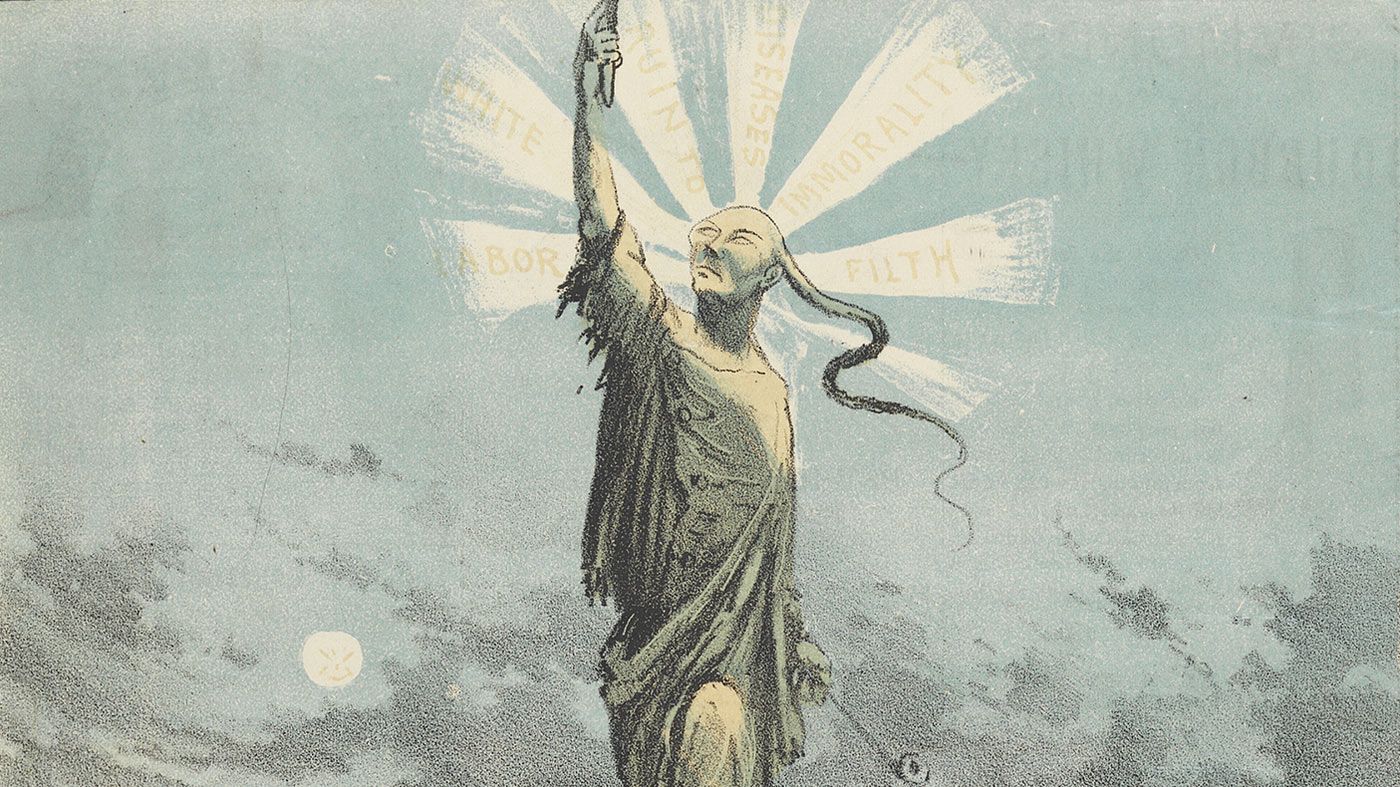
Brainwashed: The Legacies and Perils of American Sinophobia
Webinar: Oct 9, 2020 02:00 PM Mountain Time (US and Canada)
As the 2020 U.S. presidential election approaches and the stakes could not seem starker, the single issue uniting the candidates is their rhetorically inflamed opposition to China. This anti-China consensus at one of the most polarized periods in United States history should give pause for reflection, an opportunity our panel hopes to provide. Today’s anti-China discourse is a potent cocktail of anti-Chinese racism, Cold War Anti-Communism (hair of the dog, anyone?) and alarmist anxiety over the United States’ progressively fragile democracy and standing in the world. The more desperate Trump becomes, the more likely he is to blame his failures on China. Not to be outdone, Joe Biden has bashed Trump for bowing to Beijing. More than electoral bluster, such pervasive anti-China sentiment has been responsible for stoking anti-Asian racism and creating a hostile climate for Chinese students, researchers, and a deterioration of diplomatic relations. Our aim is not to romanticize China but to suggest that at a fundamental level anti-Chineseness is a homegrown discourse that has little to do with the complex realities of the People’s Republic. Thus, our discussion aims to contribute to a growing counter-hegemonic movement that aspires to break the deadly grip of competing ethno-nationalisms and create new solidarities in doing so.
Moderator:
Emily Chan (Colorado College: Psychology)
Emily Chan is associate professor of psychology and director of the Race, Ethnicity, and Migration Studies Program and the Bridge Scholars Program at Colorado College. She joined Colorado College in 2004, teaching courses in social psychology, research design, prejudice and stereotyping, and applied social psychology. Her current research focuses on culture and religious cognition, Asian American Psychology, diversity and student success, and person and organizational reputation and branding. From 2014-2018 she served as the Associate Dean of Academic Programs and Strategic Initiatives where she oversaw strategy, operations, and implementation of academic and cocurricular initiatives.
Panelists:
Keisha Brown (Tennessee State University):
Keisha A. Brown is an assistant professor of history at Tennessee State University in the Department of History, Political Science, Geography, and Africana Studies. She graduated with her bachelor’s degree from the University of Notre Dame, earned her doctorate from the University of Southern California, and was a 2018–2019 postdoctoral fellow at the James Weldon Johnson Institute for the Study of Race and Difference at Emory University. Dr. Brown’s research examines networks of difference in China used to understand the Black foreign other through an investigation of the social and political context that African Americans navigated and negotiated during their time in Maoist China. She is currently extending her research on Sino-Black transnational relations to examine ideas of race and ethnicity and Afro-Asian diasporic connections, as evidenced by her blog post, “Teaching China through Black History” (Harvard University Fairbank Center), and essay, “Bridging the Gap: Blackness and Sino-African Relations” (International Institute for Asian Studies).
Catherine Liu (University of California, Irvine):
Catherine Liu is Professor of Film and Media Studies at UC Irvine. She has written for Jacobin and the Los Angeles Review of Books. Having published extensively on critical theory, New Taiwan Cinema, Frankfurt School and the intellectual history of psychoanalysis, she is the author of American Idyll: Academic Anti-Elitism as Cultural Critique (2011) that dealt with the rise of populism. Her forthcoming book: The Professional Managerial Class: A Short Introduction will be published by the University of Minnesota Press. She has recently published "Meritocracy Agonistes" with Leo Krapp in Damage Magazine.
Maria Repnikova (Georgia State University):
Maria Repnikova is an Assistant Professor in Global Communication at Georgia State University, and the Director of Center for Global Information Studies. She works at the intersection of communication and politics in non-democratic regimes, with a regional specialization on China. She is the author of Media Politics in China: Improvising Power under Authoritarianism (2017) among numerous articles. This year she is a Wilson Fellow writing a book on Chinese soft power in Africa.
Christian Sorace (Colorado College):
Christian Sorace is an Assistant Professor of Political Science at Colorado College. He is the author of Shaken Authority: China’s Communist Party and the 2008 Sichuan Earthquake (2017) and co-editor of Afterlives of Chinese Communism: Political Concepts from Mao to Xi (2019) and has been a contributor to various journals such as Critical Inquiry, Public Culture, The China Quarterly, and Comparative Politics. He is also on the editorial board of the Made in China Journal. Currently, he is working on a book on the interlocking crises of democracy, air pollution, and urban development in Mongolia.
John Williams (Colorado College): John Williams is an Associate Professor of History at Colorado College. He has published on China’s late imperial civil service examinations in various journals and edited volumes such as Late Imperial China and Powerful Arguments: Standards of Validity in Late Imperial China (2020). His current research focuses on the evolution of insect control in 20th century China.
Sponsors:
Colorado College History Department; Political Science Department; Program in Asian Studies; Program in Race, Ethnicity and Migration Studies; Psychology Department; Made in China Journal, Critical China Scholars
Artwork: A Statue for Our Harbor (1881)
Subscribe to Made in China
Made in China publications are open access and always available as a free download. To subscribe to email alerts for each issue of the Journal, newly published books, and information about upcoming events, please provide your contact information below.
