
Gender-Critical Chinese Feminisms
From Critical Socialism to Post-Utopia
Since the 2010s, the debate about anti-gender politics has centred on the rise of right-wing forces and ideologies that are trans-exclusionary, queerphobic, and anti-feminist—particularly hostile to queer and intersectional feminisms (Butler 2024). These movements often weaponise victimhood to uphold existing structures of power: cisgender women are portrayed as victims of transgender rights under cis-sexism; men claim victimhood at the hands of feminism for allegedly depriving them of sexual entitlement; and white populations depict themselves as victims of immigrants and racial minorities who have ‘taken their jobs’ and ‘ruined the economy’ (see, for instance, Chouliaraki 2024; Hochschild 2016). In Who’s Afraid of Gender, Judith Butler (2024) demonstrates how ‘gender’ is constructed as a phantasm by anti-gender movements across the globe to consolidate authoritarian control—whether in democratic contexts such as the United Kingdom and the United States or in explicitly authoritarian regimes such as Russia. Butler noted that in the Global South—in countries such as Brazil, South Korea, and Uganda—feminism and LGBTQIA+ are described as elitist, Western, and even colonial and imperial. Far from being a threat, Gender Studies, as Butler articulates it, serves to uphold democratic values and personal autonomy.
Although mainland China was not sufficiently covered in Butler’s book, similar dynamics unfold there. Since 2013, under Xi Jinping’s leadership, the Party-State has promoted a revival of traditional gender roles, with Xi emphasising that women should ‘play a special role in the family’ (People’s Daily 2023). At the same time, LGBTQIA+ activism and culture have faced increasing repression: nongovernmental organisations (NGOs) such as the Beijing LGBT Centre have been shut, queer online content heavily censored, and danmei authors (creators of homoerotic fiction) arrested. Grassroots feminism and LGBTQIA+ issues are often framed by the state as foreign imports or the result of collusion with ‘hostile foreign forces’ (境外敌对势力) (Dian 2024). Within grassroots digital feminist groups, there has emerged a biologically essentialist, gender-separatist, trans-exclusionary, and homophobic strand of voices, often identifying themselves as jinü (激女): Chinese radical feminists (Wang et al. 2025). It can easily be argued that, in mainland China, gender, too, has become a phantasm.
However, such analyses fall short of decolonising either the concept of gender or the global feminist project. What, then, might constitute a valid critique of gender from a decolonial perspective? In this essay, I examine critical interventions by Chinese feminist scholars that challenge not only the category of gender but also Western feminist paradigms more broadly. Here, I deliberately use ‘Western’ rather than ‘Global North’, since one of Chinese feminism’s key critiques emphasises the Cold War legacy: (post-)socialist and capitalist societies were positioned asymmetrically, with (post-)socialist areas looking to the West for authority while neglecting their own traditions, thereby reproducing subtle imperialism. The term ‘West’ thus more accurately captures this historical legacy, while also aligning with the left-leaning critique of capitalism’s global expansion. It is against this backdrop that the concept of gender itself travelled outward as an English term from the West.
When Gender Came to China
Unlike its emergence in the West—shaped domestically by second-wave feminism and LGBTQIA+ activism—the concept of ‘gender’ came to China through the lens of the development framework during the globalisation trends of the 1990s. The concept officially entered the country in the 1990s, particularly with a conference titled ‘Engendering China’ held at Harvard University in 1992 and the Fourth World Conference on Women (FWCW) held in Beijing in 1995. In the edited volume that followed the Harvard conference—which brought together leading scholars from the West and China (both domestic and in the diaspora) to address gender issues from the late imperial period to the Mao Zedong era—gender is defined as signifying ‘that the categories female and male … are cultural constructions’ and ‘relational’ (Gilmartin et al. 1994: 1). This reflects the broader academic shift in the 1980s from women’s studies to gender studies, as Western scholarship established the distinction between biological sex and cultural gender (Oakley 1972). By contrast, the FWCW was less academically oriented and more focused on development. ‘Making gender mainstream’ (社会性别主流化) was promoted in the conference alongside other slogans such as ‘women’s rights are human rights’ to bring different governmental and nongovernmental bodies to tackle gender inequality. This period coincided with China’s opening to foreign funding and the emergence of numerous gender-focused NGOs—including feminist and LGBTQIA+ organisations—at a critical historical juncture after the 1989 Tiananmen crackdown and serving almost as a showcase of China’s openness to civil society.
Since then, ‘gender’—a term until then non-existent in Chinese language—has been roughly translated as ‘social sex’ (社会性别), which explicitly signals the distinction between sex and gender, or simply as xingbie (性别). The character xing (性) can mean ‘nature’, ‘characteristics’, or ‘sex’, while bie (别) denotes ‘difference’. Combined as xingbie, the term marks a departure from the usage of ‘men and women’ (男女) or ‘women’ (妇女) commonly used in socialist feminist rhetoric. Because of the FWCW, the concept of gender in the Chinese context has been closely associated with development in the dichotomies ‘women and development’ and ‘gender and development’ (妇女/性别与发展) (Song 2021). Given its genesis in the high tide of globalisation in the 1990s, this framework, on the one hand, promotes liberal cosmopolitan humanitarian ideals and human rights beyond the West; on the other, it is inextricably entangled with the expansion of neoliberal global capitalism, risking being a contemporary alteration of imperialism.
Two types of voices critical of gender—particularly as a Western concept—have emerged within Chinese scholarly circles. The first emphasises Marxist, socialist, or state feminism as crucial Chinese legacies for both epistemological and political decolonial and anti-capitalist efforts. The second perspective, represented by the late Li Xiaojiang (李小江), seeks to document Chinese women’s and gender history beyond any Western-influenced academic frameworks—a Marxism-inflected approach included.
Critical Socialist Feminism
German Sinologist Nicola Spakowski (2018) has labelled the first approach ‘critical socialist feminism’. Many of these critical socialist feminists are China-born and raised female scholars (some are also activist academics) who lived through both the Mao era and the period of economic reform. Some, such as Zhong Xueping (钟雪萍), Bai Di (柏棣), Wang Zheng (王政), and Zhang Naihua (仉乃华), earned their PhDs abroad (mainly in the United States and the United Kingdom) and remained in Western academia (Zhong et al. 2001). Their research focuses on women under Chinese socialism. Others, such as Song Shaopeng (宋少鹏), Gao Xiaoxian (高小贤, primarily an activist), and Dong Limin (董丽敏), were trained entirely in China and continue to work in the country.
Since the 2000s, many critical socialist feminists have put forward alternative narratives of women’s experiences under Mao—countering the dominant post-reform depiction of the Mao era as a traumatic, repressive collective past—by critically acknowledging the achievements of women’s liberation (妇女解放) and the principle of equality between men and women (男女平等) (Spakowski 2018). In 2010, a landmark conference titled ‘On the Differences between Socialist Women’s Liberation and Western Feminism: Theory and Practice’ (关于社会主义妇女解放与西方女权主义的区别: 理论与实践) was held at Renmin University of China in Beijing. Hosted by Song Shaopeng, the event brought together many of these scholars, and Song later summarised the debates in a 2011 report.
The conference opened with anthropologist Yan Hairong’s personal story about herself and her mother. She recalled how her generation resisted the label funü (妇女, ‘woman’) after the reform era, while her mother’s rejection of being addressed as part of ‘the Yan family’ (reflecting patrilineal kinship) revealed the profound influence of socialist women’s liberation in shaping a consciousness of equality. Building on this, the scholars in attendance reflected on how Western feminist theories entered China in the 1980s, often ignoring the complex legacies of socialism.
They critically noted that ‘gender’ entered China in tandem with its integration into global neoliberal capitalism. As a concept, it emphasised individualism—a defining feature of capitalism—and, within foreign-funded programs, the marginalised were often recast as ‘vulnerable groups’ (弱势群体) in need of liberal humanitarian aid, rather than as revolutionary subjects. In discursive debates about women’s empowerment, the 1980s and 1990s also saw nüxing zhuyi (女性主义, ‘femininity-ism’) overshadow nüquan zhuyi (女权主义, ‘woman-power-ism’)—the former stressing essentialist, individual femininity, the latter emphasising activism and collective struggles for power and rights. Even within debates about collective actions by women, as Song (2012) later argued, the socialist and state feminist legacies of women’s liberation were neglected, while the civil society versus state framework of rights claims of woman-power-ism became dominant. This critique was echoed by Bai Di at the conference as she criticised ‘Western feminism’ as a whole:
First, it emerged within the capitalist system, a system that allows capital to exploit. Second, it is reformist, seeking only to make changes within the capitalist framework. It focuses on legislation but has never aimed to overthrow the entire social system. (quoted in Song 2011: 147)
Critical socialist feminists emphasise the need to re-evaluate the legacy of socialist women’s liberation. On the one hand, state socialism mobilised women into labour, providing partial liberation from reproductive duties and granting new forms of subjectivity—well before the concept of gender was introduced. On the other hand, they also recognise the limitations of the socialist experiment, such as the failure to fully liberate women from reproductive labour in the private sphere (Song 2011; Spakowski 2018; see also Hershatter 2007; Wang 2017). Such discussions underscore how Western frameworks for understanding feminism and civil society often obscure the specificity of the Chinese socialist and post-socialist experience. Within a Western framework, for example, the All-China Women’s Federation (ACWF, 全国妇联), as a mass organisation and the sole official institution in China dedicated to gender equality, would not typically be regarded as an NGO. Yet, Shan Jiahui (单佳慧 2020) has argued that these views reflect a binary framework of state versus civil society modelled on the West, which overlooks the concrete development work carried out by the ACWF—the state-sponsored mass organisation representing women’s interests since the founding of the People’s Republic of China.
The common ground in these discussions is that uncritically following the Western feminist paradigm may hinder both socialist solidarity and theoretical developments emerging from non-Western contexts—what Dong Limin has called ‘local theoretical aphasia’ (2005: 11, translated and cited in Spakowski 2018: 567). While some have a starker anti-Western stance by taking gender as a merely individualistic and capitalist concept, some are keener to critically localise these approaches. Gao Xiaoxian, who died in 2025, exemplifies the latter approach. She was a pioneering activist and scholar in China’s women’s movement, best known as the founder of the Shaanxi Research Association for Women and Family (陕西省妇女理论婚姻家庭研究会) in the mid-1980s—one of the country’s earliest grassroots women’s initiatives. Gao played a central role in introducing and localising the ‘women and development’ and later ‘gender and development’ frameworks in China, applying them to pressing issues such as rural women’s health, education, land rights, and political participation.
Third World or Statism?
While critical socialist feminist scholars make a valid point in calling for the decolonisation of Western concepts—especially ‘gender’—their arguments also, perhaps unintentionally, resonate with Xi Jinping’s official discourse of the ‘Two Cannot Be Denied’ (两个不能否定): that the post-reform period cannot be used to negate the pre-reform period and vice versa. This discourse explicitly bridges back to the Mao era and aligns with Xi’s other advocation of the ‘Four Confidences’ (四个自信)—that is, confidence in the path, theory, system, and culture of socialism with Chinese characteristics, with emphasis on ‘cultural self-confidence’ (文化自信). Providing a localising narrative of Chinese feminism with close linkage to the Mao era clearly echoes with these state initiatives.
What I propose here is to historicise the rise of critical socialist feminism in Chinese academia. An illustrative example is the publication of the eighth volume in the series Studies on the History and Theory of the Chinese Communist Party (中共历史与理论研究), edited by Song Shaopeng (2020), part of a broader series that is regarded as canonical in party theory and history studies. Critical socialist feminists have long emphasised distinctions between socialist feminism in China and that in the Soviet Union (Song 2011: 144–45). In the edited volume, many scholars situate Chinese socialist feminism within the broader struggles of women in the Third World (see Song 2020: Chs 2–8). The notion of the Third World, however, can be understood in two different ways.
In Cold War international relations, the ‘three worlds’ framework was widely used in the West to categorise global blocs: the First World referred to advanced capitalist states led by the United States and its allies; the Second World denoted the Soviet Union and other socialist states; and the Third World encompassed developing nations in Asia, Africa, and Latin America. In 1974, Mao Zedong reformulated this scheme in his ‘Three Worlds Theory’ (Teng 2019). He identified the First World as the two superpowers, the United States and the Soviet Union; the Second World as developed but non-superpower states such as Japan, Western Europe, and Canada; and the Third World as the oppressed nations of Asia, Africa, and Latin America, with China among them.
In the geopolitical context of the past decade—shaped by Sino-Western trade tensions often described as a ‘new Cold War’—the meaning of the ‘Third World’ has become increasingly ambiguous. Mao’s rhetorical insistence that China belonged to the Third, rather than the Second, World functioned as a rejection of the imperial tendencies associated with ‘superpower’ status. For critical socialist feminists, however, continuing to align Chinese feminism with the Third World in this historical moment, when China is the world’s second-largest economy and a rhetorically socialist state, risks offering a valid critique of Western-centred knowledge production while at the same time being co-opted by state narratives and statist frameworks—a longstanding issue that can also be associated with China’s New Left (Liu 2021; Li 2014).
In Li Xiaojiang’s (2014) critique of New Left scholars, she observes that Chinese scholars critical of economic reform not only receive considerable recognition from Western academia—especially among leftist scholars critical of neoliberalism—but also occupy central positions within Chinese academia, often serving in managerial roles at key tertiary institutions. Transposing this to the feminist debate, it seems plausible that the decolonial projects of critical socialist feminists may, whether consciously or unconsciously, contribute to constructing China as a new socialist and anti-Western centre, which aligns with the Party-State’s agenda today. Moreover, by distancing Chinese socialism from the Soviet model (for critiques on gender issues in the Soviet Union, see Stites 2021), critical socialist feminists may risk overlooking how women’s liberation has historically been subordinated to socialist modernisation and industrialisation, in which socialism is closely associated with highly centralised governance.
Li Xiaojiang and Post-Utopian Feminist Endeavours
In this essay, I single out Li Xiaojiang as representing the second type of Chinese feminism. In late 2024, right before her death in February 2025, a report about Li went viral on Chinese social media. Written by journalist Zhang Yue (2024), it was titled ‘The Person Who Pioneered Chinese Women’s Studies Does Not Want to Be Called a Feminist’. In her lifetime, Li Xiaojiang launched the first women’s studies program in mainland China, authored 24 books, compiled or edited 49 volumes, and founded China’s first Women’s Culture Museum (妇女文化博物馆), which houses more than 2,000 artefacts. She was a prolific yet controversial scholar, often criticised for being essentialist and for promoting a highly individualised notion of femininity. Unlike critical socialist feminists, she was not a vocal critic of China’s economic reform that marked the country’s turn to neoliberal capitalism; rather, she acknowledged this transition as one that could, in her view, empower women.
Lin Chun (林春), whose writing focuses mostly on Chinese socialism but touches on women under socialism, wrote:
Li Xiaojiang, a pioneer theorist in post-reform ‘new enlightenment feminism,’ forcefully rejects ‘gender’ as not only useless in China but also as an example of foreign worshiping and Western hegemony. She correctly notes that the Chinese word for ‘sex’ encompasses two subtexts: xing or sex, and xingbie or sexual differentiation (of people), where the latter already contains a social dimension … The purpose, consistent in her influential writings, is to retain and cultivate the biologically distinctive feminine subject as a deliberate political act of ‘separation’ against integration paradoxically embedded in the socialist universalism of equality. (Lin 2006: 120)
Lin Chun is correct in summarising that Li Xiaojiang was as critical of concepts from the West as she was of the socialist legacy, which set her apart from critical socialist feminists. In other words, she was critical of both nüquan zhuyi (literally, ‘woman-power-ism’) and funü jiefang (‘women’s liberation’).
Li’s (2005, 2006) criticism of woman-power-ism echoes certain aspects of critical socialist feminists, particularly the Western archetypal feminist assumption that a ‘pure’ civil society is the only legitimate arena for women’s mobilisation. The key difference, however, is that while critical socialist feminists dismiss market reforms as individualistic and capitalist, Li was more wary of socialist/state feminism and the related concept of women’s liberation, which she regarded as inherently tied to top-down approaches that dismiss individuality. In critiquing woman-power-ism and women’s liberation, she wrote:
In my view, most knowledgeable women today already possess the ability to be independent, autonomous, and self-determined … The key is not to take money from foundations to act as saviours for so-called vulnerable groups, but to be self-reliant and excel in one’s own domain. It is not about using universally imposed notions of ‘correctness’ and ‘-ism’ to coerce others, but about self-discipline and adhering to one’s duties … What if some problems arise? The people involved should unite and speak for themselves, rather than allowing those who specialise in ‘fighting for justice’ to empower themselves and forcibly speak on behalf of others. Having been born in Red China and lived through the Cultural Revolution, having seen numerous leftist leaders and revolutionaries consumed with a desire for leadership, what I fear most is ‘representation’, and what I am most wary of are the so-called ‘representatives’. Ultimately, is there truly anyone in this world who is entirely selfless? Those who feign public-spiritedness often hide behind the revolutionary facade, concealed within various leftist groups—and nowadays, these groups increasingly include women. (Li 2024a: 76–77, translated by the author)
For Li, it was the market after reform—or, in her preferred term, minjian (民间, ‘among the people’)—that offered a space for bottom-up gender subjectivities.
In one of her earliest works, Sex Gap (性沟, 1989), Li Xiaojiang set out ideas that shaped her later writing. The title plays on ‘generational gap’ (代沟), reframing it as the ‘sexual gap’ between men and women. Unlike poststructuralist scholars wary of ‘difference’, Li emphasised that it is possible to recognise difference without embedding it in power hierarchies. Drawing from but also critiquing Engels’ Origin of the Family, Private Property, and the State, she challenged Marxist historical materialism that links history to the development of productivity and progress towards communism. For her, it was exactly this progression that brought patriarchy and, instead, she investigated feminism in ‘prehistory’ and the ‘matriarchal era’, arguing that the very notion of ‘history’ is male-centred, relegating women’s stories to a vague prehistorical darkness. Li deliberately used ‘matriarchy’ (母权) rather than ‘matrilineality’ (母系), contending that prehistoric kinship structures were far more fluid than assumed. Civilisation, she argued, marked patriarchy’s triumph—the conquest of both women and nature—whereas matriarchy embodied ‘chaos’ and ‘nature’. Her framework can lead to ecofeminist or intersectional feminism, but Li went back to strengthen the biological difference between men and women, which she unapologetically upheld till her passing.
Beginning with Wolf Totem and Post-Mao Utopia (后寓言: 〈狼图腾〉深度诠释), a close literary reading of the novel Wolf Totem, Li (2010) began formulating her concept of ‘post-utopia’. Critical perspectives often situate utopia—whether socialist or feminist (in her understanding)—in some distant space or time, using it as a yardstick to critique the present. Yet, this same measure can also become a tool of domination, demanding the sacrifice of immediate needs in pursuit of an imagined, collective future. In this way, utopia risks reproducing the very systems of exploitation it claims to resist. The danger lies in its insistence on a singular vision of the future, which can itself become oppressive. Post-utopia, by contrast, rejects hope projected into the future and instead turns to the present, seeking forms of idealism within everyday, mundane life—even when such forms appear problematic in the eyes of so-called critical theories. For Li, this problematic presence included some ordinary people’s assertions of binary and essentialist gender, which she chose to defend rather than deconstruct.
Li criticised the concept of gender as redundant in China, arguing that the phrase ‘social xingbie’ is unnecessary since xingbie already contains the social dimension (see also Liu 2021). Nevertheless, she continued to use xingbie in her writing (see, for instance, Li 2005, 2006, 2024b) and did not move away from her own form of gender studies. In so doing, she contributed to the pluralisation of the concept of gender and helped decentre it from its English-centrism—an intervention crucial to building a transnational feminist network. Likewise, while Li expressed a preference not to be called a feminist in Chinese, her stance reflected a challenge to the subtle forms of imperialism, and perhaps authoritarianism, embedded in the various translations and interpretations of the term. Hence, I continue to call her a feminist in this piece of writing in English, not to fall into English-centrism but to provide a valid contribution to global feminist studies and gender studies.
For Li, it is precisely the various ‘-isms’ that overshadow the lived realities of people in both the past and the present, blinding those who seek to document women’s and gender issues in China. What, then, were her feminist practices? In her own words, taken from the second-to-last book she published:
Since the 1980s, my work in the field of women’s and gender studies has largely been about ‘laying foundations’ … Staying rooted locally (in China), doing work is like farming—one crop after another: in the 1980s I edited the Women’s Studies Series, which established a disciplinary foundation here and cultivated a team of scholars; in the 1990s I directed the Oral Histories of Women in Twentieth-Century China, rescuing the authentic voices of several generations of women; in 2002, the Women’s Culture Museum was founded at Shaanxi Normal University, becoming a permanent platform for research and education on women’s culture; and in November 2018, the Women’s/Gender Studies Documentation Centre was officially inaugurated, creating a sustainable academic base for the transmission of women’s knowledge … From nothing to something, from small to large, even broken tiles and shards, so long as they come from this land, can be used as bricks for the foundation, enabling future generations to continue along a traceable path. (Li 2024b: 184, translated by the author)
Transnational Feminisms and Gender Studies
If intersectionality requires feminists to go beyond liberal and Marxist feminist critique—while still acknowledging the struggles faced by women and LGBTQIA+ individuals, especially as they are shaped through globalisation, development projects, and epistemological exchanges—then carefully teasing out the decolonial nuances is key to building a democratic, transnational feminist solidarity.
In this essay, I have introduced critical socialist feminists and Li Xiaojiang as two examples of local Chinese feminists challenging Western-centric theories and practices. Although critical socialist feminism risks being co-opted by statism, it validly highlights the fact that the concept of gender, as developed within feminist paradigms, is not universal but embedded within capitalist systems. Recognising the socialist feminist traditions in post-socialist regions rather than dismissing them as purely illiberal or authoritarian and influenced by Cold-War legacies, allows us to address this history more thoughtfully. This approach also opens the possibility of imagining feminist solidarity beyond capitalism. Li Xiaojiang is less concerned with utopian visions—often underlying existing feminist and Marxist frameworks—and instead emphasises careful documentation of gender issues in both the past and the present. Her work provides a foundation for people to speak for themselves, fostering a more grounded feminist dialogue. Fundamentally, both approaches show that it is only through the pluralisation of genders and feminisms that we can further the processes of decolonisation and democratisation—challenging the patriarchal and authoritarian power structures that gender claims to destabilise.
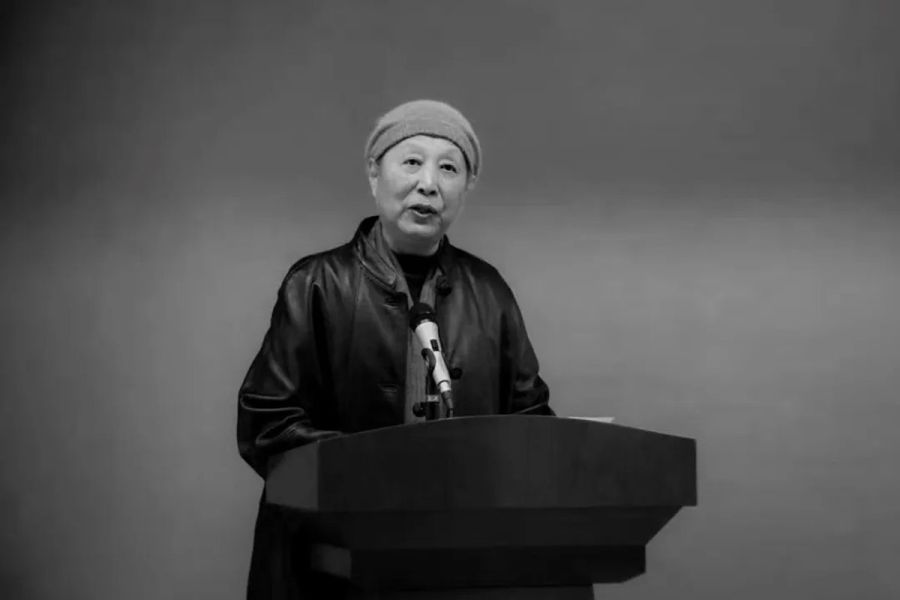
Featured Image: 李小江, Image source unknown
References
Butler, Judith. 2024. Who’s Afraid of Gender? London: Allen Lane.
Chouliaraki, Lilie. 2024. Wronged: The Weaponization of Victimhood. New York, NY: Columbia University Press.
Dian, Dian. 2024. ‘Lala Activists in Dark Times: Queer Feminist Resistance to the Cyber-Nationalist Attacks in China.’ Journal of Lesbian Studies 28(3): 460–85.
Dong, Limin 董丽敏. 2005. ‘女性主义: 本土化及其维度 [Feminism: Indigenisation and Its Dimensions].’ 南开学报 [Nankai Journal] (2): 7–12.
Dong, Limin 董丽敏. 2012. ‘“历史化”性别: “关联”如何可能 [“Historicising” Gender: How Can a “Connection” Become Possible]?’ 文艺争鸣 [Debates on Literature and Art] (4): 31–35.
Gilmartin, Christina K., Gail Herhatter, Lisa Rofel, and Tyrene White, eds. 1994. Engendering China: Women, Culture, and the State. Cambridge, MA: Harvard University Press.
Hershatter, Gail. 2007. Women in China’s Long Twentieth Century. Berkeley, CA: University of California Press.
Hochschild, Arlie Russell. 2016. Strangers in Their Own Land: Anger and Mourning on the American Right. New York, NY: The New Press.
Li, Xiaojiang 李小江. 1989. 性沟 [Sex Gap]. Beijing: SDX Joint Publishing.
Li, Xiaojiang 李小江. 2005. 女性/性别的学术问题 [Issues Related to Women and Gender]. Jinan: Shandong Renmin Chubanshe.
Li, Xiaojiang 李小江. 2006. 女人: 跨文化对话 [Women: Cross-Cultural Conversation]. Nanjing: Jiangsu Renmin Chubanshe.
Li, Xiaojiang 李小江. 2010. 后寓言: 〈狼图腾〉深度诠释 [Wolf Totem and the Post-Mao Utopian: A Chinese Perspective on Contemporary Western Scholarship]. Wuhan: Changjiang Wenyi Chubanshe.
Li, Xiaojiang 李小江. 2014. 对话汪晖: 管窥中国大陆学术风向与镜像 (1990–2011) [Dialogue with Wang Hui: A Case Study of Scholarism in Mainland China (1990–2011)]. Beijing: Shehui Kexue Wenxian Chubanshe.
Li, Xiaojiang 李小江. 2024a. 华人家国与天下 [Chinese People: Family, Nation, and the World]. London: Global Century Press.
Li, Xiaojiang 李小江. 2024b. 史学的性别 [Gender in Historiography]. Xi’an: Shaanxi Shifan Daxue Chubanshe.
Lin, Chun. 2006. The Transformation of Chinese Socialism. Durham, NC: Duke University Press.
Liu, Petrus. 2021. ‘Thinking Gender in the Age of the Beijing Consensus.’ Feminist Studies 47(2): 341–71.
Oakley, Ann. 1972. Sex, Gender and Society. Melbourne: Sun Books.
People’s Daily. 2023. ‘为强国建设、民族复兴伟业贡献巾帼智慧和力量—学习〈习近平关于妇女儿童和妇联工作论述摘编〉 [Contributing Women’s Wisdom and Strength to Building a Strong Nation and National Rejuvenation—Studying Excerpts from Xi Jinping’s “Words on Women, Children, and the Work of the Women’s Federation”].’ 人民日报 [People’s Daily], 22 November. www.gov.cn/yaowen/liebiao/202311/content_6916447.htm.
Shan, Jiahui 单佳慧. 2020. ‘1995年后的妇联:能否重拾作为人民团体的群众性? [The All-China Women’s Federation after 1995: Can It Regain Its Mass Character as a Mass Organisation?].’ In 中共历史与理论研究(第8辑) [Studies on the History and Theory of the Chinese Communist Party (Vol. 8)], edited by Song Shaopeng 宋少鹏, 156–172. Beijing: Shehui Kexue Wenxian Chubanshe.
Song, Shaopeng 宋少鹏. 2011. ‘社会主义妇女解放与西方女权主义的区别: 理论与实践”座谈会综述 [Report on the Conference “On the Differences between Socialist Women’s Liberation and Western Feminism: Theory and Practice”].’ 山西师范大学学报 [Shanxi Normal University Journal] no. 7: 143–49.
Song, Shaopeng 宋少鹏. 2012. ‘资本主义、社会主义和妇女: 为什么中国需要重建马克思主义女权主义批判 [Capitalism, Socialism, and Women: Why China Needs to Reconstruct a Marxist Feminist Critique].’ 开放时代 [Open Times]12: 98–112.
Song, Shaopeng 宋少鹏, ed. 2020. 中共历史与理论研究(第8辑) [Studies on the History and Theory of the Chinese Communist Party (Vol. 8)]. Beijing: Shehui Kexue Wenxian Chubanshe.
Song, Shaopeng 宋少鹏. 2021. ‘宋少鹏对话高小贤: “妇女/性别与发展”在中国的本土化与实践 [Song Shaopeng in Dialogue with Gao Xiaoxian: The Localisation and Practice of “Women/Gender and Development” in China].’ 山西师范大学学报 [Shanxi Normal University Journal] (6): 76–89.
Spakowski, Nicola. 2018. ‘Socialist Feminism in Postsocialist China.’ Positions: East Asia Cultures Critique 26(4): 561–92.
Stites, Richard. 2021. The Women’s Liberation Movement in Russia: Feminism, Nihilism, and Bolshevism, 1860–1930. Expanded edn. Princeton, NJ: Princeton University Press.
Teng, Wei. 2019. ‘第三世界 [Third World].’ Translated by Craig A. Smith. In Afterlives of Chinese Communism: Political Concepts from Mao to Xi, edited by Christian Sorace, Ivan Franceschini, and Nicholas Loubere, 281–85. Canberra & London: ANU Press & Verso Books.
Wang, Hongkun, Yihuan Zhang, and Ling Tang. 2025. ‘Indigenizing Feminist Rage: The Affective Formation of Rad-Feminist Politics in Digital China.’ International Journal of Cultural Studies, online first. doi.org/10.1177/13678779251338317.
Wang, Zheng. 2017. Finding Women in the State: A Socialist Feminist Revolution in the People’s Republic of China, 1949–1964. Berkeley, CA: University of California Press.
Zhang, Yue 张月. 2024. ‘开拓中国女性研究的人, 不想当女性主义者 [The Person Who Pioneered Chinese Women’s Studies in China Does Not Want to Be Called a Feminist].’ Reproduced in Women’s Action Network, 22 September. wan.or.jp/article/show/11496.
Zhong, Xueping, Zheng Wang, and Bai Di. 2001. Some of Us: Chinese Women Growing up in the Mao Era. New Brunswick, NJ: Rutgers University Press.