
Secretary Wang’s American Friend: William Hinton and the Long History of ‘Fanshen’
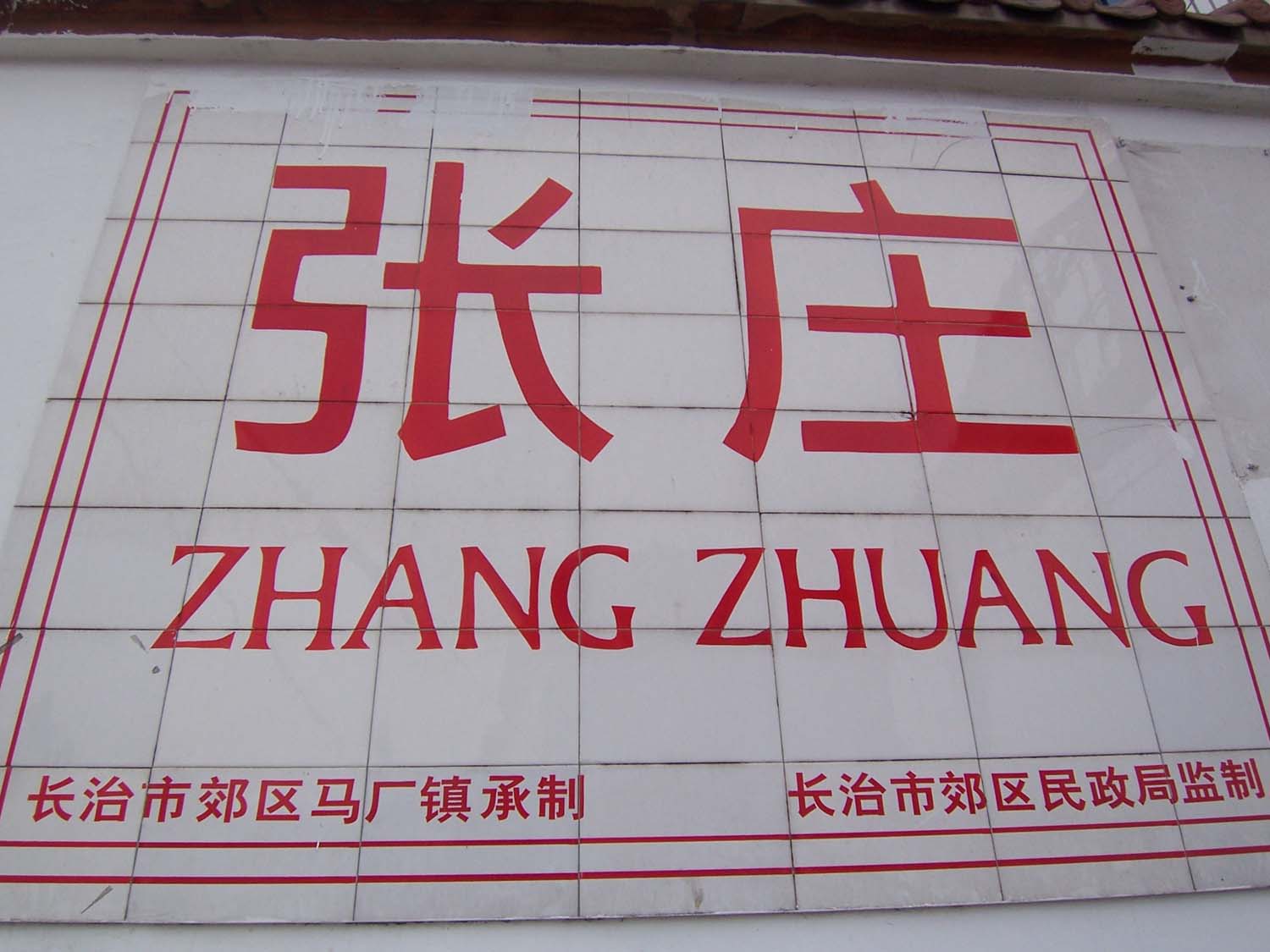
The road to Long Bow used to be much longer. When American agronomist and author of Fanshen (1966), William Hinton, made the journey to this seemingly unremarkable village in the autumn of 1947, he spent weeks navigating the North China Plain. Travelling at the height of the Chinese Civil War, he traversed territories held by the Nationalists and the Communists, when the two parties were attempting to annihilate each other. At one point in the journey, Hinton, riding shotgun in a Jeep driven by a White Russian, was stopped at gunpoint by Communist militiamen. He spent six months in the village and, after returning to the United States in 1953, wrote Fanshen based on his experiences there. In the book, Hinton gave the village its popular English name, Long Bow, inspired by its true name in Chinese, Zhang Zhuang (张庄), by deconstructing the character Zhang: the radical on the left means ‘bow’ and the component on the right means ‘long’. It was one of many steps he took to ensure Western readers discovered the book.
He was wildly successful. Few books have had a stronger impact on global understandings of China than Fanshen. I discovered Hinton’s account of rural revolution as an American student of China in the late 1990s, more than three decades after its publication in 1966. Reading about the experiences of a young American leftist in search of global justice changed my life. The book’s description of land reform—the process through which the Chinese Communists redistributed land from wealthy landlords to poor peasants—inspired me to dedicate my life to the study of Maoist revolution in the countryside. It was only a matter of time before I made the journey to Long Bow to see the place for myself.
As I would come to learn during multiple visits over the years since my initial trip to Long Bow in 2005, I was not alone. Unlike a typical Chinese village, where the presence of Westerners was rare if not completely unheard of, the men and women of Long Bow were accustomed to welcoming outsiders. After returning to the United States, William Hinton was kept away from China during the 1950s and 1960s by his own government due to Cold War tensions: the Department of State refused to issue this ‘friend of China’ a passport. But he made multiple return visits from the 1970s until his death in 2004. He often brought family members and other highly regarded ‘friends of China’ with him on these trips. His daughter, Carma Hinton, used Long Bow as the backdrop for multiple films documenting life in a North China village. As China opened to the West after the death of Mao Zedong, a small but steady stream of Westerners made their way to Long Bow. Multiple American universities made Long Bow part of their study abroad program. An American anthropologist spent a year in the village, investigating how locals understood their history (Husman 2011).
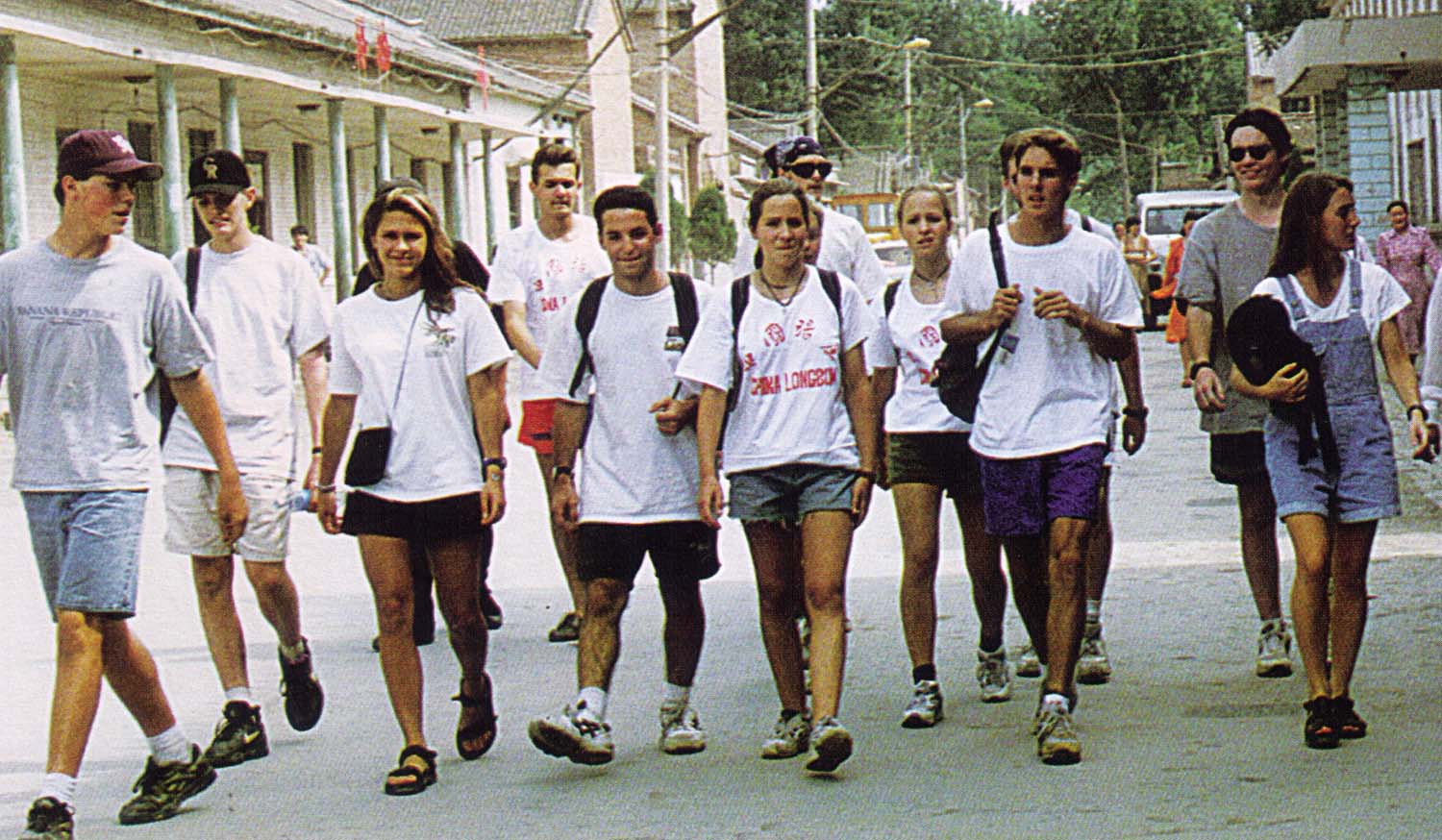
Like me, these visitors were inspired by William Hinton’s Fanshen, his epic account of rural revolution in Long Bow. Named after the Chinese term that signalled the social, cultural, and economic rebirth that the Communists promised to bring to the peasantry through land reform, Fanshen was advertised as a realistic account of rural revolution in Mao’s China. Yet, over the years, I came to understand that Hinton’s account of land reform was severely skewed. My own book on land reform—too scholarly to find the wide audience that Fanshen had and continues to enjoy—repeatedly notes how Hinton’s beautifully crafted prose echoed Communist propaganda, often at the expense of the truth (DeMare 2019).
After my book came out in 2019, a package arrived for me at my office at Tulane University in New Orleans. Inside was the Holy Grail of Anglophone land reform studies: an original draft of Fanshen. Written in a different structure from the 1966 published version and with multiple passages that were cut in the latter, the Fanshen draft was a bombshell. The original draft of the book confirmed many of my suspicions about Hinton’s relationship with the Communists and their narrative of rural revolution. Just as I had thought while writing my land reform book, Hinton’s understanding of rural society and agrarian revolution was taken directly from Communist propaganda.
But if Hinton used the power of the pen to position himself as an expert on explaining China’s revolution and as a friend to the Chinese people, he was not alone in using the written word for personal purposes. Over the years, I came to understand the complexities of Hinton’s relationship with Long Bow and with China, and how his Chinese friends in the village have replicated and reproduced their ties to Hinton in the decades that followed his arrival. Perhaps seeing the power of Hinton’s prose, Long Bow villagers have used their own books to establish their ties to Hinton and bolster their own legacies.
Anyone with an interest in rural China should know about the early Fanshen draft and the book’s legacy, which cannot be separated from the people of Long Bow, starting with their colourful leader.
Secretary Wang Welcomes Foreign Students
When I arrived in Long Bow for the first time in the summer of 2005, alongside two graduate school classmates, the first person we met was Wang Jinhong, known locally as Secretary Wang. Our meeting was not by accident. As Long Bow’s longtime leader, Secretary Wang was the friendly and public face of the village. His power flowed from two interconnected sources. The first was his official role as the head of the local Chinese Communist Party branch and the other was his decades-long relationship with his ‘American friend’ William Hinton, starting in 1971, five years after Fanshen was published.
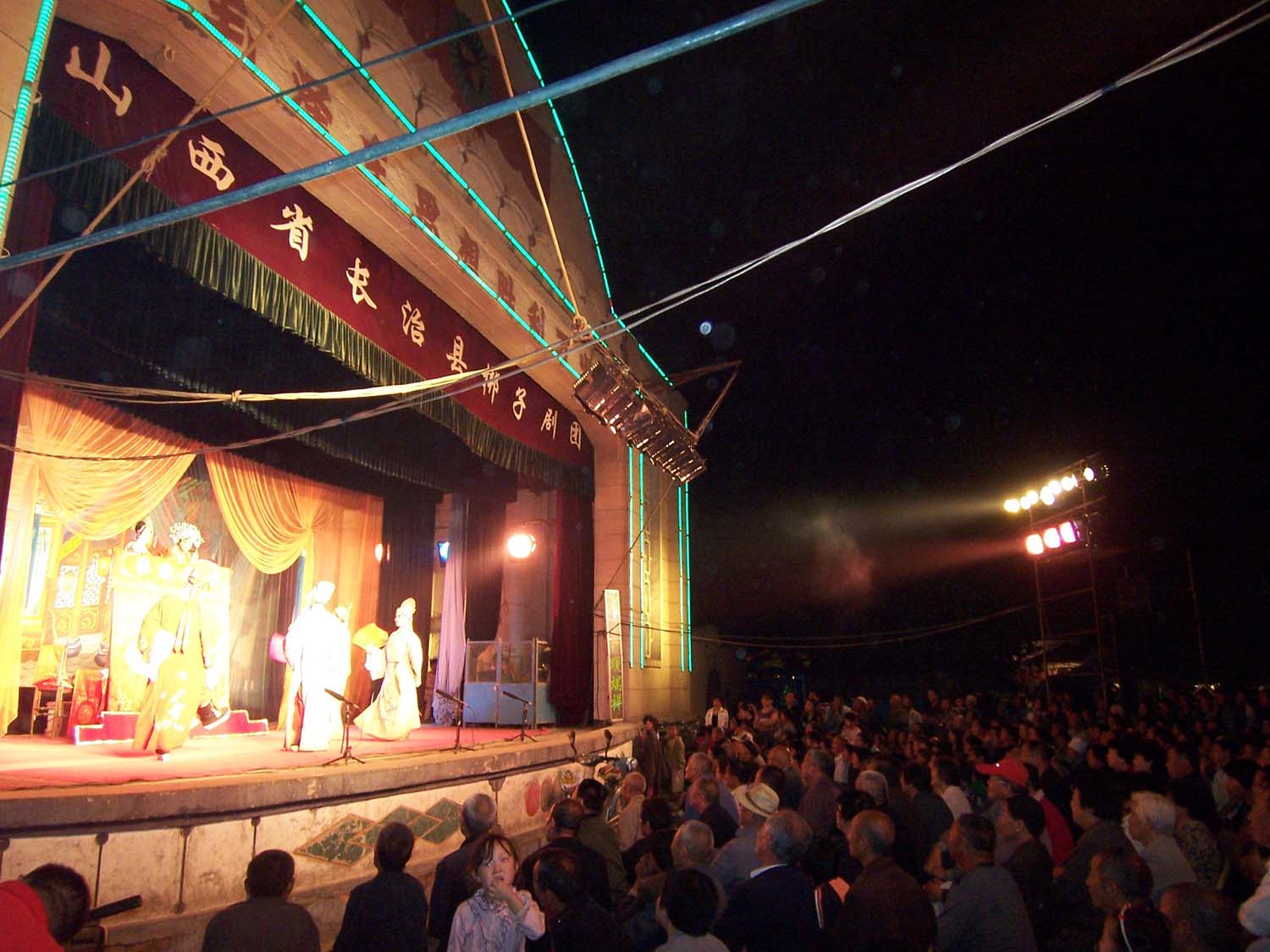
Secretary Wang was eager to open his village to foreign visitors. Having spent much time crisscrossing the Chinese countryside in the early 2000s, I knew only villages that could market themselves as travel destinations welcomed outsiders. Otherwise, a foreigner such as myself was little more than a potential political problem. But Long Bow was not a place for tourism, at least not the usual kind. Dusty and underdeveloped, there was little to see. The best local entertainment was in neighbouring Machang, where an outdoor stage hosted visiting opera troupes. Secretary Wang, knowing my interest in rural Chinese culture, made sure to take me to an evening performance. We arrived in the late afternoon and he first treated me to a local dish featuring donkey meat—one of his childhood favourites. We later sat together and took in the show, a three-hour-long traditional opera featuring scholars and maidens. It was difficult to concentrate on the performance, however: I kept thinking about Fanshen, in which Hinton had beautifully described his own attendance at an outdoor operatic performance, which had also been staged by a visiting drama troupe.
While there was a decent hotel next to the train station that served Long Bow, Secretary Wang insisted we stay at his place, a spacious courtyard home full of fascinating objects. Souvenirs from his travels mixed with Maoist statues and other Communist iconography. Most interesting among them were the many tokens of his decades-long friendship with Hinton. They were impossible to miss, starting with the large hanging scroll placed prominently in the living room. The right side of the scroll was an ode to Secretary Wang and his wife, penned by Hinton himself.
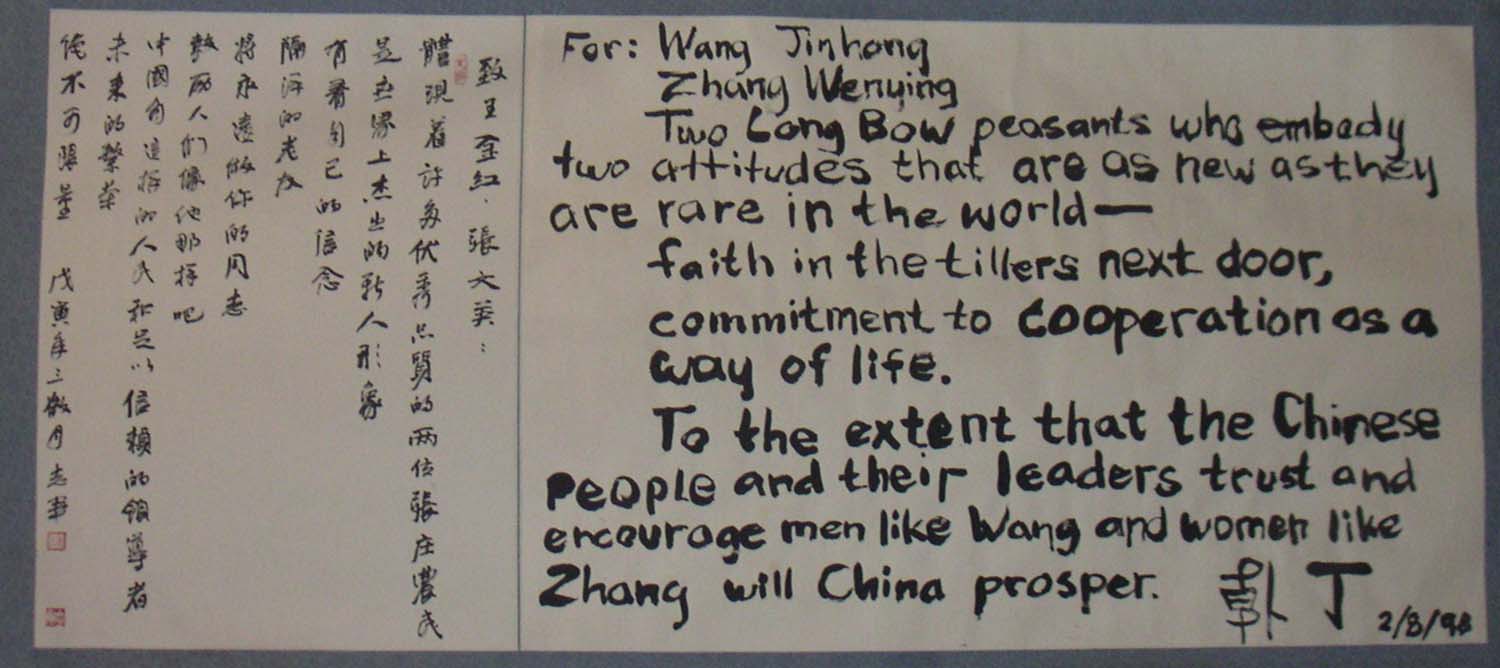
The left half featured a Chinese translation of Hinton’s praise, ensuring that all visitors to the house understood the bond between Secretary Wang and his American friend. As I would learn, Hinton’s praise of his old friends’ ‘commitment to cooperation as a way of life’ was a particularly important message.
Secretary Wang and I often discussed Hinton and the impact Fanshen had on readers such as myself. But even I was in awe of how Secretary Wang’s life had been shaped by his relationship with Hinton. Much to our delight, on the second day of our visit, Secretary Wang gave us a tour of his William Hinton Museum, located in one of the wings of his courtyard home.
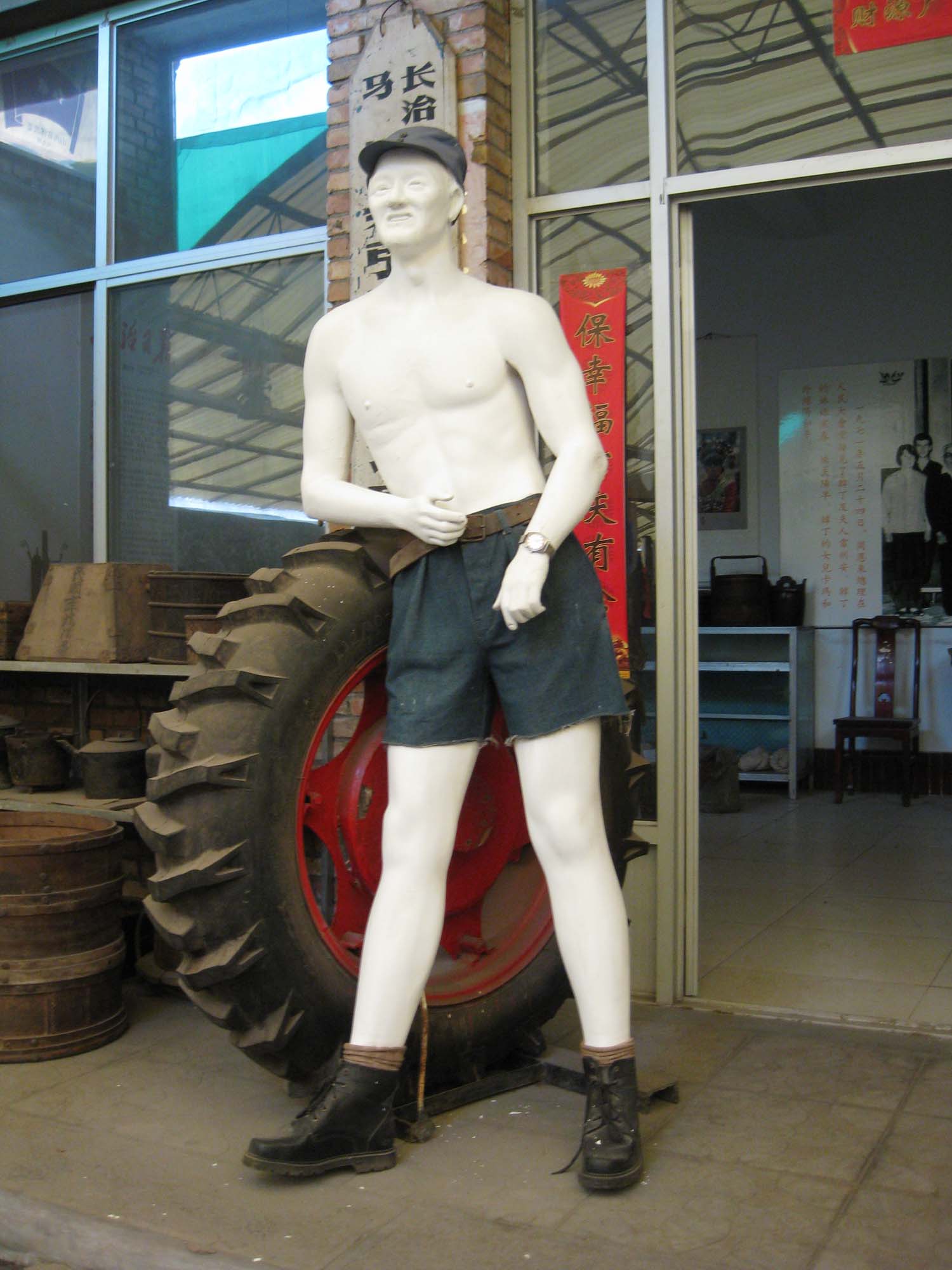
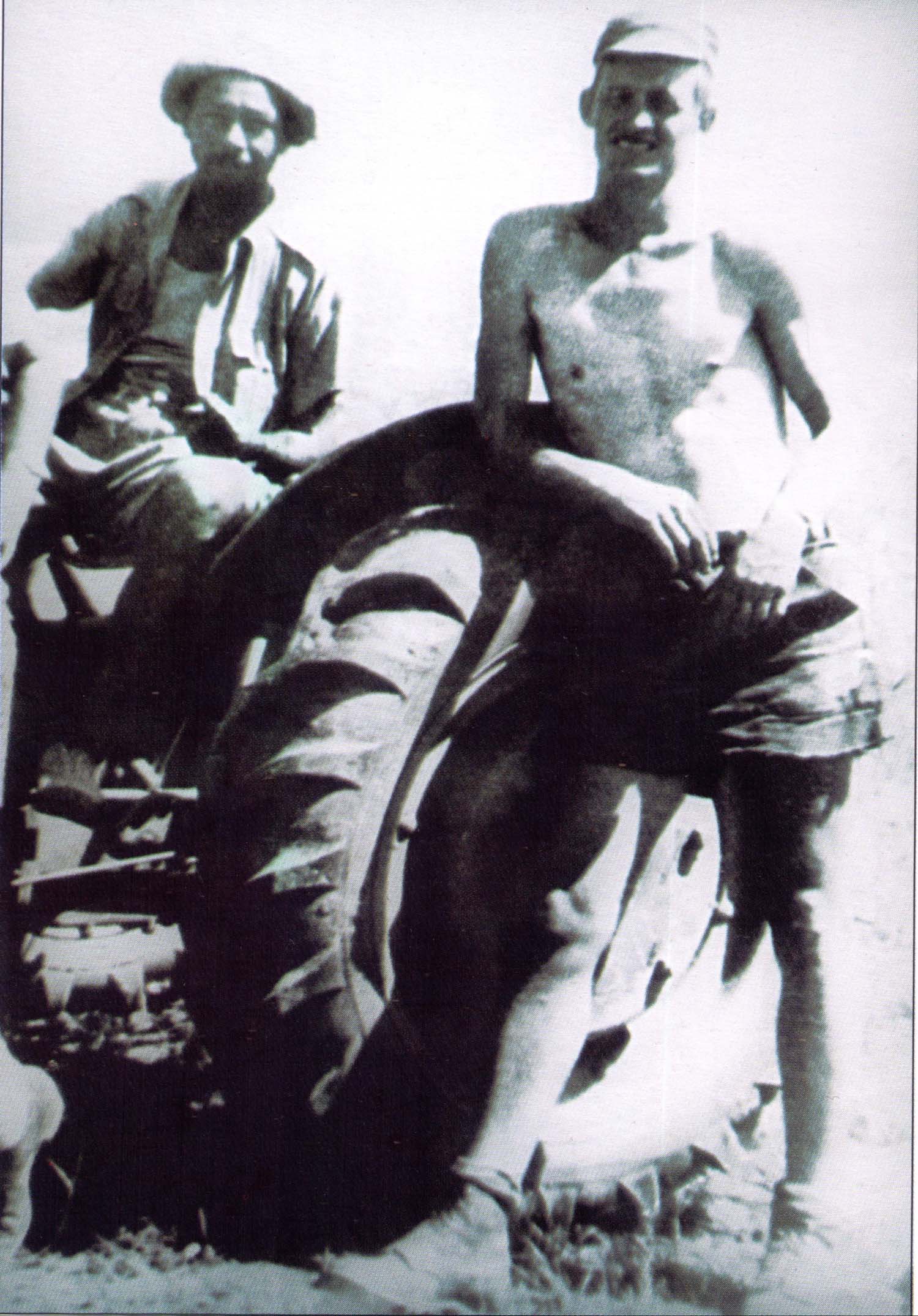
More than two decades later, the museum remains one of the most fascinating things I have ever seen in China. At its entrance stood a large plaster statue of William Hinton, based on an old photograph of him, shirtless and leaning against a tractor tyre. Inside were signs from the old collective that organised agricultural production during the Mao years. Secretary Wang was the first villager I heard criticise Deng Xiaoping and the move to redistribute collectively farmed land to rural households. His belief in agricultural cooperatives—shared by William Hinton—formed one of the strongest bonds of their friendship.
Long Bow after Hinton
Long Bow’s ties to Hinton had created an opening to the West, making it the rare place where outsiders could visit an ‘authentic’ Chinese village. Most Westerners who visited the place were academics who had read Hinton’s book. I suspect many of them must have been disappointed. Apart from Secretary Wang’s home, little evidence of Hinton’s visit remained. Secretary Wang had established a ‘Hinton Photo Station’ attached to the local elementary school, but it was always closed during my visits, so I never had a chance to see what mementos were on display. Wang also erected another Hinton statue at the elementary school, but because of its secluded location inside the building, few villagers had seen it besides the students.
During my visits, I happily roamed the dusty streets of Long Bow, revelling in the easy interaction with villagers who were never surprised to see a foreigner. Secretary Wang often accompanied me, introducing various friends who he thought might have useful stories to share about ‘the good old days’ when Mao was still alive. Sometimes, it felt like there was little to do in Long Bow besides talking about the past.
Having read Fanshen multiple times, I had an image of Long Bow in mind before my arrival. What I found was something different. The Long Bow from Fanshen, full of revolutionary passion, was nowhere to be seen. A housing boom, already decades old by the time I arrived, ensured that very little from the 1940s could be found. Instead, the village was profoundly of its time. Men darted back and forth on cheap motorcycles. Makeshift kitchens sold lamb dishes. And walls were plastered with information on what was the top concern then: the One-Child Policy. That included not just government warnings, but also advertisements from a fertility clinic in nearby Changzhi City. As the clinic’s advertisements noted, there were plenty of exceptions to the policy. Those looking to become pregnant were encouraged to visit the facility, which offered state-of-the-art treatments from the West.
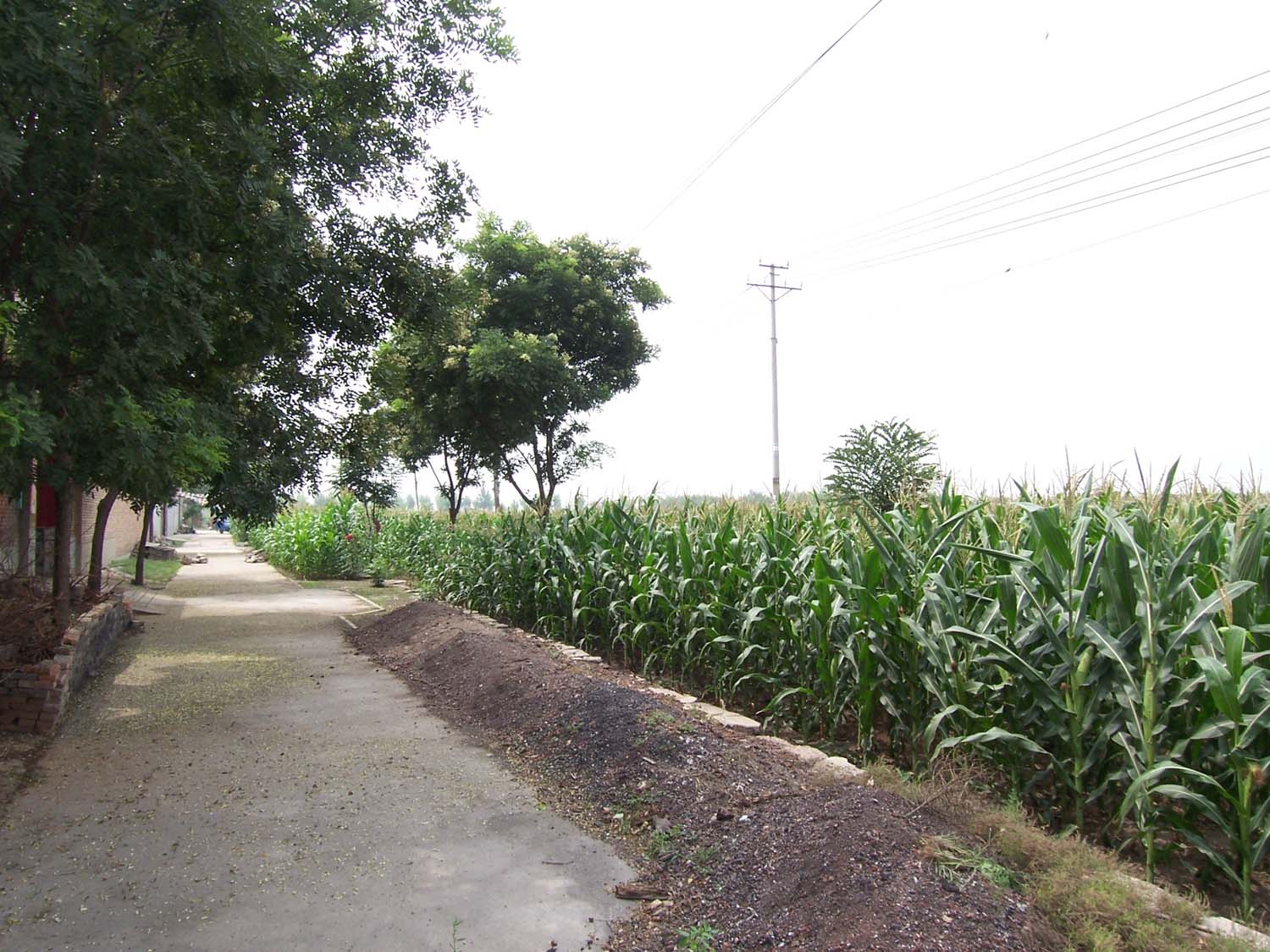
Only by wandering to the edge of the village did I encounter the farms that villagers had redistributed during land reform. The disconnect of these seemingly endless rows of corn from the everyday life of the villagers was another reminder that much had changed since Hinton’s first visit. Thanks in no small part to the work of Secretary Wang, the economy of Long Bow now centred on small-scale industry, not agricultural production.
Secretary Wang Goes to Boston
Despite a lack of physical evidence of Long Bow’s ties to William Hinton besides Secretary Wang’s home, the villagers of Long Bow are aware of Hinton and his ties to their hometown. Daniel Husman, the anthropologist who lived in Long Bow from 2008 to 2009, discovered that Hinton and his visit were essential to how locals understood their history. Few of the villagers had read the Chinese translation of Fanshen, but they all understood that they lived in ‘Hinton’s village’. Like me, Husman stayed with Secretary Wang, and he too noted how central Hinton was for the longtime village leader. In Husman’s (2011: 47) view, the memorialisation of Hinton in Secretary Wang’s courtyard house was a pointed but private criticism of the move away from Maoist revolution and collectivism.
It was not just Secretary Wang who was drawing attention to Hinton’s ties with Long Bow. In local histories, Long Bow was rarely mentioned unless its ‘American friend’ was in town. The Chronicle of Major Events in Changzhi (长治大事记), a year-by-year account of important happenings in the region, recorded seven of these visits, explaining who accompanied Hinton and what stops they made in and around Long Bow (see, for example, Cheng 1987: 432). The Changzhi City Gazetteer (长治市志) noted Hinton visited Long Bow 16 times between 1947 and 1985 (Changzhi City Local Records Compilation Committee 1995: 440).
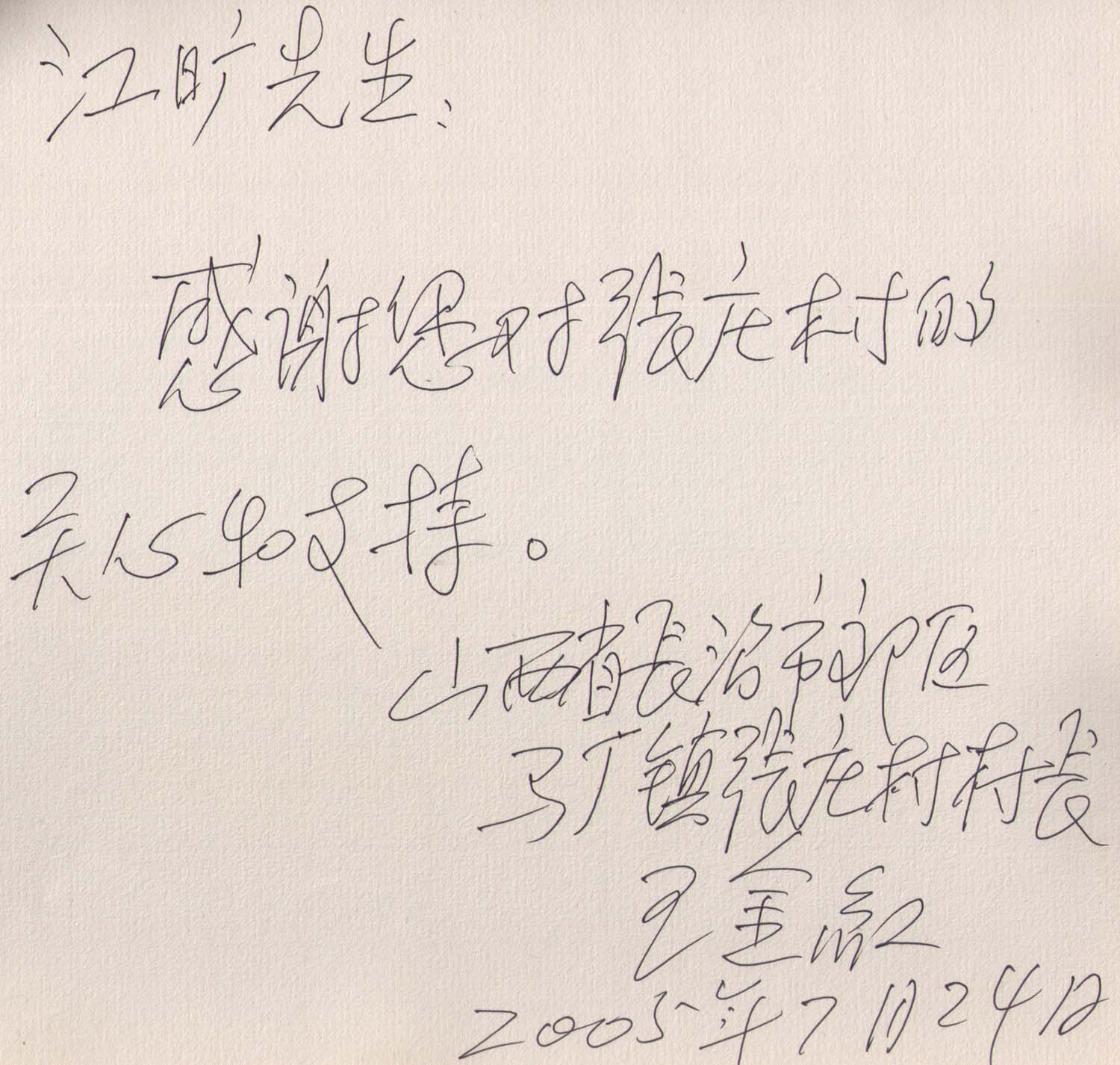
But the local authorities’ efforts to promote their ties with Hinton seem amateurish compared with Secretary Wang’s. The last time I saw him, about a decade before his passing in 2022, he gifted me a copy of a book: William Hinton: An Old Friend of the Chinese People (中国人民的老朋友: 韩丁) (Li and Wang 1999). Despite not being the author, Secretary Wang signed my copy, which I found odd until I realised that he had personally commissioned the book for Hinton’s eightieth birthday in 1999. I later discovered that Secretary Wang had been the driving force behind another book on Hinton: William Hinton and China (韩丁与中国), written by Li Changzhao (1995).
If Li Changzhao had been going for precision in the title, his book probably should have been called William Hinton and Secretary Wang. Most of the book deals with their friendship, which began during Hinton’s second visit to Long Bow in 1971. As was often the case during the Cultural Revolution (1966–76), self-proclaimed ‘rebels’ had seized power in Long Bow, pushing aside Secretary Wang. But hearing villagers endlessly praise their toppled leader during his visit, Hinton insisted on meeting with Secretary Wang before departing Long Bow.
William Hinton and China features a lengthy description of that meeting, almost certainly narrated to the author by Secretary Wang. During this meeting, in which he interacted with Hinton for the first time, Secretary Wang insisted that the charges levelled at him by Long Bow ‘rebels’ were false:
I can’t understand it. I believe I have always acted according to Chairman Mao’s words. But they say I made a ‘rightist’ or ‘line deviation’ error. What is the purpose of revolution? Isn’t it to develop production better and let the peasants live a good life? I remember that right after liberation, our Party said it wanted peasants to have electric lights instead of oil lamps, to plow without using cattle, and to have better housing, electric lights and telephones—wasn’t that the idea? (Li 1995: 128)
In response, Hinton assured his future friend:
Jinhong, don’t be distressed. This is nothing. From my investigation and understanding, I think you did a good job. Before you were removed, each work point was worth 80 cents; after you stepped down, it dropped to 50 cents and still could not be cashed out. Doesn’t that say a lot? (Li 1995: 128)
Hinton’s words startled Secretary Wang. The deposed village leader had not expected this American to understand the complexities of Long Bow politics. The two men quickly bonded and Hinton advocated for his new friend with provincial and national leaders before he made his way back to the United States. Two years later, Secretary Wang was restored to his leading role in the local party branch. When Hinton made his next journey to China in 1975, Secretary Wang met him in Beijing, where they discussed plans for agricultural mechanisation in Long Bow.
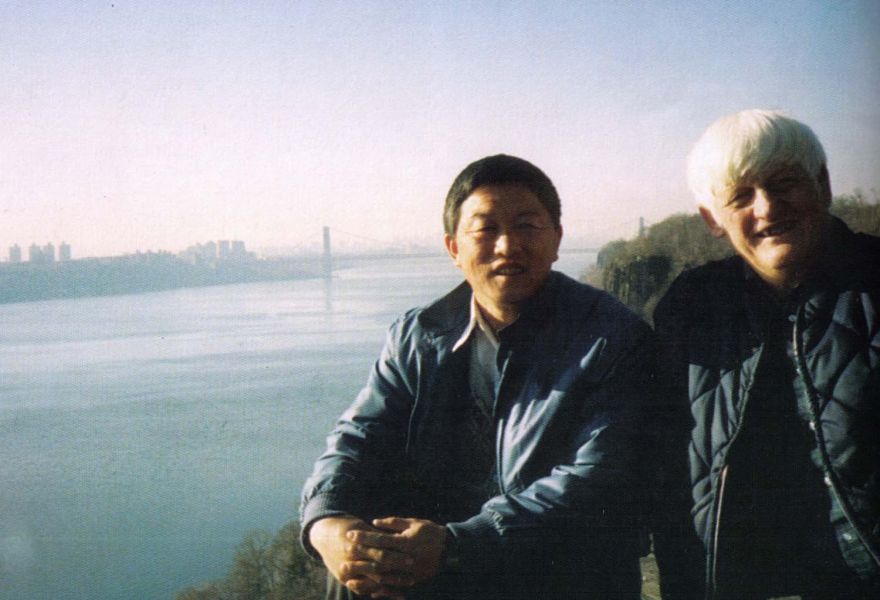
The highlight of William Hinton and China in my mind is its account of Secretary Wang’s trip to the United States in 1987. Accompanied by his sponsor and friend William Hinton, Secretary Wang took his first plane ride:
He still could not shake off a feeling of dizziness, as if gravity no longer applied. He knew clearly that he did not belong in the sky. He belonged to the earth—the land where he was born, where he grew up, and where his roots were deeply planted. The land gave him stability and peace. Now, suspended in the air, he could not find a point of balance. (Li 1995: 198)
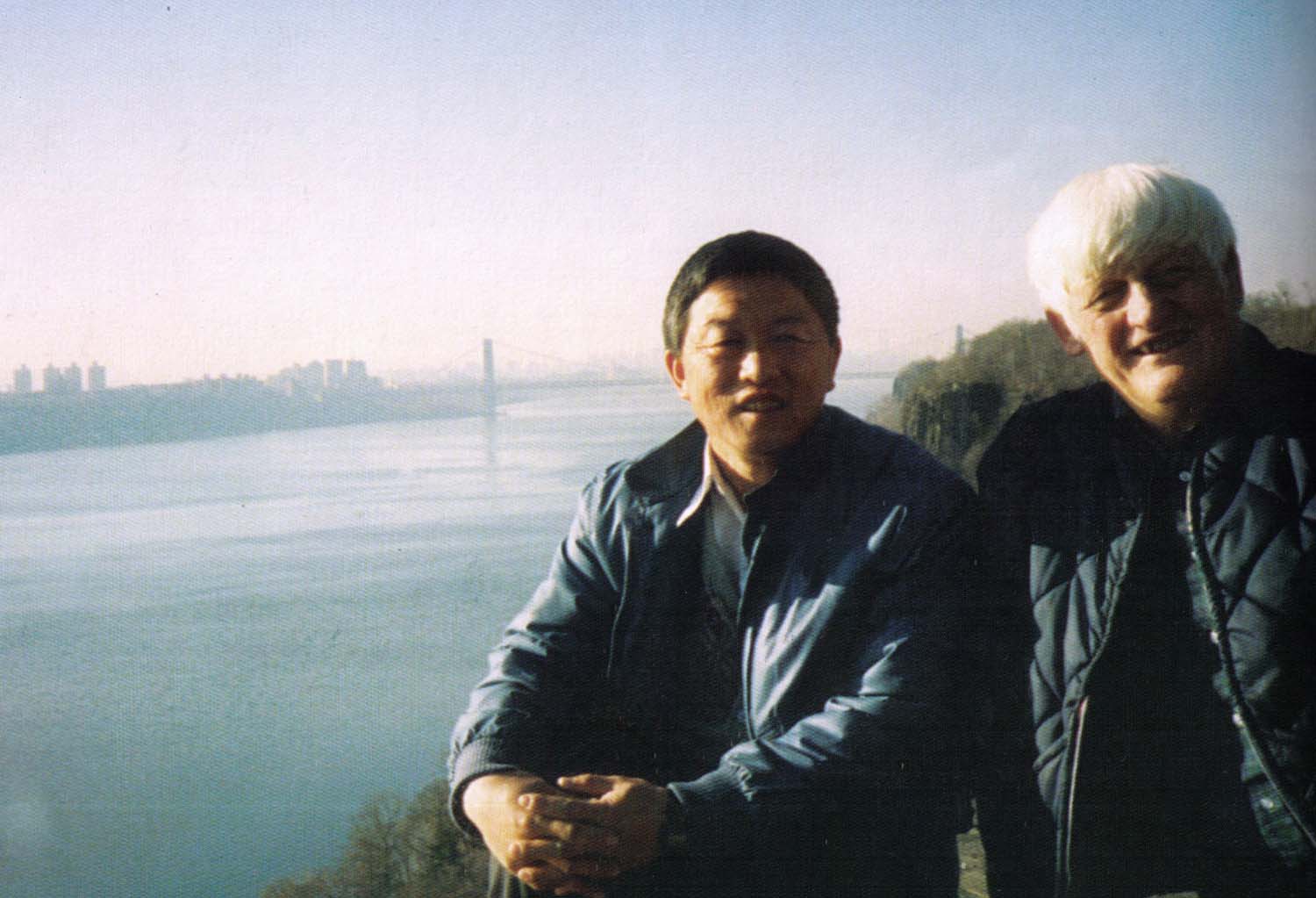
Arriving in New York, the two men saw the Statue of Liberty as the plane landed. They then headed north to Boston, where a local university was staging a dramatic performance of Fanshen. This theatrical version of the book, adapted by the English playwright David Hare in 1975, had been performed sporadically over the years on college campuses and in leftist theatres, including stages in the United States, the United Kingdom, and Israel. The stripped-down staging, with no curtains or scenery, confused Secretary Wang, who was used to traditional Chinese operas performed on open-air stages. Seeing his confusion, Hinton smiled and said: ‘In 1947 I saw your performances on an outdoor stage in Long Bow. That stage was much more complex than this one.’ Then the show started:
Wang Jinhong’s heart began to beat intensely. Far away from home, suddenly hearing the call of Long Bow filled him with a strong sense of homesickness. One by one, characters familiar to Secretary Wang appeared on stage. Those wearing felt hats or tied white towels around their heads, with straw ropes around their waists and cloth shoes with round toes, carrying shoulder poles on their backs, were his father’s generation. Those wearing belts with red stars on their caps were members of the land reform work team. Those carrying ‘Type 38’ rifles were village militia members. At first glance, it was hard to believe they were all played by foreigners. (Li 1995: 219)
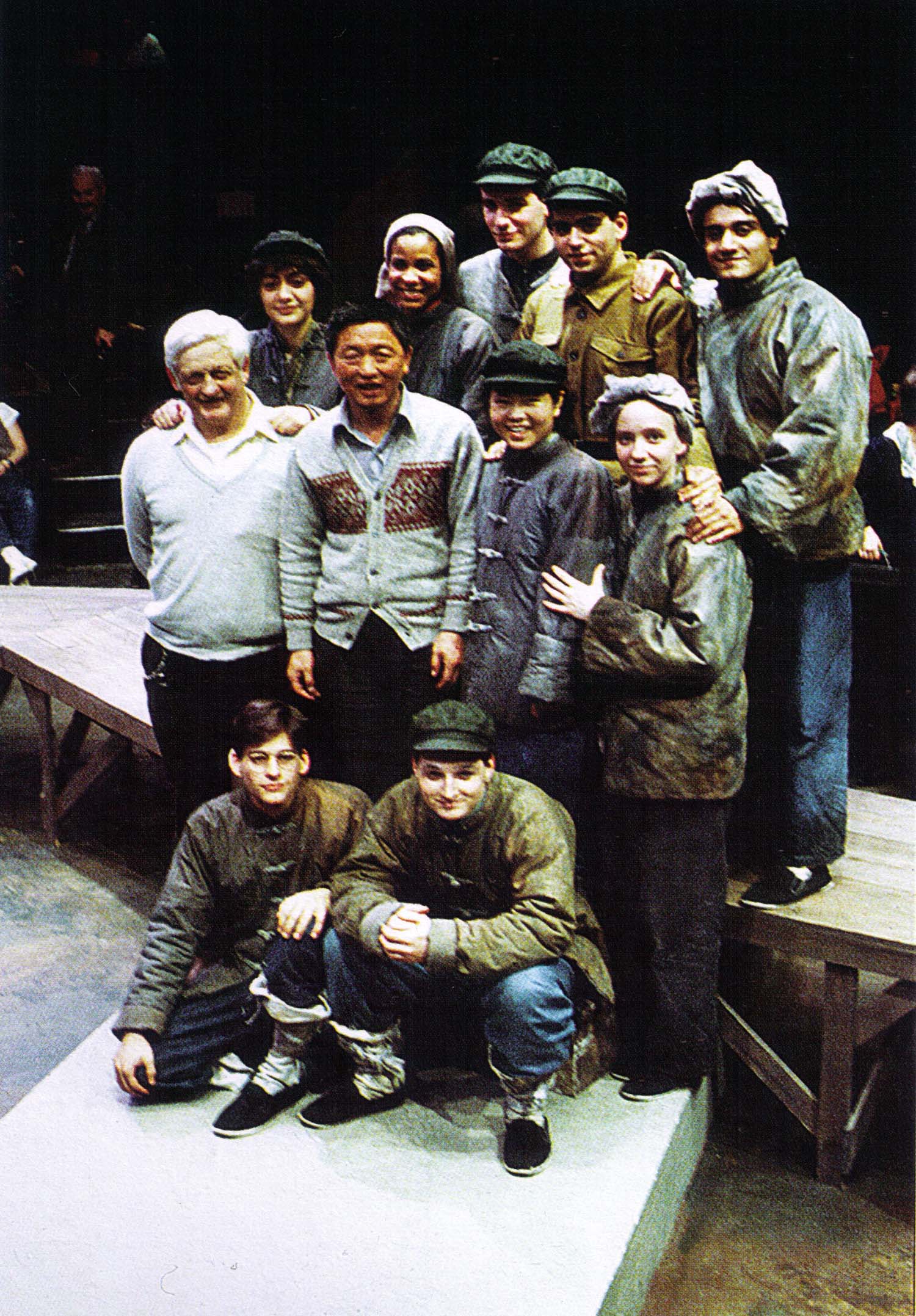
Watching Long Bow history come alive on a Boston stage filled Secretary Wang with pride. That they were re-enacting land reform was, of course, a direct reflection of the power of Fanshen. In Hinton’s powerful prose, the story of land reform in Long Bow had become the story of rural revolution in China. His book made him famous and a hero among leftist academics.
But what had really happened back in 1947?
A Priceless Draft Arrives in New Orleans
After I published my book on land reform, I discovered that the curiosity about Maoist revolution that had permeated academic circles back when Hinton first published Fanshen had long evaporated. I wrote the book with undergraduate students in mind, but my most passionate readers, I was surprised to discover, were older leftists. Like me, they had read Fanshen and found a passion for rural revolution. One of them sent me a gift.
The original draft of Fanshen is a sight to behold. Clocking in at more than 900 pages, the sheer size of the typewritten manuscript is a testament to Hinton’s dedication to his craft. Knowing what had to be done but mindful of how time-consuming the project would become, I hired a student to go through the original draft and highlight any changes from the final published version of Fanshen. What she discovered confirmed some of my initial suspicions about the published volume, but it also forced me to rethink my assumptions about Hinton and the book that informed my understanding of Maoist revolution.
Even before reading the original draft, I had already accepted that Fanshen told a tremendous tale, but one that should not be taken as true history. Most notably, my research revealed that Hinton had accepted Mao’s narrative of rural revolution as factual and correct: under the leadership of the Communist Party, exploited peasants overthrew morally corrupt landlords. While often true, this simplistic formula obscured a complex and messy reality. In many villages where no landlords could be found, farmers were beaten and tortured under the assumption that violent struggle was necessary for liberation (DeMare 2019).
The original draft of Fanshen shows that Hinton was not relying just on Maoist narrative. He was also taking an active and inventive role as a storyteller. Unlike the published version of the book, in which the timeline of Hinton’s arrival is unclear to many readers, here he is explicit: he had not personally observed land reform in Long Bow. As such, he had to rely on villagers to fill him in on what he had missed, and their stories were inconsistent:
The past was reviewed for me by a multitude of people, all of whom remembered reality a little bit differently. Their stories contained both contradictions and gaps and the gaps sometimes overlapped. Where contradictions could not be resolved or gaps filled in through careful checking and cross-checking, I have had to adopt such interpretations and solutions as seemed most consistent with other known facts. If the history that has thus emerged is not accurate in every detail, it nevertheless portrays in main content and spirit the truth about Long Bow. No history can claim more.
In order to bring the historical materials to life, I have recreated certain episodes in greater fullness than is customary from a strictly academic point of view. That is, I have here and there taken real events about which I possessed certain basic facts and have added dimensions to them by describing the weather, the setting, the appearance of people and the tone of passion of their words as if I had, in fact, been an eyewitness. Such a method can be justified only in cases where the setting and people involved are familiar enough to the author to allow projection backwards of known quantities and qualities. Where familiarity did not extend that far I have not attempted the method. (Hinton n.d.: 1–2)
In this passage, Hinton reveals the limitations of his book: a secondhand narrative pieced together from contradictory accounts. And if Fanshen is highly readable, this is partly due to the liberties he took with the story. These passages were removed from the published version of Fanshen, which presents itself as a ‘documentary’ of land reform.
These deleted passages also underline how dependent Hinton was on others for the bulk of the story told in Fanshen. Arriving after land reform had concluded, he had to interview firsthand observers for his book. But how well did Hinton understand the peasants of Long Bow? In the published version of the book, Hinton notes he relied on interpreters, especially Qi Yun, a young woman attached to his work team. He also mentions a young man, Xie Hong, but only in passing. In the original draft, however, Xie is a major player in Hinton’s time in Long Bow. Unfortunately for Hinton, Xie hated this ‘American friend’ with a passion:
Xie’s arrival complicated life for me. From the beginning we did not get along. I felt that he disliked all foreigners. He felt that I did not trust him to translate what he heard. In this he was right … He translated the bare bones of what transpired but indicated by gesture and expression his contempt for me and his disgust for the menial work he had to do. When I protested particularly blatant examples of omission on his part he fell back on the excuse that he couldn’t understand the local dialect, an answer that I, in turn, doubted. (Hinton n.d.: 626–28)
A translator who saw Hinton as an unwanted outsider. Total reliance on others to understand what was going on. None of this critical information made it into the published book, which presents Qi Yun as a friendly and talented translator and glosses over the serious language issues Hinton and his interpreters faced in Long Bow.
Xie Hong’s absence from the final version of Fanshen is a shame. Hinton’s description of Xie as a brilliant but arrogant intellectual who overcame a landlord background to become a true believer in Communist revolution is fascinating. As is the clash between the two men as Hinton demanded better translations:
Every attempt to discuss this problem ended in sharp words. I spoke of ‘my book’ and the necessity for knowing everything that happened so that I could write objectively. He reacted strongly to this. Who was I to judge the Chinese revolution and land reform? How could I, a mere observer, hope to understand what went on? How could I talk of ‘my book’ when obviously it was collective work? (Hinton n.d.: 629)
The published version of Fanshen presents Hinton as a welcomed observer, fully integrated into the work team sent to Long Bow. In reality, he was an outsider. Xie’s disapproval was infectious and he turned the other team members against Hinton as well. Eventually, things reached a boiling point that forces readers to confront the question of Hinton’s motives for coming to Long Bow:
I am not able now to trace the full reason for this or even to pinpoint the incident that caused the final explosion. I know that I showed impatience as the two interpreters became more and more involved in the work of the team and began to begrudge the time they had to spend in translating. Perhaps I criticized Xie for not giving me a full account of what happened during those day-long meetings. Whatever the starting point, the end result was a very bitter quarrel. Both Xie and Qi accused me of being a bystander who did not care about the outcome of their work just so long as it was tense and exciting … Xie yelled at me, and the hatred that burned in his eyes was enough to unnerve a much fiercer nature than my own. (Hinton n.d.: 696)
As far as the work team was concerned, Hinton was an outsider from an imperialist nation. Other imperialists had come to China in search of fortune and power; he came to write a book. Hinton, to his credit, reflected on the accusations. He was not sure why he was in Long Bow. Was it for personal glory? Or was it because he harboured a deep concern for the people of China? He vowed to find the answers to these questions, but his problems with the work team remained.
Isolated and unable to take part in the work team’s activities, Hinton grew increasingly depressed. With little to do, he began to take long walks across the countryside. On one walk he ran into a People’s Liberation Army soldier, who was shocked to see a lone foreigner roaming the North China Plain. He arrested Hinton on the spot. The misunderstanding was quickly resolved, but Hinton’s problems with the work team were now public knowledge. District cadres and the county magistrate, a Communist Party official, let the work team translators have it:
Both the County Magistrate and the district cadres criticized Xie and Qi for adopting a sectarian attitude toward me and my problems. ‘Of what use is it to call the American an imperialist?’ asked the Magistrate … ‘Is he not one of the American people? Are they not potential allies in the struggle for socialism? If you have disagreements then you must work them out. Talk them over. Criticize yourselves. You are acting like children.’ No one undertook to criticize me … I tried to say that I too had been at fault, that my attitude had been arrogant, that I had stood aloof from the agony of the day to day work, and that I had looked on Xie and Qi as assistants rather than colleagues. But the group did not seem to care about that. (Hinton n.d.: 753–54)
After the scolding, the proud Xie Hong admitted his errors. None of this made it into the published version of Fanshen, the book that defined Maoist rural revolution on the global stage.
William Hinton and Secretary Wang
I think Hinton made a mistake when he cut Xie Hong from the story of rural revolution in Long Bow. Xie’s presence makes the draft version of Fanshen a superior read. His refusal to translate for Hinton underscores the American outsider’s reliance on the local work team to understand what was happening in Long Bow. It is little wonder that Hinton viewed the rural revolution in China through a Maoist narrative structure.
Xie’s burning anger at Hinton also highlights the ambiguous role played by this ‘American friend’ as he chronicled China’s peasant revolution for a book that few Chinese peasants would ever read. To his credit, Hinton never dismissed Xie’s accusations and thoughtfully pondered his motives in finding his way to Long Bow. He should have kept Xie in Fanshen so that his readers could see how Hinton grappled with his emerging role as Long Bow’s ‘American friend’.
I think even Xie Hong could eventually be won over by Hinton’s dedication to China and Mao’s revolution. After all, Hinton continued to play the role of China’s and especially Long Bow’s ‘American friend’ for decades, regularly returning to the village and writing multiple books about the changes he saw over the years. Luckily, at least one person asked Hinton directly about his motives: Li Changzhao, author of William Hinton and China. Walking through the fields of Long Bow with Hinton and Secretary Wang, Li asked Hinton why he was so devoted to China. Expecting a long and grand response, he was surprised by Hinton’s curt reply: ‘I love China. I love China’s socialism’ (Li 1995: 251).
Reading his answer, I cannot help but wonder whether Hinton was still thinking about Xie’s hatred for him and the charges levelled against him back in 1947. While I have no doubt about Hinton’s commitment to China and socialism, the reflexive author I saw in the unpublished draft of Fanshen would also admit that he came to Long Bow to write a book—a landmark work that made him a global symbol of Maoist revolution.
Here is the other reason I think Xie would have come to terms with the man from imperialist lands with questionable motives: as much as Hinton gained from his time in Long Bow, the people of the village also benefited greatly and many still take pride in the connection to Hinton. Secretary Wang certainly learned much from his American friend. That included the study of agricultural mechanisation—one of Hinton’s greatest passions. Equal parts savvy and earnest, like his village’s most famous American visitor, Secretary Wang understood how he could parlay his relationship with Hinton into local authority. That included using one of the most powerful weapons in a propagandist’s arsenal: the book.
References
Changzhi City Local Records Compilation Committee, ed. 1995. 长治市志 [Changzhi City Gazetteer]. Beijing: Haichao Chubanshe.
Cheng, Fengying 程凤英, ed. 1987. 长治大事记(初稿) [Chronicle of Major Events in Changzhi (Preliminary Draft)]. Changzhi, China: Changzhi Shi Difangzhi Bangongshi, Changzhi Shi Zhengxie Wenshi Bangongshi, Changzhi Shi Dang’anju.
DeMare, Brian. 2019. Land Wars: The Story of China’s Agrarian Revolution. Stanford, CA: Stanford University Press.
Hinton, William. n.d. ‘Fanshen: A Documentary of Revolution in a Chinese Village.’ Unpublished draft.
Hinton, William. 1966. Fanshen: A Documentary of Revolution in a Chinese Village. New York, NY: Monthly Review Press.
Husman, Daniel Raymond. 2011. ‘Long Bow: Memory and Politics in a Chinese Village.’ PhD dissertation, University of California, Berkeley.
Li, Changzhao 李昌钊. 1995. 韩丁与中国 [William Hinton and China]. Beijing: Zhongguo Guoji Guangbo Chubanshe.
Li, Changzhao 李昌钊, and Wang Jinhong 王金红, eds. 1999. 中国人民的老朋友: 韩丁 [William Hinton: An Old Friend of the Chinese People]. Translated by Xiao Wenke 肖文科. Shanxi, China: Changzhi Shi Duiwai Youhao Xiehui.