
Ten Years After the Charity Law: Whither Chinese NGOs?

Since the promulgation of the Charity Law of the People’s Republic of China in 2016, the relationship between the state and nongovernmental organisations (NGOs) in China has undergone profound changes. Drawing on fieldwork and an analysis of official policies and regulations, this essay argues that the positive term ‘charity’ has been strategically deployed by the […]

Easting the West: A Conversation with Chenchen Zhang

At a time when right-wing populism appears to be rampaging through global politics, studies about its discourses and strategies remain thin and even marginal in the field of international relations. This is especially true for authoritarian states where far-right discourses are not so much about electoral competitions as about regime legitimation. Chenchen Zhang’s new book, […]

Episode 10 | The Race for Education

For millions of children in China, life has been a race against time since the day they were born. They are blasted with advertisements that warn ‘Do Not Lose at the Starting Line’, and handed by their elders a checklist of milestones to hit by a certain age as they grow up: diplomas, property, marriage, […]

Aspiration, Imagination, and Praxis: Artists Reconstructing the Leftist Political Imaginary

Drawing on the experience of a Chinese artist under the pseudonym ‘A’, this essay examines how leftist artists strive to reconstruct their political imaginary in this uncertain time. Central to A’s recent work is a dual impulse: first, the practice of international solidarity; second, a critical effort to decolonise the dominant political imaginaries within contemporary art. The essay argues that the legacies of grassroots Third World internationalism provide crucial intellectual resources through which A and other ‘artivists’ reproduce a leftist political imaginary in their artistic practice and social activities.

Rethinking Comrade and Foreigner

Joan Hinton and the Boundaries of Belonging in Maoist China

This essay rethinks the place of foreign Maoists in the People’s Republic of China through the case of Joan Hinton, one of the most prominent American supporters of the Chinese Revolution. Drawing on newly examined archival materials from her 1963 visit to Shanghai, it argues that Hinton’s position in Maoist China was defined by a structural duality: she was celebrated as an internationalist symbol yet governed as a foreign subject. The archives further reveal a deeper mismatch between what American Maoists understood as the socialist project—egalitarian reform, labour rights, everyday justice—and what the Chinese Communist Party prioritised: geopolitical alignment, diplomatic utility, and national security.

Chinese Platforms: A Conversation with Wilfred Wang and Jian Lin

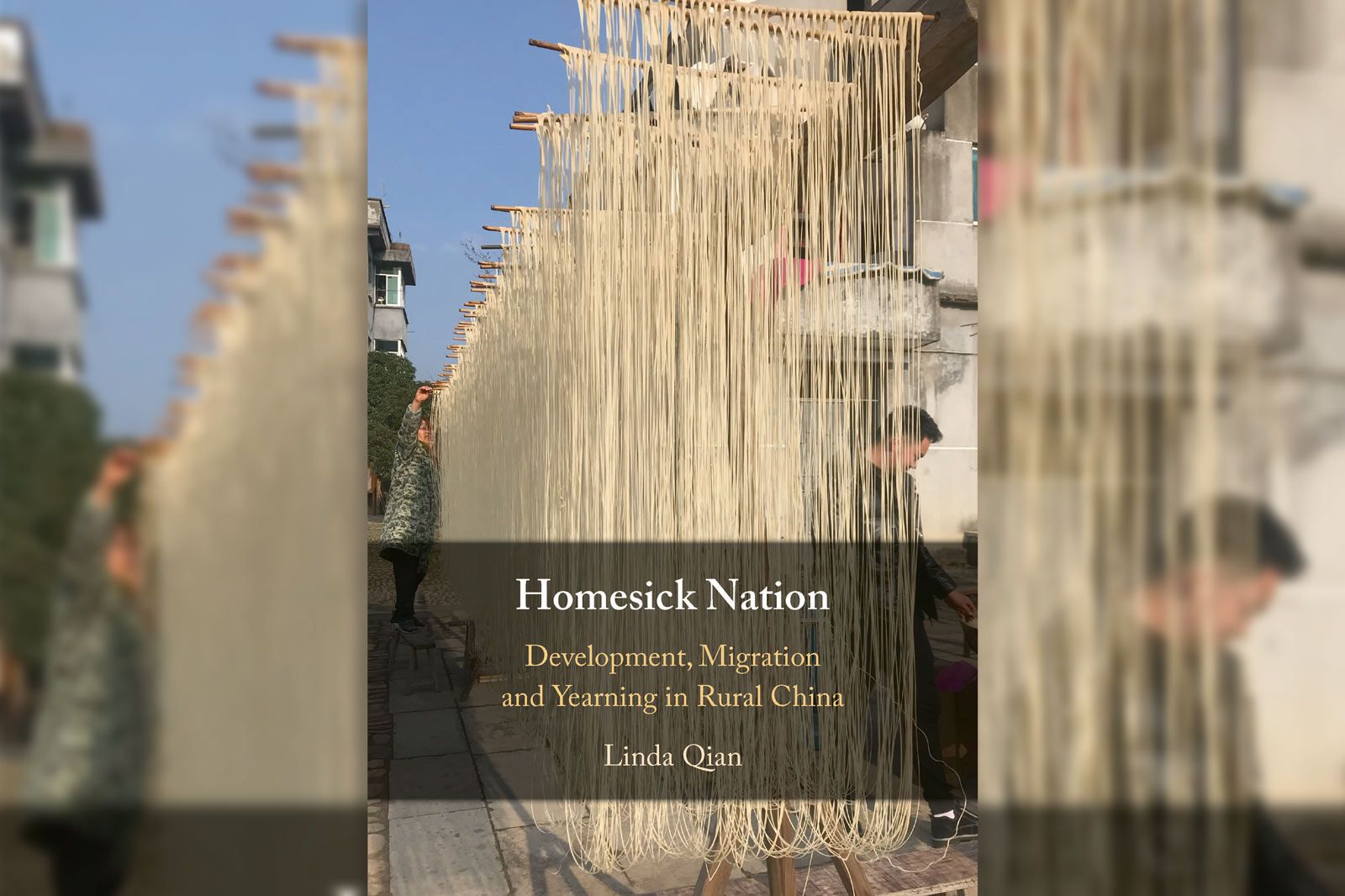
Jian Lin, Wilfred Yang Wang, and Ping Sun’s Chinese Platforms: A Critical Introduction (Polity Press, 2025) is one of the first English-language books to offer a systematic examination of Chinese digital platforms across technology, geopolitics, business, culture, gender, and labour. For decades, scholarship on Chinese platforms has been shaped by a dichotomy: either viewing them […]

The Decline of Pity Party

Lessons from Grassroots Mental Health Activism in China

A pink and green poster with a bird and a clock.

This essay examines the rise and fall of Pity Party, a series of grassroots mental health art exhibitions that sought to challenge the individualisation and medicalisation of depression while creating dialogical, community-based spaces for healing. By tracing the exhibition practices across different stages between 2017 and 2025, the article highlights the political possibilities created by […]

No-One Signed Up: Fatigue, Failure, and Fragile Optimism in Chinese Trans Advocacy

This essay examines how a liminal state of uncertainty and disorientation shapes the trajectory of a trans-advocacy organisation in contemporary China. By situating the group’s current struggles within the tension between global humanitarianism and China’s ambivalent institutional support for trans people, it argues that this situation produces a unique structure of feeling that can be called ‘fragile optimism’. Drawing on ethnographic fieldwork, the author shows how the members of this organisation cultivate fragile optimism as an affective orientation to navigate political and cultural constraints.

Episode 9 | Dancing in China’s Digital Space

For years, Anglophone coverage of the Chinese internet has emphasised the Great Firewall. The focus on censorship and surveillance collapses information production and access into a false binary between the haves and have-nots, the free and unfree. Yet, the authoritarian state cannot extinguish the Chinese people’s creativity and entrepreneurship, and the wall itself can unfold […]

Subscribe to Made in China

Made in China publications are open access and always available as a free download. To subscribe to email alerts for each issue of the Journal, newly published books, and information about upcoming events, please provide your contact information below.


Back to Top