
No-One Signed Up: Fatigue, Failure, and Fragile Optimism in Chinese Trans Advocacy
While conducting ethnographic fieldwork in a coastal Chinese city in the early 2020s, I became friends with a core member of TGDP (a pseudonym), a small group dedicated to promoting the wellness of transgender and gender-nonconforming communities. Beyond his advocacy work, this member is also a songwriter. In the lyrics to one of his songs, he writes that trans-advocacy workers sometimes feel as though their train has left the station before they have even arrived. They linger at the station, caught between the urge to rage against the transportation system and the fear that the path ahead is too difficult to walk on foot.
This essay explores the liminal state of uncertainty and disorientation that has shaped TGDP’s trajectory. The team was originally formed in 2020 as the trans branch of a predominantly gay nongovernmental organisation (NGO). In 2022–23, amid tightened political restrictions (Wang 2021), this NGO was first disbanded and then reformed as a commercial enterprise. It was at that point that I began collaborating with TGDP as a field researcher and volunteer. The shift left the group in a difficult position. While its organisational status remained formally tied to the now-commercialised gay NGO, its members struggled to maintain the collaboration; the two groups serve very different demographics and thus have different concerns. In practice, TGDP now relies on the gay organisation only when formal affiliation is required—for instance, for financial transactions. The two no longer share service work or office space. TGDP remains a small, grassroots, not-yet-commercialised team that strives to support local trans communities despite considerable obstacles.
Rather than telling a story of overt state suppression or charity burnout, this essay traces the tension between the global humanitarianism that animates TGDP’s practice and China’s ambivalent institutional support for its trans communities. On the one hand, global humanitarianism fosters forms of recognition-based care that flow from those with resources to underprivileged groups; in this respect, TGDP functions as an intermediary channelling such care from the Chinese State to trans communities. On the other hand, the Chinese State’s complicated relationship to transness limits the degree to which it facilitates this care. Queerness and transness disrupt the norms around marriage and childbearing promoted by Chinese familism and, as liberal inclusion-based queer politics is framed as an exclusively Western form of progress (see, for instance, Liu 2023; Puar 2007), ‘illiberal’ China has increasingly condemned these phenomena as ‘foreign’ and therefore incompatible with Chinese nationalism (Wang 2021). Thus, while certain medically assisted transition procedures are feasible in China (Shao 2026; Zhou 2024), the state offers only partial and unsustainable institutional support to identity-based nongovernmental groups that aim to make such care more accessible.
This tension between humanitarian forms of recognition-based care and the Chinese State’s reluctance to recognise transness as an identity produces a distinctive structure of feeling for TGDP members (Williams 1977), shaped at once by the promise of care and the limits of ambivalent state recognition. I call this structure fragile optimism, distinguishing it from Berlant’s (2011) ‘cruel optimism’ and from more radical, utopian conceptions of ‘hope’ (Bloch 1995; Eagleton 2015; Muñoz 2009). In what follows, I show that this optimism is an affective orientation TGDP members actively sustain as they continue their work under political and cultural constraints. I then turn to two incidents—a failed New Year gathering and an ambivalent encounter with the police—to show how fragile optimism simultaneously sustains and exhausts its bearers. I conclude by reflecting on TGDP’s new project: a lighthearted, presentist initiative that may allow the group to escape the desperate, future-oriented work of optimism.
Fragile Optimism
Following Raymond Williams’s (1977) conceptualisation of ‘structures of feeling’, I use ‘fragile optimism’ to describe a state of experience that cannot be reduced to a fixed class outlook or individual psychology. Rather, this structure of feeling is a relationally formed subjective experience—an embodiment of social contradiction that runs through TGDP members’ everyday lives.
Terry Eagleton (2015) once condemned optimism as a form of illusory, false hope: rather than the more sustainable, radical ‘hope’ rooted in Marxist and Christian traditions, optimism, on this account, is a self-sustaining prediction that assumes a good outcome. I suggest that the optimism onto which TGDP members hold cannot be reduced to illusion. It is, instead, an outcome of a humanitarian tradition of care and of the Chinese Party-State’s ongoing effort to define itself against liberal recognition-based politics.
The care provided by TGDP is significantly shaped by global humanitarian logic, which relies on the mobilisation of moral sentiments towards unevenly recognised victims. The humanitarian framing at TGDP is closely tied to China’s broader NGO-isation. Beginning with the economic reforms of 1978, accelerating in the 1990s, and accentuated by the 1995 UN Fourth World Conference on Women, transnational funding and recognition-based discourses reshaped the terrain of social organisation and care for the underprivileged in China (see, for instance, Hildebrandt 2011; Howell 2021; Saich 2000; Wang 2021). The gender sector was particularly impactful in raising public awareness of queer identities and advancing policy reforms addressing gender-based and sexuality-based violence, as the 1995 conference brought forth creative exchanges between global LGBTQIA+ activism and Chinese domestic networks (Li 2024; Wang 2021).
Within this humanitarian field, care is structured around particular moral expectations of who counts as a legitimate recipient of aid. Scholars have emphasised that subjects of humanitarian care must often be rendered as innocent, apolitical victims to evoke empathy from those with resources (Fassin 2011; Malkki 2015; Ticktin 2011, 2017). TGDP’s experience reflects a similar dynamic. From 2021 to 2023, the group secured a grant from a local branch of China’s Centre for Disease Control by emphasising the lack of sexual health care among transgender sex workers. In that framing, trans sex workers appeared as innocent victims—people to whom misfortunes such as diagnoses of sexually transmitted infections happen—rather than as political agents challenging prevailing social order. They were thus rendered deserving of state attention and care. This success made space for TGDP members’ optimism: if they could do things ‘the right way’, they might secure recognition and compensation for trans-specific suffering.
Yet TGDP struggles to prove its innocence to the Chinese Party-State, as its very claim to care is shaped by the fraught relationship between queer social organisations and the state. While humanitarian discourses open certain possibilities, TGDP must also navigate a political environment that resists rights-based recognition. The absence of such recognition does not foreclose political action altogether; rather, it shifts the burden of crafting tolerable forms of politics onto activists themselves. Tan Jia (2023), for instance, points to the wave of ‘new rights feminism’ in China as an attempt to forge a movement influenced by, yet divergent from, global human rights discourse and China’s state-sponsored socialist legacy. Similarly, a state ethos such as ‘serve the people’ (Karl 2019), together with limited room for social organisations, has enabled what Huang (2017) calls ‘pragmatic reformist’ LGBTQIA+ politics, in which activists foreground respectability rather than rights-claiming confrontation.
This conditional tolerance has never been stable. Since the mid-2010s, China has tightened its control over foreign influence on queer organisations—notably, through the 2017 Foreign NGO Management Law and the 2021 ban on queer social media accounts (China Digital Times 2021). While such measures clearly target queer social groups, the line between tolerable activities and punishable collective politics remains ambiguous. Within this shifting terrain of surveillance and ambivalence, TGDP occupies a paradoxical position: the particularity of its work depends on recognising transness as a distinct identity requiring targeted care, yet the current political climate requires the group to insist that its service recipients are simply ordinary citizens experiencing unnecessary suffering.
This tension becomes particularly visible in members’ reflections on the legacy of 1995. In 2025, the thirtieth anniversary of the UN women’s conference, TGDP members frequently spoke of living in the shadow of that moment when the NGO form first bloomed in China. Although none of the members personally experienced the period—most were born about 1995—they imagine it as a romanticised time when activism thrived and collective mobilisation appeared powerful enough to influence policy and reshape the state. Under current constraints, they nostalgically draw on the hope and excitement that once animated social activism while remaining cautious about uncritically replicating it. Repeating earlier models risks politicising trans issues and inviting state scrutiny, yet the state’s ambivalent stance on apolitical efforts to expand trans welfare leaves space for a measured optimism.
TGDP’s fragile optimism thus emerges from the intertwined genealogy of humanitarian logic and China’s ambivalence towards identity-based politics. To clarify what is at stake in this term, it helps to distinguish it from Lauren Berlant’s ‘cruel optimism’ (2011) and José Esteban Muñoz’s ‘utopian hope’ (2009). For Berlant, optimism names the structural attachments that promise flourishing but in fact block it. She points, for instance, to how people hold onto the aspiration for a good life under late capitalism and argues that these attachments are cruel because structural conditions render that life unattainable, even as its loss becomes unbearable. Berlant (2011: 24–25) theorises a largely collective affect—one ‘usually unconscious’, beneath intention and agency, more readily perceived by an external ‘analyst’. Cruel optimism is future-oriented and quietly consumes the present. By contrast, Muñoz (2009), drawing on Ernst Bloch (1995), theorises a utopian hope that holds onto the potential of the ‘not-yet’—a critical refusal of the here and now that always reaches towards something better in the ‘then and there’.
Fragile optimism differs from both. Unlike cruel optimism’s attachment to unattainable fantasy and utopian hope’s radical refusal of the present, the optimism I describe enables pragmatic survival and provisional organisational continuity within political constraint. It is neither fully unconscious nor radically future-oriented. It is, rather, a structure of feeling that emerges from ambiguity—from the lingering in-betweenness of the possible and the impossible—and is intentionally sustained to navigate the tension between humanitarian care and the state’s reluctance to support identity-based needs. Within this liminal space, members hold onto optimism by emphasising past successes and cultivating modest expectations of the future. Yet the feeling remains fragile because they are fully aware of its precarity; they track the state’s shifting posture towards advocacy groups and have witnessed the slow dissolution of peer organisations. Despite this awareness, they continue to commit emotional and organisational labour to keeping the group alive.
The Toll of Optimism
Fragile optimism takes its toll in moments when the gap between what TGDP members hope to do and what they can actually sustain becomes unbearably visible. Two scenes from my fieldwork make this toll legible: a failed New Year gathering and an ambivalent encounter with the police.
Towards the end of 2024, TGDP attempted to host a New Year event. The plan was ambitious. Members hoped to re-create the intimate, in-person gatherings that had run successfully over the previous two years, especially during holiday seasons. One key difference this time was that participants were asked to pay an entry fee of RMB50—roughly the cost of a modest meal—because TGDP had lost all its previous sources of funding that year and could not fund the event itself. Most of TGDP’s service recipients had grown used to free events sponsored by state or private actors and participation fell short, even though the fee was modest for a games night. Some community members complained in TGDP’s group chats, suggesting they would rather stay home than pay. Even after two weeks of individual invitations and a rebranding of the event, sign-ups remained too low to proceed.
By the time TGDP decided to cancel, burnout had already set in. Instead of the carefully framed message the group would normally prepare for such a situation, a member sent out a brief, vague cancellation notice. This was not simply a logistical lapse. It was symptomatic of the fragility of TGDP’s work as its members struggled with fatigue. For the core members, the burnout stemmed not only from exhausting cycles of promotion, but also from the awareness that the entrance fee would exclude precisely the lower-income trans folk they most hoped to reach. Deprived of systematic state support, TGDP members were forced to grapple with the painful limits of their advocacy.
This episode also speaks to a deeper stagnation. Most members feel the group has been operating on inertia, with no energy to innovate. This state of being is close to what Hil Malatino (2022: 67) calls trans numbness: ‘the practice of becoming insensate, of slowly turning the volume down on the world, thus minimising its disruptive capacity’. Working in a constant state of burnout, TGDP members, as both trans subjects and advocacy workers, experience anxiety, worry, and cycles of negative self-talk alongside a quieter erosion of care, empathy, desire, and hope (Malatino 2022: 68). This numbness, coupled with the desperate hold on fragile optimism, has brought TGDP to an inflection point. As members search for a formula for their advocacy work that allows for psychological and financial stability, they debate whether to reorganise as a commercial enterprise or simply disband. Registering as a commercial enterprise might allow them to hold events and manage funds with less scrutiny from authorities, but it demands considerable legal and administrative labour—burdens that fall heavily on members who are themselves struggling to make a living. In this state of flux, the future remains uncertain. TGDP’s organisational life will continue in some form, but the shape it takes is still unclear.
Despite this numbness, TGDP continued to plan and host its monthly online and in-person events. In June 2025, however, one of its key members was summoned to their local police station. While police intervention is not a surprise for those working in gender advocacy, the frustration and stress of facing the police directly cannot be rendered ordinary. The officers came to his door while he was busy at home and he did not hear them knock. They then contacted his parents and landlord to reach him. By the time he checked his phone, he had multiple missed calls from all three. He eventually called back and scheduled a meeting at the station.
The timing, during Pride Month, coincided with TGDP’s WeChat public account reposting a research recruitment announcement from a Hong Kong institution that had drawn the officers’ attention. During the meeting, they made clear that any research produced outside mainland China is considered a potential threat from ‘foreign forces’ and should not be circulated on public media channels. Nevertheless, as the member strategically framed trans people as ordinary citizens facing unique barriers to accessing state welfare, the officers expressed a degree of sympathy. They nonetheless insisted that gatherings of more than 10 people would not be permitted and, although they did not impose an outright ban on TGDP’s activities, they told him not to promote events on public platforms.
Even without an explicit order to stop operating, and despite the officers’ touch of sympathy and hints at possible cooperation, the incident significantly destabilised TGDP, producing not quite fear but a deep uncertainty about the boundaries of what could be done. While scholars have argued that the ambivalence of state authority reinforces self-censorship and detachment from sensitive issues (Stern and Hassid 2012; Wang 2010), I want to emphasise the affective complexities of facing such censorship up close. The officers’ unfamiliarity with the issues and their willingness to listen suggested that some room might exist for dialogue with local authorities. State power, as others have shown, is not monolithic but enacted by local actors with sometimes contradictory motivations (Friedman 2015; Martin 2019; Steinmüller 2013). Yet the episode also served as a stark reminder: should they choose to censor TGDP, they have the power to do so absolutely.
After this visit, TGDP’s motivation to organise regular events waned. In August, an attempt to restart activities was disrupted by another, possibly unrelated, police encounter, rumoured to have been triggered by a complaint from a community member upset at being removed from a TGDP group chat. Whether connected or not, the second incident reinforced the sense of instability, leaving TGDP uncertain of when or how to resume public programming. This uncertainty, I suggest, undergirds a structure of feeling that paradoxically sustains small groups such as TGDP, whose work depends on individual willingness to help, even as it drains members through fatigue, despair, and the very fragile optimism they cannot afford to release.
Tastes of Joy
Towards the end of 2025, TGDP began a new project: a trans-friendly food guide, for which members visit and review restaurants and post the reviews on TGDP’s public account. Unlike other food guides that circulate as a genre of lifestyle media, this one incorporates trans-friendly observations, noting, for instance, the availability of all-gender restrooms or the privacy and inclusiveness of seating arrangements. The guide also deliberately recorded awkward gender-related moments, such as being misgendered by restaurant staff, alongside members’ own coping strategies, as a resource for other trans folk.
For example, TGDP members, including me, visited a relatively upscale restaurant popular for celebratory family meals, drawn by its atmosphere, menu variety, and higher price point. For one of its signature dishes, crisp-skinned squab, the waitstaff distributed disposable gloves—packaged, we noticed, as ‘gloves for men’ and ‘gloves for women’. The gloves themselves were identical, only the packaging differed. The waiter assigned gloves based on his own gendered reading of each of us, pausing and staring at us for several seconds before he reached our table. His visible confusion and later small chats with his colleagues made some of us uncomfortable.
In the food guide entry that followed, TGDP members chose to not frame this as a traumatising incident. Instead, they critiqued the packaging itself, asking, in a joking tone, why disposable gloves must be sorted by gender at all. This review was not written in a wounded tone demanding social recognition; rather, it was written by trans folk for other trans folk—light in its form and tone. In this way, one member noted, it allowed trans individuals to become agentive subjects who could evaluate, criticise, and even enjoy something as ordinary as a restaurant, reversing their everyday experience of being judged, objectified, and profiled. It also conveyed a sense of shared, extended present: visiting a recommended restaurant became a way to participate in TGDP’s collective experience. Many community members have since posted about their own visits to these restaurants in TGDP’s group chats, reinforcing a sense of being together even at a distance.
TGDP members embraced this project for its low organisational burden and its modest entrepreneurial potential. I want to suggest, however, that the food guide did something more substantial: it shifted the temporal frame of TGDP’s work. Unlike the events discussed earlier, the guide arrived with no expectations attached, which made failure almost impossible. The project was not innocent of broader entanglements. It might sit comfortably enough with China’s state-capitalist privatisation agenda (Zhang and Ong 2008; Rofel 2007), and it resonated with the entrepreneurial activism Tan Jia (2023) describes. Yet these very entanglements loosened the humanitarian demand for future-oriented justification grounded in the alleviation of suffering. The guide’s members did not need to perform present suffering to secure future recognition, nor did they need to cultivate positive feelings to keep TGDP intact. They could shift their attention, instead, to a carefree and joyful present.
I am not invoking joy here as a corrective to rage, burnout, or other ‘negative’ feelings, nor to make transness more intelligible to the public or to mitigate stigma. Such uses of joy risk reproducing what Tenorio (2025) calls the ‘trans joy fetish’, whereby joy is selectively highlighted to render trans subjects more tolerable in normative worlds. The food guide’s joy was, in any case, ephemeral: it could not resolve the structural tensions between humanitarian and Chinese state logics, nor could it secure the resources TGDP desperately needs.
Yet it is precisely this ephemeral joy that insists trans subjects are not obligated to endure suffering merely to survive, but deserve ordinary moments to eat, to play, and to live. In a political moment when optimism remains fragile, perhaps a more sustainable feeling is not the belief in a better future but the fleeting tastes of joy in moments that allow one to live in the present
Lingering
Echoing the lyric referenced at the outset, TGDP members perpetually found themselves arriving at the station after the train had left: the 1995 moment that they romanticised but did not live through, the state funding that dried up, the NGO that disbanded around them, the New Year event that collapsed before it started. Fragile optimism—the forward-oriented structure of feeling—was what kept them waiting at the station. Unlike Berlant’s cruel optimism—an unconscious attachment to an unattainable destination—or Muñoz’s utopian hope, which rejects the station altogether in favour of a different path, the fragile optimism of TGDP members is a conscious effort to stay put, to linger at the station and wait, holding onto even the smallest hope that another train might arrive for them.
The food guide, on the other hand, opened a space for which the lyric did not quite allow. Rather than raging against the transportation system or walking on foot, this initiative suggested that the station itself might be worth inhabiting, even if only briefly. TGDP members were not just waiting for the next train; instead, they were touring around, reviewing restaurants, sharing their experiences with others who might also be waiting. This ephemeral joy was not an answer or solution to the toll of fragile optimism but an alternative, a way of living in the present without demanding this present to be justified through future recognition. The train might still leave before they arrive; but, for now, TGDP members were there.
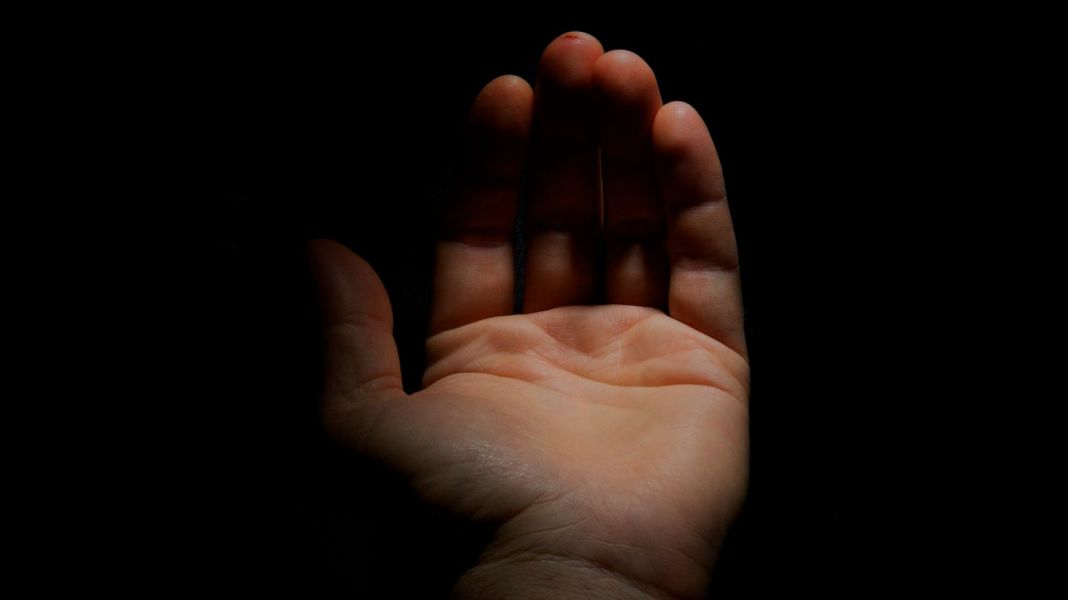
Figure 1: Nasty Papercut; Source: Jonathan Pincas (CC BY 2.0), Flickr.com
References
Berlant, Lauren. 2011. Cruel Optimism. Durham, NC: Duke University Press.
Bloch, Ernst. 1995 [1954)]. The Principle of Hope, Vol 1. Translated by Neville Plaice, Stephen Plaice, and Paul Knight. Cambridge, MA: MIT Press.
China Digital Times. 2021. ‘未命名公众号, 未命名群体, 未命名的爱—中国高校性少数社团公众号遭批量永封 [Unnamed Public Accounts, Unnamed Communities, Unnamed Love: Sexual Minority Organisations in Chinese Universities Are Permanently Banned].’ China Digital Times, 7 July. chinadigitaltimes.net/chinese/667938.html.
Eagleton, Terry. 2015. Hope without Optimism. New Haven, CT: Yale University Press.
Fassin, Didier. 2011. Humanitarian Reason: A Moral History of the Present. Berkeley, CA: University of California Press.
Friedman, Sara. 2015. Exceptional States: Chinese Immigrants and Taiwanese Sovereignty. Oakland, CA: University of California Press.
Hildebrandt, Timothy. 2011. ‘The Political Economy of Social Organization Registration in China.’ The China Quarterly 208: 970–89.
Howell, Jude. 2021. ‘From Green Shoots to Crushed Petals: Labour NGOs in China.’ Made in China Journal 6(1): 102–7.
Huang, Ana. 2017. ‘Precariousness and the Queer Politics of Imagination in China.’ Culture, Theory and Critique 58(2): 226–42.
Karl, Rebecca. 2019. ‘为人民服务 Serve the People.’ In Afterlives of Chinese Communism: Political Concepts from Mao to Xi, edited by Christian Sorace, Ivan Franceschini, and Nicholas Loubere, 247–50. Canberra & London: ANU Press & Verso Books.
Li, Jun. 2024. ‘News Media and the Feminist Movement in China: A Brief History.’ Made in China Journal 6(2): 130–37.
Liu, Petrus. 2023. The Specter of Materialism: Queer Theory and Marxism in the Age of the Beijing Consensus. Durham, NC: Duke University Press.
Malatino, Hil. 2022. Side Affects: On Being Trans and Feeling Bad. Minneapolis, MN: University of Minnesota Press.
Malkki, Liisa. 2015. The Need to Help: The Domestic Arts of International Humanitarianism. Durham, NC: Duke University Press.
Martin, Jeffrey. 2019. Sentiment, Reason, and Law. Ithaca, NY: Cornell University Press.
Muñoz, José Esteban. 2009. Cruising Utopia: The Then and There of Queer Futurity. New York, NY: New York University Press.
Puar, Jasbir. 2007. Terrorist Assemblages: Homonationalism in Queer Times. Durham, NC: Duke University Press.
Rofel, Lisa. 2007. Desiring China: Experiments in Neoliberalism, Sexuality, and Public Culture. Durham, NC: Duke University Press.
Saich, Tony. 2000. ‘Negotiating the State: The Development of Social Organisations in China.’ The China Quarterly 161: 124–41.
Shao, Jianmin. 2026. ‘The Geobiopolitics of Trans Medicine: Kinship, Recalibrated Care, and Difference-Making Amid China–US Tensions.’ American Ethnologist 53: 22–33.
Steinmüller, Hans. 2013. Communities of Complicity: Everyday Ethics in China. New York, NY: Berghahn.
Stern, Rachel, and Jonathan Hassid. 2012. ‘Amplifying Silence: Uncertainty and Control Parables in Contemporary China.’ Comparative Political Studies 45(10): 1230–54.
Tan, Jia. 2023. Digital Masquerade: Feminist Rights and Queer Media in China. New York, NY: NYU Press.
Tenorio, Sam C. 2025. ‘Modulating Rage; Or, the Trans Joy Fetish.’ Feminist Theory 27(1): 67–84.
Ticktin, Miriam. 2011. Casualties of Care: Immigration and the Politics of Humanitarianism in France. Oakland, CA: University of California Press.
Ticktin, Miriam. 2017. ‘A World without Innocence.’ American Ethnologist 44(4): 577–90.
Wang, Stephanie Yangyi. 2021. ‘Unfinished Revolution: An Overview of Three Decades of LGBT Activism in China.’ Made in China Journal 6(1): 90–95.
Wang, Zheng. 2010. ‘Feminist Network.’ In Reclaiming Chinese Society: The New Social Activism, edited by You-tien Hsing and Ching Kwan Lee, 101–18. London: Routledge.
Williams, Raymond. 1977. ‘Structures of Feeling.’ In Marxism and Literature, 128–35. Oxford, UK: Oxford University Press.
Zhang, Li, and Aihwa Ong, eds. 2008. Privatizing China: Socialism from Afar. Ithaca, NY: Cornell University Press.
Zhou, Xiaogao. 2024. ‘Care in Transition: Global Norms, Transnational Adaptation, and Family-Centered Gender-Affirming Care in China.’ Social Science & Medicine 344: 116658.