
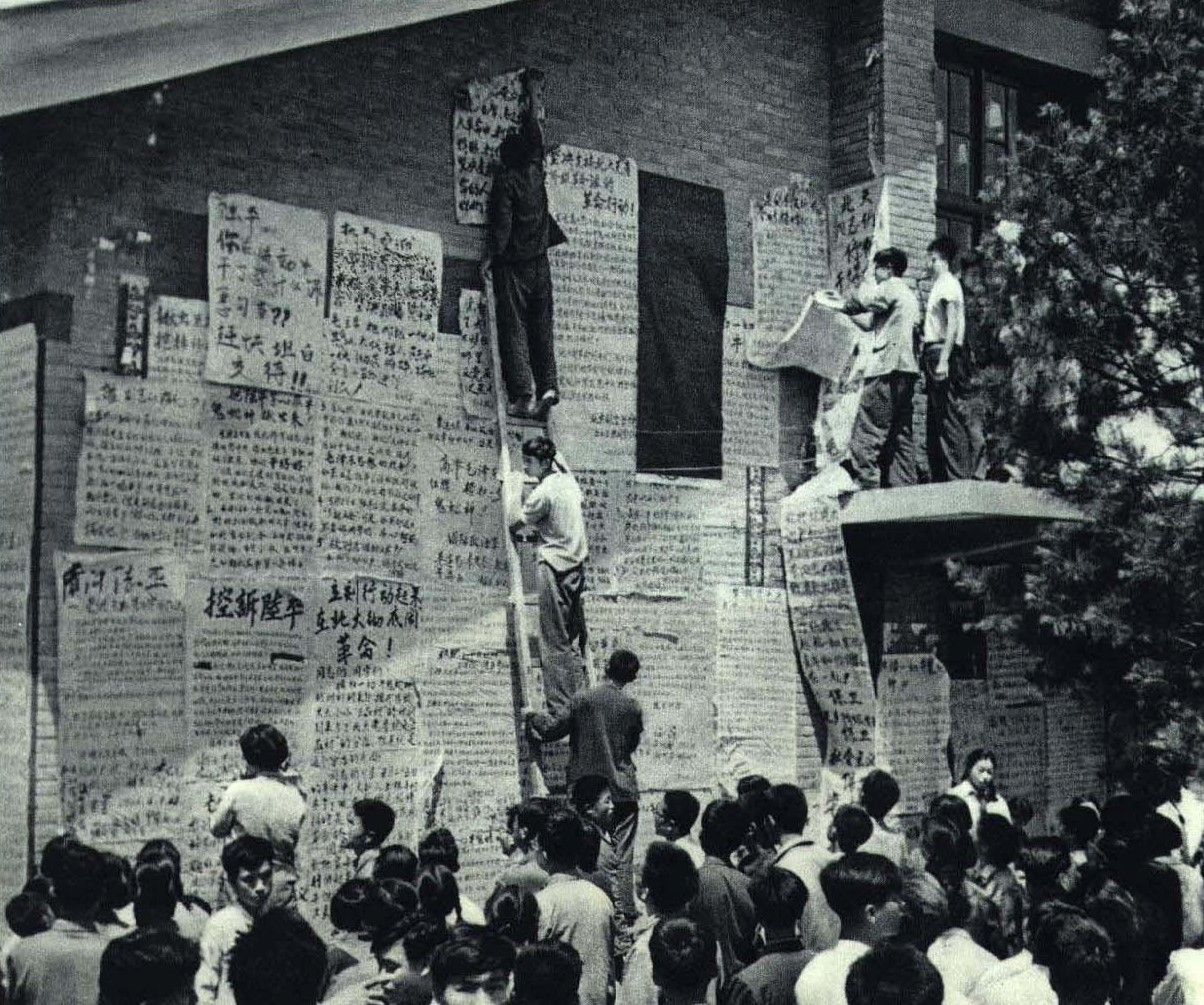
Reporting the Future to Mao: Time-Travel Web Novels and the Digital Afterlives of Maoism

Memories of the Mao era are usually sought in state commemoration or personal recollection. This essay turns instead to Chinese web fiction, examining a genre of time-travel novels in which a protagonist from the 2020s returns to 1950 and reports China’s future to Mao Zedong. These stories are strikingly selective: they denounce the reform era’s ‘capitalist restoration’ yet fall silent on the disasters of the Mao years, and they answer restoration not with class struggle but with technology and productive forces. The essay argues that what they revive is a depleted Maoism—futurity and personal success cut loose from their political foundations.
The Chinese Boy with Golden Hair and Jade-Green Eyes

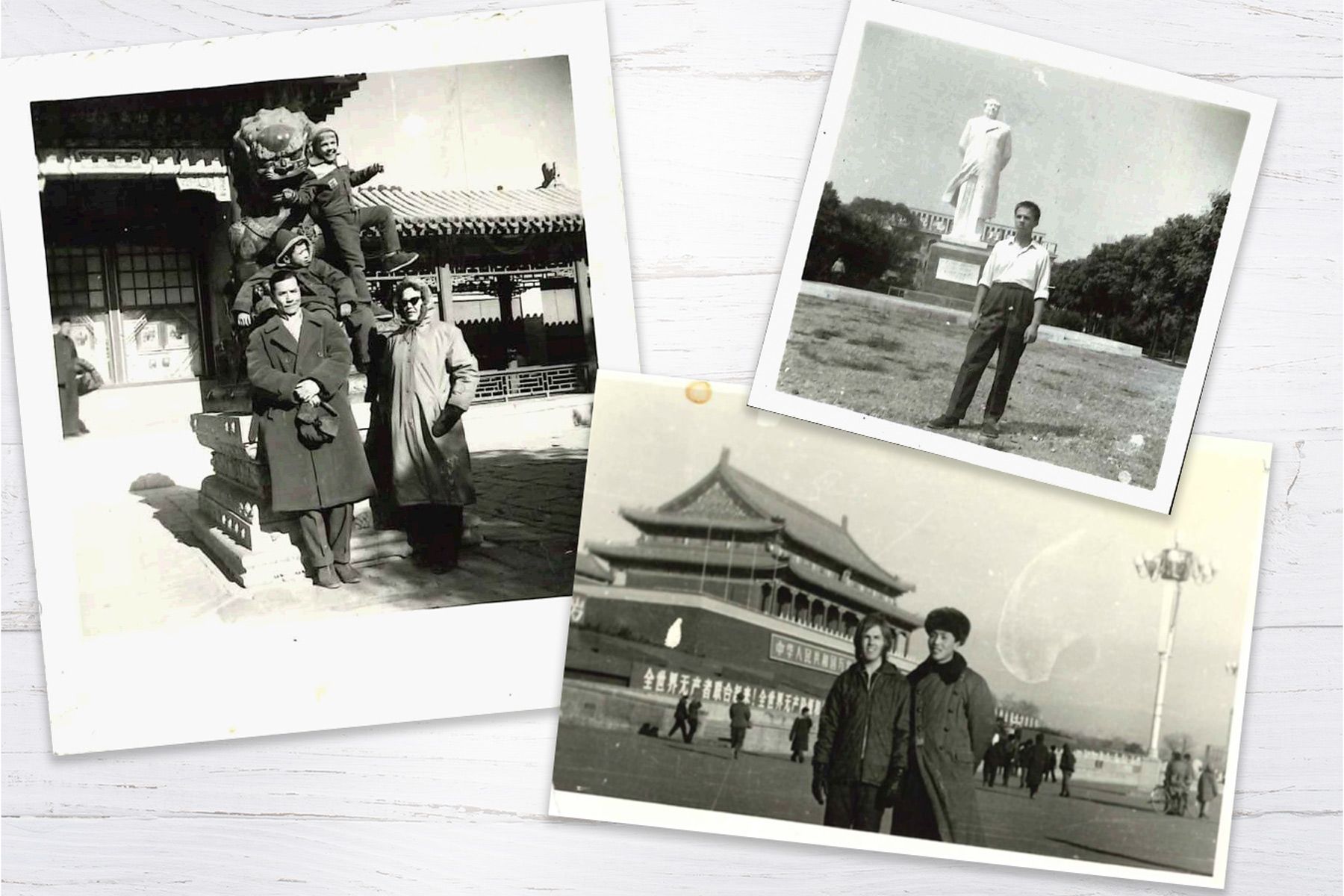
My Father in Beijing’s Revolutionary Past

Growing up in Beijing under Maoist rule, my father always stood out because of his golden hair and jade-green eyes, or what locals would call 金发碧眼. One afternoon, sitting in his living room in Helsinki, he told me how he learned to circumvent the public curiosity his appearance attracted by wearing a flat cap. With […]

On Bureaucratic Ownership: From Anti-Bureaucratism to Anti-Official Profiteering

Scholars have long debated whether the transition from the Mao Zedong era to Deng Xiaoping’s Reform and Opening Up was a moment of rupture or continuity. One influential view holds that the 1980s saw a rise of Western-influenced liberalism (Calhoun 1994) and Deng’s program marked a ‘fundamental departure’ from Maoism (Vogel 2011). This rupture thesis […]

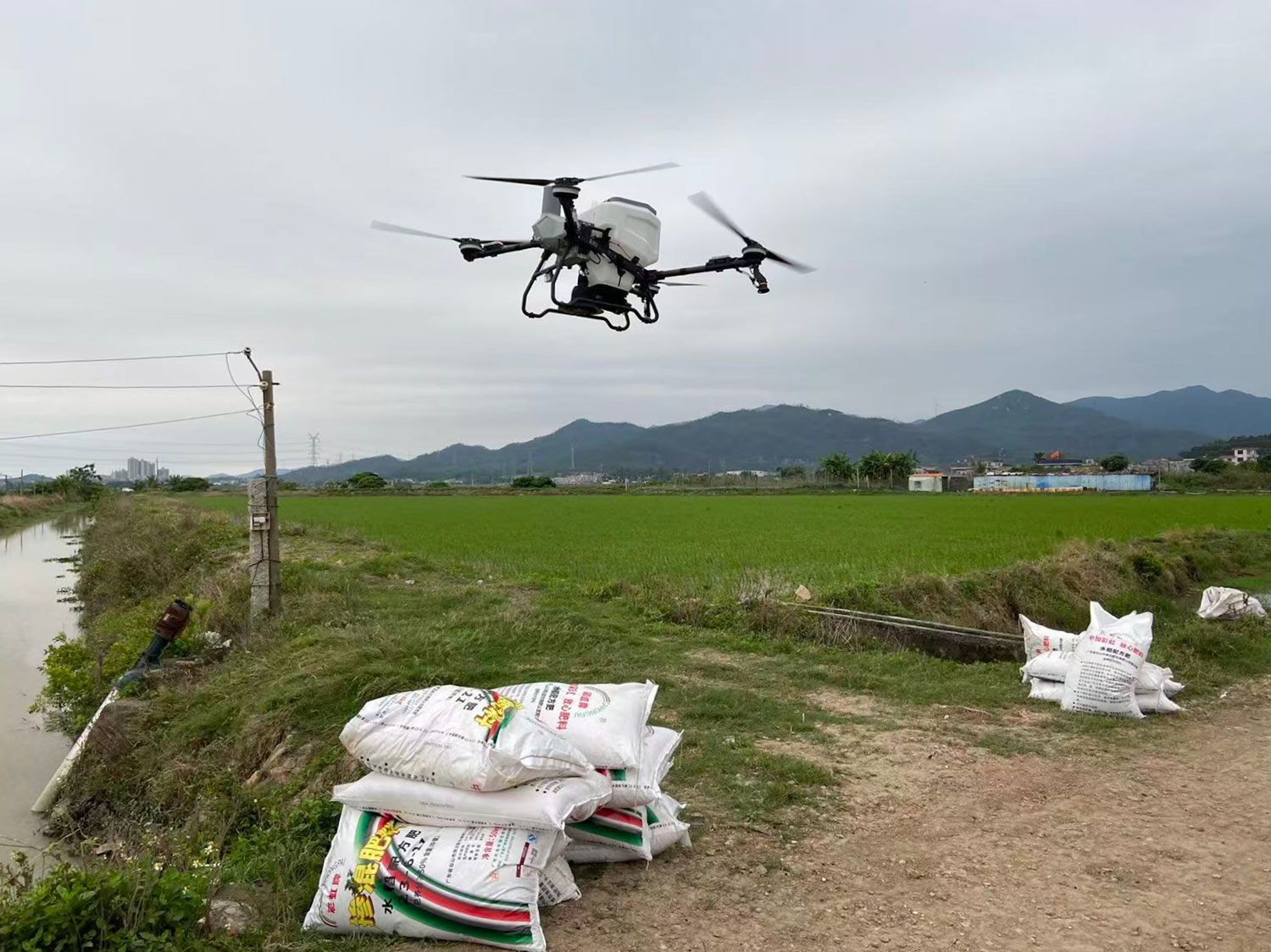
China’s Approach to AI: Infrastructural Statecraft, Managed Pluralism

China’s artificial intelligence (AI) trajectory is often characterised as ‘frugal innovation’ (Waters 2025), ‘self-reliance’ (Wang et al. 2025), or a state-controlled approach to innovation and diffusion (Roberts et al. 2021). Many observers have focused on China’s AI policy and regulatory approach, portraying it as ‘vertical’ (as opposed to the ‘horizontal approach’ of the European Union’s […]

‘Keep Politics in Games’: Reactionary Circuits between the Anglo-European Sphere and China

Black Myth: Wukong (黑神话: 悟空; hereinafter BMW), an action role-playing game developed by the Chinese studio Game Science (游戏科学), became both a commercial and a cultural phenomenon after its release on 20 August 2024. BMW belongs to the ‘Souls-like’ genre, named after the Dark Souls series, whose punishing difficulty is by design: it appeals to […]

From Political Depression to Creative Praxis

Modes of Diasporic Queer World-Making

Diaspora is conventionally understood as the dispersion of a people from a shared homeland—a formulation that could reproduce binary imaginaries of centre and periphery, origin and afterlife, homeland and shadow. Such frameworks also tend to tether diasporic belonging to lineage and return, treating political life as something transmitted through continuity. As David Eng (2010: 13) […]

Download PDF

Aspiration, Imagination, and Praxis

Artists Reconstructing the Leftist Political Imaginary

Drawing on the experience of a Chinese artist under the pseudonym ‘A’, this essay examines how leftist artists strive to reconstruct their political imaginary in this uncertain time. Central to A’s recent work is a dual impulse: first, the practice of international solidarity; second, a critical effort to decolonise the dominant political imaginaries within contemporary art. The essay argues that the legacies of grassroots Third World internationalism provide crucial intellectual resources through which A and other ‘artivists’ reproduce a leftist political imaginary in their artistic practice and social activities.

Download PDF

No-One Signed Up: Fatigue, Failure, and Fragile Optimism in Chinese Trans Advocacy

This essay examines how a liminal state of uncertainty and disorientation shapes the trajectory of a trans-advocacy organisation in contemporary China. By situating the group’s current struggles within the tension between global humanitarianism and China’s ambivalent institutional support for trans people, it argues that this situation produces a unique structure of feeling that can be called ‘fragile optimism’. Drawing on ethnographic fieldwork, the author shows how the members of this organisation cultivate fragile optimism as an affective orientation to navigate political and cultural constraints.

Download PDF

Affective Encoding: Coping with Political Depression through Urban Wall Writing in Post-2020 Hong Kong

In 2023, the Special Interest Group on Computer Graphics and Interactive Techniques (SIGGRAPH) conference and exhibition, held in Sydney, featured an interactive installation by Miu Ling Lam titled Erased Murmurs. The art piece drew attention to the ever-vanishing graffiti in the artist’s hometown, Hong Kong. In Lam’s description, Erased Murmurs centred on affective, sentimental poems […]

Download PDF

Subscribe to Made in China

Made in China publications are open access and always available as a free download. To subscribe to email alerts for each issue of the Journal, newly published books, and information about upcoming events, please provide your contact information below.


Back to Top