
Aspiration, Imagination, and Praxis
Artists Reconstructing the Leftist Political Imaginary
What does it mean for art to function simultaneously as aesthetic expression and social intervention? This is the question that lies at the heart of this essay, which examines art activities conducted by critically minded individuals who seek to push the boundary between art and activism. Drawing on the experience of a Chinese artist under the pseudonym ‘A’, I examine how art activities generate new forms of political imagination through which leftist artists seek to reconstruct their political vision in this uncertain time.
Looking at A’s previous artistic practice in China, I first examine the social and political circumstances confronting critically minded artists as they seek to transform social critique into cultural praxis. Tracing A’s later migration to Europe, I turn to his recent art projects, particularly his experimental attempts to practise internationalist solidarity through a range of art activities. Drawing on ethnographic fieldwork and interviews conducted with A since 2021, in this essay, I foreground the legacies of grassroots Third World internationalism within A’s recent artistic practice and investigate how his story reveals one possible path by which leftist artists strive to reclaim their political imaginary in the face of obstacles during this period of uncertainty.
Living as an Artivist in China
I first encountered A during my fieldwork on Chinese contemporary art conducted between 2020 and 2021. A is one of many artists I met in China who self-identify as tizhiwai (体制外, ‘standing outside the official cultural system’) and duli (独立, ‘independent’), distancing their art activities from both official cultural production and the commercial art market. In an early interview conducted in 2021, he used the term ‘artivist’ to characterise his artistic practice—a combination of ‘artist’ and ‘activist’ that foregrounds the intersection between social intervention and aesthetic expression. For some artists who work in China, this kind of artistic practice has also become a practical strategy to help them navigate the structural constraints imposed on their activities. As A said in one interview: ‘I often needed to situate my concerns within the protective shell of art.’
Reflecting on his observations of artivists’ activities in China, A identified two main strategies through which they try to push the boundary between art and activism. The first approach operates through direct intervention, exemplified most clearly by the artist Nut Brother (坚果兄弟). For example, in 2015, Nut Brother staged a performance work in Beijing entitled Dust Plan (尘埃计划), responding to the widespread PM2.5 (particulate matter) air pollution in the city at the time. In this performance, the artist walked through the streets of Beijing while carrying a vacuum cleaner, turning his body into a site of embodied intervention that directly targeted an environmental issue (Johnson and Fürst 2022: 82–83).
By contrast, A describes his own artistic practice as more indirect, as he seeks to embed social action within artistic forms. For example, A once participated in a collaborative creation with a migrant worker of an art book that intended to show the worker’s ‘real circumstances’. In this work, art functions not as a direct instrument for immediate social change; rather, A and his artivist friends try to create a critical space, such as the art book, in which audiences can cultivate their political awareness of labour and class issues in China. This form of ‘indirect intervention’, mediated through artistic expression, exemplifies what A describes as a ‘protective shell’—a possible mode of creation that enables artivists to translate social critique into art activities under structural constraints, such as increasingly stringent cultural censorship.
What further contextualises the predicament confronting artivists in present-day China is the political and social vulnerability faced by critically minded individuals. The Sinologist Sebastian Veg (2019) has used the term ‘minjian intellectuals’ (民间知识分子) to describe the emergence of grassroots intellectuals (草根知识分子) in post-Mao China, such as rights lawyers, journalists, and independent filmmakers. These minjian intellectuals, as Veg’s study tells, have been marginalised from the official cultural system and mainstream intellectual circles, but they remain actively engaged with social causes in Chinese society amid political and economic challenges. Both ‘artivist’ (as used by A) and ‘minjian intellectuals’ (as theorised by Veg) speak to the persistent efforts of critically minded individuals to sustain critical interventions towards China’s social realities.
In 2023, after receiving an art fellowship in Europe, A decided to continue his artistic journey on another continent. A’s departure from China opens new questions about how critically minded artists cultivate their political imaginary across different sociopolitical contexts, and what intellectual and aesthetic resources they mobilise in so doing.
Internationalism and the Remaking of the Leftist Political Imaginary
Over the past three years, A’s artistic practice has undergone a significant shift in both geographic and political scale: moving from critical inquiry into social realities in China towards an exploration of internationalist solidarity as a new framework for his work. This shift first materialised in a long-term performance art project that began in 2023—several months before he moved to Europe. As part of his political and affective response to Israel’s genocide in Gaza, A has been developing a participatory performance art project that aims to visualise solidarity with displaced Palestinians. Through public art workshops, A invited participants to create stories, write scripts, and conduct performances articulating their responses to violence, oppression, and imperialism. As he explained to me, ‘This is my own way of establishing a connection with the suffering in a distant place [这是我建立起与远方苦难联系的方式].’ This international solidarity has become a central thread that A has woven throughout his art activities over the past three years.
This concern finds more explicit expression in an art project developed after A moved to Europe, organised around a series of public workshops and the production of a self-published zine. During the workshops, A invited participants to revisit the histories of social movements across the Third World and to trace their political echoes across borders. By engaging with the political and historical specificities that contextualise these events, the workshops provided an anti-imperial attempt to, as A described it, ‘re-weave the map of the world [重新编织世界地图]’ through art activities and visualise the Third World internationalism that has been marginalised or oversimplified within the nation-state framework.
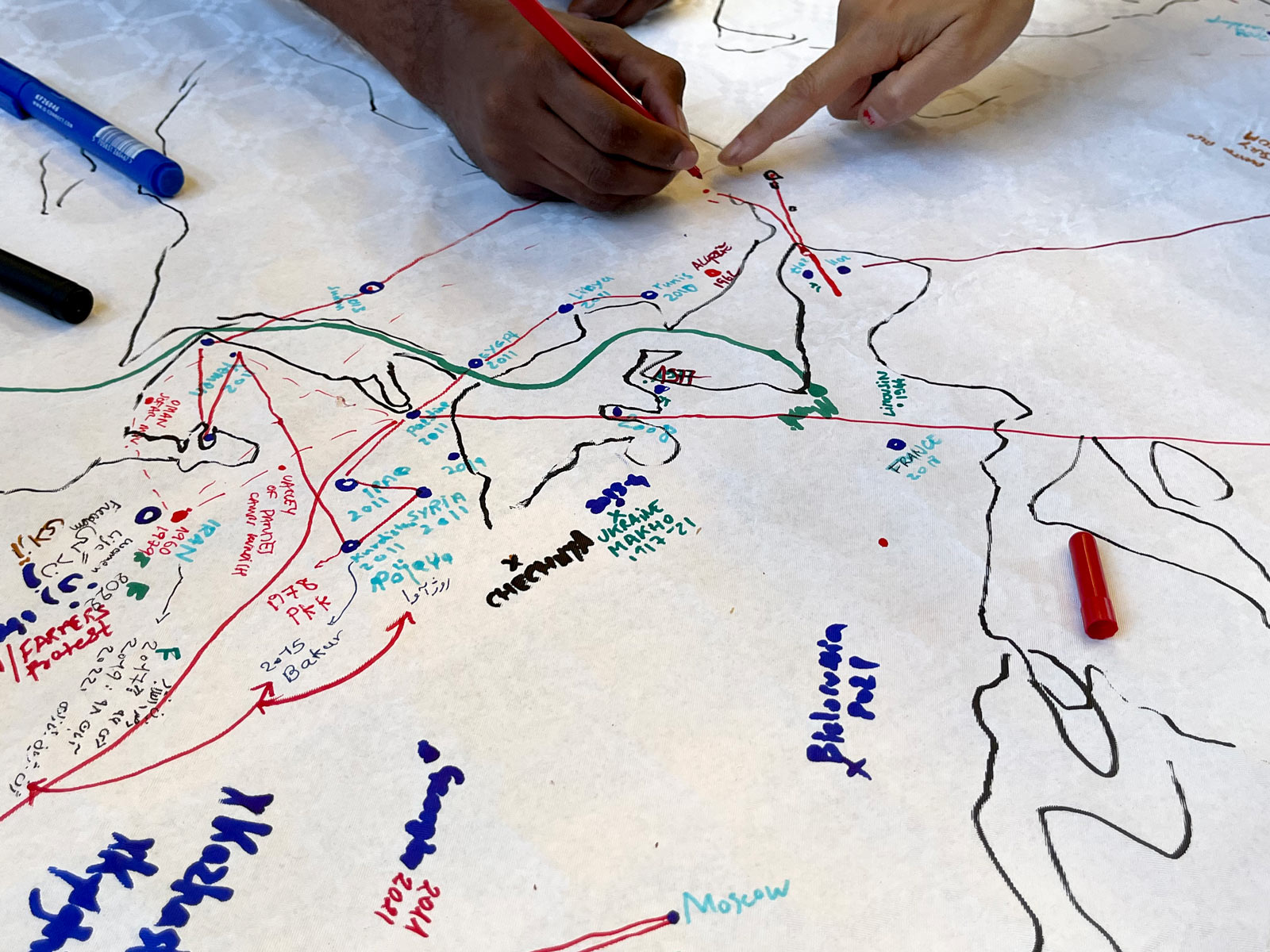
Reflecting on his motivation for organising these mapping workshops, A further explained how his practice of internationalism refracts his understanding of art’s role in public and political life:
Mapping the world through the lens of internationalism is closely related to my understanding of art. Art provides a kind of imagination; art doesn’t give us clear answers, but it can offer a certain kind of vision. This vision, for example, through re-narrating histories, opens up new ways to see the connection between the past and the present, and, further, to imagine other possibilities for the world.
This effort was extended in a self-published zine made in 2024, which brought together anarchist histories from East and Southeast Asian societies. Interlacing historical facts with semi-fictional narratives co-created by workshop participants and woodcut printmaking (a creative medium used widely in Third World liberation movements), this zine offers a visual exploration of the cross-border political influences of anarchism across the region.
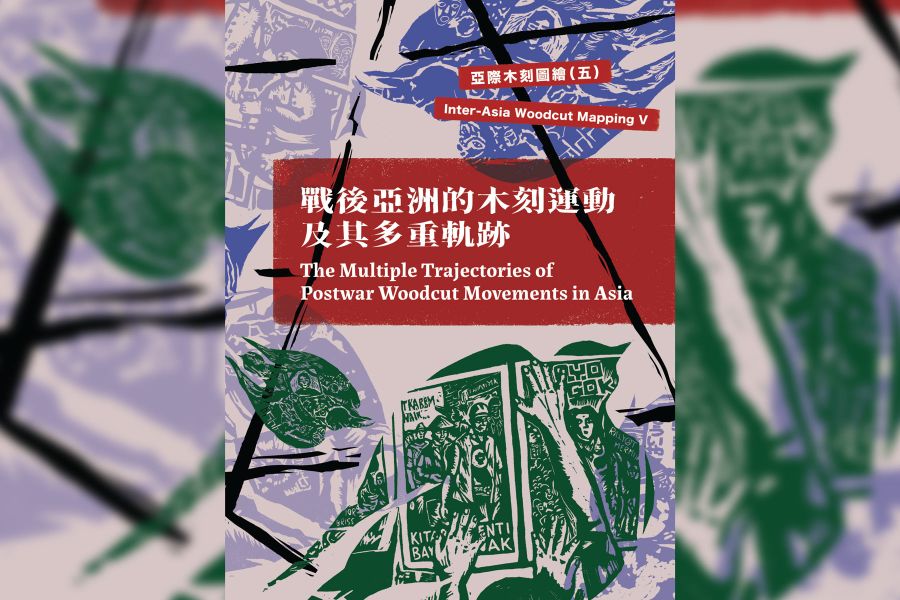
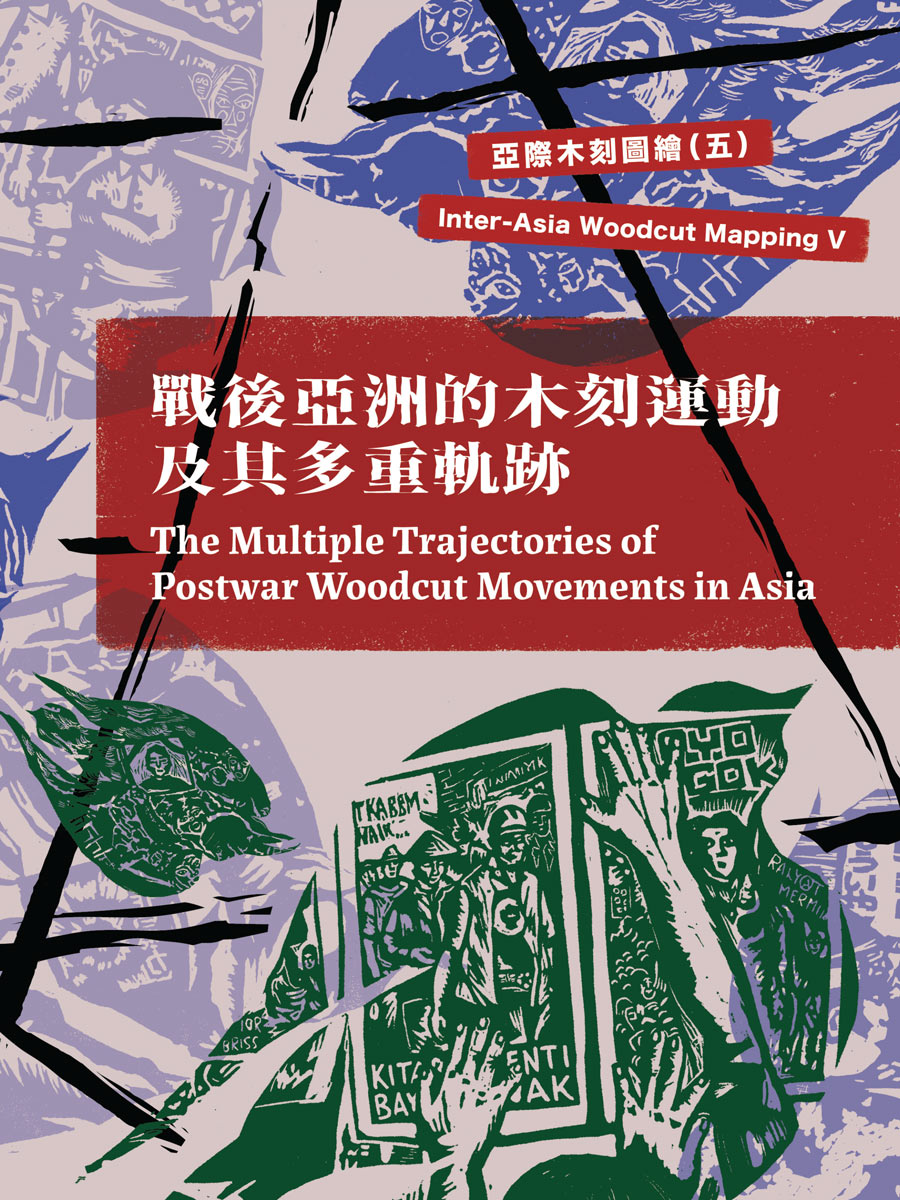
Taken together, these art activities raise a broader question about the global structure of contemporary art. In a field in which internationally renowned art museums and large-scale exhibitions in Europe (such as biennials) have become key venues for constructing artistic discourses, how might art practitioners in non-Western societies enact decolonisation? This question resonates with the central problem posed by the anthropologist Sasha Su-Ling Welland (2018), whose ethnographic fieldwork on Chinese contemporary art in Beijing illustrates the difficulties Chinese artists face when their lived experiences in a (post)socialist society cannot be fully articulated through the universal discourses constructed by their Western counterparts. This concern has also been taken up by some art practitioners who seek to decolonise contemporary art grounded in the experiences of Asian societies. One example is the self-published zine Inter-Asia Woodcut Mapping V: The Multiple Trajectories of Postwar Woodcut Movements in Asia (2024), which revisits the cross-border woodcut art movements through the critical lens of the postwar condition in Asia.
Sharing a similar concern, A’s recent art activities can be understood as an effort to decolonise political imaginaries in contemporary art. Since moving to Europe in 2023, A, rather than seeking legitimacy within the Western art world, has drawn on the legacies of Third World internationalism as an intellectual resource for his activities, thereby shedding light on political horizons that have remained peripheral to dominant Western artistic and political discourses.
A’s engagement with Third World internationalism, moreover, unfolds within a more complex intellectual landscape than state-centred narratives of internationalism would suggest. In Li Yawen’s (2024) discussion of the traditions of internationalism in present-day China, she identifies two discourses of internationalism—one operating within the narrow framework of the nation-state, and another emerging through the grassroots praxis of critically minded individuals. Li’s focus on grassroots internationalism resonates with the ‘subaltern approach’ to internationalism proposed by David Featherstone (2012), who draws attention to the formation of internationalism from below rather than internationalism led by political elites, organisations, or nation-states. Following Li’s analysis of the aspirational feature of grassroots internationalism in Chinese society, A’s artistic practice demonstrates how the political legacies of grassroots internationalism offer potential intellectual resources through which leftist artists can reconstruct their political imaginary, which has been increasingly constrained in recent years.
From Imagination to Praxis
While the previous sections traced how A sought to rebuild a leftist political imaginary through internationalist frameworks, this section explores how such an imaginary has been translated into everyday praxis. A described these artistic practices and social activities under the banner of ‘DIY’ (do-it-yourself)—the lived form that his art-based internationalist solidarity takes at the grassroots level. This dimension of A’s art practice shows how reclaiming political imagination requires new social relations and material conditions that allow those ideas to be sustained.
For independent artists such as A, who distance their art creation from state-led cultural production and the commercial art market, the spirit of DIY arises first and foremost from the desire to challenge the conditions that shape and limit the production and circulation of critical cultural activities. In China’s social context, these concerns are linked to broader transformations of cultural production. As I have argued elsewhere, the commercialisation, marketisation, and individualisation of cultural activities during the post-Mao reform era have given rise to a state-led, market-oriented, and elite-centred framework of cultural production that shapes the political, economic, and social conditions of artistic practice in contemporary China (Li, J 2024). In this sense, the pursuit of artistic autonomy, for many Chinese artists, often reinforces efforts to create alternative artistic ecosystems—ones that enable artists to work with limited social resources and circulate artworks beyond the art market and formal art institutions.
To cope with the constraints that commonly confront independent artists, establishing mutual support networks (or interpersonal solidarity) has become a practical strategy for A and his artist friends. Such efforts have manifested in various ways—for example, offering free accommodation to help others reduce travel costs, sharing their ideas and working methods through public workshops and freely accessible written materials, and building alternative distribution models in collective art activities.
These efforts are closely related to two dimensions through which A explains the motivation for his art activities:
First, to challenge the given understanding and perception of the world, and to depict and share an alternative vision of it [颠覆已有的对于世界的理解和认知, 并去描绘和传达另一个世界的图景]. Second, to work at a micro-level and establish autonomy, self-governance, and mutual-support systems in everyday life [从微观层面去尝试建立自主自治和互助的生活系统].
In this sense, A’s practice does more than reclaim the leftist political imaginary in a turbulent time. It also fosters new ways of living and creating that contest domestic and global power structures, even as precarious conditions constrain the work of critically minded artists.
Reclaiming Grassroots Internationalist Traditions
On what historical, political, and intellectual resources might leftist artists draw to (re)cultivate a political imaginary in the face of contemporary political constraints and cultural marginalisation? Taking A’s artistic practice as an example, in this essay, I have explored how a critically minded art practitioner makes experimental efforts to reconstruct a leftist political imaginary in this turbulent time. I have identified the legacies of grassroots Third World internationalism that have been mobilised in re-creating the political vision in his artistic practice. As I have shown, A has woven together his affective response to people’s suffering (such as labourers in China and displaced people in Palestine), his critical reflection on the possibilities of decolonising political imaginaries in the field of contemporary art, and his aspiration to reconstruct a renewed leftist political vision. More broadly, A’s artistic endeavours tell an open-ended story about how leftist artists can push the relationship between art and politics beyond Western-centric frameworks and reclaim the grassroots internationalist traditions that illuminate new political horizons.
Acknowledgements
The author wishes to thank A for his generosity in sharing his stories and thoughts throughout their conversations. The author also extends sincere thanks to the editors for their insightful comments.
References
Featherstone, David. 2012. Solidarity: Hidden Histories and Geographies of Internationalism. London: Zed Books.
Johnson, Thomas, and Kathinka Fürst. 2022. ‘Praying for Blue Skies: Artistic Representations of Air Pollution in China.’ Modern China 48(1): 73–104.
Li, Jia. 2024. ‘Bringing Art Back to Life: The Practice of Artistic Participation in Urban China.’ Inter-Asia Cultural Studies 25(3): 458–71.
Li, Yawen. 2024. ‘Specters of Anticolonial Internationalism in Contemporary China: Observations during a Time of Global Struggle.’ Made in China Journal 9(1): 60–67.
Veg, Sebastian. 2019. Minjian: The Rise of China’s Grassroots Intellectuals. New York, NY: Columbia University Press.
Welland, Sasha Su-Ling. 2018. Experimental Beijing: Gender and Globalization in Chinese Contemporary Art. Durham, NC: Duke University Press.