
A Hundred Flowers: A Conversation with Dayton Lekner
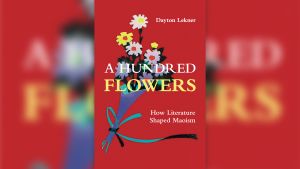
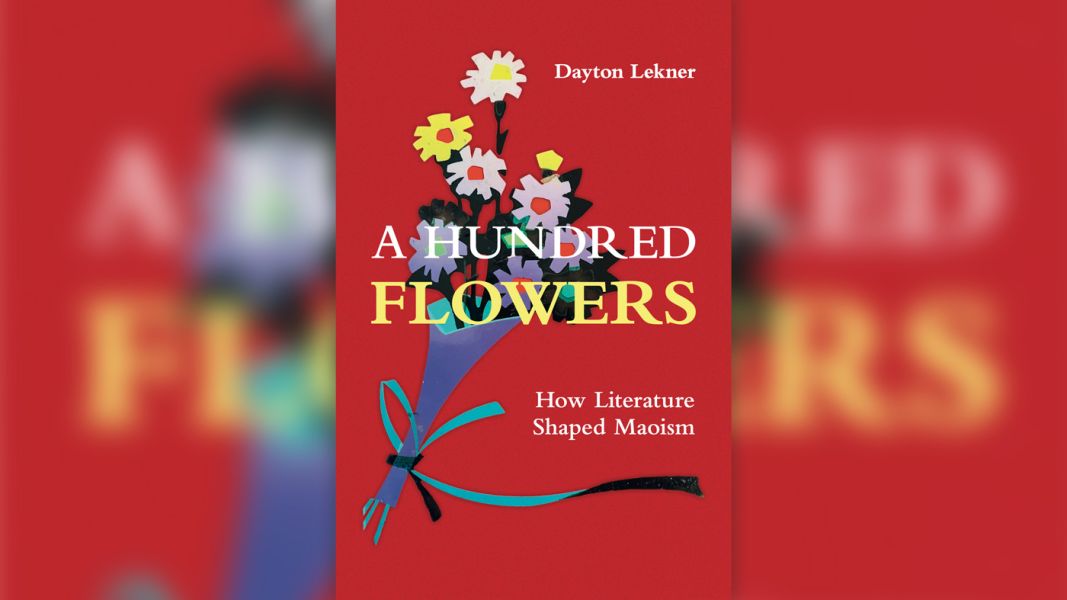
In A Hundred Flowers: How Literature Shaped Maoism (Cambridge University Press, 2025), Dayton Lekner presents a detailed historical account of the influence of literary practice and circulation on Mao Zedong–era politics and mass campaigns in China. His approach differs from mainstream accounts of the ‘Hundred Flowers Campaign’ of 1956–57 in that he concentrates less on the political power struggles and more on literary creation and circulation. In so doing, he reaches remarkable conclusions, including a novel perspective on the origins of the ‘movement’, as well as a provocative judgement about the lingering power of literature in Mao’s China. Lekner’s book is an important addition to the study of Chinese culture and cultural policy of the 1950s, which has been a very rich area of research over the past decade or so. In this conversation, we discuss at length how he approached his topic, the roadblocks he ran into when doing fieldwork in China, and the complex balance between culture and politics.
Michel Hockx: Your study provides a great deal of detail, not only about developments that took place within the year 1957, but on the underlying historical forces that came to the fore in that year. In addition to well-known historical and literary sources, you bring to the discussion a wide range of material including regional publications, memoirs and diaries, and records of interviews. In the past few years, there have been many studies of culture in the People’s Republic of China (PRC) in the 1950s, as archives opened, sources were digitised, and survivors remained available for discussion. You mention in your preface that you also encountered some restrictions when doing fieldwork in China but, generally speaking, do you think you benefited from perhaps the best time to do this particular type of research?
Dayton Lekner: I am not sure whether the late teens was a golden moment for research in the PRC. Like the characters in A Hundred Flowers, we are always trying to ‘read the weather’ to understand what might be researchable, writable, and publishable. While ‘having tea’ with state security officers in Shanghai, I certainly did not say to myself that ‘this is the best time ever’. Two factors were very helpful, but unfortunately neither reflects very well on me.
First, I was naive enough to carry out interviews and archival research on what is now a clear no-go zone for both domestic and foreign scholars. In 1957, ambiguity about the ‘weather’ and how it was changing created a sense of possibility. Moments like this—and I suppose 2017–18, when attacks on ‘historical nihilism’ had begun in earnest but were not yet taken as gospel throughout campuses and research institutions, could be seen in this light—are both energising and risky. Being deaf to what were already clear rumblings of danger, I simply dived in until I ended up in the back rooms of a Shanghai police station.
A second factor was just as important. The availability of sources had boomed, but research based in digital humanities and large-language-models (LLMs) was only in its early stages. This meant I was inundated with textual sources and the only way for me to handle them was to sit at my desk and read them. This would probably be seen as hopelessly naive today, given the possibility to discover patterns across corpora in seconds. But, as with the gathering of materials, naivety was important. It made me feel lost in the sources and forced me to work to find my way out.
Digital humanities or LLM approaches would probably yield some interesting results, but they render the historian external to the process. Historical research requires deep immersion in the world you are exploring. A bird’s-eye view is useful, of course, but if you want to understand the motivations, ideas, and feelings of the people who make history then you must sit with those people. For me, sitting with the writers of the Hundred Flowers meant both reading their work and finding out as much about their lives as possible—about petty feuds, about crushes on their classmates, about how they felt about their mother and father.
In this process, I am like a needle working its way through the grooves in a record—being moved by every ridge and ripple. If the writing process goes well—and it never goes easily—then what I write is the sum of all these movements, which take place inside myself before they reach the page. LLMs could very convincingly create a simulacrum of this process but, in using them, the historian would abandon the most important tool they have: empathy. For me, this is the engine that drives everything.
MH: Your book reminded me of Rudolf Wagner’s 1992 monograph Inside a Service Trade: Studies in Contemporary Chinese Prose, which deals with the same period and some of the same materials, both textual and visual, but clearly from a different perspective. Am I right in thinking that you would disagree with his description of literary writing in 1950s China as a ‘service trade’? You seem to place much emphasis on the idea that writers helped create the political discourse about the ‘Hundred Flowers’, rather than simply responding to it or acting in the service of it. For instance, on page 31 you write that ‘the creative practice of writing is structuring as well as enclosed by structure’.
DL: Wagner was a great influence, as were others in his generation such as Perry Link, Michael Schoenhals, and Li Tuo, who, in one way or another, all describe the restraints on writers during the Mao years, as well as how writers responded. These were such key figures in the field of PRC history that the idea of disagreeing with them never crossed my mind. In fact, A Hundred Flowers began as a puzzle founded on the belief that they were correct about the weight of these restraints. But I wondered how we could reconcile the attempts of the Chinese Communist Party (CCP) to prescribe a formulaic language (提法) for state socialism and Mao’s personal immersion in, and adroit deployment of, literary culture.
The Hundred Flowers Movement seemed particularly fertile ground, so I began the simple but fairly arduous task of tracing flows of language—trying to see who echoed Mao’s metaphors of flowers blooming, of grass bending in the wind, and allusions to The Water Margin, Dream of the Red Chamber, and other classic literary works. I was astounded at the uptake of this language and struck also by the complexity and diversity of what I thought at this time were responses among writers to the literary Mao.
But then I noticed something odd. As I was browsing the journal Literature and Arts Monthly (文藝月報), I found that the decorations at the top of the title page changed from images of industry (power stations, construction sites, trains, dams) in February 1955 to flowers in March 1955—more than one year before Mao ‘launched’ the Hundred Flowers Campaign. It was quite a prosaic discovery, but this moment entirely changed the direction of my work. I began hunting back through the 1950s for images related to the Hundred Flowers and found that these were not at all isolated, but were everywhere. Botanical imagery pervaded debates on issues ranging from the direction of philosophy to hydrological practices to the forms of national poetry and, of course, the vocabulary of poetry itself. Flowers spilled off the page and decorated visual design, fashion, even architecture. From this, I reassembled the interconnected literary circulation, centred on the image of a hundred flowers blooming (百花齊放), as described in the first section of the book.
My work at this point was, in a sense, botanical. I did not set out to do anything other than follow flowers, but in following them very carefully I accidentally stumbled onto something that surprised me and contradicted what I had read in my history studies. The Hundred Flowers was not a policy ‘launched’ by Mao, but a genuinely organic movement in the cultural-intellectual sphere that began at least two years before Mao attempted to capture it with his speech in April 1956. A book that had been centred on Mao became one in which he was only a supporting character. What also struck me were the depth, creativity, and polyphony of the movement. Yes, individual writers were trying to express a point of view; they were all doing something that we could call ‘political’. But they were also engaged in a circulation that was, among other things, clearly a source of creative pleasure. This was not the Chinese writer trapped in the ‘Mao genre’ (毛文體) described by Li Tuo or the ‘Chinese Socialist Literary System’ described by Perry Link. But it was a writer whom I felt I recognised and with whom I identified—someone who knew the pleasure of finding the right word for the right task at the right time.
Let me get back to Wagner and his ‘service trade’. Wagner showed us one side of the political–literary relationship of the Mao era (and more generally of authoritarianism). The writer, constrained by the force of the state, struggles against or negotiates with that force. I don’t disagree with this per se; examples abound. What A Hundred Flowers shows us is the counterbalancing force—the energy of the creation and circulation of literary texts. When the writers in the Hundred Flowers Movement sat down to do their work, sometimes their minds were on the party censor, but often they were elsewhere: on a crush they had at university; or at the window, looking at the spring blooms and searching for just the right word to capture its colour. Their creative work then flowed back into politics because CCP leaders were hungry consumers of exactly this kind of literary energy. It shaped how they (including Mao) spoke and wrote—and even influenced the nature and timeline of the political campaigns of the late 1950s.
This offers a more convincing depiction of the writer in authoritarian states: yes, subject to political power, but also creating the images, the stories, the myths, and the metaphors by which the people who hold this power recognise themselves and their project. It balances the literary–political equation by giving more agency to the writer, which in turn helps us understand both why authoritarian states take such severe steps to rein in that writer and why individuals still put pen, or brush, to paper.
MH: You seem to argue for a reconsideration of not only the role of writers, but also the role of politicians and policymakers. Throughout the book you emphasise the way in which politicians and ideologues respond to what writers are doing, rather than the other way around, and the final sentence of your book states that ‘political regimes, dominant though they may appear, are forever subject to the world-making power of the imaginative writer’ (p. 235). Is it really ‘forever’ or was this true only of the special historical moment at which you are looking in your book?
DL: The Hundred Flowers Movement was indeed special in that it marked the end of—or the beginning of a long hiatus in—a millennia-old political–literary relationship. In the 1950s, we find in China a political leadership whose education was rooted in the classical literary canon. This canon was not only familiar to CCP leaders; it also formed the epistemological and moral foundation of much of their thought. We find also an educated class of writers and intellectuals who saw themselves as continuing a lineage of moral intervention in the activities of the state. The fact that a journalism student at Fudan University could write in the same language as the Chairman of the CCP—that they both had access to the beautiful technology of the literary canon—created the impression and indeed the possibility that a single writer could ‘change the weather’. The Anti-Rightist Campaign ended that specific relationship, which still lies dormant today. Say what you will about Xi Jinping, but he is not a poet.
But structurally, the book’s simple observation that political regimes are always subject to writers remains true. There exists an immensely complex and decentralised flow and contestation of ideas, which are not simply announced from the party’s ‘calls for papers’ and then flushed out below, as in Wagner’s ‘service trade’. Powerful tropes such as the ‘China Dream’ emerge not from the party elite but from the writings of individuals. Media forms have proliferated and now instead of riffs on the Book of Odes we see hip-hop responses to Fangfang’s Wuhan Diary and music videos made in Malaysia that critique ‘little pinks’ as just more chives (韭菜) to be harvested by the state. The texts have changed, but the creativity and circulation remain immensely powerful and, yes, political regimes are subject to their patterns of flight, forever.
MH: One of the things I like a lot about your book is that you study writers and works that are not usually foregrounded in studies of the Hundred Flowers. As someone who started out doing research on ‘May Fourth literature’, I was surprised to come across both Zhou Shoujuan and Wu Mi—who are so often painted as reactionary and opposed by the May Fourth generation—and see them so active in the early Mao period. Was this part of the reason you included them? And, more generally, how did you go about choosing your examples?
DL: Salman Rushdie (2025) has a nice line that there are ‘everything books’ that try to include as much of the world as possible and ‘almost nothing books’, in which the author explores ‘one tiny little beautiful strand, turning it in the light to tell that story’. A Hundred Flowers is an ‘almost nothing book’, in that it sets out simply to trace the movement of literary imagery across a period of history. I was quite disciplined in this task so the only reason a writer found their way into the book was that they were first drawn into the literary circulation of the Hundred Flowers.
Zhou Shoujuan and Wu Mi make appearances, but so do a rather odd cast of characters across the political and social spectrum. So, we get lionised party writer Guo Moruo in 1958, as he writes a poetic response to writer Liu Shahe, who by then was cleaning the toilets of the Sichuanese branch of the China Writers’ Association. We meet Xu Chengmiao, a taciturn journalism student at Fudan University, as he responds to Mao, who was in turn responding to the poet Ai Qing. Ai Qing was echoed by the hydrologist Huang Wanli, who also riffs on an essay by the anthropologist Fei Xiaotong. And it was Fei’s essay ‘Early Spring Weather of the Intellectuals’ that, in suggested a spring chill among the blooming flowers, created a meme so powerful that it supplanted (for a moment) the Hundred Flowers themselves. The only choices I made were to leave some writers out, and that was simply out of necessity. The world described in the book is already extremely rich, but it barely scratches the surface of the interconnected polyphony of literary circulation in the 1950s PRC.
MH: The key individual to whom you keep returning and whom you seem to consider somehow representative of the period is Xu Chengmiao. What led you to that choice and did you interact with him in any way? I note that he is still alive.
DL: As above, people caught my attention through their participation in the Hundred Flowers Movement. Xu Chengmiao’s is a fascinating story for several reasons. First, despite being labelled a ‘poisonous weed’ set against the party and Mao, he held both in the highest regard. Even after being labelled a Rightist, he saw a photo of Mao and yearned to go to him to explain what had happened. In this way, he is indicative of a larger undercurrent of those who remained intensely loyal to the regime even though history misunderstood them as dissidents. What Xu saw in the Hundred Flowers was not a chance to voice critique of CCP leadership, but an opportunity to be published and perhaps noticed by that leadership. That motivation, to step into a public circulation of texts—to respond and be responded to—has not been foregrounded in studies of the Mao era or of authoritarian regimes more generally.
Second, Xu left a very candid diary that was clearly written in private and (initially) only for his own eyes. That diary gives us a chance to follow him through the Hundred Flowers and Anti-Rightist campaigns at ground level and to notice that he cares more about feuds with university classmates than the socialist transformation of society. It also shows us how these two worlds interact: Xu is taciturn in class and pins his hopes for recognition by his classmates on the publication of his poetry—the very poetry that, once published, leads to his labelling as a ‘poisonous weed’ and downfall in front of the classmates he is trying to impress.
No, I didn’t communicate with Xu. I had his contacts, but after the attention I received in Shanghai, I decided to not pursue him. I had the option to leave the PRC, but my interlocutors did not and some received unwelcome attention after my visit.
MH: One strength of your work is the extent of your documentation, in both primary and secondary sources. Your footnotes are exceptionally rich. Were you aiming for some sort of ‘thick description’, capturing the deeper context and meaning behind people’s actions? And how in general do you situate yourself as a scholar?
DL: For any ‘thickness’ of description, I must thank Anne McLaren (1952–2026), whom we lost earlier this year. I know I am not alone in missing her as a mentor, a peer, and a friend. Anne nudged me in that direction and, once she did, I could not but pursue it to the best of my abilities. I became fascinated with the responsibility of accurately depicting the lives of others, with how various events shaped what writers wrote and how what they wrote interacted, in usually small but sometimes decisive ways, with the political and social worlds. One example is the poet Liu Shahe, who in previous histories of the Hundred Flowers emerges as a sort of hero of literary dissent. But Liu Shahe was in fact a reluctant dissenter at best and, once attacked, very quickly threw his co-editor Shi Tianhe under the investigatory bus. This in turn caused him great regret throughout his life and shaped his work after the Mao era. There is a great tension between the cleanness of historical narrative and the exquisitely messy complexity of each person involved in that narrative. I feel it is my job to explore and question the former, while giving due reverence to the latter.
References
Rushdie, Salman. 2025. ‘Novelist Salman Rushdie at “The Eleventh Hour”.’ Talk Easy with Sam Fragoso podcast, 2 November. podcasts.apple.com/nz/podcast/talk-easy-with-sam-fragoso/id1100417601?i=1000734812491.