
The Internet in China: A Conversation with Gianluigi Negro

For the past couple of decades, the Internet has been one of the most contentious arenas for public discourse in China, a site of confrontation between authorities eager to exert control and users attempting to re-appropriate discursive spaces. In his book The Internet in China: From Infrastructure to Nascent Civil Society (Palgrave Macmillan 2017), Gianluigi […]

Illicit Economies of the Internet: Click Farming in Indonesia and Beyond

Click farms are often considered either a form of fraudulent online marketing or as a type of exploitative digital labour based on an illegitimate business operation that produces ‘click spam’. There has, however, been limited research on how these entities operate, who the actors are, and how the market is organised. In an ethnographic spirit, this essay takes click farmers not as an aberration, but rather as a starting point for approaching the ‘like economy’.

Land Wars: A Conversation with Brian DeMare

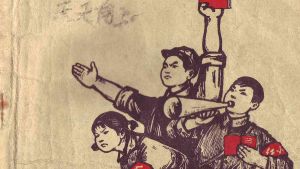
The Maoist land reform campaigns were an integral element in the Chinese Communist Party’s rise and subsequent ability to maintain power. In Land Wars: The Story of China’s Agrarian Revolution (Stanford University Press 2019), Brian DeMare weaves together historical and narrative accounts, providing a detailed picture of how the land reforms shaped the lives of […]

Domestic Archaeology

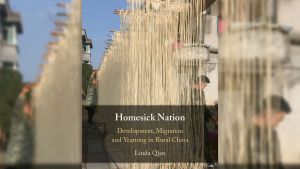
The Domestic Archaeology Project is the outcome of seven years of work, from 2009 to 2016. During this period, I undertook dozens of trips to the countryside—exploring the lives of those living in the rural hinterlands of the coast, inland areas, and the western provinces. In our contemporary era, characterised as it is by change […]

Managing the Anthropocene: The Labour of Environmental Regeneration

Since 2010, China has seen new carbon markets, closures of polluting factories, and expanded efforts to regenerate degraded landscapes and protect wildlife in intact ecosystems. All of this entails a great deal of labour. Yet when reporters or researchers discuss China’s environmental management efforts, they may chronicle policies, regulatory actions, infrastructures, carbon figures, or impacts on humans and animals, but they seldom say much about the labour of environmental protection or the people who perform it. This is because scholars and journalists alike tend to place environment and labour in separate boxes.

Manufactured Modernity: Dwelling, Labour, and Enclosure in China’s Poverty Resettlements

Between 2016 and 2020, the Chinese authorities will have resettled nearly 10 million people throughout China’s inland provinces with the aim of eliminating absolute poverty in rural areas. Looking at the case of Southern Shaanxi, this essay reflects on specific poverty resettlement projects, and Chinese resettlement practice more broadly, to try to make sense of the intent and impact of such large-scale interventions on both the lives of individuals and the transformation of the Chinese countryside as a whole.

Beyond Proletarianisation: The Everyday Politics of Chinese Migrant Labour

In China as elsewhere, labour studies typically focus on visibility, organisation, and collective endeavours taken on by workers and their organisations to improve the collective situation of the labouring class as a whole. The privileged site for these overt manifestations of labour movement politics remains focussed on urban areas in general, and on manufacturing work in particular. This essay argues that this view is reductive, in that it only takes migrant labourers seriously as political actors once they enter the urban workplace. This risks neglecting the reality of hundreds of millions of workers who live between the farmlands in the countryside and the workplaces of the city.

China’s Land Reforms and the Logic of Capital Accumulation

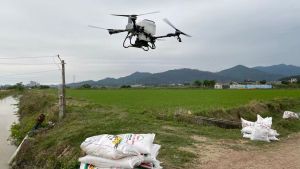
This essay briefly examines how rural land reforms in China are being driven by the imperative of capital accumulation. It looks at how policies of agricultural land transfer, new rural community construction, and the urban-rural land linking system, are all too often driven by the urban real estate industry in league with local governments and agribusinesses, rather than by villagers themselves.

Inside Work: The Hidden Exploitation of Rural Women in Modern China

Conventional wisdom holds that China’s modern development has been powered by urban industry and commerce. The agrarian family economy, combining home handcraft production and domestic work with small-scale agriculture, is commonly seen as a remnant of the past. This essay proposes a different understanding of the development trajectory of modern China as being underpinned and enabled by exploitation in the agrarian family economy, especially of rural women.

Subscribe to Made in China

Made in China publications are open access and always available as a free download. To subscribe to email alerts for each issue of the Journal, newly published books, and information about upcoming events, please provide your contact information below.


Back to Top