
Beyond Representation
On Being a Woman in Science in China
In the autumn of 1995, Ye Shuhua made a speech. During the NGO Forum at the United Nation’s Fourth World Conference on Women, held in Beijing, the 68-year-old astronomer took to the microphone and called on fellow women to break the glass ceiling and realise their potentials (Ye 2023; China Science Daily 2016).
The daughter of a pastor and a silk factory worker, Ye grew up on China’s southern periphery between Guangdong and Hong Kong. She majored in mathematics and astronomy at Sun Yat-sen University in the late 1940s and taught in the British colony after graduation. After the foundation of the People’s Republic of China in 1949, determined to serve her country, Ye began looking for ways to move back to the mainland with her mathematician husband. In 1950, she applied for a job at the Purple Mountain Observatory in Nanjing but was told that the position was open only to men. Undeterred, she wrote to the observatory’s director and listed five reasons why she was qualified. One year later, she was hired at the Xujiahui Observatory in Shanghai (Ye 2021; Ye 2023).
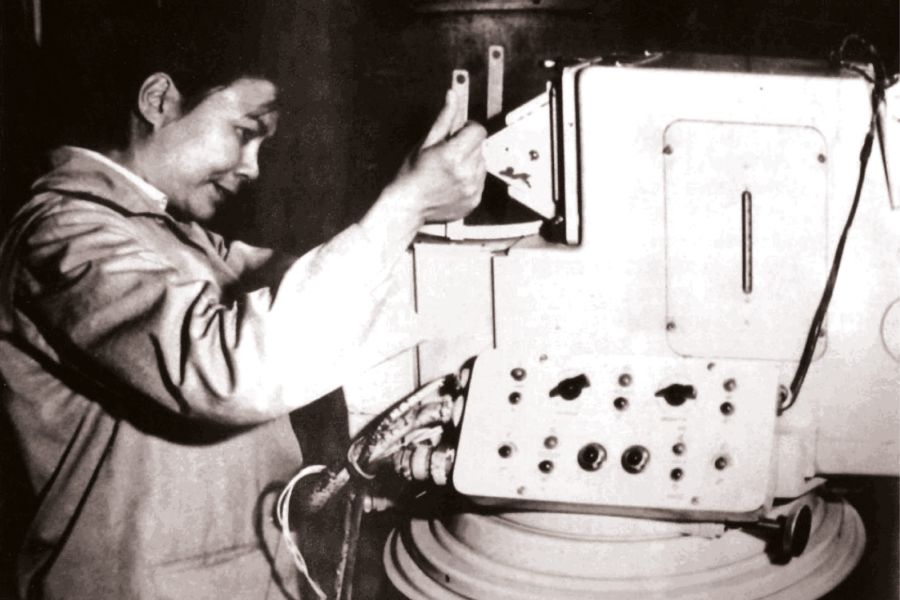
There, Ye and her team were tasked with using astronomical measurements to determine Universal Time. Despite limited equipment, they achieved world-leading accuracy. Ye was lauded as the ‘Mother of Beijing Time’. She was named head of the Shanghai Observatory in 1981, becoming the first female director of an observatory in China. By the time of the World Conference on Women in Beijing, she had just completed two terms as the vice-president of the International Astronomical Union—the second woman and the first person from Asia to hold the position (Ye 2023).
The 1995 conference was a landmark event for women’s rights globally, elevating gender equality on to national agendas and the policy mainstream (UN n.d.). The Beijing Declaration and Platform for Action, adopted unanimously by 189 countries, covered a wide range of issues, including science and technology. This document noted gender biases in science curriculums that failed to consider women’s experiences or include women’s contribution and demanded broader access to science education for women and girls (UN 1995: 26–32). The China Women’s Fellowship for Science and Technology (中国女科技工作者联谊会), which has since been renamed the China Women’s Association for Science and Technology (中国女科技工作者协会), was created in the leadup to the conference (CWST n.d.). Prominent female scientists, including Ye and Xie Xide, the former president of Fudan University and the first female leader of a major research university in China, spoke at the conference’s NGO Forum (Xie 1998).
When women from across the world gathered in Beijing, sporting T-shirts that read ‘Half the Sky’, I was in second grade in my hometown, 1,000 kilometres south of the nation’s capital (People’s Daily 1995c). My mother was my Chinese teacher. She read me stories of Madame Curie, in which the Nobel Laureate was not only an exemplary female scientist but also a model patriot because of her love for her native Poland. As I grew older, I noticed tensions between my mother’s aspirations for her daughter—her only child—and her traditional views on gender, in which women were deemed inferior to men. I was told that a girl’s brain would become too dumb for maths after puberty while boys would get smarter, and when I decided to study physics at university, my mother kept suggesting that I switch to a ‘softer’ discipline, such as biology or management. I moved to the United States in 2009 to pursue my PhD in physics at the University of Chicago. My mother filled my final weeks at home with stern warnings: ‘If you lose your virginity before marriage, you could win the Nobel Prize in Physics and you would still be worthless.’
Shortly after arriving in Chicago, I was introduced to initiatives for women in science. I was sceptical at first. During one such gathering, I raised my hand and said I wished to be seen only as a scientist, with no gendered prefixes. After the event, a senior female colleague came up to me and said: ‘You might not see yourself as a woman before your profession, but others do, and you need to know that.’
It took me years to understand what she meant: I cannot wish away structural inequality by unilaterally rejecting a label. Gendered prejudices do not just hinder a woman’s entry into science and her advancement but also shape what types of science are pursued and prioritised by men and women alike (Harding 1986, 1991). As I carried on with my physics career, I became a regular participant at events aimed at women and girls. I found kindred spirits and gained lasting friendships. But I have continued to feel alienated by the core messages in many of these spaces that centre the experiences of white women, in which science is presented as a curiosity-driven endeavour, and stories of successful female scientists are told as inspirational tales of believing in oneself and chasing one’s dreams. Discussions often revolve around how many women there are in a field and how they are treated, and progress is measured in numbers and individual perceptions. Numbers are important, but they must be placed in context. For instance, I cannot help but wonder: if more women are doing the same work as men, are women contributing to the liberation of their sisters and daughters or are they reproducing a world conceived by men?
The issue of women in science extends beyond representation. Who becomes a scientist, what kind of work does she do, and why? For more than a century, generations of Chinese women have explored these questions. Their lives and careers reveal different answers—on the purpose of science and the meaning of womanhood.
China’s Madame Curie
‘The great outlook for China’s future enlightenment depends upon the opportunity given to her women,’ wrote Ruby Sia in the waning days of the Qing Empire (Tsao 1910). The first Chinese graduate from Cornell College in Iowa, Sia went on to study at the Baltimore Women’s College (now Goucher College) before returning to her homeland, where she became a celebrated teacher and activist. ‘Let education come, and the prosperity and happiness of our people will follow,’ Sia continued.
Wang-Xie Changda agreed with Sia. Married to the scion of a prominent scholar-official family in Suzhou, Wang-Xie founded the local anti–foot-binding society in 1901 and the Zhenhua Girls’ School five years later (Liu 2013: 19–21). At the turn of the twentieth century, as China faced an existential crisis from foreign invasions and internal upheaval, the image of a traditional Chinese woman with bound feet and scant schooling became another symbol of the country’s backwardness. Progressive intellectuals called for the liberation of Chinese women from the double binds of physical confinement and illiteracy. Ideas for gender equality and women’s independence were forged alongside a nascent national consciousness, and science and technology were hailed as the backbone of a strong, modern nation (Wang 1999).
Few families embodied the pursuit of excellence in the sciences and equality for daughters and sons as much as Wang-Xie’s. Her descendants would include some of the most prominent names in academia and industry in twentieth-century China (Liu 2013: 21–28). One of her daughters, Wang Chi-Che (Wang Jichai), would become the first Chinese woman to earn a doctorate, receiving her PhD in chemistry from the University of Chicago in 1918 (Kang and Li 2012). A granddaughter, Wang Mingzhen, would complete her PhD in physics at the University of Michigan and serve as the first female professor at Tsinghua University (Liu 2013: 22).
As a young girl, He Zehui looked up to her older cousins, especially Wang Mingzhen. After graduating from Zhenhua, the school her grandmother Wang-Xie established, an 18-year-old He enrolled at Tsinghua in 1932 to study physics. She liked the arts and had briefly considered medicine, but she chose physics ‘for the country’, as she told reporters decades later (Liu 2013: 49–50). A total of 27 female students were admitted to Tsinghua that year. Eight were in physics, making up nearly one-third of the class of 28 (Liu 2013: 55).
Yet, the department chair Ye Qisun (no relation to Ye Shuhua) believed girls were ill-suited for physics and asked them to transfer. An ‘old feudalist’ was how He referred to the man—a University of Chicago and Harvard–trained scientist (Dajia 2015). The department also had a strict elimination mechanism based on academic performance. Only 10 of the initial 28 students managed to graduate; three were girls, and He was among them. The professors helped the boys land jobs, and several joined the army or the defence ministry to conduct ballistics research (Liu 2013: 64). The war against Japan was escalating, and the country was in urgent need of technical expertise to improve its weaponry, but no-one seemed to think that women were also up to that task.
‘Since the defence ministry does not want us, I shall go to Germany myself to learn from the grandmasters of military experts!’ He recalled in a memoir (Liu 2013: 66–67). Aided by a scholarship from her ancestral Province of Shanxi, He arrived at the Technische Hochschule of Berlin in autumn 1936. The head of the technical physics department, Carl Cranz, had just completed a stint as a military advisor to the Nationalist Government of China, at a time when the two states briefly formed closer ties. He persuaded Cranz to admit her as a student, arguing that her country needed more precise guns and cannons to fight the Japanese (Liu 2013: 70–71).
Contemporary accounts of He’s life often portray her nine years in Germany as an example of breaking down barriers, with her patriotism and perseverance trumping prejudice (Dajia 2015). She was the first foreign student in the technical physics department, and the only woman majoring in ballistics. After completing her doctorate in 1940, advised by physicist Hans Geiger, He was barred from leaving Germany due to the war and worked at Siemens researching magnetic materials. As the Allied air-raids over Berlin intensified in late 1943, she moved to the Kaiser Wilhelm Institute in Heidelberg and joined Walther Bothe’s lab, where she ventured into the burgeoning field of nuclear physics (Fidecaro and Sutton 2011).
While there is no indication that He was aware of, let alone involved with, Hitler’s pursuit of nuclear weapons, a few of her advisors had been key members of the German Uranium Project, and the institutions with which she was affiliated were instrumental in supplying the Third Reich’s military might. Did He realise that her work in Germany was also contributing to the Nazi regime, and did she wrestle with the ethical implications? The archive does not provide a clear answer. Maybe she was only focused on learning the most advanced technologies to aid her homeland and paid little attention to what was happening in Europe.
Since her school days, He had demonstrated an unwavering faith in the power of science and a remarkable ability to compartmentalise, dissociating classroom learning from the political environment. When she was a student at Tsinghua, campus movements were raging across China, and many of her schoolmates joined the resistance and relief efforts against Japanese aggression. She stayed in the library. ‘I always thought that I needed to seize the day and get a good education; only then could I help my country,’ she recalled years later (Liu 2013: 63–64). Her father, He Cheng, who had taken part in the Revolution of 1911 that overthrew the Qing Empire, agreed, as did her professors. As Ye Qisun emphasised to his students: ‘Science, only science can save our nation’ (Wei 2013; see also Liu 2013: 62).
After Germany’s surrender, He moved to Paris and married Qian Sanqiang, her classmate at Tsinghua. Qian had completed his doctorate in nuclear physics in France, advised by Irène and Frédéric Joliot-Curie, Madame Curie’s Nobel Prize–winning daughter and son-in-law. Over the next two years, He worked at the Joliot-Curie Lab with Qian, where she was the first in the world to observe quaternary fission—a process in which the nucleus of a heavy atom splits into four parts (Fidecaro and Sutton 2011).
The couple’s stars were rising in Europe, but their hearts remained in China. In 1948, He and Qian returned to their war-torn homeland with their infant daughter. The 1943 Hollywood film Madame Curie had recently aired in China to an eager audience. Noting the public’s fascination with female scientists, staff from the Shanghai-based magazine Woman (婦女) travelled to Suzhou to interview He (Zhi 1948). In a cover story titled ‘China’s Madame Curie is Growing Up’ (成長中的中國居禮夫人), He praised the French support for working women and new mothers, and expressed reservations about her work on nuclear physics: she had come to the discipline years ago by circumstance; had she known that the technology would be used to kill, she would not have studied it.
If He held any moral objections to the bomb, she made an exception for her motherland. After the communist takeover, Qian became an early leader of the Chinese nuclear program, and He herself made important contributions to the bomb’s development (Liu 2013). Maybe she agreed with her mentor Frédéric Joliot-Curie, a passionate advocate against nuclear weapons in the West who was nevertheless a supporter of the Chinese bomb, which he saw as necessary to resist Western imperialism and ensure world peace. Maybe He could not separate her love for her country from allegiance to its government. Maybe, with her lifelong aversion to politics, it was not so much that He automatically trusted the new regime, but that it did not occur to her to question it, to ask who controlled the scientists’ work, and how the state might wield its power. Maybe for her, the justification was as simple as the reason for her initial foray into physics: it was ‘for the country’.
While most members of the Chinese nuclear program were men, several women, in addition to He, made their mark. For instance, Wang Chengshu, who earned her PhD from the University of Michigan, led the uranium enrichment effort (Wu and Wang 2023). These pioneering scientists encountered discriminatory attitudes due to their gender, but they were also part of the lucky few who were able to receive an education at a time when most Chinese women were illiterate. For elite women in the Republican era, such as He and her cousins, their affluent upbringing freed them from the burdens of domestic labour and the pressures of seeking a livelihood. Their class privileges elevated them above structural barriers and enabled some to reach the upper echelons of academia, where distinguished titles could obscure gender identity. For the rest of her life, He was addressed by her students and junior colleagues as gong (公) or xiansheng (先生), the honorifics for educated men (Liu 2013: 140).
A Model for the Masses
In Mao Zedong’s China, a privileged class background made one politically suspect. Scientists such as He and Qian strived to fortify the nation with science and technology but found themselves defenceless against waves of political campaigns. During the Cultural Revolution, the couple, like many of their peers, were sent to a farming village for re-education through labour (Liu 2013: 183–84). Ye Shuhua was forced to live in a cowshed and was relegated to janitorial duty at a library (Ye 2023).
For Mao and his followers, science was unabashedly political. Technology was a vehicle for revolution. Knowledge should serve the people and knowledge production must mobilise the masses (Schmalzer 2016). As the country faced isolation from the West and rising tensions with the Soviet Union, debates about what type of socialism China should practise and what kind of revolutionary power it should become also reached the sciences. Two options lay ahead according to the radicals: the socialist road of mass science or the capitalist and revisionist road that privileged textbook learning. Distinctions between the two were reflected in discussions of two types of experts: tu (土), native and earthy, and yang (洋), foreign and fancy. A 1958 column in the People’s Daily (人民日报), the Communist Party’s mouthpiece, elaborated on the meaning of tu: a tu expert does not have advanced degrees or overseas experience, but that should not be treated as a deficiency. To the contrary, tu is a badge of honour, and experts who are insufficiently tu should learn to ‘plant their roots firmly in the soil of production practice’ (He 1958).
In 1963, Mao named ‘scientific experimentation’ (科学实验) as one of the three revolutionary movements, alongside class struggle as the tenet and production struggle as the central mission. From rice paddies to steel mills, mass science experiments sprouted across the country (People’s Daily 1964; see also Schmalzer 2016). The success of the movement, according to the party, relied on the effective mobilisation of poor peasants, whose active participation was key to ‘breaking the monopoly on scientific knowledge by a small group of intellectuals’ (People’s Daily 1966).
The goal of Mao’s revolution was not just to eliminate class differences, but also to transform gender relations. ‘Women can hold half the sky’ (妇女能顶半边天) became a defining refrain of that era. Following Engels’ theory of women’s emancipation through participation in production, and out of a pragmatic need in the labour force, Chinese women were encouraged to leave the confines of domesticity and work alongside men in the factories and fields. State media celebrated women who excelled in traditionally male-dominated professions such as construction and heavy industries, as well as the sciences (Wang 2016). The December 1959 issue of Geology in China (中国地质) introduced readers to Liu Jinmei, a ‘heroine who sought treasures deep inside the mountains’. The young geologist traversed 7,000 kilometres in the Changbai Mountains in Manchuria and surveyed 65 mineral deposits, finding iron, copper, lead, and borax for her country. She weathered the elements and risked attacks from wild beasts. Once, the sounds of a black bear nearby forced her to hide in the grass for over two hours (Geology in China 1959).
Liu grew up in an urban household and graduated from Nanjing University, and the magazine feature highlighted her adherence to the party’s mass line. At each survey location, she taught the villagers how to identify minerals and examined their findings. Often, the science heroine profiled in the media was a member of the peasantry herself. In an article for the People’s Daily, Rong Fengai shared her journey as a rural meteorologist. Appointed to the role with no formal training, she made a string of erroneous forecasts. But she did not give up. She borrowed texts from the weather station in the county seat and used money allotted for clothing on books. Her tu weather base lacked equipment, but she made use of the rural conditions, raising creatures that are sensitive to the weather, such as fish, turtles, and spiders, and consulted old peasants experienced in observing the sky. Gradually, she reached 80 per cent accuracy for short-term forecasts, and utilised weather patterns for pest control (People’s Daily 1981).

Source: Li Zhiming and the Taikang Art Museum.
The young women who worked as village meteorologists such as Rong were called ‘girls who supervise the sky’ (管天姑娘). Their stories were dramatised in a popular 1960 movie, Plowing Clouds and Sowing Rain (耕云播雨). Another Mao-era film, Spring Seedling (春苗, 1975), portrayed rural healthcare workers known as barefoot doctors. In both movies, the female leads defied male authority who doubted their abilities. As the heroine in Spring Seedling proudly declared, ‘The hand that holds a hoe can also hold a needle!’
The mass science campaigns brought tangible improvements to rural life, and many Chinese women felt empowered by and took pride in their participation in ‘men’s work’. But beneath the rosy idealism lay a harsh reality. The experiments often led to failure and waste, most tragically during the Great Leap Forward famine. Despite all the promises of equality, women were paid less than men at the collective farms and shouldered most of the unremunerated domestic labour (Hershatter 2014). Eager to prove themselves and earn more, many women took on heavy duties despite physical limitations, some during pregnancy or postpartum, and suffered lasting afflictions (Hu 2020).
Even at the height of political fanaticism, individual desires strayed from the party’s mission. Urban youths who were ‘sent down’ to the villages during the Cultural Revolution snuck in books on science and literature that were deemed bourgeois and reactionary. The pages opened an escape hatch and offered glimpses into a different future. Some of these youths became my college professors. At the re-education farm, He Zehui and Qian Sanqiang built a telescope from scrap materials and observed a comet, three months after the celestial object’s initial discovery by a South African astronomer (Liu 2013: 185–87).
Racing against Time
On 18 March 1978, a year and a half after Mao’s death, Deng Xiaoping addressed delegates from the scientific community in the Great Hall of the People. The new paramount leader proclaimed that science and technology are productive forces and intellectuals are part of the working class. He emphasised that science and technology workers should focus their energy on research and be judged first and foremost by their professional accomplishments, not by their family background or political participation (Deng 1994). Like many of her colleagues, Ye Shuhua credits the Reform and Opening-Up policies for ushering in a new ‘spring of science’. She resumed her work at the Shanghai Observatory and helped bring the latest satellite-based and long-distance radio telescope technologies to China, in collaboration with international partners (Ye 2023). He Zehui joined the newly established Institute of High Energy Physics in Beijing and devoted the rest of her career to basic research on elementary particles (Liu 2013).
While Deng and his allies adopted a rhetoric of depoliticising science, scientific pursuits in the reform era were no less politically important than they were under Mao. As China transitioned out of socialist planning to embrace the capitalist market, a different vision of science served a different mode of politics. To distinguish themselves from the ideological fervour of their predecessors, a new generation of technocrats deployed the language of science and objectivity to bolster political legitimacy. If the Mao-era mass movements were a misguided detour, now the country must race ahead to make up for lost time, and science and technology were the perfect propellant.
One of the first and most consequential policies of the reform era was the One-Child Policy (Greenhalgh 2008). Missile scientists, not demographers, led its design. Venerated for their contributions to national defence, the elite cohort enjoyed social prestige and political resources, while their work was deemed pure and objective, unlike the social sciences, which were tainted by ideology. Guided by a masculine, mechanical vision of nature, the ballistics experts imagined women’s bodies as inanimate objects, whose reproductive functions could be switched on and off by command. A team literally used formulas for calculating missile trajectories to project population growth and boasted that predicting the number of people involved fewer variables (Greenhalgh 2008: 162).
As Susan Greenhalgh (2008) points out, the One-Child Policy was also classist. Wealthier urban families, on average, had fewer children, so it was rural women whose bodies were castigated as overly reproductive and in need of discipline. On the march towards capitalist modernity, tu no longer symbolised proletarian pride, but was a marker of cultural backwardness. In rebuking Mao-era excesses, urban intellectuals—mostly men—found an easy target in female farmers and factory workers whose competence bruised the male ego and threatened the patriarchal order. Once a poster image of women’s liberation, ‘iron girls’ (铁姑娘) were now derided as victims of totalitarianism, whose natural femininity was suppressed by the party. Some elite women also joined the fray, and their disparagement of labourers helped to restore a class-based hierarchy (Wang 2016).
The return to traditional gendered expressions and gender roles exacerbated gender disparity. With the dismantling of the collective-era welfare system and the privatisation of state-owned enterprises, many workplaces eliminated support structures such as childcare and canteens, and at the same time judged women with family obligations as less productive than men. Women bore the brunt of China’s economic transition, making up 60 per cent of the laid-off workers and less than 40 per cent of those rehired (Zhao 2021). In the two decades after 1990, women’s participation in the labour force decreased by 10 per cent, and the gender wealth gap widened (Hong Fincher 2023: 50).
The shifts were also felt in the sciences. The ratio of female researchers at the Institute of Physics at the Chinese Academy of Sciences (CAS) dropped from more than one-third in the 1980s to one-quarter in the early 2000s, and the percentage of women among professors plummeted from 17 per cent in 1995 to only a few per cent at the beginning of the new century (Wu 2002, 2012). Similar trends were observed at other institutions and in other disciplines. The director of the institute that studies ancient vertebrates and prehistoric humans at CAS joked that if the course continued, women in her field might go extinct like the dinosaurs (Huang 1989).
In 1995, as the Fourth World Conference on Women neared, conference chair Chen Muhua acknowledged at a planning session the problem of female unemployment caused by market reforms, but this could be ‘a good opportunity’ for women to ‘adjust themselves, improve their quality, and realise their values’, she said (People’s Daily 1995b). As the head of the All-China Women’s Federation, Chen played a key role in implementing the One-Child Policy. The state’s attempt at engineering a better, leaner population incurred a staggering social cost, yet it also broadened educational access for China’s daughters. During the Mao years and for much of the 1980s, girls made up about one-quarter of the college population; since the early 2010s, they have been in the majority (Zhang 2010). Women also outnumber men among master’s students and currently account for 40 per cent of doctoral candidates—up from 15 per cent in 1995 (Mu 2025; SCIO 2005).
For many Chinese women, the exam sheet is the fairest playing field in which they can participate, and earning advanced degrees is the only remedy for their gender deficit. Despite the encouraging figures in women’s education, the gender landscape in academia is one with a leaky pipeline and disciplinary disparities. Boys still outnumber girls by a significant margin at elite universities and in science and engineering (EOL 2025). My undergraduate alma mater, the University of Science and Technology of China, has one of the most disproportionate gender ratios: on average, five to one and as high as seven to one in some years (Ye and Liu 2014). While half of all college instructors are women, they only account for one-third of master’s advisors and less than 17 per cent of doctoral advisors (Huang and Zhao 2018). Chinese authorities boast that nearly 40 million Chinese women work in science and technology, making up 45.8 per cent of the science, technology, engineering, and mathematics (STEM) workforce, but less than three million of them work in research and development (Women of China 2023; SCIO 2025).
By the end of the Mao era, only one woman had held the title of academician at CAS, the gynaecologist Lin Qiaozhi. He Zehui was nominated by her division in 1957 but not selected. In the ‘spring of science’, 167 new members were inducted to CAS in 1980, including He, Ye Shuhua, and seven other women (Liu 2013: 217–20; Ye 2023). Today, less than 7 per cent of academicians at CAS are women, and the figure is even more dismal at the Academy of Engineering. Compared with their male colleagues, women scientists in China also face a lower tenure rate, are less likely to win grants, and publish fewer papers (National Science Library 2023).
These statistics speak not to women’s innate inferiority but to their time deficit (Xu 2025). By bearing and being the primary caretaker for children, and by doing most of the housework, a female scientist on average has less time for research than her male peers. In 2011, the Natural Science Foundation of China raised the age limit for its Young Scientist Grant from 35 to 40 for women only. The following year, the number of female applicants nearly doubled, reaching almost half of all applications (Ma et al. 2018). The authorities have taken several similar actions to support female scientists, relaxing age limits and offering project extensions for new or expectant mothers. A 2021 measure explicitly sets out affirmative action for women in promotions and funding approvals in the sciences (CAS 2021).
These well-meaning measures that benefit some female scientists are nevertheless limited in efficacy when the state continues to see women’s submission to men as integral to political stability and a righteous social order. Already short on time, women are also required to retire five years earlier than men. In 1991, He Zehui brought up this issue during a home visit by top officials, arguing that it is a waste of female talent (Liu 2013: 229–30). As the country confronts a demographic cliff with an ageing population and shrinking workforce, Beijing announced in 2024 plans to raise the retirement age, but the gendered difference remains (NPCSC 2024, translated in Wei and Hu 2024).
To alleviate the sharp decline in the birthrate due to urbanisation and the One-Child Policy, the Chinese Government has been relaxing birth restrictions and pressuring women to have more children. In the late 2000s, when I was in college, state media began pushing the notion of ‘leftover women’ (剩女): a woman who is still unmarried by her late twenties is deemed unwanted and devalued (Hong Fincher 2023). I was still a teenager then, but I watched schoolmates a little older than me abandon their academic pursuits for fear of becoming ‘leftover’. While men and boys are perceived to have more potential, are allowed more time, and extended more grace to make mistakes, as women and girls, we are always racing against time: we are told we must study harder before menses drains our brains, find a life partner before we age out of desirability, and fulfil our motherly duties before the biological clock runs out. Neither our time nor our body fully belongs to us. They are claimed by men and by the state, in the name of harmony and prosperity.
Whose Science, Whose Future
In 2015, the year I completed my doctorate and was ageing into ‘leftover’ status, the 85-year-old Tu Youyou was awarded the Nobel Prize for the discovery of artemisinin, an effective treatment for malaria. She became the first scientist in China and one of a handful of women worldwide to receive this honour. Until she won the Lasker-DeBakey Award four years earlier, few in China had heard of Tu. Netizens pointed out her ‘three withouts’ (三无): without a doctorate, without overseas experience, and without an academician title (Sohu 2015). In other words, she was a tu expert.
Born in 1930, Tu grew up in the coastal city of Ningbo and studied pharmacology at Peking University. To address severe shortages in medicine and healthcare personnel, and to promote indigenous science, the new communist regime institutionalised traditional Chinese medicine in the 1950s, and Tu was assigned to work at the newly opened Institute for Chinese Medicine in the capital. When the task of finding a therapy for malaria came to the institute at the height of the Cultural Revolution, most senior experts had been sidelined by the political struggle, and the 39-year-old Tu was selected to lead the mission. The team worked under conditions of exceptional scarcity. Tu suffered liver poisoning from the chemical solutions; to evaluate the toxicity of the drug, she and her colleagues tested it on themselves (Tu Youyou Biography Editorial Group 2015).
While Tu deserves recognition for instigating several breakthroughs, artemisinin is the fruit of mass science. Its discovery took nationwide effort across dozens of institutions and countless individuals. Findings at each stage were promptly shared with colleagues without reservation (Tu Youyou Biography Editorial Group 2015: 100–6). The crowning publication in 1977 lists no individual names for authorship, only the Artemisinin Structure Research Coordinating Group (青蒿素结构研究协作组, 1977).
The question of when a scientist in China might win a Nobel Prize had been a national obsession for decades. Pundits cited the vacancy as proof that the Chinese way of thinking or doing research was deficient. When the honour was finally bestowed on a Chinese scientist, she was not quite what many had imagined. After the Nobel announcement, three male hosts on a popular talk show lamented that Chinese researchers did not patent artemisinin in time, and drug companies in India and the United States have been profiting from the Chinese discovery (Behind the Headlines with Wen Tao 2015).
In China’s capitalist present, science is no longer a vehicle for the people’s revolution. The rhetoric of depoliticisation facilitates the commodification of technology. Detached from the political incentives and social context of its production, knowledge is converted into capital that can be controlled by an elite few. The 1985 reforms to the country’s science and technology system stressed the importance of applied research to economic development and called on institutions and individuals to accelerate the commercialisation of technological advancements (People’s Daily 1985). A decade later, Beijing unveiled plans to ‘invigorate China through science and technology’. A signature policy of the Jiang Zemin administration, the plans encouraged academic institutions to collaborate with corporations or form firms of their own (People’s Daily 1995a). As the country jettisoned its socialist past to compete in global capitalism, the public sector has become feminised and is viewed as weak and stagnant, while the private market symbolises masculine prowess (Rofel 1999).
Every so often, state media revisits stories of distinguished female scientists of an earlier age, like He Zehui or Tu Youyou. Their names reappear on important anniversaries related to the party or the state’s founding. They are lauded as patriotic heroes who helped lay the foundation for science in the People’s Republic. The nostalgic tone also creates a temporal distance. He and Tu lived frugally and shunned publicity. Devoted to their work, they sent their children away to boarding school or left them in the care of relatives (Liu 2013: 178–79; Tu Youyou Biography Editorial Group 2015: 38–40). State-sanctioned narratives describe their separation from family as proof of the older generation’s selfless spirit, while the same outlets appear to be promoting a very different model for female scientists today.
Open the home page of the website of the China Women’s Association for Science and Technology, the organisation formed in preparation for the Fourth World Conference on Women, and one sees two rows of photos (CWST n.d.). The bottom row features female academicians in simple, ID-style portraits. Above them is a set of glamour shots of younger women, all dressed in black against a light-grey background, their hair glossy, their makeup impeccable. They are recipients of China’s Young Female Scientist Award. Initiated by the French cosmetics giant L’Oréal in partnership with the All-China Women’s Federation and other official agencies, the prize was inaugurated in 2004 as the first dedicated science award for women in China (Xu and Li 2024). For more than two decades, L’Oréal has made championing women in science part of its corporate image, sponsoring national and international initiatives in collaboration with the United Nations Educational, Scientific and Cultural Organization (UNESCO).
What does it mean for a French beauty conglomerate to brand itself as a cheerleader for female scientists globally? When I was little, neighbours used to tell my very attractive mother that it was okay her daughter was plain, because I would not get distracted from my studies. Perhaps it is progress that the public now sees female scientists can be beautiful, too. What troubles me is the standards for beauty, who sets them, and for what purpose. Strikingly different from the figures of labouring women that graced magazine covers in the Mao era, the pictures of the L’Oréal awardees are akin to what one might find in a glossy fashion magazine. They convey an ideal of femininity that appeals to the male gaze and is only achievable with time, money, and effort. The polished imagery normalises class privilege and makes it aspirational.
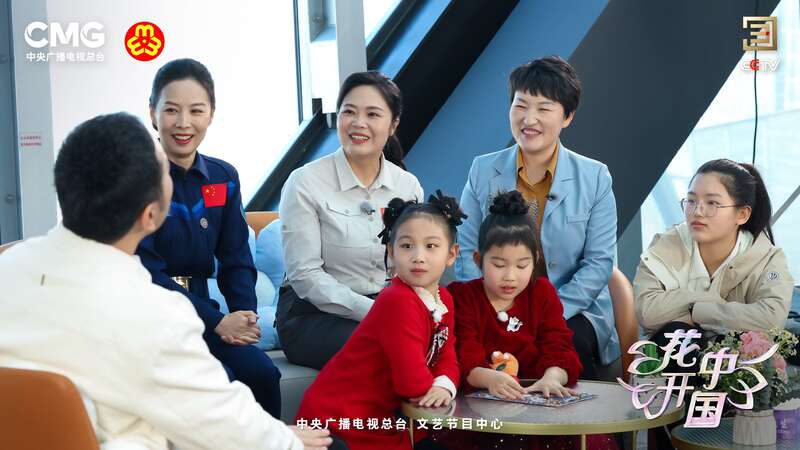
Since taking the helm, Xi Jinping has repeatedly emphasised the importance of ‘traditional virtues’ for women (Wang 2016: 260; Xinhua 2023). Consistent with the state’s pro-natalist policies, contemporary portraits of working female scientists routinely highlight their femininity and their roles as a loving wife and devoted mother. Showcasing high-achieving professional women as mothers also underlines the authorities’ desire for the kind of women they prefer to have more children. A 2016 profile of deep-sea oceanographer Tang Limei featured this headline: ‘The Female Scientist Who Dives the Deepest in China Is Also A “Little Woman” Who Appreciates Life’ (Jin and Yu 2016). Last year, for International Women’s Day, Tang appeared on China Central Television with military pilot-turned-astronaut Wang Yaping and tunnel shield engineer Wang Dujuan, as well as their respective daughters, aged eight to twelve. In a 22-minute segment titled ‘My Mother Is a Scientist’, the hosts asked the kids whether their mum or dad was the better cook (answer: mum) and chatted with the women about helping their children with schoolwork. Throughout the heavily choreographed segment, there was not a single scene depicting the women at work. Even though they were chosen for the program because of their accomplishments in conventionally masculine and strategically critical sectors, their professions were only mentioned in passing, as a backdrop to childrearing (Flowers Bloom in China 2024).
The messenger may be innocent, but the message is not. In 1995, hosting the World Conference on Women was a politically safe and expedient way for the Chinese State to reassert itself on the global stage after the Tiananmen crackdown six years earlier. The gathering of women cleansed the capital of the haunting of tanks. Capitalist consumption numbed the yearnings for alternative politics. Sexualised, commodified images of female beauty flooded the spaces where dissent was no longer allowed (Wang 2016: 257).
Thirty years after Beijing formally adopted gender equality as a ‘basic state policy’, the Chinese Government is moving further away from its promise. The push for more births is coupled with women’s political and socioeconomic disenfranchisement that seeks to confine them to the domestic sphere. Chinese women are finding it harder to land a job, gain financial parity in a marriage, or leave an abusive partner (Hong Fincher 2023). At the same time, elevating a selected group of elite women such as scientists and entrepreneurs helps the state maintain a progressive facade, in which individual accomplishments obscure societal regression. As tensions rise between the United States and China, and science and technology are at the centre of great-power rivalry, Beijing is once again calling on the fairer sex to serve the nation (SCIO 2025). Women’s underrepresentation in the sciences is viewed as a potential, indicative of underutilised human resources. Promoting a new generation of female role models is not just about motivating the public; their femininity also helps soften the image of a state that is increasingly militant and dictatorial. These women scientists, with their carefully curated appearance, are brand ambassadors for the motherland, selling an image of China that is modern, prosperous, powerful yet still humane.
In 2021, Ye Shuhua went viral. At the SHE Forum of the Fourth World Laureates Forum, held in Shanghai, the renowned astronomer stood behind the podium and asked the audience to guess her age. ‘Actually, this year, I’m over 95 years old,’ she said in English. Echoing her remarks in Beijing 26 years earlier, Ye told fellow women: ‘If you want something, you have to fight for it. You must show your ability. You must work hard’ (Yicai 2021).
‘If we do better and try our best, then I think the women’s position will become more and more equal or even higher,’ Ye continued. For pioneering women such as Ye, He Zehui, or Madame Curie, entering and excelling in a men’s profession proved what is possible and paved the way for younger generations. Yet, a century later, if we limit our goals to inclusion and representation, we are ossifying an important legacy and discounting our potential. The question should never have been whether a woman could be a scientist. The efforts in trying to answer that in the affirmative have deflected the much more fundamental interrogations of what kind of science is done by men, why women might do it differently, and how a gendered world view shapes inquiry (Harding 1986, 1991). Data are never neutral and knowledge is always political. Science can nurture and heal; it can also exploit and kill. To which profession should a woman aspire, by whose metric must she prove herself, and into what vision of a future is she bringing life?
A woman is not born; she is made in relations of power. If we reimagine gender equality not as women gaining a seat at the table but as rebuilding the house from a more just foundation, if we reconstruct femininity not as weakness and submission but as refusal of the logic of domination, if we redefine strength not by the sharpness of a spear but by the capaciousness of a vessel, only then might we, of all genders, break free of the shackles of patriarchy and conceive a new world, in which science is liberatory and life-affirming and the earth and the skies belong to all.
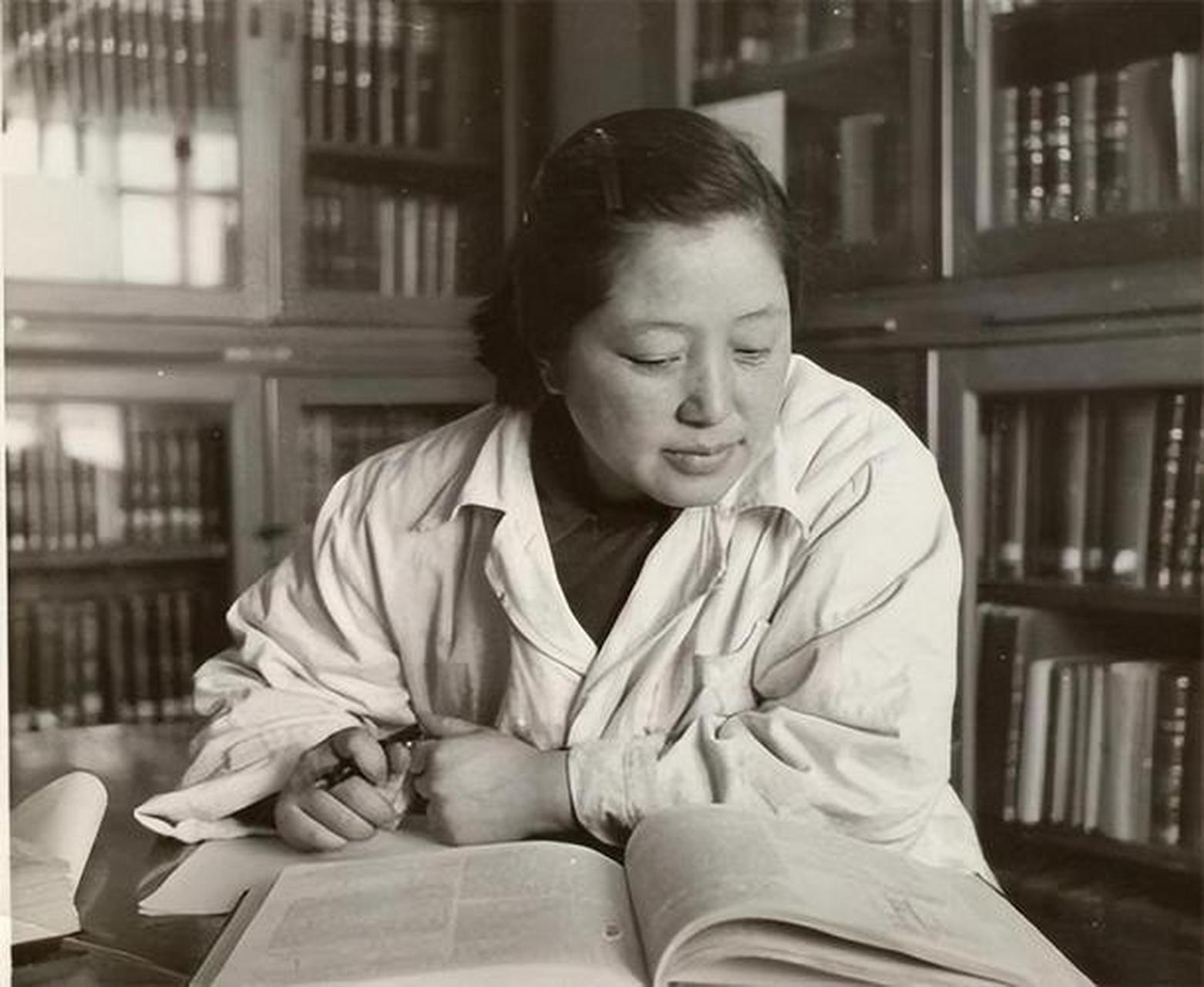
Featured Image: Astronomer and the ‘Mother of Beijing Time’ Ye Shuhua at work. Source: Shanghai Astronomical Observatory.
References
Artemisinin Structure Research Coordinating Group 青蒿素结构研究协作组. 1977. ‘一种新型的倍半萜内酯—青蒿素 [A New Type of Sesquiterpene Lactone—Artemisinin].’ 科学通报 [Science Bulletin] 22: 142.
Behind the Headlines with Wen Tao 锵锵三人行. 2015. ‘屠呦呦获诺奖 中国文学掀起性高潮 [Tu Youyou Wins the Nobel Prize, the Chinese Literati Pleasure Themselves].’ 凤凰卫视 [Phoenix Television], 17 December. www.youtube.com/watch?v=exqOEfGXXXE&list=WL&index=128.
China Science Daily. 2016. ‘叶叔华: 星路漫漫 上下求索 [Ye Shuhua: The Path to the Stars Is Long, and the Search is Unending].’ 中国科学报 [China Science Daily], 30 May: 8.
China Women’s Association for Science and Technology (CWST). n.d. ‘中国女科技工作者协会历史沿革 [A History of the China Women’s Association for Science and Technology].’ China Women’s Association for Science and Technology. www.cwst.net/gyxh/lsyg/index.html (Accessed 27 September 2025).
Chinese Academy of Sciences (CAS). 2021. 关于支持女性科技人才在科技创新中发挥更大作用的若干措施 [Several Measures on Supporting Female Science and Technology Talent Play a Greater Role in Science and Technology Innovation]. 17 June. Beijing: Chinese Academy of Sciences. www.cas.cn/zcjd/202107/t20210720_4799076.shtml.
Dajia 大家. 2015. ‘著名核物理学家 何泽慧 [Renowned Nuclear Physicist He Zehui].’ 中国中央电视台[China Central Television], 8 October. tv.cctv.com/2015/10/08/VIDE1444319839501714.shtml.
Deng, Xiaoping 邓小平. 1994 [1978]. ‘在全国科学大会开幕式上的讲话 [An Address at the Opening of the National Science Conference].’ In 邓小平文选 [Selected Works of Deng Xiaoping], volume 2, 85–100. Beijing: Renmin Chubanshe.
Education Online (EOL). 2025. ‘阴盛阳衰, 大学为什么越来越突出 [Why Do Girls Increasingly Outnumber Boys at Universities]?’ eol.cn, 8 March. www.eol.cn/news/guancha/202503/t20250311_2658044.shtml.
Fidecaro, Maria, and Christine Sutton. 2011. ‘Zehui He: Following a Different Road.’ CERN Courier, 23 November. cerncourier.com/a/zehui-he-following-a-different-road.
Flowers Bloom in China 花开中国. 2024. 中国中央电视台 [China Central Television], 8 March. tv.cctv.com/2024/03/08/VIDE3VuJ6KiRwPvLFvLuawTA240308.shtml?spm=C55953877151.PuvgIQ6NQbQd.0.0.
Geology in China. 1959. ‘深山探宝的女英雄—刘金美 [The Heroine Who Sought Treasures Deep Inside the Mountains—Liu Jinmei].’ 中国地质 [Geology in China] 2(12).
Greenhalgh, Susan. 2008. Just One Child: Science and Policy in Deng’s China. Berkeley, CA: University of California Press.
Harding, Sandra G. 1986. The Science Question in Feminism. Ithaca, NY: Cornell University Press.
Harding, Sandra G. 1991. Whose Science? Whose Knowledge? Thinking from Women’s Lives. Ithaca, NY: Cornell University Press.
He, Ming 何明. 1958. ‘论“土专家”之“土” [On the “Tu” Quality of a “Tu” Expert].’ 人民日报 [People’s Daily], 7 June: 8.
Hershatter, Gail. 2014. The Gender of Memory: Rural Women and China’s Collective Past. Oakland, CA: University of California Press.
Hong Fincher, Leta. 2023 [2014]. Leftover Women: The Resurgence of Gender Inequality in China. 10th anniversary edn. London: Bloomsbury.
Hu, Chen 胡辰. 2020. ‘荣誉与伤痛: 建国初期的妇女解放运动 [Honour and Pain: Women’s Liberation in the Early Days of the People’s Republic of China.’ 澎湃新闻 [The Paper], [Shanghai], 29 May. www.thepaper.cn/newsDetail_forward_7307523.
Huang, Wei 黄葳. 1989. ‘倾斜的“半边天”—知识妇女成才路上的不平等竞争 [An Uneven “Half the Sky”: Unfair Competition on the Career Paths for Female Intellectuals].’ 人民日报 [People’s Daily], 8 March: 5.
Huang, Yuanxi 黄园淅, and Zhao Linjia 赵吝加. 2018. 我国女性科研人员发展现状、挑战及政策演变 [The Development of Women Scientists in China and Its Supporting Policy]. Natural Science Foundation of China. www.nsfc.gov.cn/csc/20345/20348/pdf/2018/201806622.pdf.
Jin, Xubin 金许斌, and Yu Shiqi 于诗奇. 2016. ‘中国潜得最深的女科学家 也是个懂生活的“小女人” [The Female Scientist Who Dives the Deepest in China Is Also a “Little Woman” Who Appreciates Life].’ 浙江在线 [Zhejiang Online], 8 March. china.huanqiu.com/article/9CaKrnJUnMY.
Kang, Jing 康静, and Li Yanping 李艳平. 2012. ‘中国第一位女化学博士—王季茝 [China’s First Female PhD Holder in Chemistry—Wang Jichai].’ 中国科技史杂志 [The Chinese Journal for the History of Science and Technology] 33(2): 167–75.
Liu, Xiao 刘晓. 2013. 卷舒开合任天真: 何泽慧传 [Biography of He Zehui]. Beijing: Kexue Puji Chubanshe.
Ma, Ying, Yandong Zhao, Xu Gong, Li Sun, and Yonghe Zheng. 2018. ‘Close the Gender Gap in Chinese Science.’ Nature 557: 25–27. www.nature.com/articles/d41586-018-04996-3.
Mu, Yu 木俞. 2025. ‘学历攀登的女性, 为何在博士阶段止步 [Why Do Women Climbing the Education Ladder Stop at the Doctoral Stage]?’ 端传媒 [Initium Media], 8 May. theinitium.com/zh-hans/article/20250508-mainland-dataphile-female-doctorate.
National Science Library. 2023. 性别视角下的中国科研人员画像 [Gender in the China Research Arena]. Beijing: National Science Library of the Chinese Academy of Sciences.
People’s Daily. 1964. ‘把普及现代农业科学技术建立在群众的基础上: 全国农村群众性科学实验活动迅速发展 [Utilise the Masses as the Foundation for the Popularisation of Modern Agricultural Technology: Nationwide Rural Mass Scientific Experimentation Activities Develop Rapidly].’ 人民日报 [People’s Daily], 21 May: 1.
People’s Daily. 1966. ‘破除迷信, 打破少数知识分子对科学知识的垄断: 农村群众性科学实验运动蓬勃开展 [Break Superstition and the Monopoly on Science by a Small Group of Intellectuals: The Rural Mass Scientific Experimentation Movement Is Developing with Vigour].’ 人民日报 [People’s Daily], 8 May: 4.
People’s Daily. 1981. ‘管天管地又管虫—记全国“三八”红旗手标兵、农村气象员荣凤爱的谈话 [Supervising the Sky, the Earth, and the Insects: On a Conversation with National “8 March” Red Flag Labour Model, Rural Meteorologist Rong Fengai].’ 人民日报 [People’s Daily], 31 March: 3.
People’s Daily. 1985. ‘中共中央关于科学技术体制改革的决定 [The Central Government’s Decision on Reforming the Science and Technology System].’ 人民日报 [People’s Daily], 20 March: 1.
People’s Daily. 1995a. ‘中共中央国务院关于加速科学技术进步的决定 [The State Council’s Decision to Accelerate Scientific and Technological Progress].’ 人民日报 [People’s Daily], 22 May: 1.
People’s Daily. 1995b. ‘首要的是提高自身素质 [The First Task Is to Improve One’s Own Quality].’ 人民日报 [People’s Daily], 21 June: 3.
People’s Daily. 1995c. ‘与会者偏爱“半边天” [Conference Attendees Prefer “Half the Sky”].’ 人民日报 [People’s Daily], 2 September: 4.
Rofel, Lisa. 1999. Other Modernities: Gendered Yearnings in China after Socialism. Oakland, CA: University of California Press.
Schmalzer, Sigrid. 2016. Red Revolution, Green Revolution: Scientific Farming in Socialist China. Chicago, IL: University of Chicago Press.
Sohu. 2015. ‘屠呦呦多次落选院士 曾被称为“三无”科学家 [Tu Youyou Failed to Be Elected an Academician Multiple Times, Was Called a Scientist of “Three Withouts”].’ Sohu, 5 October. news.sohu.com/20151005/n422607547.shtml.
State Council Information Office (SCIO). 2005. 中国性别平等与妇女发展状况 [The State of Gender Equality and Women’s Development in China]. 24 August. Beijing: State Council Information Office of the People’s Republic of China. www.scio.gov.cn/zfbps/ndhf/2005n/202207/t20220704_129865.html.
State Council Information Office (SCIO). 2025. 新时代中国推进妇女全面发展的实践与成就 [Practices and Accomplishments in Advancing Women’s Overall Development in a New Era in China]. 19 September. Beijing: State Council Information Office of the People’s Republic of China. politics.people.com.cn/n1/2025/0919/c1001-40567924.html.
Tsao, F.Y. 1910. ‘A Brief History of Chinese Women Students in America.’ The Chinese Students’ Monthly 6: 616–22.
Tu Youyou Biography Editorial Group 屠呦呦传记编写组. 2015. 屠呦呦传 [A Biography of Tu Youyou]. Beijing: Renmin Chubanshe.
United Nations (UN). n.d. Fourth World Conference on Women, 4–15 September 1995, Beijing, China. Conference report. New York, NY: United Nations. www.un.org/en/conferences/women/beijing1995 (Accessed 27 September 2025).
United Nations (UN). 1995. Beijing Declaration and Platform for Action. 15 September. Beijing: United Nations. www.un.org/womenwatch/daw/beijing/pdf/BDPfA E.pdf.
Wang, Zheng. 1999. Women in the Chinese Enlightenment: Oral and Textual Histories. Oakland, CA: University of California Press.
Wang, Zheng. 2016. Finding Women in the State: A Socialist Feminist Revolution in the People’s Republic of China, 1949–1964. Oakland, CA: University of California Press.
Wei, Bangliang 魏邦良. 2013. ‘叶企孙: 明其道也计其功 [Ye Qisun: He Understands the Way of Science and its Values].’ 中国科学报 [China Science Daily], 2 March.
Wei, Changhao, and Taige Hu. 2024. ‘Commentary & Translation: China’s Plan to Raise Statutory Retirement Ages.’ NPC Observer, 14 September. npcobserver.com/2024/09/china-npc-raise-retirement-age.
Women of China. 2023. ‘仰望苍穹, 俯瞰大地, 下潜深海 … 看科技强国“她”作为 [Gazing at the Stars, Examining the Earth, Diving into the Sea … Take a Look at Women’s Contributions in Strengthening the Nation with Science and Technology].’ 中国妇女 [Women of China], 17 October. www.womenofchina.com/zt/2023/1017/11758.html.
Wu, Lingan 吴令安. 2002. ‘中国女物理学家为何在减少 [Why Is the Number of Female Physicists in China Decreasing]?’ 物理 [Physics] 31(10).
Wu, Lingan 吴令安. 2012. ‘中国物理学会女物理工作者委员会岁月回顾—十年风雨半边天 [A Reflection on the Committee for Women Physicists at the Chinese Physics Society: A Decade of Struggles for Half the Sky].’ 物理 [Physics] 41(8).
Wu, Xiaojie 吴晓婕, and Wang Xiaolu 王晓璐. 2023. ‘觉醒于时代又隐于时代的核物理学家王承书先生 [Awakened by the Times and Hidden in the Times: Nuclear Physicist Wang Chengshu].’ 物理 [Physics] 52(2): 141–44.
Xie, Xide 谢希德. 1998. ‘中国妇女从事科学的现状、成就与问题 [The Current State, Achievements and Problems for Women in Science in China].’ In 95北京非政府组织妇女论坛中国论文选 [Selected Papers at the NGO Forum on Women ’95 Beijing by Chinese Participants], 231–34. Beijing: Zhongguo Funü Chubanshe.
Xinhua. 2023. ‘习近平在同全国妇联新一届领导班子成员集体谈话 [Xi Jinping Speaks to a New Class of Leaders at the All-China Women’s Federation].’ 新华社 [Xinhua News Agency], 30 October. www.gov.cn/yaowen/liebiao/202310/content_6912723.htm.
Xu, Cora Lingling. 2025. The Time Inheritors: How Time Inequalities Shape Higher Education Mobility in China. Albany, NY: SUNY Press.
Xu, Diwei 徐笛薇, and Li Yiran 李怡燃. 2024. ‘中国青年女科学家奖20周年: 她们走了多远 [Twenty Years of China’s Young Female Scientist Award: How Far Have They Come]?’ 澎湃新闻 [The Paper], [Shanghai], 26 July.
Ye, Dandan 叶丹丹, and Liu Zhifeng 刘志峰. 2014. 催人泪下? 中国科大女生比例研究 [A Reason to Weep? A Study on Gender Ratios at the University of Science and Technology of China]. 12 December. University of Science and Technology of China Initiative Foundation. www.ustcif.org.cn/default.php/content/2381.
Ye, Ruolin. 2021. ‘Through the Glass Ceiling, and Beyond.’ Sixth Tone, [Shanghai], 19 November. www.sixthtone.com/news/1009010.
Ye, Shuhua. 2023. ‘A Walk in Time and Space: My Journey as a Strategic Scientist.’ Annual Review of Astronomy and Astrophysics 61: 1–17. www.annualreviews.org/content/journals/10.1146/annurev-astro-121222-033350.
Yicai. 2021. Facebook post, 3 November. www.facebook.com/watch/?v=305717631372833.
Zhang, Guo 张国. 2010. ‘女学生“占领”高等学府 [Female Students “Occupy” Institutions of Higher Learning].’ 中国青年报 [China Youth Daily], 8 November. news.sciencenet.cn/htmlnews/2010/11/239903.shtm.
Zhao, Yunxian 赵蕴娴. 2021. ‘重返90年代之下岗潮—“铁饭碗”砸碎后, 一代工人的沉浮与迷茫 [Revisit the Wave of Layoffs in the 1990s: After the “Iron Rice Bowl” Is Broken, a Generation of Workers Are Struggling and Lost].’ 界面 [Jiemian.com], 19 August. m.jiemian.com/article/6485827.html.
Zhi, Xuan 志喧. 1948. ‘成長中的中國居禮夫人: 何澤慧女士 [China’s Madame Curie is Growing Up: Ms He Zehui].’ 婦女 [Woman], 15 July: 2–3.