
Garbage as Value and Sorting as Labour in China’s New Waste Policy

On 1 July 2019, new rules went into effect forcing Shanghai residents and businesses to sort their garbage into four categories (wet, dry, hazardous, and recyclable) under the threat of fines and social credit penalties. An explosion of social media commentary ensued, some supportive but most cynical. The question ‘what kind of garbage are you?’ […]
Download PDF

Revolution and State Formation as Oasis Storytelling in Xinjiang

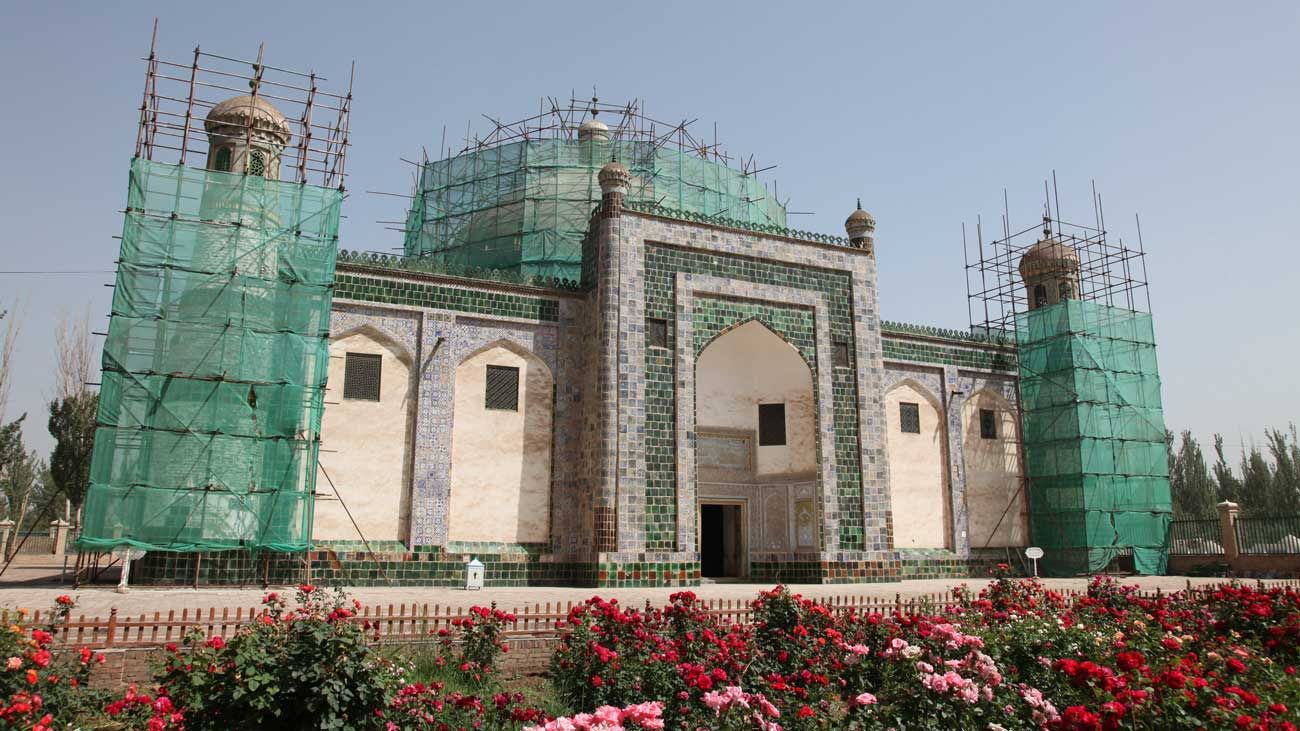
No one can say that the world is ignoring Xinjiang. In October, at the American Association of Christian Counselors, US Secretary of State Mike Pompeo likened China’s treatment of over a million Uyghur Muslims in the Xinjiang Autonomous Region to George Orwell’s 1984 (Reuters 2019). This was at the same time that the Trump White […]

Download PDF

Service for Influence? The Chinese Communist Party’s Negotiated Access to Private Enterprises

Among the many praises for the documentary American Factory, the filmmakers’ non-judgmental way of storytelling is a major point. Their determination not to villainise any individual indeed conveys a commendable commitment to humanity—in an age of polarisation when people are used to pointing fingers at others, this film is refreshing. This was supposedly also why […]

Tales of Hope, Tastes of Bitterness

A Conversation with Miriam Driessen

How is China’s success in Africa experienced by those who work on the Chinese-run construction sites that have emerged across the continent? In Tales of Hope, Tastes of Bitterness (Hong Kong University Press 2019), Miriam Driessen follows the lives of Chinese road builders in Ethiopia to reveal the friction of Chinese-led development on the ground. […]

Jiabiangou Elegy: A Conversation with Ai Xiaoming

Before retiring, Ai Xiaoming was a Professor in the Chinese Department at Sun Yat-sen University. She is also a feminist scholar, rights activist, and independent documentary filmmaker. In the 1980s and 1990s, Ai’s academic work focussed on modern and contemporary Chinese literature and comparative literature. In 1999, she moved to the United States for one […]

The Thai Elections of 2019: The Rise of the Illiberal Middle Classes

In early 2019, Thailand’s military junta held elections for the first time since removing the elected Prime Minister Yingluck Shinawatra from office five years earlier. The elections took place under a new constitution, which gave the coup leader Prayuth Chan-ocha an insurmountable advantage. Ironically, some of Prayuth’s strongest supporters were the same middle classes that fought in the streets for democracy in the 1990s. The result is a Thai polity that can only be described as constitutional authoritarianism.

Researching China Through Translation and Presentation

To present a research project as understandable, inoffensive, and interesting to people in the field involves both politics and artfulness. Researchers, the researched, and potential collaborators together constitute the politics of fieldwork, at the centre of which are ongoing processes to establish expectations of possible benefits or conflicts of interests. The multidimensional politics on the ground remind us to consciously and continually seek appropriate translation and presentation of our research and position while conducting fieldwork in China.

State of Sensitivity: Navigating Fieldwork in an Increasingly Authoritarian China

This essay reflects on the process of designing, conducting, and writing about fieldwork in China’s politically-sensitive environment. I draw on my experience as a foreign scholar researching the hydropower industry from 2013–18, a period of growing authoritarianism in China. I describe attempts and strategies (both successful and unsuccessful) to navigate sensitivity in framing my project, accessing and conducting interviews, and sharing results. Overall, my aim is to provide a sense of cautious optimism for early-career scholars headed into the field.

Confronting Sexual Harassment in the Field

This essay sheds light on gendered violence negotiated by researchers conducting fieldwork in China. It examines coping and resistance strategies employed by female researchers, and analyses how the female researcher’s body is disciplined in a hetero-patriarchal setting. Linking gendered field experience to the #MeToo movement in China, the essay discusses the role of academics in feminist movements and the implications for the broader civil rights issues in the Chinese context.

On Becoming a ‘Blue-eyed, Blond American Friend’

Difficult Fieldwork, Positionality, and Being a Participant-researcher

For researchers working in China, particularly foreigners, the problems of doing fieldwork as an ‘outsider’ often feel acute. However, the frustrations felt while setting up and carrying out fieldwork can distract from the more complex social dynamics that researchers are enmeshed within in the field. In particular, the ways that issues of ‘positionality’ have been theorised in feminist social science can help clarify how the impossibility of full understanding and transparency between researchers and research participants is not just limiting but also creates opportunities for knowledge production.

Subscribe to Made in China

Made in China publications are open access and always available as a free download. To subscribe to email alerts for each issue of the Journal, newly published books, and information about upcoming events, please provide your contact information below.


Back to Top