
Futures and Ruins: The Politics, Aesthetics, and Temporality of Infrastructure

Future and ruin are two intricately linked concepts. Especially in the age of a growing planetary crisis, conceptualising the future often anticipates ruination whereas ruins are symbols of abandoned futures. Nowhere is this paradox manifested more profoundly than in China’s recent frenetic development. In less than four decades, China has transformed from a predominately agrarian […]

What Kind of Model? Thinking about the Special Economic Zone and the Socialisty City

Looking through the lens of the economic zone seems eminently fruitful for conceptualising the infrastructural logic of socio-spatial transformation that has been the result of China’s economic growth in the last 40 years. Since China embraced and adapted the zone model as a site for production of exports and accumulation of capital in the 1980s, […]

China Made: Infrastructural Thinking in a Chinese Register

The brief essays in this collection emerged out of a 2018 workshop hosted by the China Made project—a collaboration between the University of Colorado’s Center for Asian Studies and the Hong Kong Institute for Humanities and Social Sciences funded by the Henry Luce Foundation. We sought to explore what we might learn when we look […]

Queer History, Culture, and Activism in China: A Conversation with He Xiaopei

He Xiaopei is a leading queer feminist filmmaker, activist, and director of Pink Space (粉色空间), a Beijing-based NGO dedicated to promoting sexual rights and gender equality. Her films include The Lucky One (宠儿, 2012), Our Marriages: Lesbians Marry Gay Men (奇缘一生, 2013), Yvo and Chrissy (如此生活, 2017), and Playmates (玩伴, 2019). As one of China’s […]

Accidental Activists: The Resistance of the ‘709’ Wives

The crackdown of 9 July 2015 saw hundreds of lawyers and legal activists called in by the police or official lawyers’ associations for questioning. While many were released in a matter of hours or days, a number disappeared into China’s system of ‘residential surveillance in a designated location’. In this essay, Nicola Macbean details how the wives of these lawyers have coped with the detention of their husbands and how they have been experimenting with new forms of campaigning that draw strength from Chinese tradition.

The Plight of Sex Workers in China: From Criminalisation and Abuse to Activism

To this day, the Chinese Party-state perceives sex work as a violation of the human rights of women. Therefore, the Chinese authorities believe that sex workers need to be rescued and reeducated, and regularly subject them to periodic crackdowns and long spells of detention in ‘rehabilitation education centres’. In this essay, Tiantian Zheng highlights how policies of this kind have not only fuelled violence, exploitation, abuse, and health risks among Chinese sex workers, but have also had terrible consequences for public health in China.

Global Connections: Chinese Feminism, Tibet, and Xinjiang

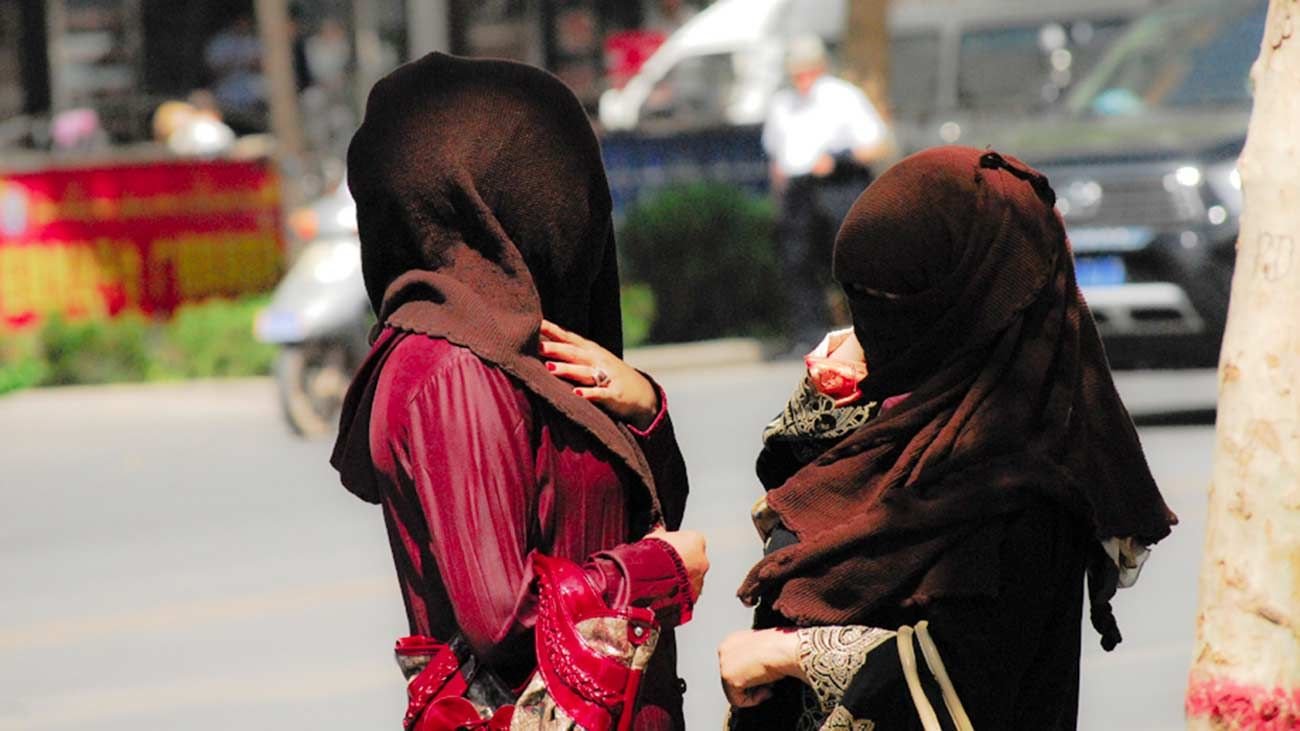
While the Chinese feminist movement is good at making international connections and is characterised by an explicit concern for intersectionality, it generally overlooks how experiences of gender and ethnicity in China overlap in complex and often brutal ways. In this essay, Séagh Kehoe looks into the plight of women and ethnic minorities in the borderland areas of Tibet and Xinjiang, and argues for increased attention and social mobilisation from abroad to address these issues.

Does China Have a Feminist Movement from the Left?

The detention of the ‘Feminist Five’ in March 2015 and the subsequent international campaign to free them marked a watershed moment for contemporary feminist movements in China (Wang 2015; Li 2017; see also Ristivojević’s essay in this issue). While Chinese women joined global feminist movements as early as the turn of the twentieth century, when […]

Chinese Feminism as We Know It: Public Pedagogies of the Anglophone Media Space

Anglophone media have been reporting about women’s activism in China since the mid-1990s. While sympathetic media coverage of the public performances of young Chinese feminists in the early 2010s gradually built up popular knowledge, interest, and support among the global audience for grassroots feminist activism in China, the arrest of the ‘Feminist Five’ in 2015 brought forward a new set of narratives.

Subscribe to Made in China

Made in China publications are open access and always available as a free download. To subscribe to email alerts for each issue of the Journal, newly published books, and information about upcoming events, please provide your contact information below.


Back to Top