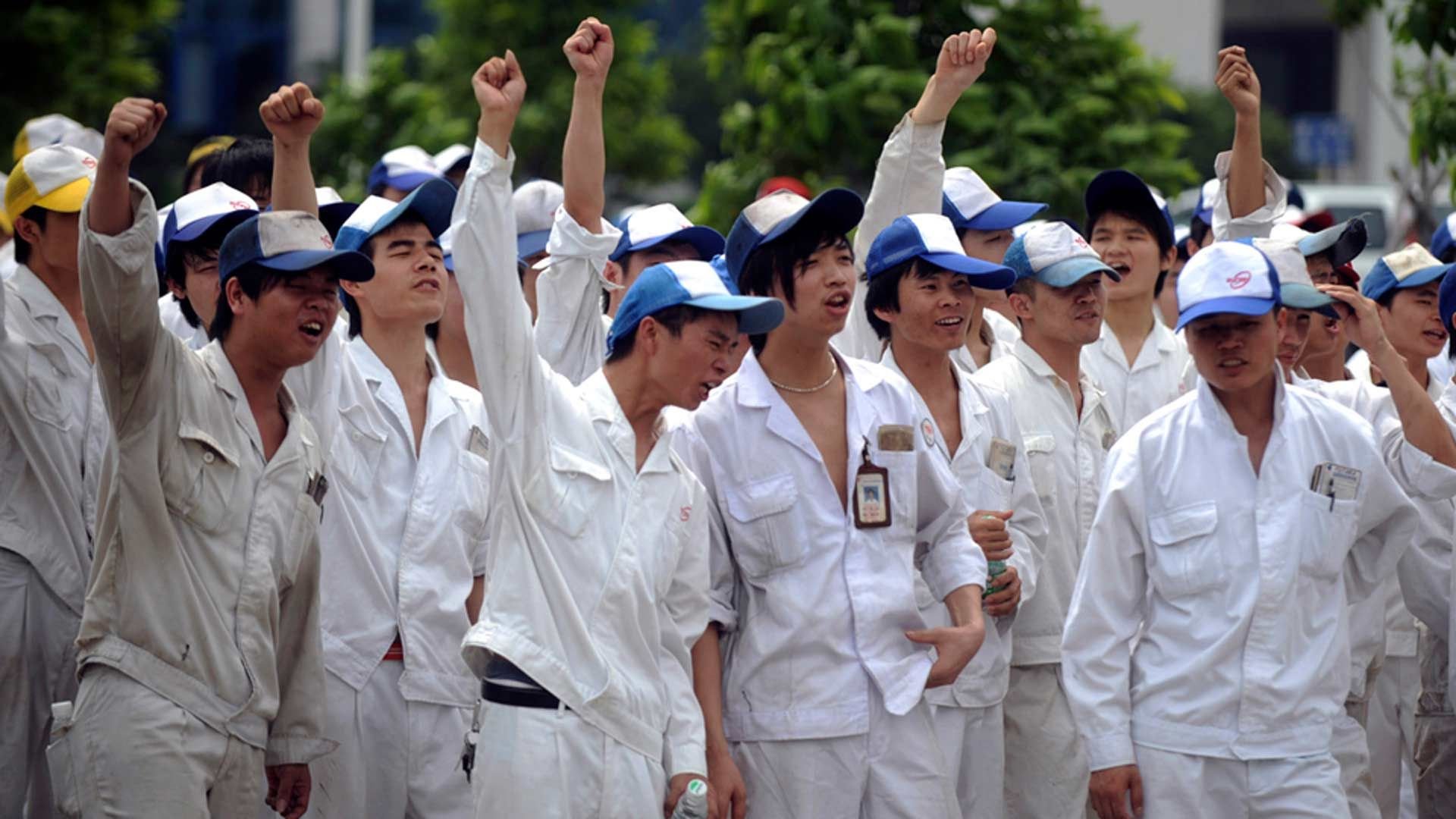
For China’s workers, the first five years of Xi Jinping’s rule (2013–2018) were characterised by slower economic growth, the decline of traditional industries such as manufacturing and mining, a rapid growth in service industries, and the increasing use of flexible or precarious labour. This led to a commensurate change in the nature and scale of […]
The year 2018 marks the fortieth anniversary of the beginning of China’s economic reform programme initiated in 1978. The rise of migrant workers’ strikes since early 2000s and the efforts of the Chinese government to rebalance and re-regulate workplace relations have created fertile ground for labour studies and labour activism in China. One of the […]
Unlike previous disasters in China, the Sichuan earthquake was extensively documented in images and film, leaving behind an archive of national trauma unparalleled in Chinese contemporary history. This essay examines 16 documentary films produced by 10 filmmakers in the wake of the disaster. These visual testimonies help preserve individual memories of a traumatic event that to a large extent is unaccounted for in the official media and cultural productions.
Parents and bystanders were among the first to provide footage of the Sichuan earthquake, shakily recorded on their mobile phones and camcorders. In contrast to earlier natural disasters, such as the Tangshan earthquake in 1976, the Sichuan earthquake has been extensively documented in images and on film. To date, at least 10 filmmakers have produced 16 independent documentary films on the earthquake and its aftermath. Many filmmakers ended up tracing the ways in which people coped with their experiences during months and even years following the disaster.
The year 2008 saw an explosion of civic activities in China, ignited by the devastating earthquake in Sichuan province. Even amid this widespread activism, Mianyang city stood out as a unique site of popular mobilisation, with local people becoming active, self-organised, and creating a network of new NGOs that exists to this day. This kind of activism was a rare thing in Sichuan, where most cities only created new NGOs with the help of external actors. This essay considers how Mianyang’s distinctive pattern of local mobilisation was enabled by public spaces, in particular the emergency shelter at Jiuzhou Stadium.
The aftermath of the Sichuan earthquake has witnessed the development of a variety of indigenous NGOs. While the first two years after the earthquake were a ‘honeymoon’ period for local governments and NGOs, after 2010 feelings became more mixed. On the one hand, a series of policies openly acknowledged the important role of social organisations in supplying public goods and social services; on the other, new laws and regulations not only restricted the activities of overseas NGOs in China, but also severely limited access to foreign funding for domestic organisations.
In the wake of the 2008 Wenchuan earthquake millions of volunteers were driven by sorrow, love, and compassion to travel to Sichuan to help with the relief effort. This spontaneous and self-organised movement of idealistic youths was unprecedented in contemporary Chinese history. However, many of them failed to transcend the boundary between simple volunteering and the type of activism necessary to address the causes of suffering in the wake of the earthquake.
During the earthquake that hit Sichuan province in 2008, over 7,000 classrooms in shoddily constructed schools collapsed, killing at least 5,000 children. Grieving parents staged protests and called for an official investigation to punish the officials and building contractors found responsible for the tragedy. The Communist Party responded with more than just censorship, imprinting its own narrative on the rescue and reconstruction, so the slogans written by grieving parents are now doubly buried underneath monuments to the Party’s glory and benevolence.
On 12 May 2008, a 7.9 magnitude earthquake hit the Wenchuan region, Sichuan province, causing widespread damage in 10 provinces, autonomous regions, and municipalities in China. According to official data, about 45 million people were affected by the seism, including no less than 69,229 casualties and 17,923 missing persons. The earthquake also resulted in tremendous […]
The Nineteenth Congress of the Chinese Communist Party (CCP) has seen an outpouring of support for strengthening environmental protections—a theme which was central to Xi Jinping’s opening speech. This event comes amid an intensified environmental crackdown across the country. Beginning in late July, drawing on the vivid metaphor of ‘cutting with a single knife’ (yi […]
When discussing the outcomes of China’s economic development, the poverty that can still be found in Chinese cities is seldom mentioned. While the Party-state is indeed making a token effort to sustain the victims of this destitution, these people and their offspring will never be able to escape this manufactured poverty. This essay looks at the policy process that led to this outcome and at the prospects for poverty alleviation in Chinese urban areas.
Made in China publications are open access and always available as a free download. To subscribe to email alerts for each issue of the Journal, newly published books, and information about upcoming events, please provide your contact information below.