
Johnnie Got His Gun, While Liang Took Up the Plough: Nostalgia in the United States and China, Then and Now

This essay examines the nostalgic pragmatism of the reformer and Confucian philosopher Liang Shuming (1893–1988). Liang’s responses to the social and economic dislocations of the early Republican era, including a series of concrete steps to ameliorate them, are surprisingly relevant to the spiralling cycles of racism and violence afflicting US society in the twenty-first century. His diagnosis of the harms of industrial society and prescription for restoring the moral as well as physical health of rural populations remain valid both for China and for the United States—in particular, with regard to addressing climate change and its attendant psychophysical trauma known as solastalgia.

Download PDF

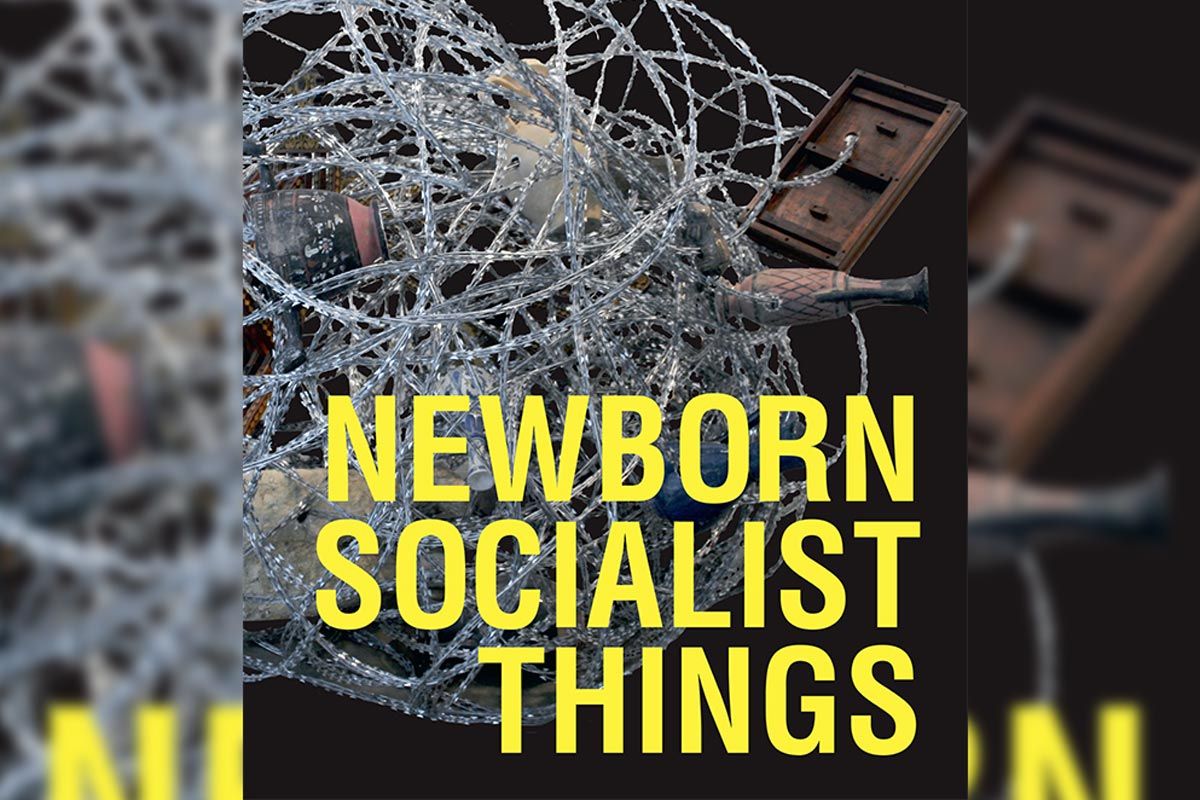
Newborn Socialist Things: A Conversation with Laurence Coderre

I recently participated in an event on ‘Socialist Stuff’ hosted by Stanford’s materia working group. Fittingly, it featured all the technical difficulties typical of hybrid in-person/remote gatherings, but we nonetheless muddled through in pursuit of a productive alchemy between Jacqueline Loss’s work on Cuba and mine on China (Loss 2013; Loss and Prieto 2012). I […]

Download PDF

Magic, Religion, and the Naturalisation of Chinese Communist Party Rule

The Chinese Communist Party (CCP) has developed strategies that draw on a dedication to the Party that is specifically religious yet does not require belief in a doctrine. These strategies revolve around the Leninist concept of ‘party spirit’, which, paradoxically, has become a commodity that is produced, supplied, and consumed. This essay discusses these strategies […]

Download PDF

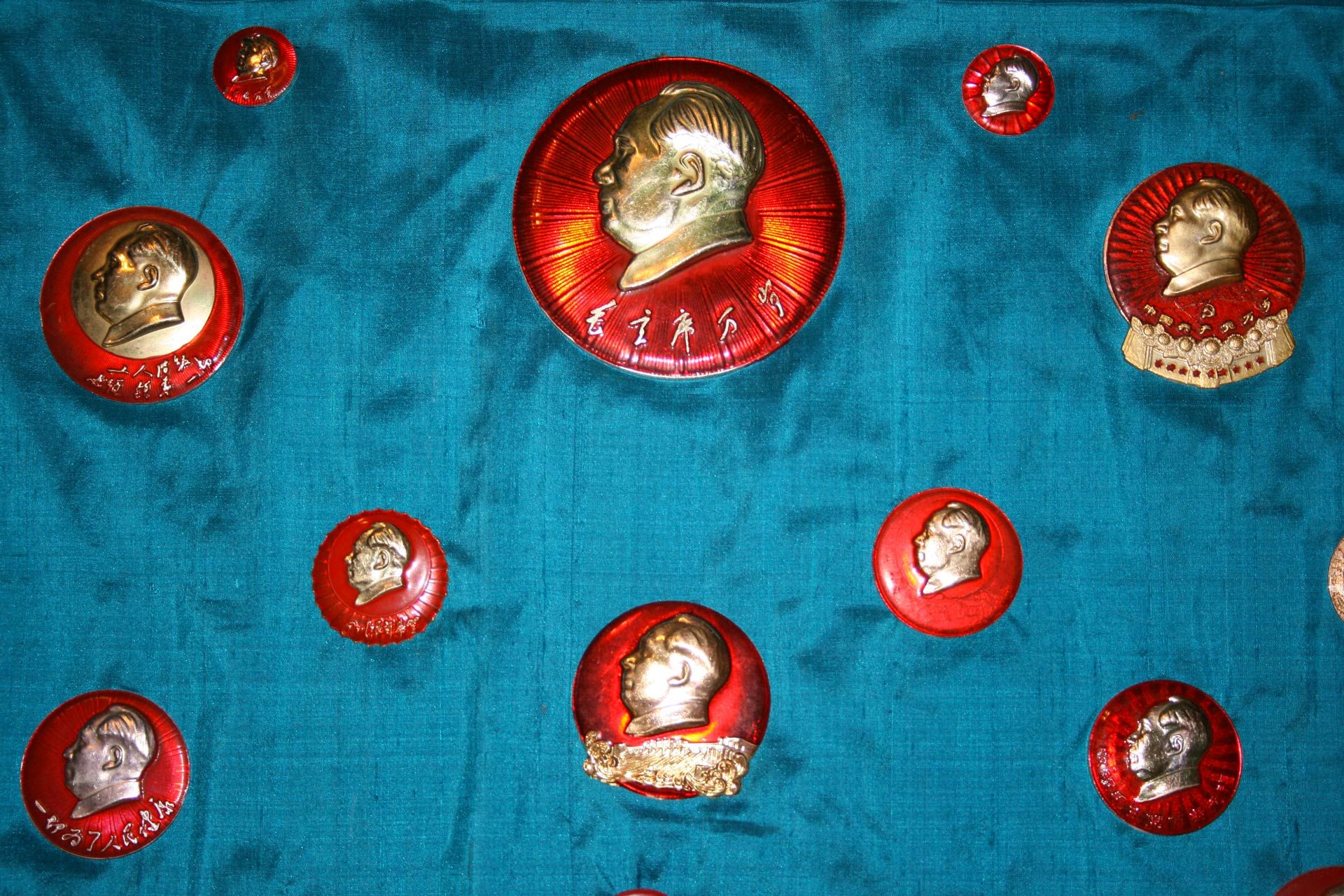
From Grassroots Nostalgia to Official Memory: Red Relics in Contemporary China

Collections of ‘Red relics’—objects relating to the history of the Chinese Communist Party—were initially understood primarily as a form of grassroots nostalgia for the supposed purity and equality of the Mao era and a reaction against the changes of the reform era. This essay argues that in recent years, these objects—particularly those from the revolutionary, pre-1949 period—have been increasingly coopted into the Party’s narrative about the rejuvenation of China under its leadership.

Download PDF

On Nostalgia and Returns

Amid a global pandemic and worsening repression in contemporary China, what does it mean to be nostalgic? This essay explores this question through two disparate but intimately connected lenses. First, it examines changing registers of nostalgia in China over the past several decades, analysing the role of the Party-State and how it is imagined in their production. Second, it examines what nostalgia might mean for scholars who study state–society relations and the production of nostalgia in China, when they confront the potential of not being able to return to China to conduct research, and the ethics of that research should they continue to engage.

Download PDF

Ideas Are Bullet-Proof: A Conversation with Ching Kwan Lee

Ching Kwan Lee is a sociology professor at the University of California, Los Angeles (UCLA), and former Chung Sze-Yuen Professor of Social Science and chair professor at the Hong Kong University of Science and Technology (HKUST, 2019–21). She is the author of several award-winning monographs on Chinese capitalism and labour, including Gender and the South […]

Download PDF

Words Against the Wind: A Conversation with Liu Wai Tong

Liu Wai Tong (廖偉棠) is a poet, writer, and photographer. He was born in 1975 in Guangdong Province, later moved to Hong Kong, lived in Beijing for five years, and currently lives in Taipei. Liu has received the Hong Kong Biennial Award for Literature, the Taiwan Times Literature Award, and the United Daily News Literature […]

Download PDF

Peddling the Revolution?

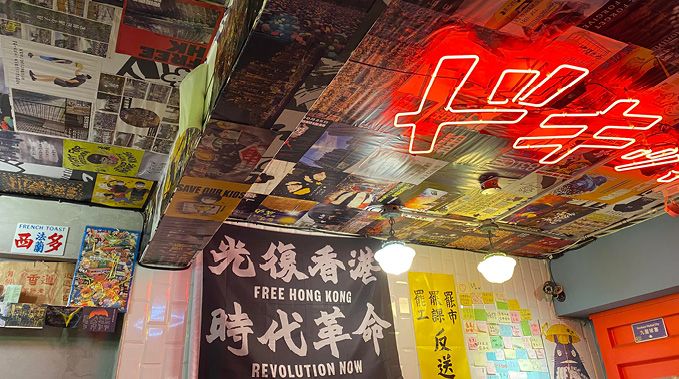
How Hong Kong’s Protesters became Online Vendors in Taiwan

Some former Hong Kong protesters who fled to Taiwan have resorted to selling local products online to Hong Kong-based consumers to make a living. This essay argues that these purchases become both an alternative form of financial support from Hong Kong’s politically conscious consumers and business transactions endowed with political meaning. Not without ambivalences, these online vendors sell more than products, but also a lifestyle, an identity, and a commitment—in short, a revolutionary dream at a time when street protests in their home city are no longer feasible.

Download PDF

Restructuring the Political Society during Autocratisation: The Case of Hong Kong

The case of Hong Kong illustrates a problem not discussed in the literature on democratization. Is it possible to create and have a functioning democratic political subsystem within a nondemocratic state? Can a democratic political subsystem exist within the overall framework of a totalitarian or post-totalitarian state? Politically, probably not—because of the example that it […]

Download PDF

Why Is Reconciliation Impossible?

On the Clash of Emotions between Hong Kong and Mainland China

This essay presents an affective analysis of the antagonism between Hong Kong and mainland China. It illustrates the contexts in which the conflicts are driven by an accumulation of emotional experiences and imaginaries. The divergent emotional positions should be understood as a consequence of nationalism and nativism. Fear and pride are two opposing emotional structures that have become the material basis of ongoing confrontations. Each side uses its own experience to erase that of the other, making regional reconciliation difficult. We suggest that comparing the two structures of feeling helps identify the psychological mechanisms at work.

Download PDF

Subscribe to Made in China

Made in China publications are open access and always available as a free download. To subscribe to email alerts for each issue of the Journal, newly published books, and information about upcoming events, please provide your contact information below.


Back to Top