

The Technopolitics of China’s Yarlung Tsangpo Dam Project and the Paradox of Hydropower
Three years after announcing their intent to construct a mega-dam along the Yarlung Tsangpo (Brahmaputra) River as part of the Fourteenth Five-Year Plan, Chinese officials gave their approval to proceed with the project on 25 December 2024. This was followed by a ground-breaking ceremony led by Premier Li Qiang on 19 July 2025. While key details of the project remain unknown, the construction of the dam has sparked considerable debate about its environmental impacts as well as its potential to exacerbate tensions with downstream states (Pearce 2025). However, much of this debate neglects the technopolitical logic that not only shapes Chinese officials’ attachment to hydropower, but also their elision of its paradoxical outcomes. In essence, officials view hydropower as foundational to China’s energy and water security, economic development, and energy transition despite its negative impact on each of those efforts. This paradox reveals how technopolitical dependencies emerge whereby technological solutions produce new conditions that necessitate additional technologies for their success. As a result of this ‘fix to fix the fix’ dynamic, officials become locked into path dependencies, thereby undermining system resilience (Harrell 2022). These recursive dynamics entrench the state’s reliance on large-scale infrastructure, obscuring alternatives and reinforcing an ideology of control through engineering.
Technopolitics and the Yarlung Tsangbo Dam Project
Technopolitics involves the design and use of technology to advance political objectives. However, despite this expressed intentionality, technopolitical implementation produces social and material effects that are often unintended by proponents (Hecht 2011: 3). These technologies, once implemented, can acquire their own agency and power, thus requiring political actors to implement additional technological solutions to ensure their success. In the Chinese context, technopolitics is deeply shaped by the intersection of the country’s long hydrological history (Ball 2017), the technocratic approach of the Chinese Communist Party (CCP) to exercising mastery over the environment (Crow-Miller et al. 2017), and security and development discourses that link social stability to economic development, which underpin these processes (Garcia and Guerreiro 2025). This intersection produces a form of state-building in which infrastructural interventions are not merely technical solutions but also imbued with ideological significance, legitimising state authority and reinforcing centralised control over frontier regions (Zhang 2025).
The Yarlung Tsangpo Dam, projected to cost US$167 billion and generate a staggering 60 gigawatts of electricity—three times that of the Three Gorges Dam—embodies this complex intersection. Nevertheless, while its scale and scope exceed that of the roughly 100,000 other dams in the country (Song et al. 2022), the mega-dam reflects a continuation of China’s historical hydrological engineering practices and technocratic approach to national development through mastery over the environment (Shapiro 2001). More importantly, the project represents the technopolitical implementation of security and development discourses. The CCP has consistently mobilised discourses that link underdevelopment to social instability. As a result, underdevelopment is viewed as a leading indicator of insecurity and detrimental to the party’s legitimacy (Garcia 2021). This discourse is especially salient in the less developed interior and frontier provinces with sizeable minority populations, such as Tibet, where the CCP perceives the development gap as a key factor in driving unrest and social tensions (Garcia 2021). Consequently, party officials have sought to address this issue through infrastructure that is intended to simultaneously generate economic activity while extending the reach of the state, illustrating the co-constitutive relationship between infrastructural and despotic power (Mann 1993). In this framing, the Yarlung Tsangpo Dam project is a vehicle for addressing several interconnected developmental challenges within China, which are expected to contribute to social stability and therefore security.
Proponents of the dam view its construction as a way to stabilise energy provision within Tibet and neighbouring provinces, which have experienced electricity shortages in the past (People’s Daily 2013). Furthermore, the dam would enable Tibet to transmit electricity to more developed provinces further east whose energy demands continue to grow (Shen et al. 2024). In other words, Tibet is expected to emerge as an energy hub by leveraging its vast hydropower potential (Xizang Autonomous Region Development and Reform Commission 2021). Party officials also regard this as a key step towards accelerating economic development in Tibet since energy security is intended to attract industries that can develop human capital (Xinhua 2024). From their perspective, these dynamics would better integrate Tibet into the rest of China while bridging the development gap with other interior provinces, thus addressing what they believe to be the primary source of social tensions in the province. Additionally, the presence of a high-profile infrastructure project functions as a performative display of state power and commitment to long-term development in a geopolitically sensitive region. Finally, the Yarlung Tsangbo Dam project is also viewed as vital to China’s transition to renewable energy as Beijing seeks to meet its carbon emission reduction goals (Xinhua 2024). However, despite these stated aims, the implementation of mega-dams such as the one proposed on the Yarlung Tsangbo exposes the paradox of hydropower.
The Paradox of Hydropower
Given China’s massive population, growing energy demands, ambitions for energy diversification, decarbonisation goals, stark economic disparities between coastal and interior regions, and persistent water insecurity, it is understandable that CCP officials are driven to pursue large-scale hydropower expansion. Hydropower projects impact the nature around them, the economies developed from them, the energy distributed by them, and the politics holding them up. They represent the juxtaposition of energy and nature. On a grand scale, hydropower is a technology that simultaneously introduces great gains and great pains. Supporters of large-scale dams tout the ability of these projects to generate reliable and affordable energy, become a catalyst for economic development, and spearhead the transition to green energy.
However, while hydropower projects can ostensibly support these efforts, they often produce opposite outcomes. Large hydropower projects demonstrably ravage local ecologies and river basin health, suffer from cost overruns, become mired in bloating operating costs, hinder agricultural output, force mass relocations, and create flooding and energy burdens for planners (Petheram and McMahon 2019; Fan et al. 2021). As a result, these outcomes erode ecological, social, and institutional resilience (Harrell 2022). The paradoxes of large-scale dams are neither new nor unique, yet the sheer volume of China’s pursuit of hydropower warrants a continuing discussion about the wisdom of pursuing not only large dams, but also mega-dams.
China is already a world leader in dam development and possesses an extremely long history of hydrological engineering. Yet, this long history does not stop the increased development of dams regardless of the documented drawbacks within China. For example, the argument that dams offer affordable energy should come with the caveat that dams inevitably will cost more in the long run than initially estimated, with cost overruns ranging from 49 per cent to 120 per cent (Petheram and McMahon 2019). These costs are not merely financial but also environmental, social, and political, spurring unrest in relocated communities and challenging the very legitimacy of local governance that these projects are intended to reinforce (Xu et al. 2023).
Furthermore, the expectation that dams will catalyse economic development and urbanisation must be qualified with the caveat that, globally, dams produce opposite effects, with many reducing local GDP, population, and urban spaces (Fan et al. 2021). Within China, projects such as the Sanmenxia Dam exemplify this. Built in the early years of the People’s Republic of China, the dam was supposed to offer complete control of the Yellow River and help farmers by reducing flooding, resisting sediment flow, and boosting development (Shapiro 2001). However, the dam failed to deliver on these promises, leading to sediment build-up and flooding. This required costly renovations that limited the energy generation capacity of the dam while retaining sediment and flood risks. In essence, the Sanmenxia Dam remains an economic and ecological burden on the Yellow River Basin to this day. Consequently, it illustrates the paradox of hydropower and challenges triumphalist narratives about technological mastery over the environment, revealing instead the long-term costs of centralised, high-modernist planning that fails to adapt to environmental complexity.
Technopolitical Dependencies
Hydropower’s complex reality inevitably generates technopolitical dependencies. This refers to the dependent relationship political systems develop with technology or, in this case, infrastructure. These dependencies effectively become co-constitutive. Political capital is expended on technological solutions and implementation; as the technology becomes entrenched in daily operations, it becomes foundational to the broader system. Problems stemming from this technology must be addressed with increased layers of technology or continuous improvements to existing technology. This dependency runs so deep that this solution is now directly tied to the legitimacy and power of the state, and the state now must expend political capital to continuously maintain the technology.
Existing examples of this in China include the relationship between the Chinese State, water (in)security, and large-scale infrastructure to address the existing challenges. It is no secret that the combination of pre-existing environmental conditions, rapidly expanding urbanisation, and a changing climate has introduced historic heatwaves and drought to China. Coupled with increased industrial and agricultural use of water, freshwater resources are a precious commodity in China. To address the challenges of water security, the CCP has supported multiple large-scale infrastructure projects, including the South–North Water Diversion Project (SNWDP) and the Three Gorges Dam. Both projects were introduced as solutions to pressing challenges. They were intended to address water availability, flood control, energy demands, and developmental needs. Both projects are centrepieces of CCP legitimacy within China as a nod towards engineering marvels and mastery over the environment. The SNWDP and the Three Gorges Dam also came at a great cost, with the relocation of more than one million people and an estimated price tag of more than US$100 billion combined.
These two projects illustrate clear technopolitical dependencies. They are now foundational in diverting water to drought-ridden regions, controlling floods for the fragile agricultural sector, and generating power on a large scale. Over time, however, their unintended consequences have become increasingly pronounced. Both the SNWDP and the Three Gorges Dam have been linked to a wide range of environmental problems, including erosion, sedimentation, deforestation, wildlife extinction, natural disasters, and terrestrial adjustments (Li et al. 2013; Rogers et al. 2019). As a result, the CCP must address these issues without compromising on the political power placed on these two projects. The embeddedness of these infrastructure projects in the national imaginary as symbols of progress makes it difficult for officials to scale back or reconsider their viability. Instead, the response often takes the form of doubling down and introducing new interventions, technologies, or regulations to stabilise what has become politically indispensable, even if environmentally or economically unsustainable.
Implications
The proposed Yarlung Tsangpo Dam encapsulates China’s technopolitical strategy of addressing energy and water security, regional underdevelopment, and carbon reduction goals through large-scale infrastructure. While framed as a solution to these challenges, the dam reflects entrenched state practices that prioritise technological mastery over environmental and social stability. In other words, these megaprojects are not simply engineered responses to technical problems but also political acts that reinforce dependencies between the infrastructure and state legitimacy. As past cases such as the Sanmenxia Dam, SNWDP, and Three Gorges Dam demonstrate, these dependencies often lead to escalating financial, ecological, and political costs.
The implications are profound. First, by investing political capital in megaprojects with uncertain long-term benefits, the Chinese State risks deepening the very insecurities it seeks to resolve. Second, the environmental disruptions in one of the world’s most ecologically and geopolitically sensitive regions may exacerbate tensions with downstream neighbours. Last, the dam reinforces a cycle in which each infrastructural ‘solution’ demands further technological fixes, creating a feedback loop of dependency and degradation of system resiliency. Rather than signalling progress, the Yarlung Tsangpo Dam may come to symbolise the limits of technocratic governance and the paradoxes of development-by-infrastructure—challenges not unique to China, but increasingly central to global debates about sustainable modernisation.
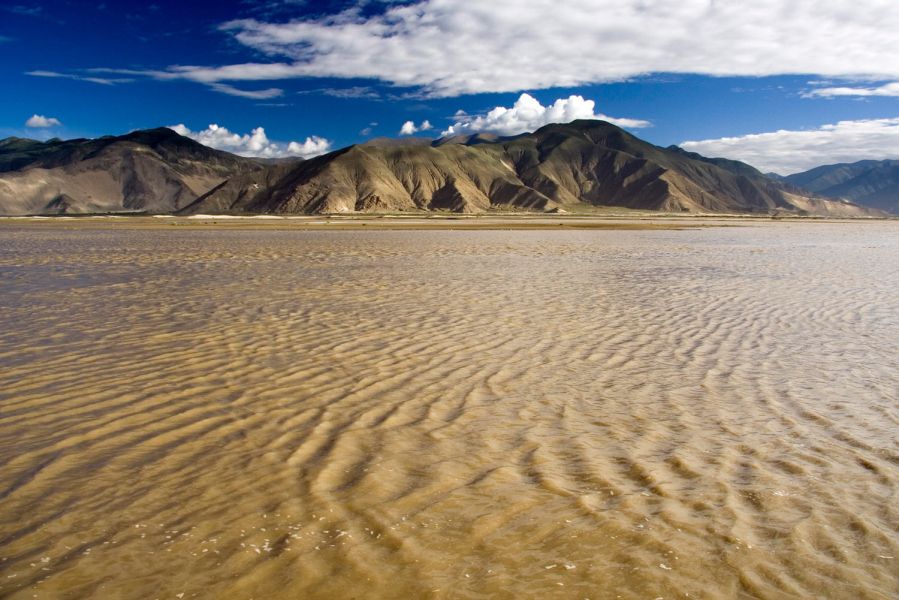
Featured Image: Yarlung Tsangpo river in Tibet. Source: Luca Galuzzi (CC), www.galuzzi.it.
References:
Ball, Philip. 2017. The Water Kingdom: A Secret History of China. Chicago, IL: Chicago University Press.
Crow-Miller, Brittany, Michael Webber, and Sarah Rogers. 2017. ‘The Techno-Politics of Big Infrastructure and the Chinese Water Machine.’ Water Alternatives 10(2): 233–49.
Fan, Peili, Myung Sik Cho, Zihan Lin, Zutao Ouyang, Jiaguo Qi, Jiquan Chen, and Emilio F. Moran. 2021. ‘Recently Constructed Hydropower Dams Were Associated with Reduced Economic Production, Population, and Greenness in Nearby Areas.’ Proceedings of the National Academy of Sciences 119(8): e2108038119. https://doi.org/10.1073/pnas.2108038119.
Garcia, Zenel. 2021. China’s Western Frontier and Eurasia: The Politics of State and Region-Building. London: Routledge.
Garcia, Zenel, and Phillip Guerreiro. 2025. ‘The Technopolitics of State and Region-Building: Examining China’s Belt and Road Initiative in Its Southwestern Frontier and Southeast Asia.’ The Chinese Journal of International Politics 18(3): 294–312.
Harrell, Stevan. 2022. ‘Prometheus Brings Water: Development and Fix-Fixing in China.’ Made in China Journal 7(2): 108–15.
Hecht, Gabrielle. 2011. ‘Introduction.’ In Entangled Geographies: Empire and Technopolitics in the Global Cold War, edited by Gabrielle Hecht, 1–12. Cambridge, MA: MIT Press.
Li, Kaifeng, Cheng Zhu, Li Wu, and Linyan Huang. 2013. ‘Problems Caused by the Three Gorges Dam Construction in the Yangtze River Basin: A Review.’ Environmental Reviews 21(3): 127–35.
Mann, Michael. 1993. The Sources of Social Power: The Rise of Classes and Nation-States, 1760–1914. Cambridge, UK: Cambridge University Press.
Pearce, Fred. 2025. ‘China’s Mega Dam Project Poses Big Risks for Asia’s Grand Canyon.’ Yale Environment 360, 14 May. New Haven, CT: Yale University. e360.yale.edu/features/china-tibet-yarlung-tsangpo-dam-india-water.
People’s Daily. 2013. ‘青藏联网工程满周岁 电力天路亮雪域 [The Qinghai–Tibet Interconnection Project Celebrates Its First Anniversary, with Electricity Paving the Way for a Brighter “Snowy Land”].’ 人民日报 [People’s Daily], 4 January. www.chinanews.com.cn/ny/2013/01-04/4454962.shtml.
Petheram, Cuan, and Thomas A.M. McMahon. 2019. ‘Dams, Dam Costs and Damnable Cost Overruns.’ Journal of Hydrology X 3: 100026.
Rogers, Sarah, Dan Chen, Hong Jiang, Ian Rutherfurd, Mark Wang, Michael Webber, Britt Crow-Miller, Jon Barnett, Brian Finlayson, Min Jiang, Chenchen Shi, and Wenjing Zhang. 2019. ‘An Integrated Assessment of China’s South–North Water Transfer Project.’ Geographical Research 58(1): 49–63.
Shapiro, Judith. 2001. Mao’s War Against Nature: Politics and the Environment in Revolutionary China. Cambridge, UK: Cambridge University Press
Shen, Bo, Anders Hove, Junfeng Hu, Max Dupuy, Lars Bregnbæk, Yuejun Zhang, and Ning Zhang. 2024. ‘Coping with Power Crises under Decarbonization: The Case of China.’ Renewable and Sustainable Energy Reviews 193: 114294.
Song, Chunqiao, Chengyu Fan, Jingying Zhu, Jida Wang, Yongwei Sheng, Kai Liu, Tan Chen, Pengfei Zhan, Shuangxiao Luo, Chunyu Yuan, and Linghong Ke. 2022. ‘A Comprehensive Geospatial Database of Nearly 100,000 Reservoirs in China.’ Earth System Science Data 14(9): 4017–34.
Xinhua. 2024. ‘雅鲁藏布江下游水电工程已获核准 [The Hydropower Project on the Lower Reaches of the Yarlung Tsangpo River Has Been Approved].’ 新华社 [Xinhua], 25 December. www.news.cn/politics/20241225/b61f14cad5c046a0a209bf36fa99d69b/c.html.
Xizang Autonomous Region Development and Reform Commission. 2021. ‘西藏自治区国民经济和社会发展第十四个五年: 规划和二〇三五年远景目标纲要 [The 14th Five-Year Plan for National Economic and Social Development of the Tibet Autonomous Region: Outline of the Plan and Long-Term Goals for 2025].’ Xizang Autonomous Region Development and Reform Commission website, 21 January. drc.xizang.gov.cn/xwzx/daod/202103/t20210329_197641.html.
Xu, Qinhong, Rutgerd Boelens, and Gert Jan Veldwisch. 2023. ‘The Evolution of China’s Rural Water Governance: Water, Techno-Political Development and State Legitimacy.’ The Journal of Peasant Studies 51(3): 717–37.
Zhang, Hong. 2025. ‘Infrastructure and State-Building: China’s Ambitions for the Lower Yarlung Tsangpo Project.’ Made in China Journal 9(2). Online first at madeinchinajournal.com/2025/08/07/infrastructure-and-state-building-chinas-ambitions-for-the-lower-yarlung-tsangpo-project.