
Only Two Genders? On Jin Xing’s Reaffirmation of Gender Binarism and Heteronormativity
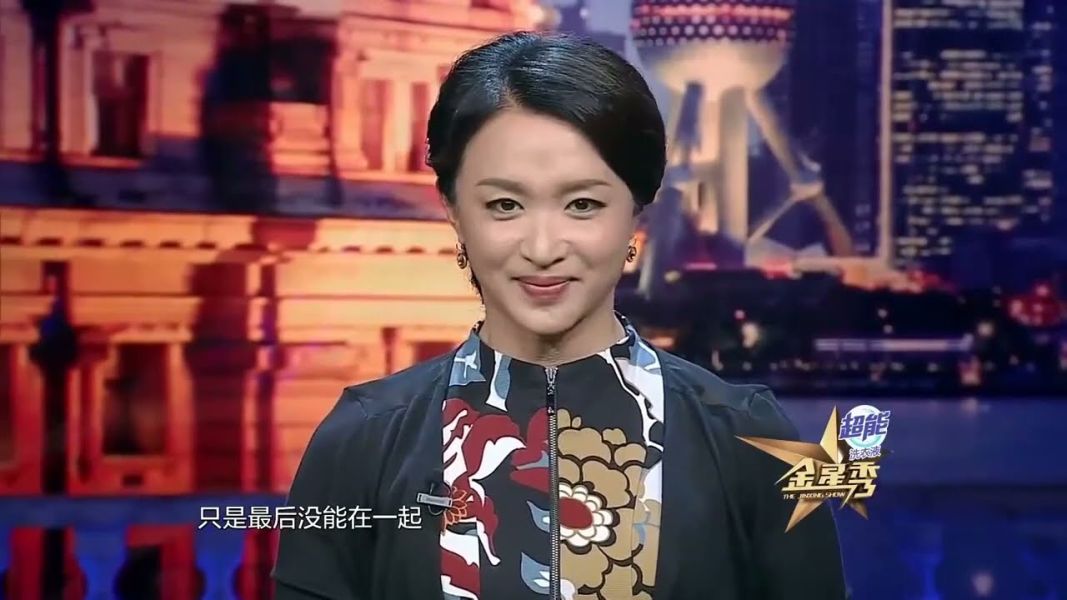
Jin Xing 金星 (literally, ‘golden star’, or ‘Venus’ in English) is a household name in mainland China. Since undergoing gender-affirmation surgery in 1994, she has established herself as a dancer, television personality, businesswoman, and, most prominently, transgender icon. From 2015 to 2017, The Jin Xing Show (金星秀) on Dragon Television (东方卫视) made her China’s first openly transgender TV host on a mainstream platform. Beyond her stardom, Jin Xing has often been positioned as a representative figure for gender and sexual minorities within the ever-evolving socioeconomic landscape of post-socialist China, particularly in relation to the neoliberal and cosmopolitan ideals of mainstream life (Davies and Davies 2010: 188; Zhao 2025: 1).
In late 2024, Jin Xing joined the Chinese diaspora, reportedly due to an unofficial ban from China’s domestic performing arts industry. In a February 2025 interview with Radio Free Asia (RFA 2025) titled ‘Modern Dance Artist Jin Xing: True Freedom Is the Extent of Your Freedom of Thought’ (现代舞艺术家金星: 真正的自由是你思想有多大自由), the now Paris-based artist stated: ‘I believe there are only two genders in human society.’ While acknowledging the existence of more than 50 sexual orientations (性取向), she rejected the notion of ‘50 genders’ that has emerged in the context of American discourses on gender, characterising it as ‘wrong’. This seemingly ‘paradoxical’ stance is consistent with her longstanding advocacy of heteronormative ideologies regarding relationships, marriage, and familial obligations—positions she frames as expressions of traditional Chinese values (Shi 2018). At the same time, while not disavowing affiliation with the LGBTQ+ community, Jin Xing has repeatedly asserted in interviews and in her 2005 autobiography, Shanghai Tango: A Memoir (半夢: 金星自傳), that she has never identified as homosexual.
Jin Xing’s shifting status as a diasporic figure must be situated within the broader context of intensifying cultural tensions and state policies concerning gender, sexuality, and activism in China. It also reflects her evolving role in both Chinese and transnational public spheres, as well as her own self-identification and critical (dis)engagement with popular discourses on gender and sexuality in a global frame. Rather than viewing her transgender identity alongside her reaffirmation of gender binarism as a ‘paradox’, this essay argues that it is precisely the consolidation of gender binarism and heteronormative ideals that enables Jin Xing not only to remain a figure palatable to mainstream representation in China but also to act as an agent for imagining political and sexual otherness within and beyond China.
Living as a Complex Figure
Born in 1967 in Shenyang, Liaoning Province, Jin Xing grew up in a family of Chosŏnjok (朝鮮族, ethnic Korean-Chinese) heritage. As she recalls in her autobiography: ‘I was born in China; however, in terms of life experience, I am an authentic Korean’ (Jin 2005: 3). In 1973, she began training with a military dance troupe in Shenyang, later joining the People’s Liberation Army dance troupe in Beijing (1980–84). From 1989, she studied and performed in South Korea, the United States, Italy, Belgium, and the United Kingdom. In 1994, she returned to Beijing, where she underwent gender-affirmation surgery. Before moving to Shanghai in 1999 to establish the Jin Xing Dance Troupe and later to launch The Jin Xing Show, she also owned a bar in Beijing named Half Dream.
Placed in a broader context, her life story encompasses much of China’s modern history, from the Reform and Opening-Up period to the social, cultural, and economic transformations shaped by post–Cold War and neoliberal capitalism (Ma 2024). On a personal level, Jin Xing has presented some challenges to normative understandings of gender and sexuality, earning a reputation in China as both radical and provocative. For example, in her autobiography, she recalls feeling sexually stimulated by a male body’s scent as a child and recounts masturbating for a secretary in her military dance troupe at age 10 (Jin 2005: 10, 23). The men with whom Jin Xing interacted did not perceive themselves as ‘homosexual’, and Jin interpreted their reactions as seeing her as a ‘loveable little girl’ (乖巧的小女孩) rather than as a boy (Jin 2005: 24). By the 1990s, her gender identity had already made her a controversial figure in China. A Beijing Youth Daily (北京青年報) article described her as ‘an amphibious person’ (两栖人) (Jin 2005: 166). Yet, she was neither the first person to transition in contemporary China nor the first to attract controversy.
In contrast, many other peers were represented negatively, pathologised, or excluded from media and social environments (Bao 2024: 130–31). Among them was Li Ermao 李二毛, a transgender migrant worker whose struggles with prejudice, unstable relationships, addiction, and financial precarity illustrate the systemic challenges faced by gender-diverse individuals in China, as documented in The Two Lives of Li Ermao (李二毛的双重人生, 2019). Filmed over 17 years across southern China by Jia Yuchuan, a documentary director and former photojournalist, the film brought Li Ermao’s life stories to wider attention both within and beyond China, screening at queer film festivals in the United Kingdom, the United States, and Australia. However, Li Ermao’s story was often reported in Chinese-language online media using disrespectful, sensationalist, and pathologising language. She was described as ‘a transgender person at the bottom of society’ (底层跨性别者), with emphasis on her longing to become a woman and achieve fame, her addictive personality, and victimhood in poverty, trauma, and failure. Her death after a short illness in 2019 in Shenzhen, three years after the Trans China conference in Ningbo, underscored the urgent need for reforms in China’s trans-specific health care and legal rights (Bernotaite et al. 2018: 474).
By contrast, Jin Xing’s social, financial, and cultural capital positioned her at the forefront of what Jamie Zhao (2025: 2) terms the ‘Chinese cosmopolitan-neoliberal framework’. Her receipt of a prestigious scholarship to study modern dance in the United States in 1988 and her collaborations with government agencies and cultural institutions, including the Ministry of Culture of China and the Beijing Municipal Bureau of Culture, reflect this privileged status (Jin 2005: 185). On television, Jin Xing combined a sharp televisual persona and distinctive hosting style with frequent recollections of her experiences in the United States and Europe, as well as interactions with global celebrities. Through this, she articulated a ‘unique Chinese neoliberal rhetoric and related subjectivities in the contemporary, globalist era’ (Zhao 2025: 4). She also gained a reputation for her ‘poisonous tongue’ (毒舌) style, delivering commentaries on topics ranging from social media trends and entertainment industry gossip to personal relationships and broader social issues. Notably, her talk shows never explicitly addressed transgender issues. Instead, while foregrounding her female identity—often referring to herself as Sister Jing (金姐)—she consistently reinforced heteronormative ideologies, illustrating how transgender visibility can (harmoniously) coexist with the affirmation of normative social structures. A striking example was her recurring gesture of asking guests to choose between two red armchairs, one ‘leading to pregnancy’ and the other ‘leading to marriage’.
Aligning with Dominant Gender Norms
Since the cancellation of The Jin Xing Show in 2017 and especially since the Covid-19 pandemic, the broader landscape for gender and sexuality minorities in China has shifted. In 2021, Shanghai Pride cancelled all activities in China and many LGBTQ+ groups—including the Beijing LGBT Centre—were shut, raising fears of a crackdown on activism in China (Liang 2023; Wang 2023). Cultural and social spaces for gender and sexual minorities have shrunk in recent years. In parallel, Jin Xing’s national dancing tours were (quietly) cancelled or not renewed, with no authorities at either the national or the municipal level issuing explicit bans or official explanations. This form of ‘soft’ censorship directed at a formerly mainstream transgender celebrity reflects a broader pattern in contemporary Chinese culture, characterised by official non-approval, public invisibility, and media silence. The point here is not to speculate on the reasons for her ‘soft’ cancellation, but to emphasise that, after leaving China and entering the diaspora, Jin Xing has openly critiqued social values, aesthetic expectations, and censorship, while at the same time reaffirming gender binarism, even as she acknowledges the existence of multiple sexual orientations beyond gender categorisation.
Since late 2024, Jin Xing has been based in Paris. Her entry into the diaspora has opened a space between the worlds she has inhabited—one that allows for her continued pursuit of artistic freedom, critique of digital culture in contemporary China, and reclamation of her voice through (dis)engagement with global discourses on gender and sexuality. In an interview with Radio France Internationale in December 2024, she suggested that the cancellation of her performances in China may have stemmed from a benign, spontaneous gesture during a January performance in Taiyuan, Shanxi Province, when she accepted a rainbow flag from an audience member and voiced the slogan ‘Love is love, it has nothing to do with gender’ (爱就是爱, 与性别无关). This ‘chance event’ (偶然的事件), as she described it, was intended to ‘calm the audience’s excitement’ (平复观众激动的情绪), rather than to express her own stance on gender equality (Radio France Internationale 2024).
Her insistence on the ‘accidental’ nature of the moment reflects both her cautious disengagement from debates on gender within China’s suppressive environment and her position as not entirely disavowing herself from the LGBTQ+ community. This stance may be read as a strategy to account for the cancellation of her performances in China, while simultaneously linking LGBTQ+ activism to broader social concerns such as freedom, censorship, and bureaucratic non-approval. In her February 2025 interview with RFA, she reiterated:
First of all, I did not think of myself as a homosexual. When I was in the United States, I came to understand that people could talk about this topic openly, fairly, and peacefully. I then asked myself, ‘Am I homosexual?’ Many homosexual people told me that I was not. Then I told them I wanted to be a woman. They told me I might be transgender. (Translation by the author)
This echoes her earlier claim in her autobiography, Half Dream, that ‘I am not homosexual’ (Jin 2005: 122), made during an encounter with a French dancer named Sylvie in Rome.
If Jin Xing’s distancing from LGBTQ+ rights activism is understood as a strategy to align with dominant norms in Chinese society—where the LGBTQ+ community is sometimes portrayed as an agent of foreign influence—then her repeated assertion that ‘I am not homosexual’ suggests a deliberate positioning within heteronormativity. By affirming herself as a woman, highlighting her married life with her German husband and adopted children, and promoting ideologies of marriage and reproduction on her television show, she reframes her identity in socially and culturally legible, thus more tolerable, terms as heterosexual, given the stigmatisation and pathologisation historically attached to the categories of homosexual (同性恋) and transgender (跨性別).
Adding further complexity to her negotiation of legibility, Jin Xing reinforces a heteronormative framework with another statement in the RFA interview: ‘I believe there are only two genders in human society.’ When asked whether her female identity had made it easier for her to gain public recognition and acceptance—given that homosexuals and other sexual dissidents are still viewed as sexual minorities in China—she responded:
I believe there are only two genders in human society—and I still hold this view: male and female. But when it comes to sexual orientation, there may be more than 50 types. For example, in the United States, more than 58 genders are recognised, but I would say, it’s not like that, don’t confuse the concepts. Gender is either ci [雌, ‘female’] or xiong [雄, ‘male’]. Sexual orientation—your self-identified sexual orientation—may well take more than 50 forms. (RFA 2025; translation by the author)
On a linguistic level, Jin Xing employs the pair of words commonly used to describe the nature of animals and plants, ci and xiong, to classify male and female characteristics in a biological sense. More importantly, this choice reflects her reaffirmation of a normative framework by insisting on a male–female binarism, through which she may have secured greater social recognition and thereby entered the terrain of heterosexuality. In other words, by distancing herself from a minoritised subjectivity—both sexually and politically—she reproduces an explicit normative distinction between genders rather than dismantling the binary altogether. Beyond this binary, however, multiple terms exist to describe gender. For instance, in 2014, Facebook introduced a list of 58 gender classifications—including genderfluid, gender variant, and nonbinary (Cartwright and Nancarrow 2022: 584)—whereas the current system on the platform restricts users to selecting ‘male’, ‘female’, or a customised option. Jin Xing may have been referring to this when she blurred the concepts of ‘gender’, ‘sexuality’, and ‘sexual orientation’ in the interview; what is more important is the acknowledgement that many gender identities exist beyond the male–female dichotomy.
The point here is not to settle which concepts, definitions, or distinctions are ‘correct’. Rather, debates about gender—as a word, a term, a concept, and a performativity—demonstrate that gender is never defined, understood, or performed within a single category. Having been part of the diaspora as early as the late 1980s, and again from late 2024, Jin Xing has been exposed to global discourses on gender and sexuality, with all their issues, concerns, fears, and political stakes. Her sense of self seems to be bound up with the language she uses to describe both herself and gender categories, suggesting a closing-off of engagement with other possible languages—including what some would call the very concept of ‘gender’. Perhaps Jin Xing would prefer to live as one of the transgender people whom Judith Butler, in Who’s Afraid of Gender (2024: 236), describes as those who ‘affirm the binary model and only want to find their rightful place either as a man or as a woman and to live peaceably, if not joyously, in that linguistic abode’.
This perspective also resonates with several chapters in Howard Chiang’s Transgender China, in which the authors illustrate how Chinese-language media and cultural institutions render transgender people legible and comprehensible to the public by aligning them with binary gender models (see, for instance, Chapters 7, 9, and 10 in Chiang 2012). They demonstrate how transgender identities are frequently normalised or domesticated through the reinforcement of gender binarism in film, television, and performance. These representational strategies reveal that transgender lives—whether embodied in celebrities such as Jin Xing or mediated across Chinese-language media—are often presented within binary frameworks that simultaneously enable recognition while constraining possibilities for diversity and dissidence.
Negotiation and Survival
My analysis of recent interviews and her autobiography, Shanghai Tango: A Memoir, contextualises Jin Xing’s reaffirmation of gender binarism and her disengagement from gender fluidity, diversity, and equality. By unpacking the complexities of her life as a transgender woman and celebrity both within and outside China, I propose that we view Jin Xing’s transgender identity and her reinforcement of gender binarism not as a ‘paradox’. Rather, we should understand that the consolidation of gender binarism and heteronormative ideals—perhaps in a seemingly paradoxical way—enables Jin Xing not only to remain a palatable subject for mainstream representation in China, but also to act as an ethical agent, imagining sexual, cultural, and political otherness within and beyond China.
Her statements—both ‘I am not a homosexual’ and ‘I believe there are only two genders in human society’—should thus be understood as negotiations of legibility and survival within a heteronormative framework. They reflect both conformity—a means to gain social acceptance and maintain her public career and stardom—and contradiction, since her life as a transgender woman in post-socialist China complicates the binaries she strategically affirms on screen, on paper, and on stage.
References
Bao, Hongwei. 2024. ‘Becoming Trans Celebrities: Visibility, Embodiment and Contemporary Chinese Gender Politics.’ In Feminist Activism in the Post-2010s Sinosphere: Identifying Issues, Sharing Knowledge, Building Movements, edited by Elisabeth L. Engebretsen and Jinyan Zeng, 129–144. London: Bloomsbury Academic.
Bernotaite, Ausma, Lukas Berredo, and H.C. Zhuo. 2018. ‘Chinese Trans Advocates Organize Nationally: A Conference Report.’ TSQ 5(3): 473–86.
Butler, Judith. 2024. Who’s Afraid of Gender? London: Allen Lane.
Cartwright, Trixie, and Clive Nancarrow. 2022. ‘A Question of Gender: Gender Classification in International Research.’ International Journal of Market Research 64(5): 575–93.
Chiang, Howard (ed.). 2012. Transgender China. New York, NY: Palgrave Macmillan.
Davies, Gloria, and M.E. Davies. 2010. ‘Jin Xing: China’s Transsexual Star of Dance.’ In Celebrity in China, edited by Louise Edwards and Elaine Jeffreys, 169–91. Hong Kong: Hong Kong University Press.
Jin, Xing 金星. 2005. 半夢: 金星自傳 [Shanghai Tango: A Memoir]. Beijing: Citic Publishing House.
Liang, Annabelle. 2023. ‘China Crackdown Pushes LGBT Groups into the Shadows.’ BBC News, 28 June. www.bbc.com/news/business-65806846.
Ma, Yahia. 2024. ‘Translating the Life of Jin Xing.’ In Queer Literature in the Sinosphere, edited by Hongwei Bao and Yahia Ma, 63–80. London: Bloomsbury Academic.
Radio France Internationale. 2024. ‘金星: 为什么取消我的舞台? 请给我一个理由 [Jin Xing: Why Were My Performances Cancelled? Give Me a Reason]!’ Radio France Internationale, 8 December. www.youtube.com/watch?v=j2IBUigvJr8.
Radio Free Asia (RFA). 2025. ‘现代舞艺术家金星: 真正的自由是你思想有多大自由 [Modern Dance Artist Jin Xing: True Freedom Is the Extent of Your Freedom of Thought].’ Radio Free Asia, 21 February. www.youtube.com/watch?v=mP9ueeS0pAM.
Shi, Flair Donglai. 2018. ‘Jin Xing: Paradoxes of Queerness in Global China Today.’ TORCH Blog, 14 February. Oxford, UK: The Oxford Research Centre in the Humanities. www.torch.ox.ac.uk/article/jin-xing-paradoxes-of-queerness-in-global-china-today.
Wang, Stephanie Yingyi. 2023. ‘Fare Thee Well Beijing LGBT Centre.’ Made in China Journal 8(1): 20–25.
Zhao, Jamie J. 2025. ‘Speaking Bitterly, Desirably and Queerly: The Jin Xing Show as Queer Chinese TV.’ Journal of Intercultural Studies 46(1): 1–22.