
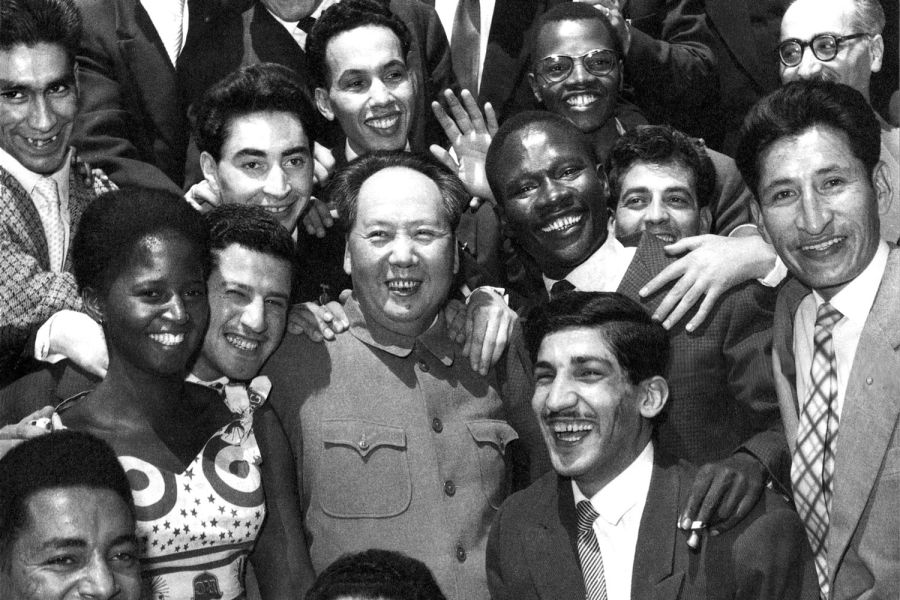
Political Depression and China’s Foreign Student Programs, 1950–1966
In 1966, the Great Proletarian Cultural Revolution began. On 30 September, the Ministry of Higher Education issued a notice to all universities hosting foreign students instructing them to temporarily suspend courses. By that time many universities were already struggling to maintain regular teaching. Large numbers of staff and Chinese students were preoccupied with the second Five-Anti Campaign (第二次五反运动), directed against corruption and economic malfeasance, and the Socialist Education Movement (四清运动), which targeted cadres’ ideological purity and grassroots corruption. As a result, institutions were unable to deliver classes effectively even before the official suspension.
As the notification explained:
Because many universities have reported serious difficulties in educating foreign students … it is anticipated that with the deepening of the Cultural Revolution, new problems will arise. Accordingly, the Ministry of Higher Education has received approval from the Central Government to suspend classes for foreign students for one year from this point onward. (SMA 1966a)
Although the management structures for foreign students would remain in place to accommodate those expected to return the following year, China would suspend the receiving of foreign students until 1973 (SMA 1974). During this period, many Chinese urban youths were sent to the countryside to perform manual labour as part of the Up to the Mountains, Down to the Countryside Movement (上山下乡) (Bonnin 2022). In the middle of this upheaval, Chinese students came to regard their studies with a sense of shame and fear, anxious that scholarly pursuits might draw political suspicion and place them in danger. For foreign students, this long suspension caused confusion and frustration, intensifying what could be interpreted as a sense of ‘political depression’ (SMA 1966a).
As Berlant (2012: 340) writes, the concept of political depression was popularised by the Feel Tank Chicago project and further developed by Ann Cvetkovich in her Public Feelings Project. In Cvetkovich’s (2012) elaboration, political depression refers to a form of hopelessness produced by the inability to alter the political status quo or to act meaningfully within a constrained political environment. It may arise from fear, frustration, or disappointment with political systems, economic conditions, or environmental crises (Cvetkovich 2012). At its core, political depression is shaped by a feeling of helplessness in the face of powerful institutions and systemic abuses. People cannot protect themselves from the turmoil that comes from powerful institutions, leaving individuals trapped in negativity and self-criticism (Lusson 2017).
Even though the concept gained currency only in recent years, the feelings it describes align closely with the affective atmosphere of China in much of the Mao era. During these years, successive socialist campaigns imposed relentless political study and class struggle activities, which shaped not only public life but also the emotional conditions of both Chinese and foreign students. Read through the lens of political depression, these experiences reveal how this period generated distinct yet interconnected forms of powerlessness and despair in the face of circumstances perceived as overwhelming and beyond anyone’s control.
Foreign Students in Mao’s China
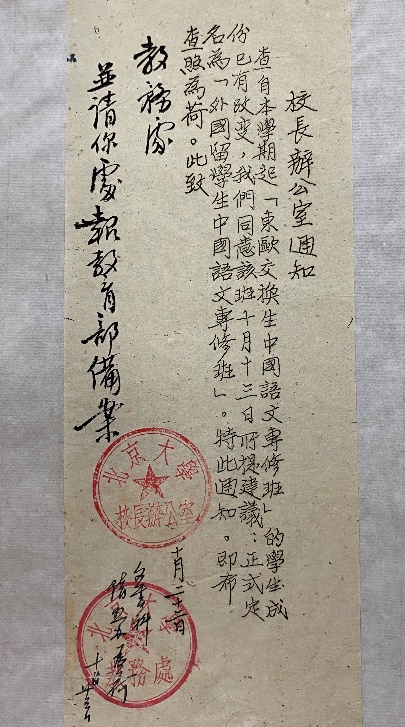
In June 1950, the newly socialist governments of Czechoslovakia and Poland initiated a plan to send 10 students to China. Soon after, Romania, Hungary, and Bulgaria also expressed their intention to send five students each. In September of that year, these students arrived in Beijing, marking the first official cohort of foreign students in the new China. They were placed at Tsinghua University to study Chinese under a program called ‘Chinese Language Specialisation Course for Eastern European Exchange Students’ (东欧交换生中国语文专修班) (Chen et al. 2015). In 1952, following the nationwide restructuring of higher education, these students were transferred to Peking University together with other Asian students and the program was renamed ‘Chinese Language Specialisation Course for Foreign Students’ (外国留学生中国语文专修班) (Yan 2022). In June 1962 the Chinese Government established the Higher Preparatory School for Foreign Students (外国留学生高等预备学校), which was designed to provide short-term Chinese-language training. In January 1965, this institution was renamed the Beijing Language and Culture Institute (BLCU 2025).
The institute functioned as a preparatory gateway. All foreign students admitted to universities in Beijing first underwent short-term Chinese-language training there before being assigned to their respective majors at other universities (BMA 1965b). The same practice was followed in other cities. In fact, most foreign students were still unable to use Chinese effectively even after competing their language studies (Hevi 1963: 29), which created a significant divide between foreign students and Chinese society.
After completing their language courses, foreign students were required to take compulsory political education alongside their major subjects. This included classes on Mao Zedong Thought, China’s national conditions, and Chinese history (BMA 1965c). For those enrolled in engineering, medicine, agriculture, and other applied fields, internships were also compulsory. These internships were organised by each university, which required them to be carried out in a standardised and methodical manner. As a document from the Ministry of Higher Education indicated:
[T]he quality of teaching during internships has to be ensured. In general, international students are to be placed in institutions with adequate facilities, good living conditions, clear rules and regulations, and qualified staff to supervise their training. Second, internships are to be arranged jointly with Chinese students whenever possible. If confidentiality or other circumstances prevent this, separate internships can be organised for foreign students. (SMA 1964)
Foreign students’ fields of study were divided into ‘general’ (一般专业) and ‘classified’ (机密专业) majors. Students in general majors were placed in non-classified affiliates, while those in classified majors were assigned to classified affiliates, where security considerations strictly governed their training (SMA 1964). This arrangement was ostensibly designed to protect national security, to keep Chinese and foreign students partially isolated, and to supervise interactions among students.
After 1962, the People’s Commune (人民公社)—rural collectives that operated as both an economic unit and a political institution under Mao’s economic strategy—became the most visible embodiment of socialist ownership and functioned as a kind of ‘model performance’ within the broader socialist movement (Meisner 1999). The Chinese authorities therefore started to bring foreign students on study trips to certain communes to showcase the supposed success of the country’s socialist experiment. For instance, in June 1965, Algerian students hosted by the Beijing Film Academy visited the Hongxing China–DPRK Friendship People’s Commune in Nanyuan, Beijing. The students were instructed to follow supervisors’ arrangements strictly, reporting any difficulties through official channels. They were also required to participate in physical labour, which was regarded at the time as an integral part of political study (BMA 1965a).
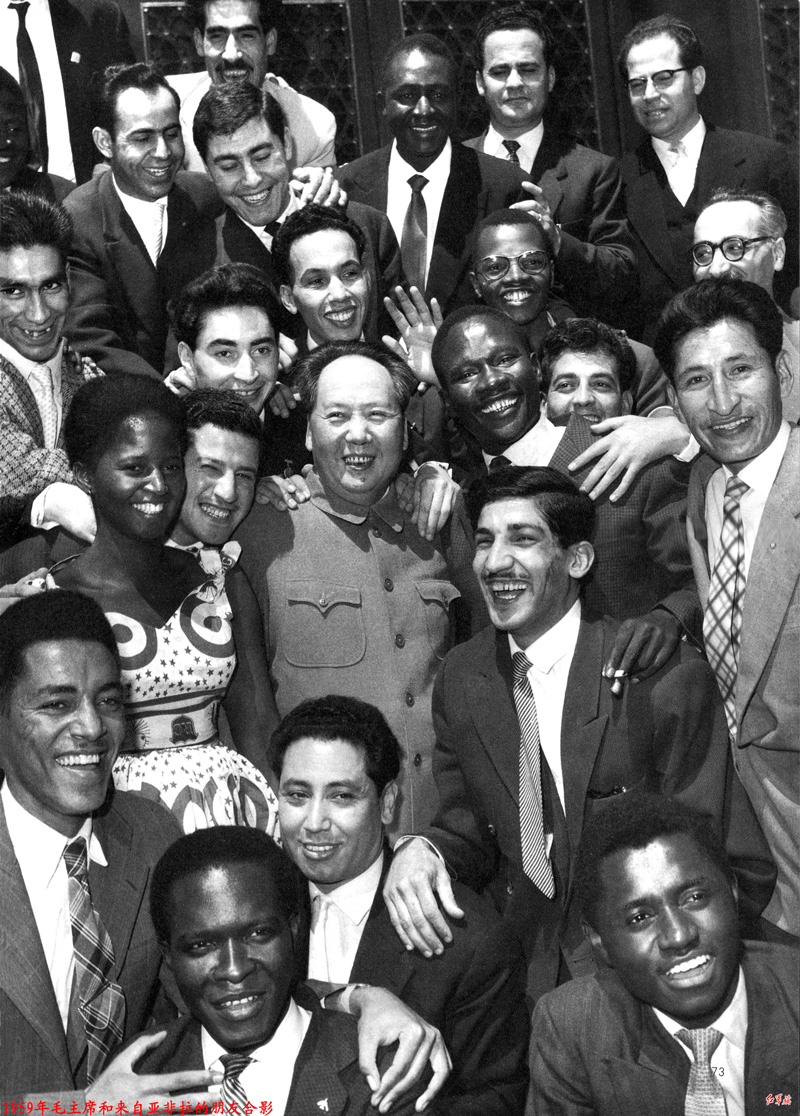
Many foreign students, especially those who did not come from socialist countries or were not members of communist parties, expressed confusion and frustration with the emphasis on political study. In 1965, Kaouadji, an Algerian student at the Beijing Film Academy, complained to his school that he had come to China with the intention of pursuing academic majors, yet the heavy schedule of compulsory political courses consumed much of his time (BMA 1965b). Many students felt disillusioned and even depressed, struggling to reconcile their academic expectations with the reality of an education system designed as much for political indoctrination as for professional development (BMA 1965b).
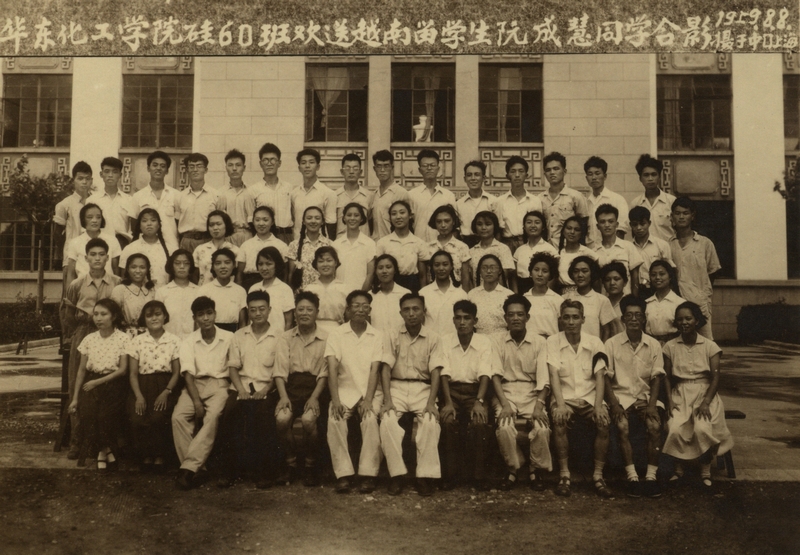
Such political indoctrination extended into holiday celebrations. During Chinese festivals, schools organised activities and film screenings for foreign students. The activities typically featured dance performances and Peking Opera programs that glorified socialism, while many of the films centred on themes of socialist transformation, portraying how people from different social classes overcame their class shortcomings under the leadership of the Chinese Communist Party (SMA 1966c). Moreover, as part of the planned economy’s reach into people’s private existence, the Ministry of Higher Education regularly issued detailed instructions on nearly every aspect of foreign students’ lives—for example, study, internships, daily life, and even vacation arrangements.
These documents were circulated not only to universities that admitted foreign students but also to government offices at multiple administrative levels, including municipal Foreign Affairs offices. Regulations covered a wide range of issues—from the allocation of funds and food supplies to the provision of cotton and daily necessities (SMA 1964). This dense layer of bureaucratic control created a sense of being trapped in a political script, which provided material stability, but only within tight frameworks, preventing the students from making choices independently.
Meanwhile, foreign students also had no ability to engage freely with Chinese society. Their social lives were marked by a condition of semi-freedom. Communication among foreign students was largely unrestricted. They could form friendships, socialise, and even develop romantic relationships with one another. However, their contact with Chinese society was highly restricted, creating a sense of isolation. They could not freely communicate with Chinese citizens outside official arrangements, nor could they live independently in Chinese communities. Their knowledge of China was, therefore, mediated by the state, whether it was the designated ‘open areas’ (开放区域) or the structured interactions at school, or the teachers and classmates assigned to oversee or accompany them (SMA 1964).
Behind these layers of bureaucratic instruction was an everyday reality that was deeply infused with political pressures and social tensions. Regulations were not simply about food supplies or course schedules; they reached into the intimate details of how foreign students lived, studied, and even socialised. Foreign students were rarely free to act beyond these managed frameworks, and this constant mediation by the state in their lives produced a climate of caution and self-control.
Mistrust and Divisions
On the Chinese side, distrust of foreigners was pervasive at that time and actively cultivated by the authorities. Political enemies in that period were often accused of holding a ‘foreign-slave mentality’ (洋奴思想) (SMA 1964). This term was generally used in Maoist China to criticise Chinese individuals who were close to foreigners. One example was the case of a young worker named Li Shuangxi at a Shanghai refinery in 1965. Li often spent time with a group of Albanian students who were doing an internship at the factory. Their friendship was soon treated as a political problem. As the archival documents of the refinery from that year reveal, Li’s supervisors considered that he was engaging in ‘improper conduct’ (作风不好). They accused him of bringing ‘negative influence’ (不良后果) to the Albanian students and prohibited him from building friendships with them. Li was ordered to postpone his wedding, simply because he had invited the Albanians to attend. Since the leadership could not directly forbid the students from going, they forced Li to delay the wedding until after the internship had ended (SMA 1965a).
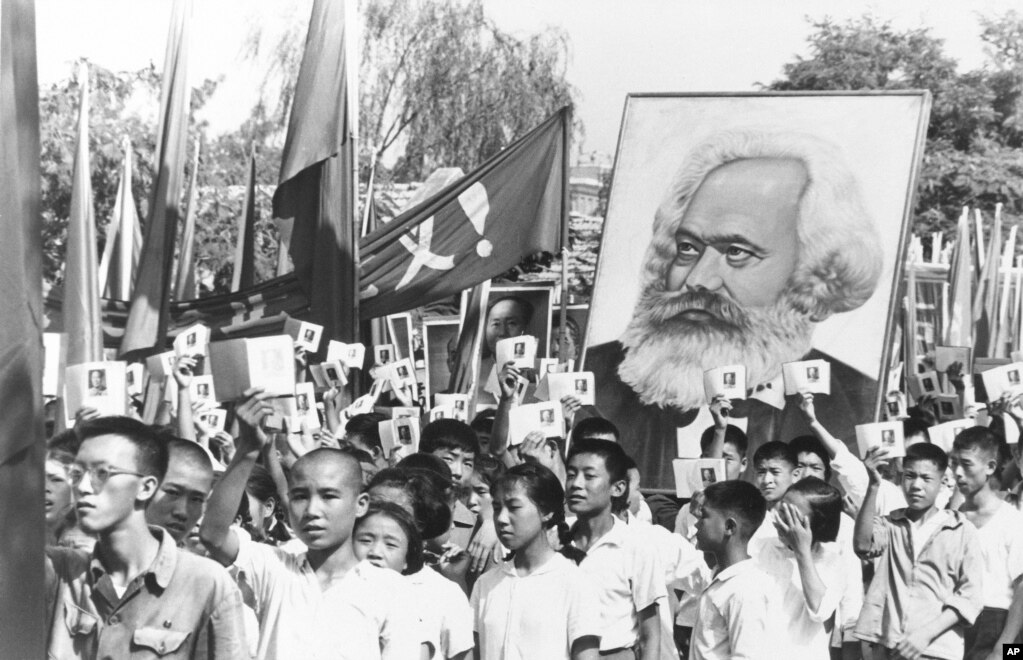
The fear of being accused of having a ‘foreign-slave mentality’ made Chinese students and citizens cautious and evasive when interacting with their foreign peers. For foreign students, the distance they often encountered was not a matter of personal choice, but the product of a political environment defined by fear. These labels, and the power structures behind them, turned what was officially promoted as a space of solidarity and exchange into one saturated with political depression, in sharp contradiction to the ideals of Africa–Asia solidarity and Third World theory that the People’s Republic officially upheld. As one student from Mongolia stated at that time: ‘We have been in China for three years, but we only know a few people. Every time we interact, it is always with the same face’ (SMA 1964). This not only restricted the space for speech and action but also generated a pervasive atmosphere of anxiety and self-censorship.
Alongside the pressures of the political system, the severe shortages created by the planned economy were another source of division between foreign and Chinese students and society at large. Foreign students enjoyed comparatively generous provisions, making the scarcity felt by ordinary Chinese more intolerable. In particular, the Great Leap Forward (1958–60) had caused catastrophic food shortages. In rural areas, people ate bark and grass, and there were even cases of cannibalism (Dikötter 2010). The famine meant not only widespread starvation but also deep despair and depression. Daily survival became uncertain, while political campaigns continued, leaving people exhausted and hopeless. In this context, the Chinese Government gave foreign students access to special shops where they could buy goods rarely found on the open market, such as bicycles and watches. Their food rations were much more generous than those given to ordinary families.
In September 1959, the first year of the famine, foreign students in Shanghai were allocated 1.5 catties of pork, 5 catties of fish, and 1 catty of poultry or eggs per month (1 catty was equivalent to 500 grams). In addition, foreign students from Mongolia and Eastern European countries were given 5.5 catties of beef and lamb to accommodate their dietary habits, though they received no extra pork or fish. These allocations were supplemented with 3 pounds (1.4 kilograms) of cookies, 2 pounds (900 grams) of sugar, 4 pounds (1.8 kilograms) of fruit, and four bars of soap (SMA 1959). In February 1960, during the second year of the famine, the Shanghai Second Commodity Bureau even increased the standard: students were provided with 3 catties of pork, 2 catties of poultry, and 4 catties of cookies, along with the other items at the original level. Foreign students also enjoyed special privileges during Chinese festivals. For example, for the Mid-Autumn Festival, each foreign student received an additional catty of fruit and a catty of mooncakes, which were purchased by their schools through applications to the district commercial bureau. Importantly, these festival supplies did not require the use of ‘grain coupons’ (粮票) (SMA 1960).
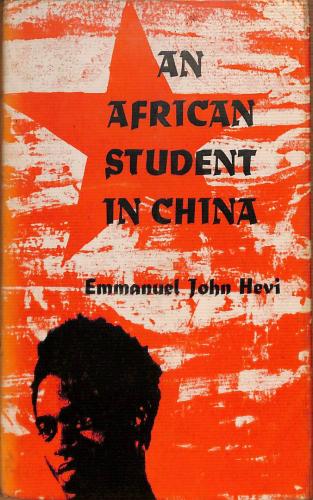
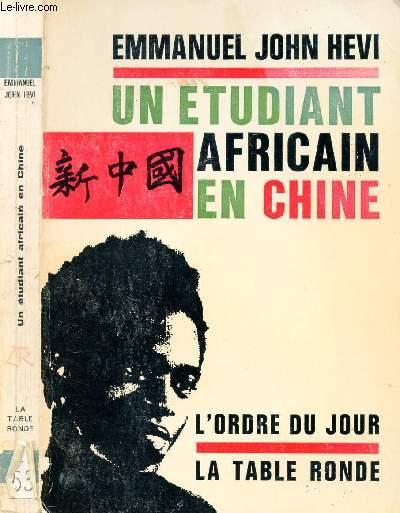
These privileges for foreign students produced resentment among Chinese people, who were struggling with rationing and hunger. In such a highly politicised environment, many Chinese students lived in a state of ‘daring to be angry but not daring to speak’ (敢怒不敢言). Such privileges also created opportunities: some locals bought food from the foreign students, who did not need grain coupons to obtain goods. As African student Emmanuel John Hevi (1963) reported, foreign students sometimes sold their surplus supplies. For these students themselves, however, material comfort was not without cost. Their relative prosperity, visible at a time of widespread scarcity, further set them apart from ordinary people and deepened their sense of isolation. Thus, what the state promoted as a sign of socialist friendship instead highlighted inequality and separateness between foreign students and Chinese citizens and produced frustration on both sides.
The Cultural Revolution Fully Under Way
In 1966, just before the notice of class suspension was issued, the Shanghai Municipal Bureau of Higher Education recorded 453 new foreign students enrolled for the autumn semester (SMA 1966b). This record suggests that universities had not anticipated that the Cultural Revolution would lead to any significant disruption. At the same time, Chinese teachers and students were being mobilised to the countryside and to factories to undertake labour exercises (SMA 1965b). The Ministry of Higher Education instructed each university to arrange additional political activities, including a campaign to ‘expose, criticise, and correct’ (揭批改) foreign students (SMA 1966a).
This turn was part of a broader trajectory that followed the famine of 1959–61. After Liu Shaoqi and Deng Xiaoping criticised Mao Zedong’s economic policies, political struggle intensified and reached a peak at the Seven Thousand Cadres Conference in 1962 (Dikötter 2016). Within universities, some ‘problematic’ courses, such as the history of the Chinese Communist Party and philosophy, were suspended on the grounds that the teaching materials were inappropriate. Two new courses appeared in the autumn of 1966: politics, which centred on Mao’s instructions for the Cultural Revolution, and situational education, which introduced current domestic and international affairs (SMA 1966b).
For many, the defining emotion of this era was largely consistent with what later would come to be known as political depression. For Chinese citizens, obedience to socialist authority was reinforced by memories of war and decades of acute political turmoil before 1949. These experiences encouraged a belief that, however harsh the present, the future could not be worse than the past. For foreign students, political depression took a different form. Like ornamental birds, they were housed in academic institutions, their presence proof of international solidarity while at the same time revealing the limits of a tightly managed political environment.
Political campaigns narrowed intellectual life and cast suspicion over even ordinary choices. For Chinese people, the fear of being labelled an enemy of the state made silence, sadness, and self-criticism the safest pathways to avoid political turmoil. For foreign students, surveillance and the condition of semi-freedom produced frustration and isolation. Both groups were shaped by the same structures of control, though with different intensities and consequences. For the foreign students, their political depression faded once they left China. For many Chinese citizens, however, 1966 marked the beginning of a deeper spiral, as the Cultural Revolution gathered full force.
References
Beijing Language and Culture University 北京语言大学. 2025. ‘历史沿革 [Historical Development].’ Beijing Language and Culture University website. www.blcu.edu.cn/xxgk/lsyg.htm.
Beijing Municipal Archives (BMA). 1965a. 阿尔及利亚留学生班课程表、教学大纲、教程 [Course Schedule, Syllabus, and Teaching Materials for Algerian Student Class]. 324-1-975-1, Beijing Municipal Archives.
Beijing Municipal Archives (BMA). 1965b. 阿尔及利亚留学生来我院学习专业一年来学习情况反映及四名阿生与高教部黄公度谈话记录 [Report on the Academic Progress of Algerian Students Studying at Our Institute for One Year and Transcript of Discussions Between Four Algerian Students and Huang Gongdu of the Higher Education Department]. April, 324-1-888-32, Beijing Municipal Archives.
Beijing Municipal Archives (BMA). 1965c. 关于组织阿尔及利亚、印尼等国留学生参加农业劳动、参观、拍摄作业等活动安排的报告 [Report on the Arrangements for Organising Algerian, Indonesian, and Other Foreign Students to Participate in Agricultural Labour, Visits, and Filming Activities]. 11 June, 324-1-887-54, Beijing Municipal Archives.
Berlant, Lauren. 2012. ‘Chapter Thirty-One: Feel Tank.’ Counterpoints 367: 340–43.
Bonnin, Michael. 2022. ‘Transforming Urban Youth into Peasants: The Maoist Rustication Movement of the 1960s–1970s.’ In Proletarian China: A Century of Chinese Labour, edited by Ivan Franceschini and Christian Sorace, 426–35. London: Verso Books.
Chen, Qiang 陈强, Sun Yi 孙奕, Wang Jing 王静, and Qian Jingbin 钱景斌. 2015. ‘新中国第一批“洋学生”: 清华大学东欧交换生中国语文专修班 [The First Batch of “Foreign Students” in New China: Tsinghua University’s Chinese Language and Literature Class for East European Exchange Students].’ Tsinghua University History Museum website, 12 July. xsg.tsinghua.edu.cn/info/1003/1279.htm.
Cvetkovich, Ann. 2012. Depression: A Public Feeling. Durham, NC: Duke University Press.
Dikötter, Frank. 2010. Mao’s Great Famine: The History of China’s Most Devastating Catastrophe, 1958–1962. London: Bloomsbury.
Dikötter, Frank. 2016. The Cultural Revolution: A People’s History, 1962–1976. London: Bloomsbury.
Hevi, Emmanuel John. 1963. An African Student in China. Westport, CT: Praeger.
Lusson, Robert. 2017. ‘Political Depression.’ HuffPost, 13 January. www.huffpost.com/entry/political-depression_b_5879574ae4b077a19d180dbe.
Meisner, Maurice J. 1999. Mao’s China and After: A History of the People’s Republic. 3rd edn. New York, NY: Free Press.
Shanghai Municipal Archives (SMA). 1959. ‘关于留学生日常用品供应标准的文件 [Document on the Standards for the Provision of Daily Necessities to Foreign Students].’ September, B98-1-547, Shanghai Municipal Archives.
Shanghai Municipal Archives (SMA). 1960. ‘关于提高留学生日常供应标准的文件 [Document on Raising the Standards of Daily Necessities for Foreign Students].’ 6 February, B98-1-726, Shanghai Municipal Archives.
Shanghai Municipal Archives (SMA). 1964. ‘关于安排留学生生产实习的试行办法 [Provisional Measures for Arranging Production Internships for Foreign Students].’ 22 February, B243-1-331-19, Shanghai Municipal Archives.
Shanghai Municipal Archives (SMA). 1965a. 外国留学生工作经验交流会议情况 [Situation Report of the Exchange Meeting on Work Experience with Foreign Students]. 9 February, B243-2-446, Shanghai Municipal Archives.
Shanghai Municipal Archives (SMA). 1965b. ‘关于召开留学生教学会议的通知 [Notice on the Organisation of a Foreign Student Teaching Conference].’ 15 May, B243-2-581, Shanghai Municipal Archives.
Shanghai Municipal Archives (SMA). 1965c. 留学生实习情况 [Report on the Internship Situation of Foreign Students]. 21 May, Shanghai Municipal Archives.
Shanghai Municipal Archives (SMA). 1966a. ‘春节活动安排 [Arrangements for Spring Festival Activities].’ January, B243-2-829, Shanghai Municipal Archives.
Shanghai Municipal Archives (SMA). 1966b. ‘关于留学生1966年秋季开学工作的意见 [Opinions on the Opening the 1966 Autumn Semester for Foreign Students].’ B243-2-780-20, Shanghai Municipal Archives.
Shanghai Municipal Archives (SMA). 1966c. ‘关于1966–1967学年度外国留学生停止上课的通知 [Notice on the Suspension of Classes for Foreign Students in the 1966–1967 Academic Year].’ B243-2-831, Shanghai Municipal Archives.
Shanghai Municipal Archives (SMA). 1974. ‘关于了解今年内接受外国留学生能力事 [Directive on Assessing the Capacity for Admitting Foreign Students within the Year].’ B106-4-1229-1, Shanghai Municipal Archives.
Walder, Andrew G. 2015. China Under Mao: A Revolution Derailed. Cambridge, MA: Harvard University Press.
Yan, Yuan 燕元. 2022. ‘来华留学教育70年|回望来路(二): 筚路蓝缕乘潮展翼(1949–1998) [Seventy Years of International Education in China: Reflecting on the Journey (Part II)—Pioneering Paths and Riding the Waves].’ Peking University News Centres, 8 April. news.pku.edu.cn/xwzh/174cc3a060324f2fa11278e641b1c044.htm.