
Burnout Market Feminism: A Conversation with Ling Tang
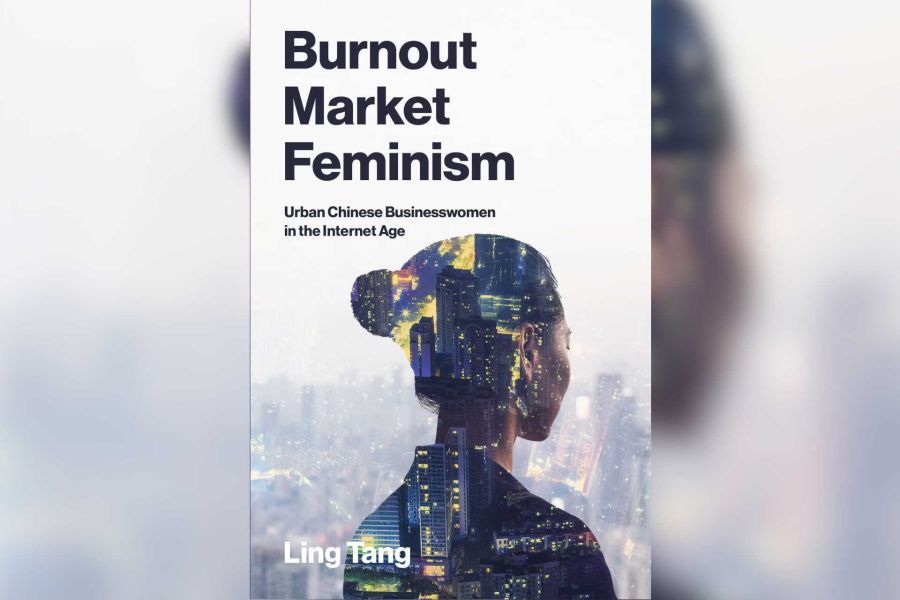
In Burnout Market Feminism: Urban Chinese Businesswomen in the Internet Age (MIT Press, 2026), Ling Tang invites readers to explore the aspirations, achievements, and everyday struggles of women at the forefront of China’s digital economy. Through the stories of elite businesswomen navigating e-commerce and the broader internet industry, the book explores how gender, sexuality, entrepreneurship, and digital capitalism intersect in contemporary China. While much scholarship has focused on the internet either as a site of political contestation or as a driver of China’s economic transformation, Tang demonstrates how these women occupy the uneasy intersection of both. Although her respondents are undoubtedly shaped by considerable socioeconomic privilege, the book resists reducing them to either success stories of neoliberal empowerment or beneficiaries of state initiatives that advance the digital economy. Adopting a bottom-up approach to feminist theorising, Tang carefully uncovers the tensions and ambivalences that structure these women’s lives. Readers will find a nuanced account of how women negotiate the intertwined powers of neoliberal capitalism and authoritarian governance across both public and private life, revealing not only the emotional and material costs that underpin seemingly successful careers but also the resilience and hope that motivate them to keep moving forward.
Xumeng Xie: In advancing the book’s central concept of ‘burnout market feminism’, you bring together Li Xiaojiang’s idea of market feminism and Han Byung-Chul’s concept of the ‘burnout society’—a critique of endless self-optimisation in neoliberal society. Your concept helps to capture the complexities of women’s pursuit of achievement, autonomy, and growth as simultaneously enabling and exhausting. Although the book focuses on what you describe as a relatively privileged group of elite urban businesswomen, the stories it tells can hardly be reduced to success stories in the digital marketplace. How do you conceptualise the distinctive position of the ‘market’ here, especially in relation to civil society and the state in post-socialist China? How does feminism emerge from the marketised spaces you observe and map, and where do you see its limits?
Ling Tang: Quite often we assume that 2010s China, driven by the digital economy, had already departed far from the economic reforms of the 1980s and 1990s. In fact, it was during President Xi Jinping’s first two terms, with Li Keqiang as premier, that the fruits of that opening ripened. China became the world’s second-largest economy in 2010 and, before Covid-19 hit, it seemed all but certain that the Chinese economy would overtake that of the United States. It was in this period that the economy shifted from one based on manufacturing—‘Made in China’—to a digital economy that boasted creativity and entrepreneurship, while also giving rise to the gig economy and precarious self-entrepreneurship. What I try to do in this book is extend the discussion of market socialism into the digital economy. This discussion touches on the platform economy, but what fundamentally intrigued me were the progressive forces at work within the market in post-socialist China.
Critical scholars commonly turn to the margins, the oppressed, and the subaltern for signs of progression and hopes of subversion. We long to dismantle the master’s house and the subject of revolution is assumed to reside at the margins. If we look at feminism, then, it would seem more intuitive to focus on the women who are most marginalised under patriarchy or feminist activists who organise collective action. Yet, post-socialism is highly intriguing precisely because it has opened many uncertainties within the master’s house. China does not have a straightforward tradition of civil society opposition to the state or an unshakeable collaborative relationship between the market and the state. The market is a crowded and messy place where a great variety of practices take shape, including business ideas that aim to ‘empower’ niche markets of marginalised communities (a trend that became more pronounced as feminism gained popularity after 2020, though my fieldwork concluded before that moment), or is simply a space in which people seek to accumulate wealth. Yet, it was never designed to be a space for women to do so, especially given that the reform era brought about a decline in women’s labour-force participation rates and the sexualisation of business interactions. It is against this backdrop that the crackdown on civil society feminist activism in the 2010s sits alongside the remarkable and simultaneous rise of businesswomen—a contradiction that this book takes seriously.
It may seem counterintuitive to frame elite women as feminists, and many of my research respondents would resist the label themselves, but simply dismissing their success as post-feminist or neoliberal, by transplanting feminist theories from the Global North onto the Chinese context, risks missing an opportunity to capture Chinese feminism on its own terms. This is because neoliberal economic reform must be understood within the specific conditions of China’s compressed modernisation—a process that coincided with the information and communication technology revolution and in which the market came to serve as a space accommodating bottom-up initiatives, fracturing the centralised control that had gradually come to define socialism as it existed.
Anthropologist Zheng Tiantian (2006) has argued that the individualism expressed in sexualised business culture can function as a form of resistance to Maoist socialist collectivism and I ask whether it is possible to think of feminism in a similar fashion. Unlike Marxism, feminism does not prescribe a fixed set of actions, nor does it assume a single utopia. It is with this in mind that I pause the almost intuitive critical impulse to dismiss elitism as unprogressive and instead examine how the spaces opened by the market have created unexpected possibilities for subjectivity that lie outside the expectations of the power apparatus. I also ask whether the subjectivities of these women might be read as feminist.
There are, of course, inherent limitations to this approach. But my goal is not to tell a straightforward story. It is to offer an alternative reading of Chinese feminism within the oxymoron of market socialism that has matured within the digital economy.
XX: A prominent strand of your feminist theorisation responds to the development of digital feminism in China. You carefully lay out the paradigms of (new) rights-based feminist activism and left-leaning feminist critiques of neoliberalism, particularly as these dynamics are intensified with the expansion of digital platforms. Yet, the book proposes moving away from these two dominant approaches by developing a bottom-up theorisation grounded in the concerns, experiences, and vocabularies of your research respondents. What kinds of feminist questions or contradictions become visible through this bottom-up method and how do these findings challenge some presumptions about what feminism should sustain?
LT: A significant portion of the book is devoted to Li Xiaojiang’s thoughts, and for good reason: her approach to feminism resists easy summary. It is perhaps easier to articulate what she is cautiously against. Li (2005) warns against the presumption that feminism in China must be anchored either in civil society activism or in Marxist-feminist collective organising, and that only practices legible within these frameworks deserve to be called feminist. Such a presumption renders a great many spontaneous, nuanced, and even contradictory practices invisible or simply dismisses them. In the book, I quote one of her most striking formulations: she challenges scholars of Chinese gender and feminism by asking why they only look at women who cry. In China, she insists, women laugh, too (Li 2024a). If critical scholarship excels only at revealing inequality and structural discrimination—the sorrow—what do we do with women who laugh?
Even more poignant is her use of the term ‘post-utopia’ to describe her mode of documenting feminism in China (Li 2010, 2024a). Li (2010, 2024b) is deeply cautious about any theory or ‘ism’ that promises a utopian future, whether liberal, feminist, or communist, and uses that imagined future to condemn the present. In this model, the task of feminism is mobilising people to march towards a utopia that has already been decided for them. Coming from Mao Zedong’s China, Li (2024a) is wary of that promise and that form of mobilisation, which she sees as foreclosing both democracy and care for the individual. Instead, she attends to the present and to what women themselves desire as the basis for documenting women’s subjectivity. In her work published after the 2010s, her scepticism towards ‘isms’, including feminism itself, becomes more pronounced. I choose to retain the term ‘market feminism’ to bridge her thinking to wider feminist conversations. In some ways, her understanding of feminism resembles Foucault’s (1978) conception of discursive resistance: not the wholesale rejection of the apparatus, but subtle, situated negotiation from within.
It is for these reasons that I turn to elite urban businesswomen, the ‘have-it-all’ women, the high-achievers who receive praise and admiration in post-socialist China. It is only within market socialism that these women can be understood as occupying a ‘bottom-up’ position: not because they stand at the bottom of the social ladder, but because their practices are spontaneous products of the market rather than mandates of centralised planning. This speaks to broader debates in Third World feminism that challenge the presumption of locating feminist solidarity exclusively in collective action.
‘Visible’ is a well-chosen word, because visibility is central to success in the market and especially the digital market. The fundamental tension within this form of feminism is the limit of the neoliberal market itself and it is precisely this limit that produces burnout—the exhaustion that follows the relentless pursuit of achievement.
‘Sustain’ is equally important. The book makes clear that achievement-laden, individualistic empowerment is not sustainable for women in the long run. But this raises an uncomfortable counter-question: is solidarity-based activism or socialist feminism sustainable? If we return to Li’s critique of utopian thinking, the imperative becomes imagining a market feminism without burnout, and this is what I take up in the book’s final chapter. With Covid-19 reshaping global economies, it becomes possible to think of alternative models oriented towards de-growth, in which community and care are placed before capital accumulation. Traces of this can be found in how some of my research respondents articulate their hopes for their children’s futures. It can also be glimpsed in many of the new practices that have emerged since my fieldwork concluded, including the remarkable growth of feminist publishing and all-women spaces in China. It is genuinely exciting to watch how market feminism and its inevitable contradictions continue to develop through the 2020s.
XX: The book attends closely to heteropatriarchal norms of intimacy and male-dominated guanxi business practices as well as how these two domains of intimate life and business culture intersect in the lives of the women about whom you write. You have described their transgression of certain norms as ‘highly contingent and predicated on neoliberal achievement’ (p. 110). Could you expand on these contingencies?
LT: This is one of the most ethnographically rich parts of the book. One of the main reasons I categorise these women’s practices as feminist is precisely because of how they negotiate heteropatriarchal norms. Some engage in same-sex intimacy, others divorce, and still others adopt practices that sit at odds with dominant expectations of gender and relationships. Their commercial success alone already places them on compromised ground, given the persistent cultural assumption that men should be the primary breadwinners.
I observe two distinct types of compromised ground in the book. The first involves same-sex relations, which are explored in a section of Chapter 5 titled ‘No Success, No Queer’. Here, I document the lives of businesswomen in Shenzhen who engage in same-sex intimacy, but who prefer business gatherings to LGBTQIA+ gatherings, and for whom identity politics holds very little meaning. Some run businesses together and a recurring pattern is that the more masculine-presenting partner invests extravagantly in her partner and in the business her partner runs. In this configuration, she occupies a compromised position (because she is a woman, not a man) relative to heteropatriarchal norms of masculinity and provision, and neoliberal achievement becomes the mechanism through which that position is sustained and justified.
The second type involves middle-aged women entrepreneurs who are the primary breadwinners in their families. To manage the tensions this creates, many learn to perform deference to their husbands: making him the chairman while she takes the role of manager or allocating him the larger office while she takes a smaller one. These are not acts of submission so much as strategic performances of face-giving, designed to maintain domestic harmony while preserving their own economic authority.
Both groups must also navigate the highly gendered and sexualised terrain of guanxi, the interpersonal connections that define so much of Chinese business culture. Guanxi practices frequently involve ritualised forms of extramarital intimacy that sit in tension with the heteropatriarchal norm of monogamous, emotionally grounded marriage. Women in both groups develop different strategies in response: some become reticent and instrumentalise their marriages; others romanticise same-sex relations as spaces free from such rituals; and others believe that performing sufficient deference to their husband or maintaining an idealised femininity will insulate their marriage from these pressures.
By the end of my fieldwork, most of the same-sex relationships I had observed had dissolved, with many women returning to heteronormative arrangements. The tensions had been visible throughout: neoliberal success functions as the central supporting structure that allows these women to maintain their compromised positions and, when success falters, that balance breaks. What is ultimately at stake here is the way in which different types of relationships become quantified and placed on scales of value. It is this process that renders intimacy fragile and it is this fragility that the concept of burnout market feminism seeks to name and to think through.
XX: The book is based on what you describe as a hybrid form of online and on-the-ground ethnography. One issue that may concern you and many other feminist researchers is researcher positionality, especially in relation to how one moves between different field sites, online and offline. There are some striking stories about your fieldwork in Hefei that might also offer you a different perspective on the lived experience of businesswomen in yingchou rituals (the work-related, post-dinner gatherings that form a central component of guanxi rituals) and in the business culture more broadly. How did your own feminist commitments shape the forms of access and trust developed during the research process?
LT: Ethnography is itself a form of contingency. Even as it yields insights into broader social patterns, the encounters that happen in the field are situated and interpersonal, shaped by the conditions of that moment and those relationships. This is something on which I reflect at length in Chapter 6, where I write about my own experience of sexual harassment during a yingchou banquet. The person who harassed me was the husband of my gatekeeper, the woman who had generously introduced me to the field.
This created a kind of ethical knot that I have never fully untangled. If my research had been oriented towards giving voice to the subaltern, I might more easily present the book to my respondents and say that I have returned their stories to them. But the women about whom I write do not lack platforms for their stories of success. What the fieldwork sought to document was something more difficult: the things they choose not to say explicitly, the silences they maintain to navigate their lives in ways that maximise their chances of achievement. How would my respondents react to a book that reveals not only the conditions that contributed to their success, but also the scars and the darkness they have chosen not to name? Who would want to read an account that includes the story of her own husband sexually harassing a self-identified queer woman in her twenties?
My positionality has also shifted considerably since the fieldwork. I would return to the field as a different researcher, not because I am no longer a Chinese queer feminist, but because, when I was writing the book, I was also navigating the precariousness of an academic career, uncertain where I would land or whether I would land at all. The lives and ambitions I was documenting were, in many ways, the life I was also being asked to perform if I were to stay in China. Writing about burnout market feminism while burning out is both an irony and a kind of method. This book was written by a burnt-out me and, in that sense, I do not see myself as entirely separate from my research respondents.
The interpretation of the material also evolved over time and in response to lived experience. When I first completed my PhD, I ended on a more ambivalent note about market feminism. It was during the revision process that I placed greater emphasis on the burnout, and that shift in emphasis reflects what I was living through as a precarious academic in Hong Kong, experiencing the post-2019 political climate and zero-Covid policies, while being active as a feminist and queer scholar on Chinese social media, writing and speaking publicly about yingchou, guanxi, sexual harassment, and #MeToo cases, and collaborating with both traditional and simplified Chinese media. Being an activist-academic in Hong Kong eventually became neither viable nor safe and the publish-or-perish demands of academic life compounded my exhaustion rather than relieving it.
Now that I am based in Melbourne with greater stability, I carry a clearer sense of to what I am committed. My English-language writing aspires to contribute to feminist theorisation from the Global South, but I remain committed to staying active in Chinese feminist and queer debates. During the revision process, I decided to care less about academic achievement as such and to remain anchored in that commitment regardless of where it lands me institutionally. In that sense, the writing of this book was both exploitative and curative and perhaps that tension is itself something that burnout market feminism, as a concept, was always trying to name.
References
Foucault, Michel. 1978. The History of Sexuality. Volume 1: An Introduction. Translated by Robert Hurley. New York, NY: Pantheon Books.
Li, Xiaojiang 李小江. 2005. 女性/性别的学术问题 [Issues Related to Women and Gender]. Jinan, China: Shandong Renmin Chubanshe.
Li, Xiaojiang 李小江. 2010. 后寓言: 〈狼图腾〉深度诠释 [‘Wolf Totem’ and the Post-Mao Utopian: A Chinese Perspective on Contemporary Western Scholarship]. Wuhan, China: Changjiang Wenyi Chubanshe.
Li, Xiaojiang 李小江. 2024a. 华人家国与天下 [Chinese People: Family, Nation, and the World]. London: Global Century Press.
Li, Xiaojiang 李小江. 2024b. 史学的性别 [Gender in Historiography]. Xi’an, China: Shaanxi Shifan Daxue Chubanshe.
Zheng, Tiantian. 2006. ‘Cool Masculinity: Male Clients’ Sex Consumption and Business Alliance in Urban China’s Sex Industry.’ Journal of Contemporary China 15(46): 161–82.