
The Chinese Boy with Golden Hair and Jade-Green Eyes
My Father in Beijing’s Revolutionary Past
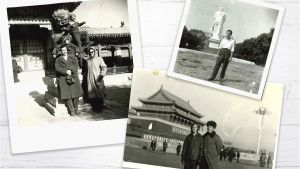
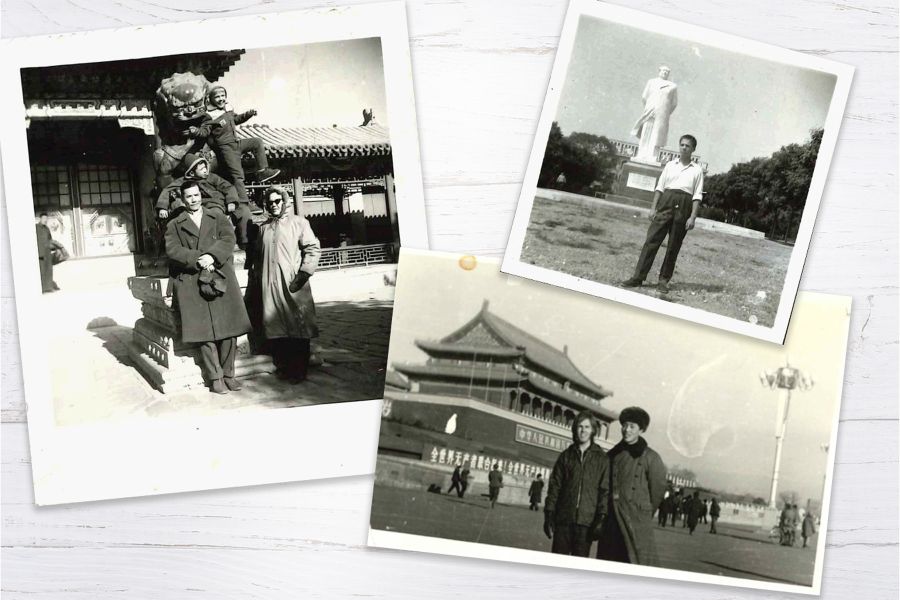
Growing up in Beijing under Maoist rule, my father always stood out because of his golden hair and jade-green eyes, or what locals would call 金发碧眼. One afternoon, sitting in his living room in Helsinki, he told me how he learned to circumvent the public curiosity his appearance attracted by wearing a flat cap. With his finger, he traced an imaginary line low across his brow to show how far down he would wear the cap to conceal his hairline.
Under Maoist rule, there was a general term for someone who did not have black hair as Chinese people commonly do. Their lighter hair marked them as visibly different, earning them nicknames such as ‘White Hair’ (白毛儿) or, like my father, ‘Little Yellow Hair’ (小黄毛儿); here, the diminutive ‘little’ expressed familiarity and affection. Today, a more common term is ‘mixed blood’ (混血) or merely ‘foreigner’ (外国人 or 老外).
That afternoon, when he shared this with me, we were just beginning the habit of regularly getting together to record stories about his upbringing. At the time, it was because of my own personal interest that he was unravelling his life story, not for academic purposes. It was only a decade later that I started to work towards turning these recordings into a bigger research project that builds on my family’s story alongside the voices of those around whom my father grew up and shaped his youth.
Starting in the early years of the Covid-19 pandemic, when travel bans kept me from leaving Helsinki, I committed my time to delving further into my family history. I combined my father’s oral histories with my uncle’s, reading them alongside my grandparents’ love letters, family photo albums, and other material remnants that my father preserved from the Maoist years, including rare Red Guard pamphlets and newsletters. More recently, I have pieced together these remnants and travelled to Taipei, The Hague, Paris, and Beijing to conduct extensive interviews and walked with both kin and non-kin through the places where my interlocutors lived, studied, and built their childhood lives.
But I am digressing. Before I began piecing together my family history alongside the shared life histories of others from the era, it was in the early interviews with my father that I learned what it was like growing up in an intelligentsia household on a university campus in the early years of Mao Zedong’s rule, when many overseas Chinese were returning to China, lured by the prestigious jobs and exalted status that the Chinese Government was promising them at the time. Through endless stories of childhood mischief, I learned about his first loves and the centrality that friendship played in his youth. I learned what it was like growing up in an enclosed university campus in northwest Beijing and how this secluded setting provided a sense of safety, as though it were a world of their own.
I learned what revolution—the way Mao promised it—carried at its core, both as a continuous endeavour full of possibilities and imaginings and as it appeared from the point of view of a young boy. I learned about the euphoria experienced by my then 13-year-old father when the Cultural Revolution broke out. How every evening he joined hundreds of people crowded around a television screen the size of a shoebox in the university’s main hall to watch Mao’s images, slogans, and video footage, reinforcing the idea that all different factions still claimed to represent the true voice of the Chairman. When the Propaganda Division announced that schools nationwide would be terminated, I could only imagine how the Cultural Revolution was proving to be a teenager’s dream.
I learned about how these stories of euphoria were replaced with terror and social displacement as Maoist politics heightened. I learned what it felt like to watch the campaign unfurl and only with time realise its human toll as torment was tried and tested across China’s universities. How intellectuals and their families were viewed with paranoid suspicion and placed under intense scrutiny and how, for many, the abuse was taken to the extreme to strip them of their humanity. I learned that the victims of this abuse were never merely strangers for those who were living in intimate settings such as a university campus. They were my father’s neighbours, his teachers and headmasters, the parents of his closest friends. I learned how the first corporeal signs of social destruction seeped into his life and began to show the deep hypocrisies of Mao’s efforts. I learned what it took for my father to face these hypocrisies of the mass movement when its destructive force percolated into the home—claiming his father first, then his mother, and finally him.
Most importantly, I learned how to read between the lines of the stories of my father—a man who recounts the past in a matter-of-fact way—to better understand the pains, fears, and deeper sense of social displacement that he must have felt since he was a boy; the alienation, the feeling that life was fragile, and the caution to which he and his generation had to become accustomed to survive.
Armi and Chi
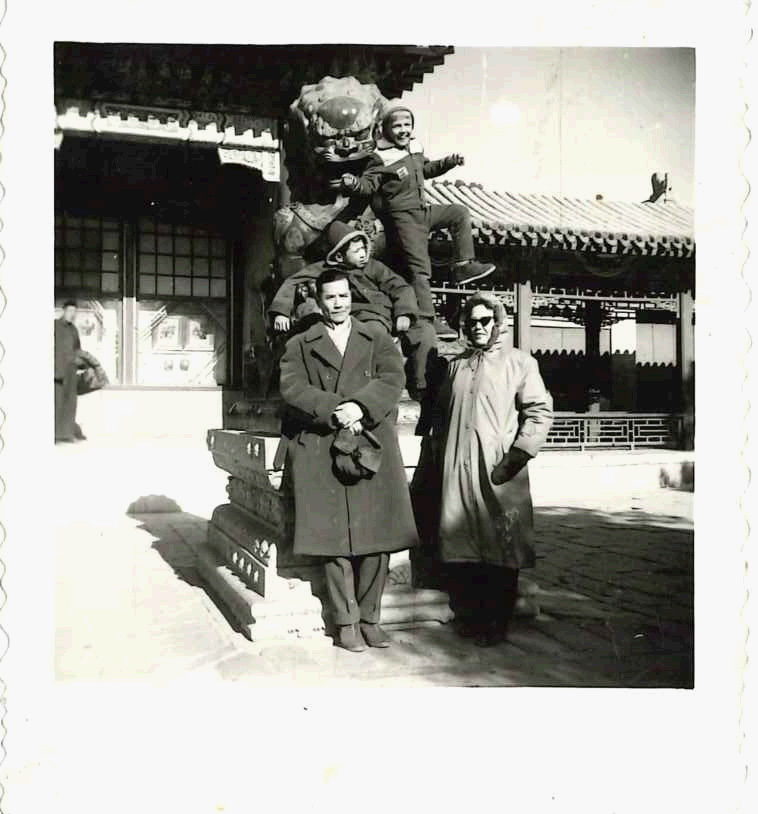
Golden-haired Chinese children, like my father, belonged to a small social world of interracial families who migrated to China at the dawn of Mao Zedong’s rule. My father’s parents met in Paris in 1953. My grandmother, Armi, was a Finnish student visiting friends when she was introduced to my grandfather, Lin Zongji, a Chinese psychology student at the Sorbonne who was living off a Boxer Indemnity Scholarship. To adapt to his new surroundings, he had shortened his Chinese first name to Chi. This is what Armi called him for the remainder of their lives together—and what I will call him in this essay.
Not long after they met, Armi and Chi moved from Paris to Helsinki, were married, and had two sons: my father and uncle. At birth, both were given Finnish and Chinese names that embodied the connection between their parents’ two worlds. My father was named Lin Baixi (林白曦), translated in English as ‘White Dawn’, and my uncle Lin Lanchen, ‘Blue Daybreak’ (林蓝晨). Blue and white, like the colours of the Finnish flag, paired with characters that evoke the morning sun.
While in Helsinki, Armi was the family’s breadwinner, working as a translator, while Chi washed dishes in hotel restaurants. Dishwashing was far from the career Chi had envisioned for himself, but there was little hope of him finding work in academia in Finland’s tightly knit, homogeneous society. He saw a bright future in returning to his motherland and taking part in the formation of the New China.
At first, Armi resisted the idea of leaving Finland, but Chi grew increasingly restless. His unyielding desire to return to China became reality in 1955, when he made the 10-day train journey first from Finland to Moscow and then through Siberia to Beijing with their second son, Blue Daybreak, who was only eight months old at the time. After three months, he secured a role as a lecturer in psychology at Beijing Normal University (北京师范大学), a teacher’s college that had just merged with Fu Jen Catholic University (辅仁大学).
Letters kept the couple connected and Chi eventually managed to convince Armi that they would have a happy and secure life ahead of them if she came to Beijing. He told her that the Chinese capital, while different from Helsinki, was open to international markets and foreign visitors. A few months later, she followed him to Beijing with their first-born son, my father. Upon migrating to China, the two boys became Chinese citizens. Unlike other Europeans who moved to China with their Chinese spouses, Armi chose to retain her Finnish citizenship.
The Story of Marriage Migration to New China
Armi and Chi’s story follows a trajectory that is strikingly similar to those of other marriage migrants and Chinese returnees in the early 1950s. Since the founding of the People’s Republic of China (PRC) in 1949, the Chinese Communist Party had been attempting to attract academics from across America, Asia, and Europe with prestigious jobs, high salaries, and comfortable living arrangements—perks that in some cases were comparable to those of national leaders and high-level state personnel. Beyond these material incentives, political sentiment was also pulling many Chinese intellectuals back. Returning to build a new, socialist China became a moral endeavour for many.
By the time Armi and Chi arrived in China with their sons, the Party-State had already instituted a system to regulate the entry, movement, and residence of foreigners in the PRC—an administrative apparatus loosely modelled on that of the Soviet Union. These new regulations followed an exodus of foreigners leaving China to escape Maoist rule. The first major wave of foreign residents either departed the country voluntarily or were expelled, imprisoned, or even executed based on accusations of alleged ties with the Guomindang (Kuomintang), of being imperialist exploiters, or of being Christian missionaries (Pieke 2011; Hooper 1986, 2016).
A diverse range of foreign residents remained in China throughout the Maoist years, including prisoners-of-war who decided to stay, diplomats, foreign experts, and students hailing from countries across the Anglosphere, Europe, the Eastern Bloc, Latin America, Africa, and Southeast Asia. The journeys to China of these foreign comrades (外国同志) and the lives they built on arrival each tell a deeply personal story driven by individual motivations and unique migration paths (see, for instance, Hooper 2016, 2018; Wits 2020; King 2016; Soeya 1992; Zhang 2011; Brady 2003; Cheng 2026). By 1964, however, stricter restrictions were imposed and such arrivals were the exception rather than the rule (Brady 2003; Cheng 2026). Foreigners were confined within a 20-kilometre radius of Beijing’s city centre. At the onset of the Cultural Revolution, only a handful of foreigners, mainly from countries that recognised the PRC, could travel and continue to live in China. They were viewed with suspicion and their everyday actions were placed under state surveillance (Pieke 2011; Hooper 1986, 2016).
The Other in Beijing’s Revolutionary Past
Children of interracial parents occupied an ambiguous category within the new institutional framework. Legally, their status as Chinese citizens should have exempted them from the restrictions; in reality, it did not. As the political frenzy of high Maoism intensified, loyalty to the party was increasingly performed through the explicit differentiation between insider and outsider groups in very much the same vein that we find in Carl Schmitt’s writings about friend and enemy (Dutton 2019). My father told me how his ambiguity resisted classification, but also conjured curiosity, suspicion, or exclusion from strangers who did not know how to fit him into an intelligible category. In his words:
When China was still on good diplomatic terms with the Russians, people called me Russian. When these ties deteriorated and China befriended Albania, I was labelled as Albanian. And then when [US President Richard] Nixon came to visit China in 1972, I was called an American.
Aware of people’s penchant for fitting people into categories based on physical attributes, my father can make sense only in hindsight of how these categories came to be incorporated into the Sinocentric political initiatives of the time. When he was a child, Russia, Albania, and America remained just as foreign and abstract to my father as they were to those who labelled him.
He was Chinese and had no other nationality with which to associate himself.
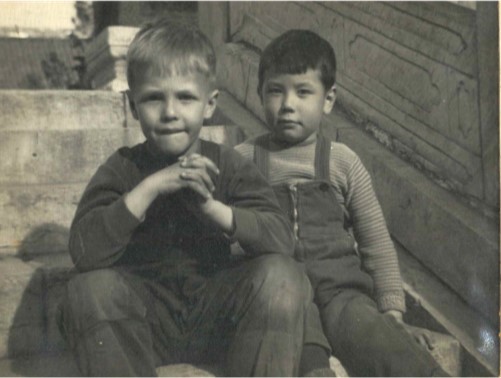
The ambiguous category that Chinese children from interracial families occupied spilled into the social sphere to shape the way they were perceived by their peers. Outside one’s living quarters within the university campus, being different carried the risk of being mocked and bullied. My uncle, Blue Daybreak, narrates this through the various markers that ‘othered’ him. Race played a role. Even though his hair, which was darker than his brother’s, marked him as more Chinese-looking (see Image 2), he was also considered not Chinese enough. Moreover, he was doubly othered for being disabled. He lived with permanent paralysis in one leg caused by polio and was a regular target of bullying. As he told me:
What I am trying to tell you is that growing up in China I was always a third-class citizen. Three factors placed me in that category. First, our family was not Red enough. Second, my race was not pure. And third, I was an invalid. Being an invalid dropped me to the lowest rank in society. Kids would run after me and shout in unison: ‘The boy with the limp! Chase after him, chase after him!’ When they came close enough, they would kick my crutches away so that I would fall to the ground. I was very lonely as a child because no-one wanted to play with me. I knew I was a liability and, during the Cultural Revolution, I knew that other kids would get in trouble if they played with me. Only at night when it was dark would my friends come and see me.
A similar example of the public targeting and mockery of mixed-race children in China at that time can be found in Carolijn Visser’s (2023) biography of a Dutchwoman named Selma Vos. Selma met her Chinese husband, Cao Richang, at Cambridge University and together they moved to Beijing with their two children, He Li and Tseng-Y. In the book, Selma’s daughter, He Li, describes the sense of humiliation she felt whenever she left her courtyard home and institutional surroundings due to her non-Chinese physical attributes. Strangers would point and whisper: ‘Look! Look! A foreigner!’ He Li recalls one instance when a grown woman saw her in public and started shouting to catch her child’s attention: ‘Will you look at that!’ She laughed so loudly that she made a spectacle of herself. As a child, He Li grew scared and reluctant to leave her courtyard alone and would wait until it was dark to visit her best friend, who lived next door.
Given the weight that ancestry holds in defining Chinese identity, youths who look different such as my father, uncle, and Selma Vos’s children presented an ambiguity that felt uncanny and threatening to those unable to place them within a bounded racial or ethnic group. As political distinctions hardened under Maoism, their ambiguous status increasingly became a liability. For children whose appearance and family histories defied neat categorisation, the stakes were heightened at the start of the Cultural Revolution as political ideology that epitomised lineage as a key determinant of belonging seeped deeper into popular belief about belonging and exclusion.
The Bastards in Beijing’s Revolutionary Past
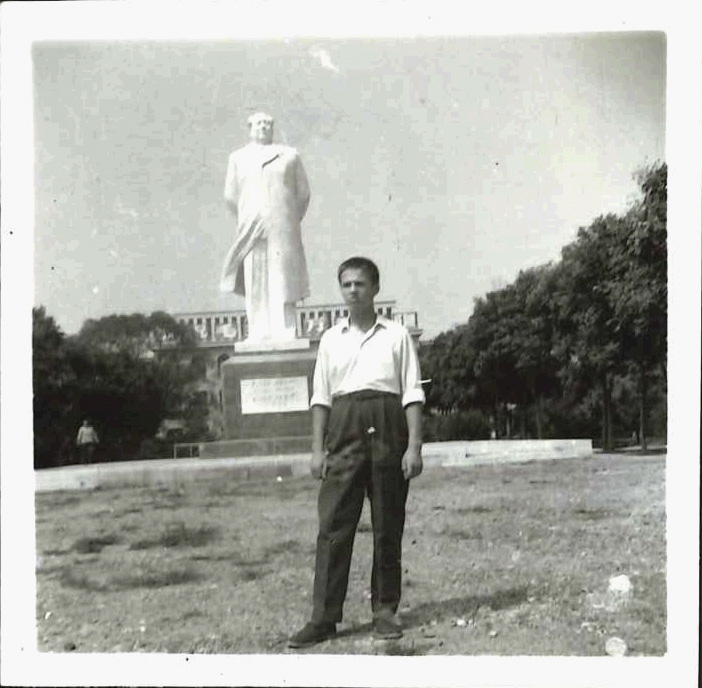
From 1966, politics became increasingly polarised. As technical and bureaucratic personnel and their family members were viewed with suspicion and persecuted, it became apparent that the revolution calling on all citizens to participate was not, in fact, willing to include everyone. The power to determine who belonged and who stood apart seeped deeper into political thought and into people’s actions.
Claiming the struggles over class identity through blood lineage and heritability was not new. The very idea that politics was treated as a matter of family lineage had been deeply embedded in Maoist discourse through ‘bloodline theory’ (血统论) and ideas of ‘red genes’ (红色基因) (Yi 2019). During the Cultural Revolution, slogans propagated this message nationwide, making certain individuals more vulnerable than others to suspicion and political violence.
The famous couplet ‘If the father is a hero, the son is a good man; if the father is reactionary, the son is a bastard’ (老子英雄儿好汉, 老子反动儿混蛋) further hardened these binaries and heightened stigma. Following this logic, the children of revolutionary cadres were viewed as natural successors, while children of so-called reactionary elements such as landlords, capitalists, rightists, and disgraced officials were considered black offspring (黑崽子) or the offspring of dogs (狗崽子). Regardless of one’s personal actions, such categories were imposed to justify the discrimination, harassment, and persecution against adults—and their children—who belonged to certain classes in society defined by the party as its enemies. Ultimately, bloodline theory reinforced hierarchies based on family background, laying bare the hypocrisy of wider socialist efforts to diminish social inequalities even as it divided the population through mechanisms of inclusion and othering.
Due to its foreign ties, my family fell among these suspect categories.
But just as suspect were many other households living on university campus with them. The crimes imposed on intellectual households varied from family to family. As these distinctions multiplied during the Cultural Revolution, the children of intellectuals were treated with suspicion. Teachers, parents, and adults with authority warned other children to stay away from such ‘bad elements’ (坏分子)—a term that was often used loosely to cover anyone tainted by association with the Five Black Categories (黑五类).
Like White Dawn, his friends were treated as outcasts. Tainted by association, these children learned that inclusion was conditional and fragile. Their loyalty and zeal for the revolution were unwanted. Left to their own devices, they formed communities of their own.
Although many of these teenagers would later be sent to the countryside as ‘educated youth’ (知青) during the rustication movement (上山下乡运动), those who remained in Beijing formed their own collective. The bonds they forged gave them a sense of worth, a feeling that they could carve out a place to belong in a society that they now knew did not want them.
The Free and Floating in Beijing’s Revolutionary Past
The Cultural Revolution emphasised revolutionary commitment and transformation, yet excluded participants based on family background. Due to this fundamental contradiction, many faced brutal consequences, including public humiliation, beatings, torture, and the psychological violence of re-education. White Dawn and his friends formed their own subgroup and started calling themselves ‘the carefree faction’ (逍遥派) to distance themselves from the turmoil they saw unfolding around them. At a time when social distrust was rampant and people were regularly forced to confess the political faults of others, the friendship and solidarity they forged saved them from the horrors around them.
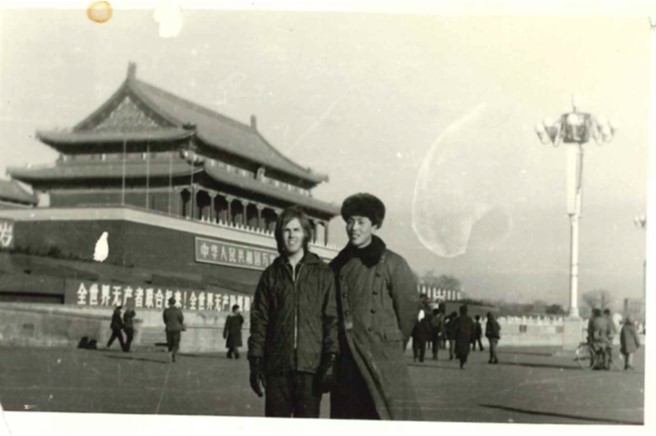
As I piece together the story of my father and the friends with whom he grew up against the backdrop of Beijing’s revolutionary past, their recollections frequently remind me to pay attention to the minutiae of everyday life that shaped youth subjectivities around a stigma of otherness. Although the stories of the Cultural Revolution now belong to a bygone era, they continue to teach us how political campaigns shape the contours of belonging and stigmatisation. The feeling of exclusion that unfolds in these stories is not unique to my family but one shared by many who experienced both the euphoria and the alienation of the revolution. By focusing on the narrative accounts of my extended family, my work offers an alternative lens through which to understand how categories imposed on populations are politically contingent, continually shifting according to the institutionalised distinction between insider and outsider. This mode of governance is neither exclusive to socialist China nor confined to history. In an era of worldwide right-wing populism, examining how the binaries of friend and enemy in contemporary Chinese history have shaped people’s lived experiences offers a way to understand how similar distinctions continue to shape practices of government today.
This essay is in memory of my uncle, Antti Rautio (林蓝晨 ‘Blue Daybreak’), who passed away during the production stages of this essay. Freed from the constraints of this earthly life, may he continue to shine in his blue morning light wherever he goes.
References
Brady, Anne-Marie. 2003. Making the Foreign Serve China: Managing Foreigners in the People’s Republic. Lanham, MD: Rowman & Littlefield.
Cheng, Henry. 2026. ‘Rethinking Comrade and Foreigner: Joan Hinton and the Boundaries of Belonging in Maoist China.’ Made in China Journal 11(1): 60–67.
Dutton, Michael. 2019. ‘Friend and Enemy.’ In Afterlives of Chinese Communism, edited by Christian Sorace, Ivan Franceschini, and Nicholas Loubere, 81–84. Canberra and London: ANU Press and Verso Books.
Hooper, Beverley. 1986. China Stands Up: Ending the Western Presence, 1948–1950. London: Allen & Unwin.
Hooper, Beverley. 2016. Foreigners Under Mao: Western Lives in China, 1949–1976. Hong Kong: Hong Kong University Press.
Hooper, Beverley. 2018. ‘Living in Mao’s China: The European Experience 1949–1969.’ In Roads to Reconciliation: People’s Republic of China, Western Europe and Italy During the Cold War Period (1949–1971), edited by Guido Samarani, Carla Meneguzzi Rostagni, and Sofia Graziani, 57–77. Venice, Italy: Edizioni Ca’ Foscari.
King, Amy. 2016. China–Japan Relations After World War Two: Empire, Industry and War. Cambridge, UK: Cambridge University Press.
Pieke, Frank N. 2011. ‘Immigrant China.’ Modern China 38(1): 40–77.
Soeya, Yoshihide. 1992. Japan’s Economic Diplomacy with China. Oxford, UK: Clarendon Press.
Visser, Carolijn. 2023 [2017]. 色尔玛: 逃离希特勒魔掌, 却成毛泽东囚徒 [Selma: Escaping Hitler’s Clutches, Only to Become Mao Zedong’s Prisoner]. Translated by Nakao Eki Pacida. Taipei: Locus Publishing Company.
Wits, Casper. 2020. ‘Foreign Correspondents in the East Asian Cold War: The Sino-Japanese Journalist Exchange of 1964.’ Modern Asian Studies 54(5): 1446–82.
Yi, Xiaocuo. 2019. ‘Blood Lineage.’ In Afterlives of Chinese Communism, edited by Christian Sorace, Ivan Franceschini, and Nicholas Loubere, 17–22. Canberra and London: ANU Press and Verso Books.
Zhang, Xiaoxin 张小欣. 2011. ‘论中国与印度尼西亚建交 [On the Establishment of Diplomatic Relations between China and Indonesia].’ 当代中国史研究 [Studies of Contemporary Chinese History] 1: 91–98.