

Reporting the Future to Mao: Time-Travel Web Novels and the Digital Afterlives of Maoism
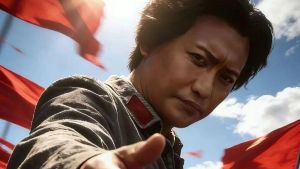
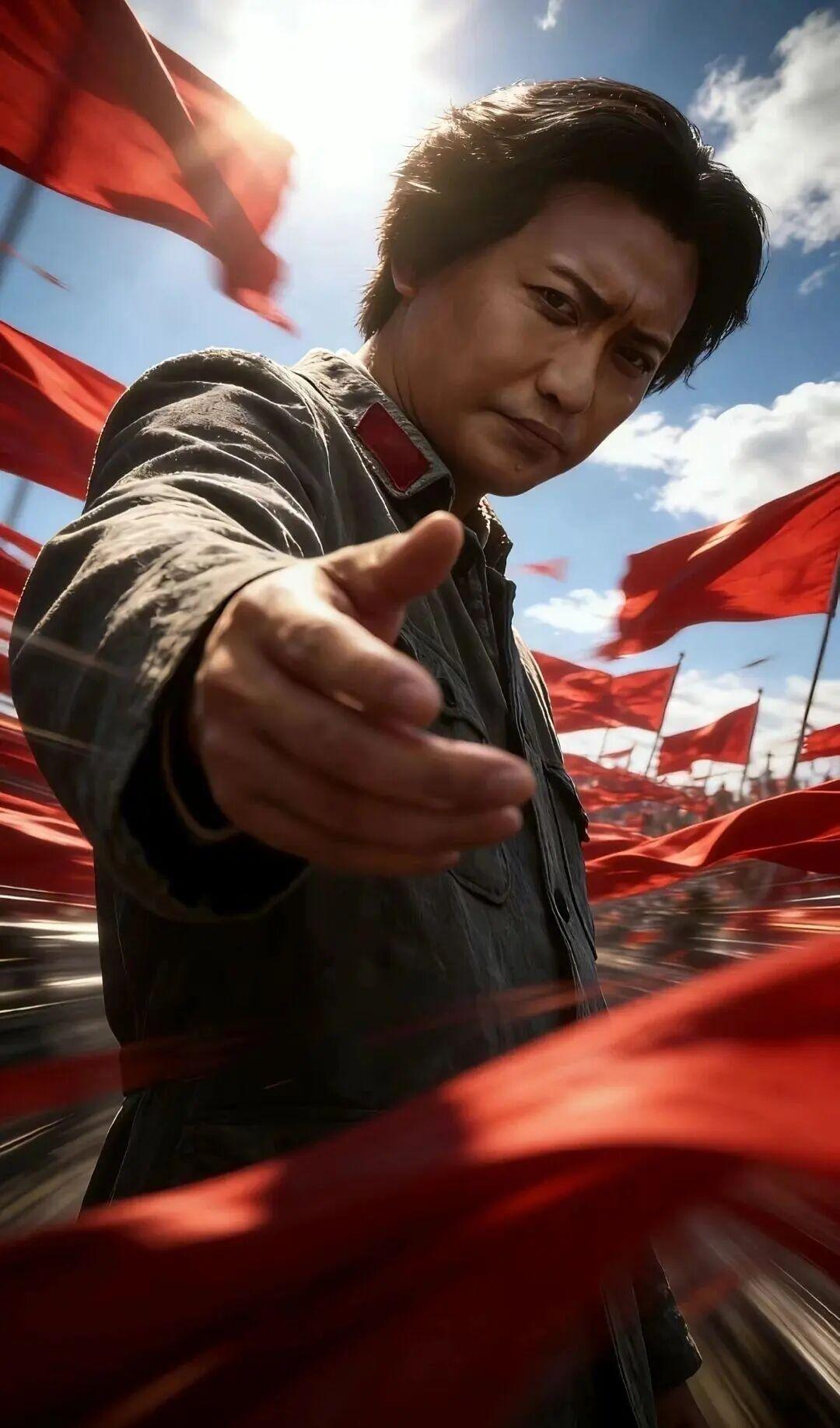
Beijing, 1950. A young man from the 2020s sits across from Mao Zedong and begins to report on the future by playing him documentaries. He starts with what is reassuring: how railways will one day blanket the land, how spacecraft will rise into the sky, how hundreds of millions will be lifted out of poverty. Then his tone darkens as he must show the rest: the chasm between rich and poor—people who cannot afford to fall ill, to grow old, or even to die with a patch of ground to call their own (死无立锥之地). When the report ends, ‘Chairman Mao was furious; he roared like an enraged lion’ (Yijinxiaoeli 2022; all translations here and below by the author).
The scene is from Bringing an Internet Café Back to 1950 (带着网咖回1950; Yijinxiaoeli 2022), an example of what its readers call ‘aiding-the-communists fiction’ (援共文). Similar scenes recur in a number of recent Chinese web novels built on the same premise: a time traveller carrying knowledge of the future goes back to the founding of the People’s Republic of China and, face to face with the man who built it, reports to him what becomes of the country. This narrative impulse belongs neither to the state’s commemorative rituals nor to the scar narratives (伤痕文学) built around personally lived political trauma. It is the work of a digital generation with no memory of the Mao era, imagining a relationship of their own with Mao Zedong. This essay asks what experiences and lessons from the Mao era such a narrative form registers and how the ideal China imagined through these alternative histories relates to today.
From Learning from Mao to Reporting to Mao
‘Reporting to Mao’ fiction belongs to the longer genealogy of Chinese historical time-travel writing. Historical time travel (穿越) is one of the most prominent and popular genres in Chinese web literature and its basic impulse can be described as a desire for historical revision: a protagonist armed with modern knowledge returns to some pivotal moment in the past to rewrite humiliation and reverse defeat. Han (2026a: 89) calls this a nationalist form of digital cultural consumption. The past is rewritten not to understand it, but to enact a collective fantasy about how ‘China could have been better’.
When this revisionist impulse meets red nostalgia, it produces ‘aiding-the-communists fiction’, set in the years of revolution and national founding. Within this body of work, two generations can be clearly distinguished. The first is what Han (2026a: 97) terms ‘Make China Great Again’ (MCGA) fiction—novels that reproduce the Chinese Communist Party’s revolutionary line almost verbatim. The time traveller returns to the late Qing or Republican era and, armed with knowledge and theory ahead of his time, personally organises the revolution and founds the state—in effect, becoming another Mao. The representative work here is Feihongzhiyue’s Red Dawn (赤色黎明), serialised on Zongheng.com from 2011 to 2014—and since censored, probably for preaching communism too openly, as communist ideals can also provide grounds for criticising the present regime (Han 2026a). The underlying logic of these novels is a fusion of red nostalgia for China’s past with institutional confidence in China’s present: since the framework Mao laid down was itself correct and worthy of pride, all the protagonist need do is walk that same road again, only better. Socialist China figures here as an ideal endpoint; the narrative typically climaxes with the founding of the state and what comes after is left unexamined.
Yet this grassroots red nostalgia appropriated the names of modern political figures and events and mixed them with hatred of local bureaucratic corruption, voiced from the standpoint of ordinary people, which pervades web fiction (Shen 2015). It also sat uneasily with China’s realist tradition in the cultural sphere and with official campaigns against ‘historical nihilism’ (历史虚无主义). To avoid the political risks of rewriting the party’s recent history, web-literature platforms began to censor themselves: historical time-travel fiction turned towards ancient rather than modern China and the modern-era variant was gradually pushed to the margins.
The second generation of aiding-the-communists fiction, the ‘reporting to Mao’ novels at the centre of this essay, differs from its predecessor in both narrative mode and readership. Most of these novels are set in the early 1950s, around the founding of the People’s Republic. The protagonist, usually a young male party member, travels back in time to tell Mao about the achievements and crises of China’s future. Armed with future technology and materiel, he helps socialist China through its hardest years: averting the disasters of the Great Leap Forward, the famine, and the Cultural Revolution, winning the Korean War and a war to unify Taiwan, and at last achieving the great rejuvenation of a red China. Mao is no longer merely the teacher of revolution but an interlocutor eager to learn about the future and to reform China accordingly.
Although scholars have described web literature as a heavily state-controlled ideological space (Hockx 2023; Han 2026b), these novels can still be serialised legally on Chinese fiction platforms, unless the host site applies conservative editorial standards, and they have drawn a sizeable readership. By 20 October 2026, Bringing an Internet Café Back to 1950 had received more than 1.84 million recommendation votes on the fiction site Xirang (息壤) (Xirang 2026a). Despite this reader engagement, Xirang remains a niche platform within Chinese web literature and its relatively low visibility affords it greater latitude under censorship than mainstream platforms. Readers even use the in-text comment function (本章说) to voice their remembrances of Mao and their desire to ‘speak bitterness’ (诉苦) to him.
What Can Be Reported, and What Cannot
Bringing an Internet Café Back to 1950 is among the better-known works of this kind. Serialised on Xirang from 2022 to 2025, the novel runs to some six million characters and remains on the site’s daily bestseller list (Xirang 2026b). It tells the story of Li Rui, a young man from the 2020s who is transported, together with the internet café he runs, back to Beijing in 1950. Like many web-novel protagonists, Li comes equipped with cheat tools: the café’s computers stay connected to the internet of the 2020s and the café itself, functioning as a wormhole, allows him to order goods from the future.
The scene of reporting the future to Mao opens the novel. Having cleared himself of suspicion of being a spy with a ‘Chinese Communist Party membership card’ (中国共产党党员证)—an object the author simply invents—the protagonist is passed up the chain of command until he meets Mao and delivers his report. From the outset, then, the novel does not develop its counterfactual history realistically, as would a war game or thought experiment. It shows only what suits the political views of its author and readers.
Thus, though this chapter is titled ‘One Cannot Report Only the Good and Hide the Bad’ (不能报喜不报忧), what the protagonist reports is selective. He assembles it from edited documentary footage: on one side, the national might of films such as Pillars of a Great Power (大国重器) and Aerial China (航拍中国); on the other, the livelihood troubles exposed in The Tycoon and the Migrant Worker (富商与农民工) and The Medical Queue of 1.3 Billion (十三亿人的医疗长龙). After this mix of good and bad news, an enraged Mao asks what becomes of the party over the next 70 years. Here the author abandons the documentary format and passes over the answer in a few lines:
Li Rui hid nothing; he told them everything, good and bad. On the great matters the Party had never wavered—earthquakes, typhoons, tsunamis, epidemics, all firmly kept under control. But a great tree has its dead branches, and some abused power for private gain. The ten years [of the Cultural Revolution] and reform and opening, and the rest, Li Rui recounted as well. When he finished, the three men were silent for a long while. ‘We took a good many detours [弯路],’ the Chairman sighed. The Premier nodded: ‘Crossing the river by feeling the stones—detours are hard to avoid. But since we know in advance, we must guard against these things.’ (Yijinxiaoeli 2022: vol. 1, ch. 7)
Despite the chapter’s title, the protagonist, a stand-in for author and reader, offers no broad critique of Party-State politics. He and his three listeners (Mao, Zhou Enlai, and Zhu De) agree that the Cultural Revolution and reform and opening were merely ‘detours’. And his account of why is again selective: the Great Leap Forward and the Cultural Revolution are swiftly passed over, while the ideological corruption and inequality of the reform era are given prominence. His verdict:
Actually, many of the problems after reform and opening came down to a loss of faith. Our cultural and public-opinion battlefield was seized by Western discourse power; Western films, novels, and entertainment invaded our country wholesale … Our whole climate of opinion was controlled by Western media, and many scholars too were held captive by that Western set of theories. (Yijinxiaoeli 2022: vol. 1, ch. 7)
To skip over the Mao-era controversies while attributing every present ill to reform and opening—to the betrayal of communist ideals by Westernised bureaucrats and scholars—is a typical grassroots Mao-leftist (草根毛左) position (Liu 2019). Tellingly, perhaps to avoid censorship, Deng Xiaoping and the other politicians so often attacked in that discourse never appear in the novel.
‘Reporting to Mao’ fiction, then, does not treat Mao as a critical interlocutor who might reassess Mao Zedong Thought or Mao-era modernisation. While claiming to not ‘report only the good’, the protagonist dwells on the 30 years after reform and opening, casting the West as the ideological enemy and glossing over the errors of the first 30 years.
The Technological Great Leap and the Rewriting of Maoism
If reporting to Mao promises to correct history, what form does the correction take? Having diagnosed a loss of faith and the invasion of Western discourse, the protagonist and Mao turn to technology for a cure.
Li Rui brings to 1950 not a different politics but an internet café that is connected to the 2020s. From here the plot becomes a sequence of technological leaps: he brings Chinese scientists home from America ahead of schedule and builds the atomic bomb early, stockpiles supplies and drones for the Korean War, secretly trains young soldiers such as Mao Anying, and, to feed the war effort, imports broiler chickens and penicillin from decades hence (Yijinxiaoeli 2022). In effect, the problem is redefined: China went wrong in its ‘latter 30 years’ because it was too poor and technologically backward to keep the West out. The solution is to build up national power in Mao’s own time by winning in Korea early, taking Taiwan, and staging a ‘genuine’ Great Leap without famine, so that later problems never arise. Developing the productive forces becomes the way to prevent capitalist restoration.
The departure from the historical Mao lies in how capitalist restoration is to be prevented. The historical Mao argued that economic construction alone cannot prevent restoration and may be the soil that breeds it; the danger sits in the superstructure and in the ‘capitalist-roaders’ within the party, and the only cure is unceasing class struggle or continuous revolution under the dictatorship of the proletariat. This was the theoretical ground of the Cultural Revolution (People’s Daily et al. 1967). Yet in the novel, for all its concern about averting restoration, class struggle and mass movements—Mao’s main weapons against revisionism—give way to economic development. Mao’s authority supplies the assurance that this development will remain socialist.
To make red China strong overnight, the protagonist also readily resorts to state-capitalist methods, using a soft-drink formula from the future to corner the Soviet market ahead of Coca-Cola, then bartering it for industrial production lines (Yijinxiaoeli 2022). The ends are socialist, but the means are thoroughly capitalist—a contradiction the text never acknowledges.
This is an unexpected instance of what Mark Fisher (2009) calls capitalist realism. Capitalism, Fisher argues, echoing Fredric Jameson, has colonised the imagination so completely that ‘it is easier to imagine the end of the world than it is to imagine the end of capitalism’. Socialism becomes not an alternative politics but a faster competitor in the same race and its red future looks like an earlier and even larger ‘world’s factory’. This future still draws its competitive strength from cheap labour. In the overseas labour program, Chinese workers earn ‘far less than their Soviet counterparts’, generating foreign exchange for the state. The narrator celebrates this arrangement as ‘a win-win in several respects’ (Yijinxiaoeli 2022: vol. 3, ch. 357). What limits these novels is not a lack of daring but the absence of any other source for radical imagination.
At the centre of the novel is a thoroughly rewritten Mao—no longer a politician feeling his way through contradictions, but a perfect information processor. The future’s data are written into him at the outset; thereafter, at each juncture, he retrieves the relevant file and rules correctly. Protagonist and chairman form a closed circuit: information flows one way, from the future into Mao, and political judgement shrinks to the retrieval of a pre-given answer. This inverts Mao’s own epistemology, in which truth had social practice as its only criterion, reached and verified through an endless spiral of practice and knowledge (Mao 1966). This Mao needs no practice, since knowing is reduced to looking things up. He appears infallible only because he has been stripped of politics and turned into a machine that gives the right answer when fed the right data.
Yet this does not empty Maoism entirely: one half of it survives. Maoism, Vukovich (2019: 64) reminds us, was never only a politics of struggle but also
a rational-practical framework that people used to make sense of their lives and the world around them, in an extreme age of revolution, nationalism, and war … but also one of massive, socialist construction of the new China (the embrace of ‘futurity’) and of new individual lives.
The novels detach the second of these dimensions from the first: with class struggle gone, ‘futurity’ is no longer a revolutionary horizon but pure technological catch-up, and ‘new individual lives’ shrink to one protagonist making his name in the new China. What remains is a Maoism reduced to futurity and personal success, cut loose from its political foundations.
A Depleted Maoism and Mao’s Digital Afterlives
The analysis above has focused on Bringing an Internet Café Back to 1950, but the narrative trajectory from reporting the future to Mao to a technological Great Leap extends across a wider body of fiction. The Xirang dataset assembled for this study contains 223 historical fiction titles, including representative works such as Space-Time E-Commerce: 1949 (时空电商: 1949; Diguo Kuanglan 2022) and A Two Sessions Delegate’s Briefcase Travels Back in Time (两会代表的公文包穿越了; Yuehan Liuzhe Changchang de Huzi 2022).
These novels summon Mao to judge a China that has lost its faith, yet all they can picture as ‘better’ is an atomic bomb detonated early, a market cornered ahead of Coca-Cola, a Great Leap without famine, and a strong state winning the Cold War. Their ‘better’ red China is measured only by the prosperity national rejuvenation can deliver. In Bringing an Internet Café Back to 1950, the labour program promises higher-value work, ‘building the country while making their own lives more prosperous’ (Yijinxiaoeli 2022: vol. 2, ch. 325). What looks like a return to Mao never leaves these novels’ idealised understanding of reform and opening, summed up in Deng Xiaoping’s dictum that ‘development is the hard truth’ (发展才是硬道理) (Deng 2013).
This idealised reading of development sits comfortably with the party’s position. Yet, as discussed above, on a platform such as Xirang that already operates in a grey area of censorship, it is better understood as a commercial strategy than simply a concession to censorship. Bringing an Internet Café Back to 1950 advertises itself as ‘pure wish-fulfilment fiction’ (Yijinxiaoeli 2022). A ‘Chinese Dream’ pursued through seemingly transgressive Mao nostalgia offers greater scope for wish fulfilment than does critical reflection on the party’s past and present.
The result is a depleted Maoism, in which Mao figures less as a proletarian revolutionary than as a strongman of the nation and revolution narrows into a technological leap. Its subject shifts from class to nation.
This depletion is typical of Mao’s digital afterlives. The ‘Mao fever’ of the 1990s ran on badges and posters (Barmé 1996), but its Mao was still a complete figure. Today’s Mao is fragmented, summoned in flashes of feeling as an empty sign of ‘something better’ detached from a sustained political program. In contemporary China, disputes over marriage have become a focus of gender antagonism. These disputes often centre on bride-price (彩礼), a payment from the groom’s family to the bride’s. In comments beneath a video recalling its abolition in Jiangxi, Mao is invoked to denounce women as traitors to the revolution (Hongdi Wange 2026). Here, revolutionary authority lends legitimacy even to misogynistic attacks. Reduced to a sign that means only ‘better’, Mao can be attached to almost any cause.
Mao remains a living presence, then, not because the road to revolution has reopened, but because his image has become empty enough to hold the anxieties of the present. His name now serves to imagine a stronger China, no longer a different world.
References
Barmé, Geremie R. 1996. Shades of Mao: The Posthumous Cult of the Great Leader. Armonk, NY: M.E. Sharpe.
Deng, Xiaoping 邓小平. 2013 [1992]. ‘在武昌、深圳、珠海、上海等地的谈话要点 [Excerpts from Talks Given in Wuchang, Shenzhen, Zhuhai, and Shanghai].’ Quotation reproduced in 人民网 [People’s Daily Online], 19 August. cpc.people.com.cn/n/2013/0819/c69710-22616545.html.
Diguo Kuanglan 帝国狂澜. 2022. 时空电商: 1949 [Space-Time E-Commerce: 1949]. 息壤中文网 [Xirang]. yp.xrzww.com/bookdetail/87942.
Feihongzhiyue 绯红之月. 2011–14. 赤色黎明 [Red Dawn]. Originally serialised on 纵横中文网 [Zongheng], 2011–14; since censored. Archived copy accessed 1 May 2026. 69shuba.com/book/599.htm.
Fisher, Mark. 2009. Capitalist Realism: Is There No Alternative? Winchester, UK: Zero Books.
Han, Rongbin. 2026a. Make China Great Again: Online Alt-History Fiction and Popular Authoritarianism. New York, NY: Columbia University Press.
Han, Rongbin. 2026b. ‘Passing on the Red Genes: Communism Nostalgia in Online Fictions and Ideological Governance in China.’ Regulation & Governance 20(1): 119–33.
Hockx, Michel. 2023. ‘Truth, Goodness, and Beauty: Literary Policy in Xi Jinping’s China.’ Law & Literature 35(3): 515–31.
Hongdi Wange 红笛晚歌. 2026. ‘95年前, 江西消灭了彩礼 [95 Years Ago, Jiangxi Abolished Bride-Price].’ 红笛晚歌 [Hongdi Wange], Bilibili, 6 June. bilibili.com/video/BV17U7D6WEkH.
Liu, Jun. 2019. ‘Contested Past: Social Media and the Production of Historical Knowledge of the Mao Era.’ In Popular Memories of the Mao Era: From Critical Debate to Reassessing History, edited by Sebastian Veg, 61–79. Hong Kong: Hong Kong University Press.
Mao, Zedong 毛泽东. 1966 [1937]. ‘实践论 [On Practice].’ In 毛泽东选集 [Selected Works of Mao Zedong], vol. 1, 259–73. Beijing: Renmin Chubanshe.
People’s Daily 人民日报, Red Flag 红旗, and Liberation Army Daily 解放军报. 1967. ‘沿着十月社会主义革命开辟的道路前进 [Advance along the Road Opened Up by the October Socialist Revolution].’ 人民日报 [People’s Daily], 6 November.
Shen, Yipeng. 2015. Public Discourses of Contemporary China: The Narration of the Nation in Popular Literature, Film, and Television. New York, NY: Palgrave Macmillan.
Vukovich, Daniel F. 2019. Illiberal China: The Ideological Challenge of the People’s Republic of China. Singapore: Palgrave Macmillan.
Xirang 息壤中文网. 2026a. ‘带着网咖回1950 [Bringing an Internet Café Back to 1950].’ 息壤中文网 [Xirang]. yp.xrzww.com/bookdetail/84820.
Xirang 息壤中文网. 2026b. ‘每日热销榜 [Daily Bestseller List].’ 息壤中文网 [Xirang]. xrzww.com/ranking/1.
Yijinxiaoeli 一斤小鳄梨. 2022. 带着网咖回1950 [Bringing an Internet Café Back to 1950]. 息壤中文网 [Xirang]. xrzww.com/bookdetail/84820.
Yuehan Liuzhe Changchang de Huzi 约翰留着长长的胡子. 2022. 两会代表的公文包穿越了 [A Two Sessions Delegate’s Briefcase Travels Back in Time]. 息壤中文网 [Xirang]. yp.xrzww.com/bookdetail/91728.