
Outsourcing Coercion and Social Control

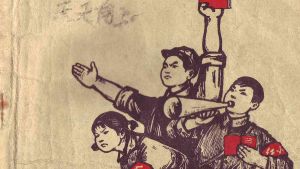
To carry out coercion and social control, the Chinese government often resorts to non-state actors, including ‘thugs-for-hire’, profit-seeking brokers, and even commercial enterprises. This piece examines the circumstances under which the authorities use these means and the reasons behind their choices, arguing that this is mostly related to the need of reducing the cost of repression and evading responsibility.

The Jasic Struggle and the Future of the Chinese Labour Movement

This summer, the struggles of workers at Shenzhen Jasic Technology, a publicly listed private firm specialising in the manufacturing of welding machinery (hereafter referred to as Jasic), to form a labour union have attracted widespread attention both inside and outside China. The worker activists decided to push for unionisation in order to address a wide range of workplace grievances, such as an inflexible work schedules, under and late compensation for overtime work, excessive and unreasonable fines, and stringent workplace regulations (for instance, regulations that restricted access to bathroom breaks). The campaign was initiated in May, in the wake of the arbitrary firing of a worker.

Blandness, Bathos, or Brashness? Choosing Pathways to Validity and Relevance for Chinese Politics Research

The study of Chinese politics and society has reached a crossroads. A year ago I called for scholars to eschew exclusive focus on the current ‘methods arms race’ and engage in more cross-national comparative analysis to bring the study of Chinese politics out of isolation (Hurst 2018). Upon further reflection, however, it seems the choice we face is actually more complex and nuanced. Two shifts have changed the way we must approach data collection and left us with three main alternatives: blandness, bathos, and brashness.

End of an Era: A Conversation with Carl Minzner

China’s post-1978 era of ‘reform and opening up’ is ending. China—a country that claims to shape the global order—is closing down and its future remains uncertain. This is the key message from Carl Minzner’s End of an Era: How China’s Authoritarian Revival Is Undermining Its Rise, an engaging, provocative, albeit sobering, analysis of contemporary China.

Hegemonic Transformation: A Conversation with Elaine Sio-Ieng Hui

Discussions of Chinese labour are generally dominated by stories of exploitation. Relatively little attention has been paid to the fact that over the past two decades the Chinese authorities have developed an impressive body of labour laws and regulations. There has been even less notice of the fact that this legislation was widely disseminated among the Chinese public through the official media, or of how these laws have regularly elicited widespread domestic discussion. But how to reconcile these notable legislative achievements with the global image of a government that apparently does not care for the wellbeing of its workers? In Hegemonic Transformation (Palgrave Macmillan 2017), Elaine Sio-Ieng Hui addresses this paradox.

China and Development Aid: The Case of Anti-trafficking and Seafood in Southeast Asia

Chinese-funded aid to developing countries does not require either mitigation strategies or environmental and social impact assessments. In this essay, Sverre Molland looks at the Mekong region and assesses the impact of China’s increasing influence in the area on the attempts to introduce humanitarian and human rights standards in labour migration.

We the Workers: A Conversation with Huang Wenhai

Shot over a six-year period (2009–2015) mainly in the industrial heartland of south China—a major hub in the global supply chain—the 2017 film We the Workers (xiongnian zhi pan) follows labour activists as they find common grounds with workers, helping them to negotiate with local officials and factory owners over wages and working conditions. Threats, attacks, detention, and boredom become part of their daily lives as they struggle to strengthen worker solidarity in the face of threats and pressures from police and their employers. In the process, we see in their words and actions the emergence of a nascent working-class consciousness and labour movement in China. What follows is a conversation between Zeng Jinyan, producer of the movie, and its director Huang Wenhai.

The Last Days of Shi Yang

What follows is a fictionalised account of the last days of Shi Yang (1889–1923) based on the prison diaries included in the commemorative volume Shi Yang jinian wenji (Museum of the 7 February Massacre, Wuhan 1988). Shi Yang was a weiquan lawyer ante litteram, and to this day he remains an inspiration to many labour activists in China. The Chinese Communist Party (CCP) celebrates him as a martyr of the revolution, the irony of which will not escape those who are aware of the plight of human rights lawyers and labour activists in the country today. That in April 2018 the Chinese government passed a new law to protect the reputation and honour of ‘its’ heroes and martyrs can be seen as further adding to the irony.

Will the Future of Human Rights Be ‘Made in China’?

For at least three years, my organisation has been tracking—and helping others to track—the way in which China is expanding its influence in multilateral institutions, in particular the United Nations (UN). However, when the Trump Administration announced the withdrawal of the United States from the UN’s peak human rights body, the Human Rights Council, on […]

China Studies between Censorship and Self-censorship

It has not been a very auspicious year for freedom of expression in China Studies. In August 2017, Cambridge University Press (CUP) removed over three hundred articles published in The China Quarterly from its Chinese website. The articles had been chosen for censorship by very haphazard searches based on ‘sensitive’ keywords: Tiananmen, Cultural Revolution, Taiwan, […]

Subscribe to Made in China

Made in China publications are open access and always available as a free download. To subscribe to email alerts for each issue of the Journal, newly published books, and information about upcoming events, please provide your contact information below.


Back to Top