
Queer Festival Troubles
What the Beijing Queer Film Festival Reveals about Queer Subjectivity in Contemporary China
Since the early 2010s, China has experienced a substantial tightening of cultural and ideological control, leading to the forced closure of many independent film festivals and grassroots initiatives. Beijing’s most prominent grassroots effort, the Beijing Independent Film Festival (北京独立影像展), was shut in 2014, marking a key moment in the government’s crackdown on civil society and cultural spaces (Kaiman 2014). In the years that followed, pressure on queer and feminist groups intensified. Organisations and individuals faced investigations, event cancellations, and digital erasure. In 2021, major university-based queer/feminist WeChat public accounts began to be deleted (Yiu 2021). In 2023, grassroots accounts faced the same fate (Gu 2023). That same year, the most prominent nongovernmental organisation in the field, the Beijing LGBT Centre (北京同志中心), announced its closure (Wang 2023).
Against this backdrop, as China’s longest-running independent film festival, the Beijing Queer Film Festival (北京酷儿影展, BJQFF) has faced a double bind: increased cultural regulation and targeted repression of LGBTQIA+ communities. Yet, despite ongoing censorship, surveillance, and the broader marginalisation of LGBTQIA+ communities, the BJQFF has persisted since its founding in 2001, albeit often in shifting and semi-visible forms. This essay asks: what enables the BJQFF’s persistence when many other grassroots cultural projects have vanished? Drawing on my own experience as an organiser of the festival since 2013, I explore how the festival’s adaptive organising, decentralised structure, and survival-driven ethos have enabled its resilience in a shifting political landscape. The study contends that the BJQFF is not only a model of cultural endurance but also a vibrant space where queer subjectivity is enacted through compromise, flexibility, and strategic ambiguity.
Improvising in the Shadows
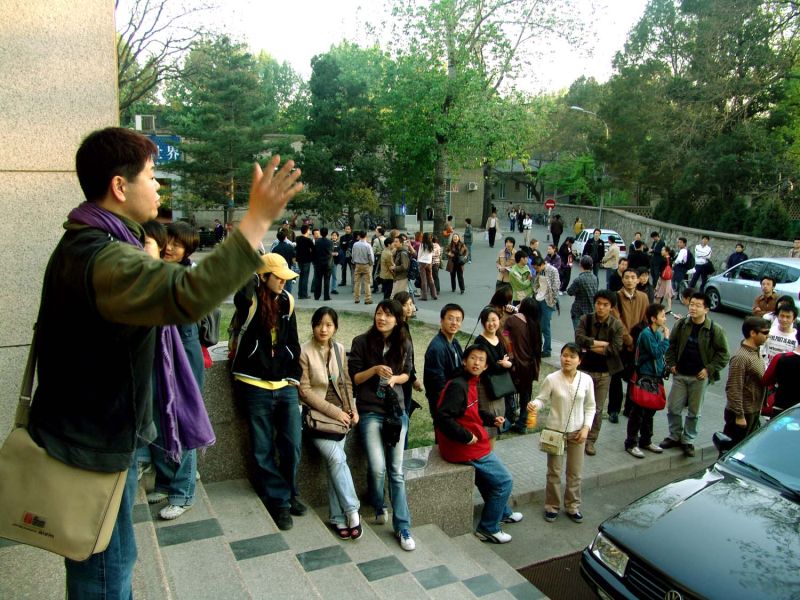
The inaugural BJQFF was organised at Peking University by Cui Zi’en 崔子恩, an early openly queer filmmaker and scholar, and student organiser Yang Yang 杨洋 in 2001, the same year that homosexuality was officially depathologised in China (Gittings 2001). Its inaugural program introduced mainland audiences to works now widely regarded as classics of Chinese-language queer cinema, such as Lan Yu (蓝宇), East Palace, West Palace (东宫西宫), and Fish and Elephant (今年夏天).
From the beginning, organising the festival has been far from straightforward. Public screenings in China generally require prior content review (审查) and a screening permit (公映许可证) from relevant authorities, but queer-themed films rarely obtain such approval. After the first festival, the university leadership learned that many of the films were queer-themed and called in the organisers. Several student organisers were formally reprimanded, and the team was reminded that campus screenings required both reviews and permits. Similar events, they were told, should not continue without approval.
Restrictions on events such as the BJQFF generally travel through two administrative channels: public-order policing by the Public Security Bureau (公安局), which monitors and can halt gatherings; and cultural-ideological review by cultural authorities (文化委/文化局), under which film is treated as propaganda work and thus subject to content control. These dual pressures—policing of assembly and censorship of ideology—set the parameters within which the festival had to improvise its early operations.
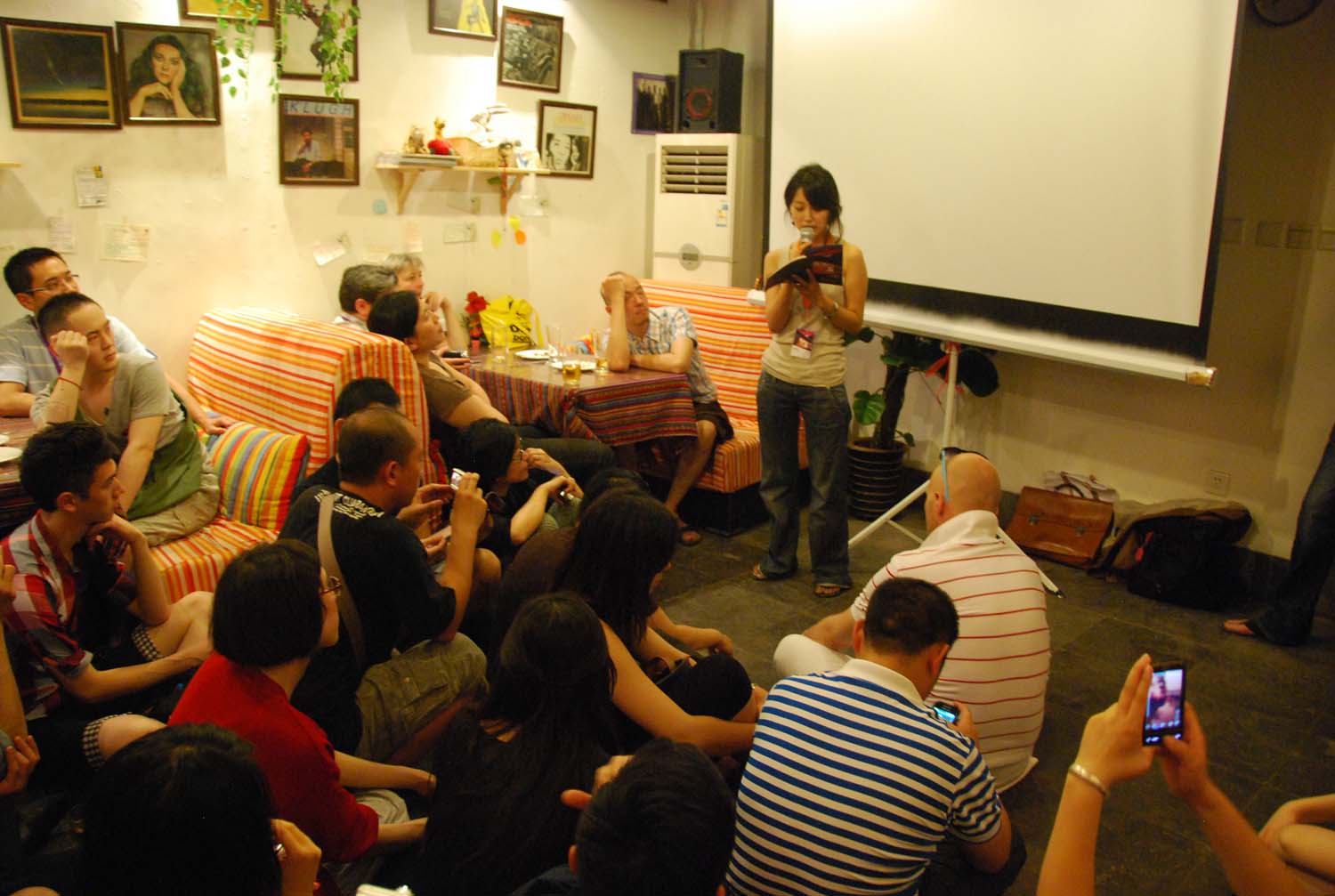
In 2005, only hours before the planned opening of the second festival, the leadership of Peking University informed the organisers that the event could not proceed on campus. The festival relocated to a private artist’s studio in the 798 Art District, running a secret, invitation-only program with minimal publicity and rolling text message updates to guide small groups to the site (Yang 2011). In the following years, the festival was frequently forced to cancel or relocate events at short notice due to government intervention. When venues were abruptly shut, organisers would scramble to secure alternatives, sometimes within hours. With limited access to stable venues, the team began to distribute screenings across multiple sites throughout the week—an art studio in the afternoon, an LGBTQIA+-friendly café in the evening, or a student film club for a single night. Information circulated on a need-to-know basis: public materials stayed deliberately vague, while precise addresses and film titles were shared privately and late.
This shows how, in the face of mounting restrictions, the festival developed a repertoire of adaptive survival tactics that are both practical and analytically legible. Rather than confronting censorship directly, organisers have learned to operate in the shadows through ‘guerilla warfare’ tactics (游击战术): shifting venues at the last minute, sending invitations through tightly managed private channels, and maintaining a low public profile by minimising digital traces and publicity. As Hongwei Bao (2020b: 192) has put it:
This is not conventional warfare in which the fight is carried out in the open and on equal terms. Rather, it is a cultural-political war in which queer film activists are heavily outnumbered and outgunned, and therefore special tactics are required.
The BJQFF’s guerilla tactics did not arise from a predetermined plan. They emerged from repeated crises and improvisation, especially in the early years. As founder of the BJQFF Yang Yang stated in the 2011 documentary Our Story (我们的故事): ‘What started as emergency improvisation had become a deliberate strategy.’ Unlike mainstream festivals that depend on a fixed venue, the BJQFF deliberately moved between six or seven locations throughout its duration. This dispersal complicated surveillance and made it more difficult for authorities to shut all activities simultaneously. Even if some events were cancelled, others could still proceed. Over time, logistical precarity evolved into a powerful form of resistance, shaping the festival’s collective memory.
Such flexibility, more than mere pragmatism, also reflects what it means to be ‘queer’ in China. Following Muñoz (1999), disidentification names a survival tactic that neither assimilates nor openly opposes but repurposes dominant forms. The BJQFF uses the festival format while refusing its normative visibility, occupying public space obliquely, ‘seeing the world sideways’ (Muñoz 1999: 25).
For the BJQFF, this has been a daily practice since its inception. Each guerilla screening redefines what a festival, a public, or a community can be, assembling ephemeral spaces of belonging in motion and under threat. Precisely because the festival lived, from the beginning, in underground and more marginal spaces, sustained by guerilla tactics, it cultivated a distinctive resilience. This resilience allowed the BJQFF to endure when the wave of repression and dismantling of independent festivals began in 2013. While more visible or institutionally reliant projects including Yunfest, the China Independent Film Festival, and the Beijing Independent Film Festival have disappeared (Bandurski 2014), the BJQFF’s methods facilitate a productive invisibility, a carefully calibrated low profile that fosters safety, continuity, and fleeting publics, enabling it to endure.
Simultaneously, however, the strategy involves costs: exhaustion, ethical dilemmas surrounding access and risk, and the challenge of maintaining community amid fragmentation. Yet, by transforming marginality and contingency into new opportunities through such guerilla tactics, the BJQFF has survived through the years, inhabiting the margins, sustaining ephemeral publics, and redefining what it means to endure as a queer collective under pressure.
From Precarity to Care
Compared with overt state violence, China’s repression of queer culture and civil society is more frequently characterised by regulatory uncertainty—a systemic ambiguity that conceals the legal and political boundaries of cultural expression. As Hongwei Bao (2020a: 141) notes, the ambiguous legal status of sexual minorities keeps queer culture in China still semi-underground, creating a context in which public visibility remains tentative and vulnerable to fluctuating regulatory interpretations. In this environment, organisations cannot determine their own legal status, whether events will proceed as planned, or how policy shifts in media and tech platforms might unexpectedly threaten their efforts. For the festival, this uncertainty remains a constant feature of organisational precarity.
This precarity stems not only from external structural exclusion but also from repeated infrastructural losses that have shifted over time. In the 2000s, instability was felt mainly in physical space: police visits, last-minute venue cancellations, and landlords abruptly withdrawing permission. Since the mid-2010s, digital infrastructure has also become fragile, with WeChat accounts being closed, promotional materials censored, and team members forced to remain anonymous. Today, these spatial and digital vulnerabilities overlap, removing predictability from the organisation’s workflow and making planning contingent and dependent on interpersonal networks.
In situations where events are hosted in collaboration with foreign embassies or cultural institutions, authorities cannot legally cancel activities, so pressure is redirected onto individuals. In 2015, for example, the BJQFF planned a screening at the Embassy of the Kingdom of the Netherlands to mark 17 May, the International Day Against Homophobia and Transphobia. Because the event would have taken place on diplomatic premises, local authorities turned instead to the Chinese organiser, issuing repeated warnings in the days before the screening that hosting a queer film event would bring ‘serious consequences’ for their work and family. Under this pressure, the organiser felt compelled to cancel the event at the last minute. The co-organiser later emigrated and withdrew from festival work altogether. Episodes such as this show how state power often operates less through formal bans than through personalised intimidation that thins out the team and erodes the vulnerable organisational infrastructure on which grassroots projects depend.
While this applies to all events dealing with topics that might be perceived as politically sensitive in China, the wider environment further increases individual precarity within the queer community. Many people working for the BJQFF are young, students, or freelancers—all groups with limited financial security and little public presence. As a result, the boundary between the individual and the organisation becomes blurred. Regulatory uncertainty not only threatens institutional structures but also impacts the daily lives of organisers, affecting their personal safety, psychological health, and emotional labour. In this context, organisational precarity and individual vulnerability are closely linked.
Rather than treat vulnerability as a state to be eliminated, the BJQFF has come to organise through it. Drawing on Judith Butler’s (2016) conceptualisation, vulnerability is not merely a condition of exposure to power but also a relational force that binds us to one another and can become the basis of mobilisation. This mobilisation takes shape through a flexible, decentralised structure that resists the professionalisation or institutional capture that often characterises international film circuits. The festival’s team operates without legal registration or a physical office. Notably, it employs a rotating director model under which each year a different team member takes on the role of ‘director on duty’ (轮值主席).
This role is not a position of hierarchical authority but functions as a facilitator for coordination and interface. This setup prevents authorities from dismantling the organisation by targeting individuals. It also acts as a mechanism for sharing visibility, accountability, and risk. Each rotating director is chosen in advance, not on an ad-hoc basis, and is supported by a horizontal network of collective decision-making and mutual care. This means responsibility and stress are shared over time. Taking turns prevents burnout, encourages innovation, and allows team members to gain insight into each other’s roles, deepening empathy and solidarity. Decentralisation, therefore, is not only a tactical defence but also a practice of collective care and resilience, distributing the burden of vulnerability across the group.
As Butler (2016: 14) has noted, ‘public resistance leads to vulnerability, and vulnerability (the sense of “exposure” implied by precarity) leads to resistance, vulnerability is not exactly overcome by resistance, but becomes a potentially effective mobilizing force in political mobilizations’. For the BJQFF, this means that structural and individual vulnerability created by regulatory ambiguity are actively organised as a collective resource, supporting queer resistance amid ongoing uncertainty. By rotating leadership, sharing responsibility, and fostering collective care, the festival transforms vulnerability into a resource for solidarity and minoritarian world-making. This approach is not just politically necessary but also ethically motivated, rejecting charismatic or top-down leadership. It affirms that decentralisation, rather than chaos, is a conscious ethics of survival, as each team member’s exposure is shared and risk becomes a collective rather than an individual burden.
The sharing of both emotional and logistical labour—subtitling, venue liaison, audience safety, archiving, translation—takes on new significance within the BJQFF as care and shared responsibility. This fluidity fosters a relational community rather than a leader-centred hierarchy. Because the director role rotates, every core member has at some point experienced the weight of being ‘on the front line’. This makes it easier to recognise and respond to each other’s limits. In a recent year, for instance, the rotating director was unexpectedly offered a full-time position at a mainstream cultural institution and realised she could no longer sustain the workload of the festival. In a slowing economy, such recognition from the mainstream job market is crucial for a young queer woman only a few years out of university, shaping her confidence and prospects. Rather than treating her absence as an irresponsible choice, the team understood this pressure and collectively stepped in: others volunteered to take over correspondence with partners, reallocated programming tasks, and quietly absorbed much of her organisational work. Here, care is not expressed through grand gestures, but through the mundane redistribution of work and risk.
As Sedgwick (2003: 1–8) suggested, queer subjectivity is not static or monolithic but emerging and evolving through affective bonds and social interaction. In the BJQFF, subjectivity is shaped less by formal roles than by who steps in when someone cannot continue, who takes on additional risk, and how care is distributed when members are under pressure. The festival’s decentralised model enables the team to collaborate, support, care for, and share with one another, exemplifying Sedgwick’s vision of how queer subjectivity is generated.
This structure also prevents the collapse of the festival when individual members are targeted or forced to withdraw. In a context in which queer organisers often occupy precarious economic positions and festival work brings little or no income, staff turnover is inevitable; the rotating director system mitigates this by limiting the period in which any one person is expected to make such intense investments of time and energy, endowing the BJQFF with greater resilience and a capacity for self-renewal. Queer subjectivity here is relationally constituted. It is shaped not by fixed identities, but by how exposure, care, and exhaustion are shared, redistributed, and collectively managed within the group. Instead of seeking to imitate institutional norms or the patriarchy, the BJQFF demonstrates the radical potential of queer collectivity by transforming precarity into shared strength, prioritising process over permanence, and reimagining survival as a collective form of innovation. In this way, the decentralised, care-based model of the BJQFF is itself an advanced form of social organising under ongoing constraints.
Failure as Method
The evolution of the BJQFF is characterised by a consistent willingness to prioritise flexible, improvisational survival over institutional visibility, scale, or symbolic capital. The festival has endured by being willing to shrink, to disappear and reappear, and to inhabit imperfection as a resource for survival. It has never aimed to attract attention through celebrity juries, red carpets, or spectacular displays. What may seem from the outside to be marginal or unstable is, in fact, an intentional refusal to conform to institutional logics that cannot accommodate queer life.
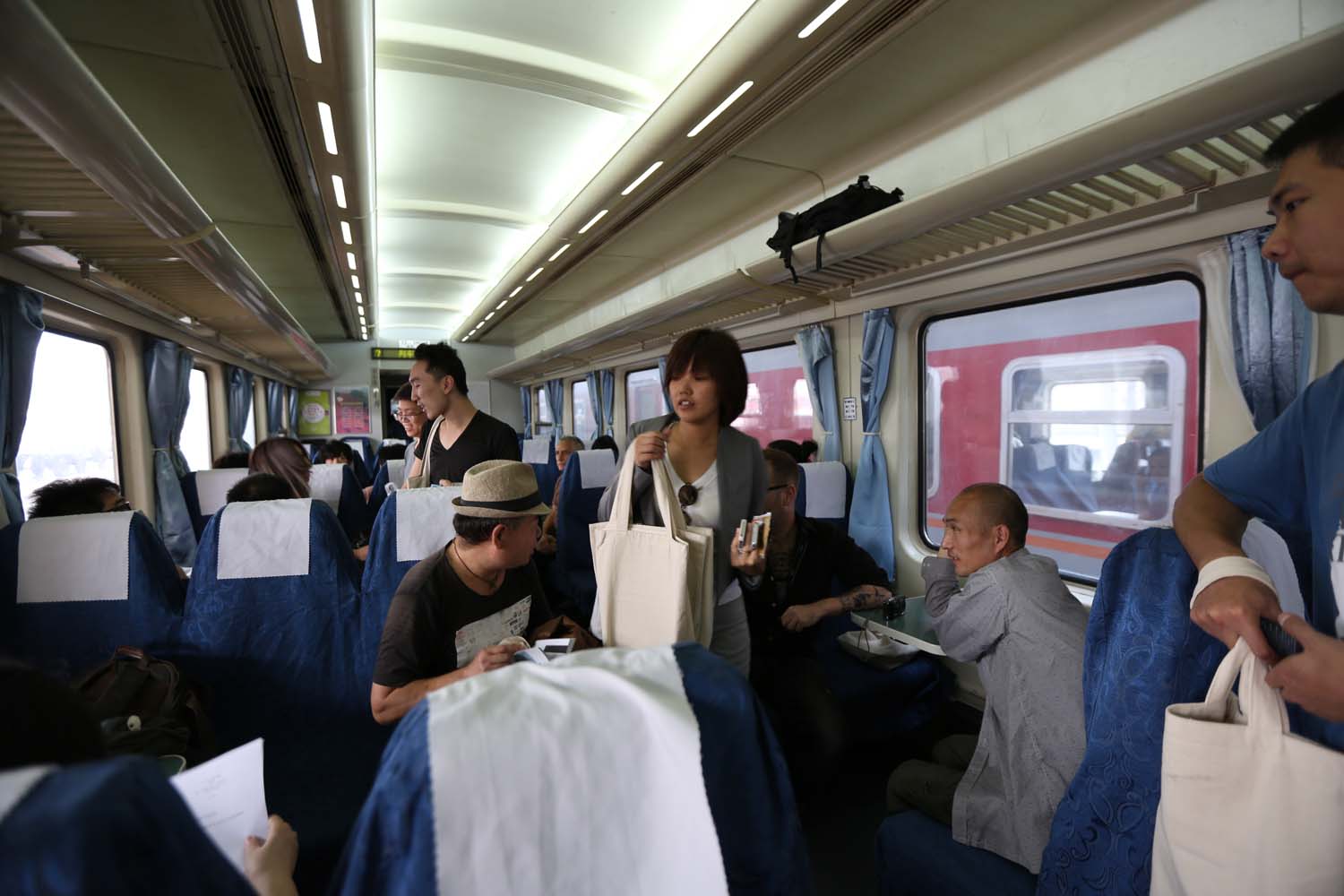
The guerilla tactics kept the festival active for many years, but in 2014 the festival was suddenly cancelled due to increasingly strict regulations on cultural events. Instead of giving up, the organisers adapted quickly: within days, they arranged for participants to board a northbound train from Beijing to Huairou, a 40-minute journey outside the city. Rather than a formal venue, the festival became a moving cinema: each audience member watched Our Story, the documentary mentioned above about the festival’s own history from 2001 to 2011, using the organisers’ USB sticks on participants’ laptops, sharing the experience on the move. More than just a screening, watching a queer film together on a train after being evicted from the city became both a performative act and a quiet protest against the extreme cultural bans.
On the surface, the inability to hold the festival as planned in 2014 was an obvious failure. Yet, that breakdown unexpectedly made the train screening possible. What began as an emergency workaround has since become one of the BJQFF’s most iconic events, remembered by many participants as capturing the festival’s mobility, inventiveness, and stubborn persistence. Even today, friends and former attendees still recall the excitement and creativity of ‘watching queer cinema on the move’. This moment exemplifies a queer art of failure: what counts as failure in a mainstream sense is reworked into a generative, mobile form of queer world-making.
It is important to clarify that the ‘failure’ at stake here is failure in a mainstream sense, not a queer one. From the standpoint of state cultural policy and the commercial film industry, the BJQFF has repeatedly ‘failed’. When the festival has moved closer to conventional markers of success—for instance, using prominent urban venues or collaborating with foreign embassies—these gestures have often triggered police pressure, last-minute cancellations, or the quiet withdrawal of key organisers. Public visibility easily turns into personal exposure and institutional risk. The BJQFF therefore does not seek growth in audience numbers so much as serving a specific community deeply; it does not chase institutional recognition through celebrity juries, red carpets, or high-profile patrons, but defines its own value; it does not prioritise media visibility, but often chooses strategic opacity for reasons of safety. For a marginalised community, however, these metrics are neither achievable nor especially meaningful. In the current political climate, a queer film festival does not need and cannot safely afford to pursue conventional success.
Following Judith Halberstam’s theorisation of the ‘queer art of failure’ (2011), what looks like failure from a dominant perspective becomes, from a queer perspective, a deliberate refusal of normative success and its exclusions. The train screening is one example while a genealogy of ‘failure’ marks the festival’s recent history.
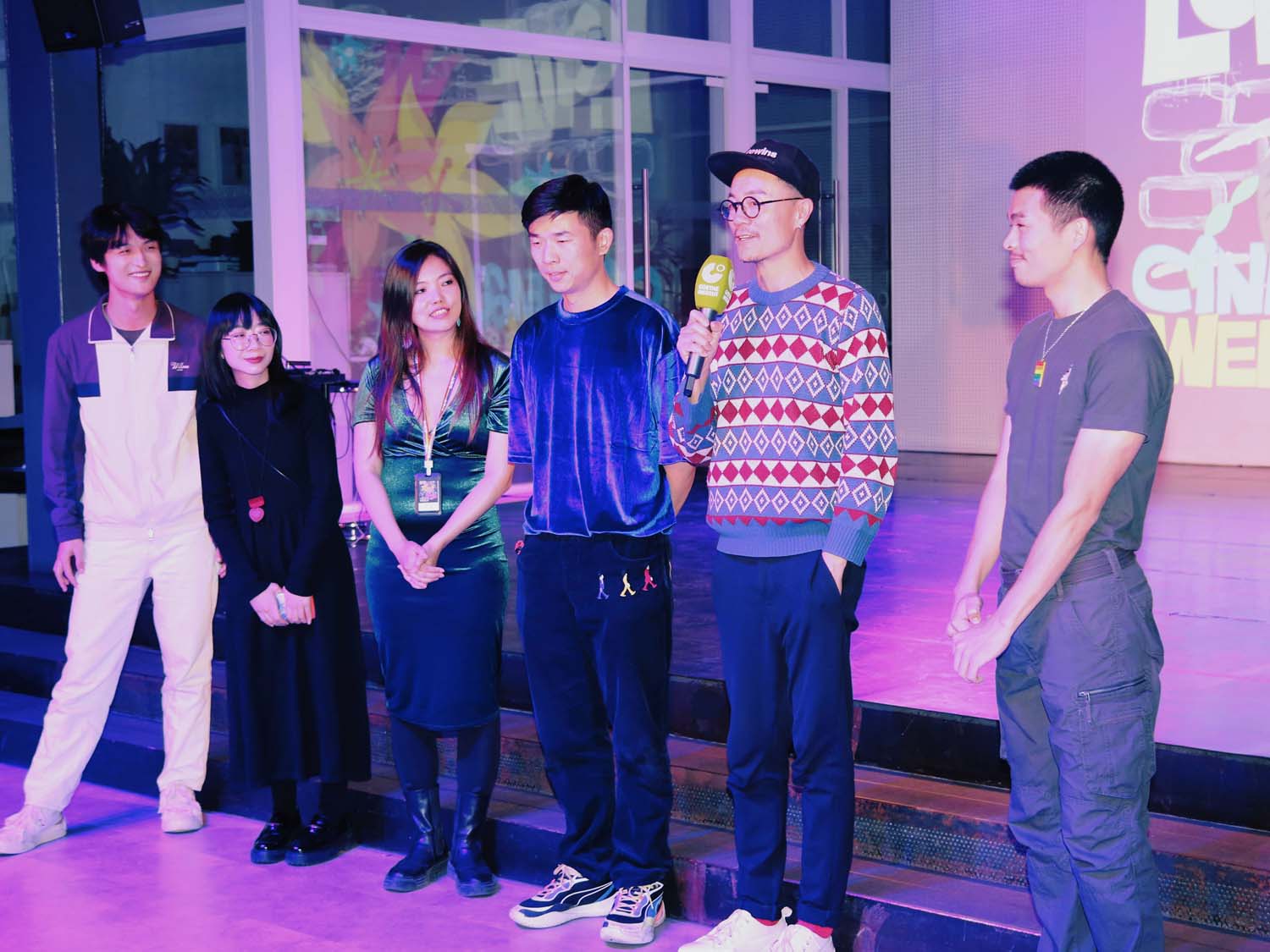
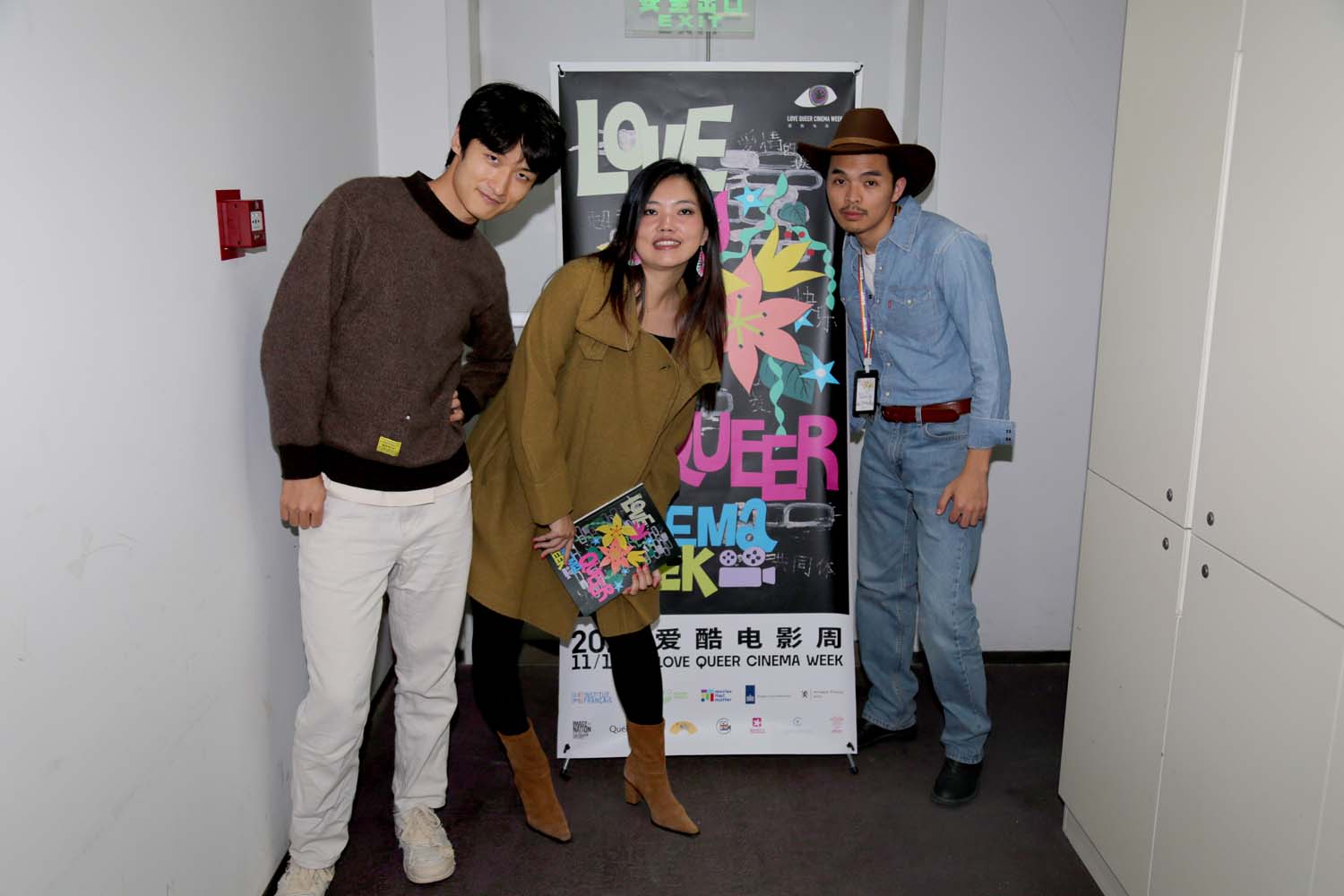
From this point of view, the festival’s response to adversity was not merely a workaround but a form of resistance and a creative affirmation of queer presence and solidarity. The following year, in an effort to avoid heightened scrutiny, the festival adopted a new, non-explicit name, ‘Love Queer Cinema Week’ (爱酷电影周), temporarily erasing the Chinese word ‘queer’(酷儿) from its public identity as a reversible disguise. This logic of tactical withdrawal continued to evolve. By 2021, in response to increasing digital surveillance, the team adopted a fully ‘de-organisational’ promotional approach: publicity materials never mentioned the festival or its organisers, only the films to be shown. In 2025, the BJQFF officially deactivated its long-established WeChat public account, opting for digital invisibility over the risks of platform censorship. Articles posted through private accounts are disguised as those of individuals eager to share messages personally. In August 2025, a ‘call for volunteers’ post garnered more than 3,000 views in a single night and ended up with 200 volunteer applications—four times the number received the previous year. This ‘small and dense infrastructure’ resists both state and platform surveillance, allowing survival through ephemerality rather than institutionalisation.
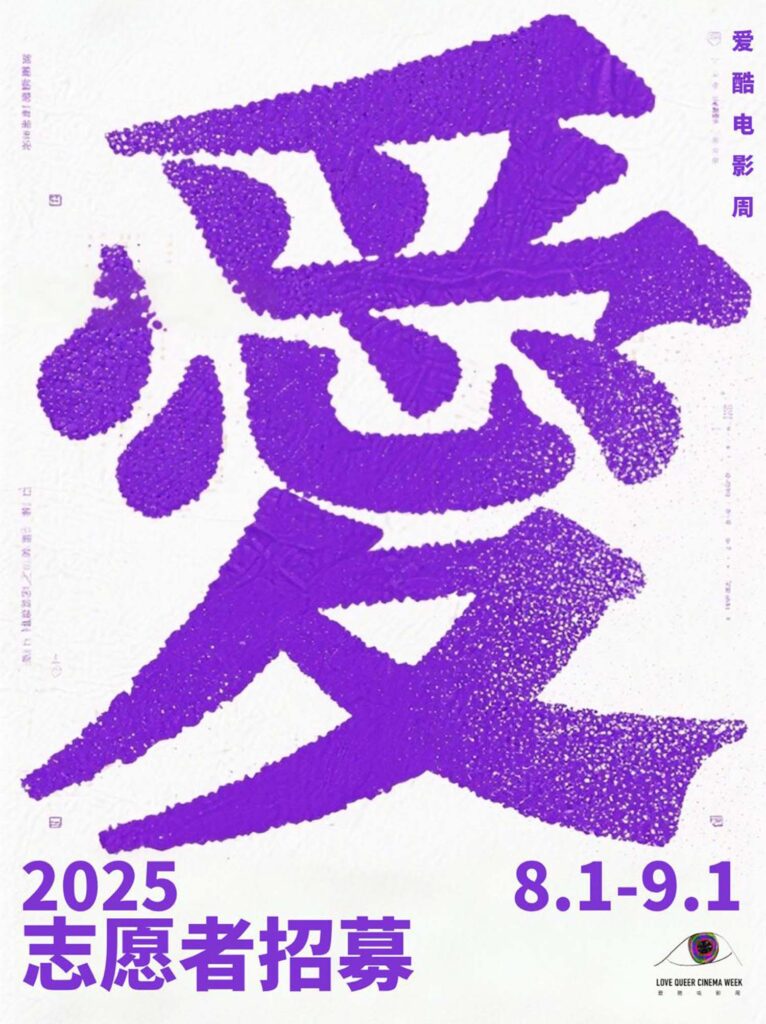
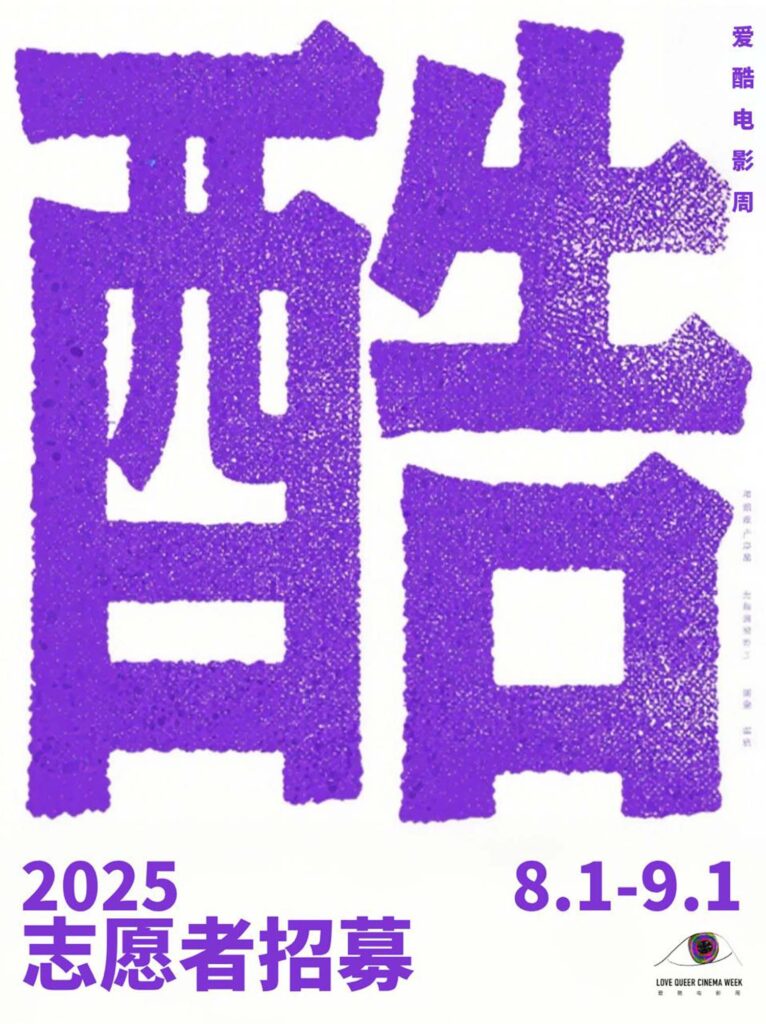
Each of these moments, from cancellation and renaming to de-organisational promotion and digital self-erasure, represents not only a concession to external pressure but also a deliberate act of survival. For the BJQFF, to fail is to adapt; to recede is to stay; to disappear is to create space for collective re-emergence. Through these accumulated acts of tactical withdrawal, the festival has built an enduring, if ever-shifting, mode of queer resilience. As Halberstam (2011: 88) has argued, ‘the queer art of failure turns on the impossible, the improbable, the unlikely, and the unremarkable. It quietly loses, and in losing it imagines other goals for life, for love, for art, and for being.’ The BJQFF’s actions to navigate censorship and cancellation do not resist failure; they repurpose it.
A further aspect of what might be called ‘failure’ is the festival’s abovementioned refusal to pursue mainstream influence or visibility as the ultimate measure of success. After adopting its de-organised communication strategy, the BJQFF became increasingly invisible, to the extent that many former supporters believed it had ceased to exist. This was not merely a loss but a deliberate redefinition of what matters: for the BJQFF, the value of continued existence as a rare space of queer resistance far exceeds any loss of reach or public profile. Winning, for those on the margins, is not about occupying the centre but about maintaining the multiplicity and durability of small, interconnected publics.
Queer values have never aimed for straightforward conformity with the mainstream. Organising a queer festival in China inherently involves embracing messiness, risk, vulnerability, and failure. Yet, as Butler (1990) once argued, ‘gender trouble’ is not a liability but a mode of being. For the BJQFF, rather than overcoming or solving the troubles it has encountered, it survives in the margins and welcomes them as the space where new forms of community, resilience, and value can be created. In this context, the queer subjectivity underlying the BJQFF’s politics seeks not to overcome failure but to experience it differently. Instead of adopting neoliberal scripts of resilience that highlight individual success, the BJQFF treats endurance as a form of collective improvisation. Here, failure is not a final point but a gateway—a means of rejecting extractive logics, delaying visibility, and staying open to the incomplete. Guerilla tactics such as ‘moving sideways’—shifting routes and formats rather than confronting censorship—are deliberate, purposeful acts of rerouting, as is horizontal organising, which is a method not of avoiding precarity, but of sharing its burden.
Trouble, Persistence, and Promise
As Bao (2018: 118) has noted, queer film activism is especially vital where public expressions of sexuality are restricted. Festivals such as the BJQFF become essential platforms for marginalised voices and community resilience. These strategies, shaped through ongoing negotiation with censorship, are innovative forms of resistance. Importantly, analysing and discussing these strategies through research, reflection, and public dialogue also constitute a form of queer activism. By critically engaging with the realities of precarity and creative survival, such work helps sustain collective memory and political imagination. In this way, reflecting on and theorising queer cultural practice are already a form of activism.
Unlike most queer/LGBTQIA+ film festivals around the world, the BJQFF originated from the independent film movement in China rather than the rights movement of sexual minorities (Yu 2014). Yet, in the decade since the disappearance of almost all independent film festivals in China, the BJQFF has not only persisted but also continues to thrive, demonstrating a unique resilience under increasing cultural regulation. This endurance demonstrates how queer subjectivity, rooted in collective practice and everyday improvisation, can generate durable forms of resilience under tightening constraints. In the Chinese context, such minoritarian tactics are less about public spectacle and more about a quiet choreography of collective survival. That, precisely, is both the trouble with and the enduring promise of the queer festival.
References
Bandurski, David. 2014. ‘“The Darkest Day” for Indie Film.’ China Media Project, 25 August. www.chinamediaproject.org/2014/08/25/the-darkest-day-for-indie-film-in-china.
Bao, Hongwei. 2018. Queer Comrades: Gay Identity and Tongzhi Activism in Postsocialist China. Copenhagen: NIAS Press.
Bao, Hongwei. 2020a. Queer China: Lesbian and Gay Literature and Visual Culture under Postsocialism. New York, NY: Routledge.
Bao, Hongwei. 2020b. ‘The Communist International of Queer Films: The Radical Culture of the Beijing Queer Film Festival.’ In Contemporary Radical Film Culture: Networks, Organisation and Activists, edited by Steve Presence, Mike Wayne, and Jack Newsinger. New York, NY: Routledge.
Butler, Judith. 1990. Gender Trouble: Feminism and the Subversion of Identity. New York, NY: Routledge.
Butler, Judith. 2016. ‘Rethink Vulnerability and Resistance.’ In Vulnerability in Resistance, edited by Judith Butler, Zeynep Gambetti, and Leticia Sabsay. Durham, NC: Duke University Press.
Gittings, John. 2001. ‘China Drops Homosexuality from List of Psychiatric Disorders.’ The Guardian, 7 March. www.theguardian.com/world/2001/mar/07/china.johngittings1.
Gu, Ting. 2023. ‘Chinese Censors Shut Down Key LGBTQ+ Social Media Accounts.’ Radio Free Asia, 24 August. www.rfa.org/english/news/china/lgbtq-sites-08242023154244.html.
Halberstam, Judith. 2011. The Queer Art of Failure. Durham, NC: Duke University Press.
Kaiman, Jonathan. 2014. ‘Beijing Independent Film Festival Shut Down by Chinese Authorities.’ The Guardian, 24 August. www.theguardian.com/world/2014/aug/24/beijing-independent-film-festival-shut-down-china-freedom.
Muñoz, José Esteban. 1999. Disidentifications: Queers of Color and the Performance of Politics. Minneapolis, MN: University of Minnesota Press.
Sedgwick, Eve Kosofsky. 2003. Touching Feeling: Affect, Pedagogy, Performativity. Durham, NC: Duke University Press.
Wang, Stephanie Yingyi. 2023. ‘Fare Thee Well Beijing LGBT Centre.’ Made In China Journal 8(1): 20–25.
Yang, Yang 杨洋 (dir.). 2011. 我们的故事: 北京酷儿影展十年游击战 [Our Story: A Decade of Guerilla Warfare at the Beijing Queer Film Festival]. Documentary. Beijing Queer Film Festival Organising Committee.
Yiu, Pak. 2021. ‘WeChat Deletes Chinese University LGBT Accounts in Fresh Crackdown.’ Reuters, 7 July. www.reuters.com/world/china/chinas-wechat-deletes-university-lgbt-accounts-2021-07-07.
Yu, Ning. 2014. The Beijing Queer Film Festival and Its Political Possibilities. Beijing Queer Film Festival website, 28 November. www.bjqff.com/7thfestival/《北京酷儿影展与其政治可能性》the-beijing-queer-film-festival-and-its-political-possibilities.