
To Whom Does Ethnic Folk Dance Belong?
Ethnic Politics and Individual Bodies in Contemporary Chinese Dance
Dance from and by ethnic minorities constitutes a significant part of how people perceive both ethnic minority cultures in China and Chinese dance at large. However, observers often miss how the staging of contemporary Chinese ethnic folk dance is not a direct representation of some original ‘folk body’. It is, rather, the accumulated product of successive historical formations that encompass state discourse, the academy system, theatrical aesthetics, and market forces. The Chinese term for ‘ethnic folk dance’, minzu minjian wu (民族民间舞), reflects this composite nature, as minzu (民族, roughly translatable as ‘ethnic group’) is the classificatory term the Chinese State uses to organise its population into 56 officially recognised nationalities, with the Han as the dominant group and the rest designated ‘minorities’ (Bulag 2019).
Contemporary dance emerged from postmodern dance experiments in the 1960s and became more widely established as a distinct field during the 1980s and 1990s in the United States. It has not a fixed technique but an open choreographic practice: choreographers combine modern dance, ballet, folk, classical, improvisation, and other media according to their social, cultural, and bodily contexts (Kwan 2017). In China, the origin and content of contemporary dance are a contested field: while some scholars consider military dance (军旅舞蹈) troupes in the Mao era to be contemporary (Liu 2011, cited in Wilcox 2021: 44), others treat contemporary dance as a hybrid practice—one that combines modern dance techniques with elements from classical dance (古典舞), folk dance (民间舞), and ethnic dance (民族舞), thereby linking everyday life to tradition (Zhu 2018). Contemporary dancers often showcase their work in arts festivals, which have proliferated in the country since the 2010s. It is within this expanding scene that some of these artists have begun interrogating ethnic folk dance itself.
Some contemporary dance pieces that engage with ethnic folk dance display the contradictions within this latter artistic form. Ethnic folk dance is widely treated as ‘traditional’: it ostensibly carries a collective bodily memory accumulated through ritual, agriculture, folklore, and festive ceremony, its movement vocabulary emphasising the stability of transmission, the typification of ethnic imagery, and a sense of collective belonging. Yet, this self-image conceals the form’s genesis in state policy, the arbitrary choices of scholars, and market incentives. By contrast, contemporary dance has long been characterised by a deconstructive impulse: from modern dance’s challenge to ballet’s normative vocabulary to the conceptual and decolonial practices of a globalised era that treat the body as a site of power inscription and political resistance, this art form represents a sustained interrogation of who defines bodily norms and whose bodies are excluded from them.
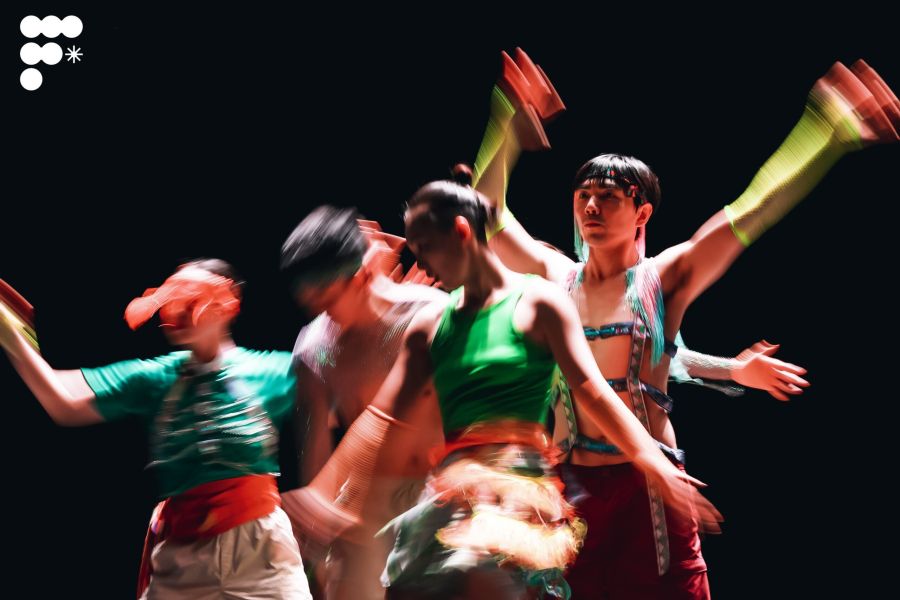
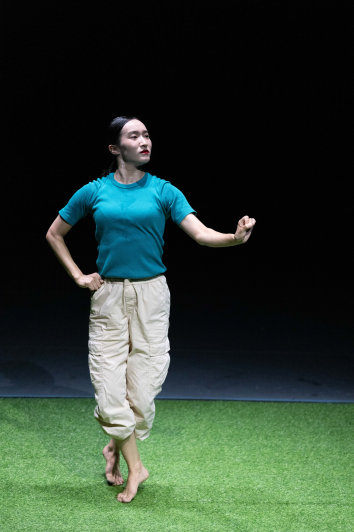
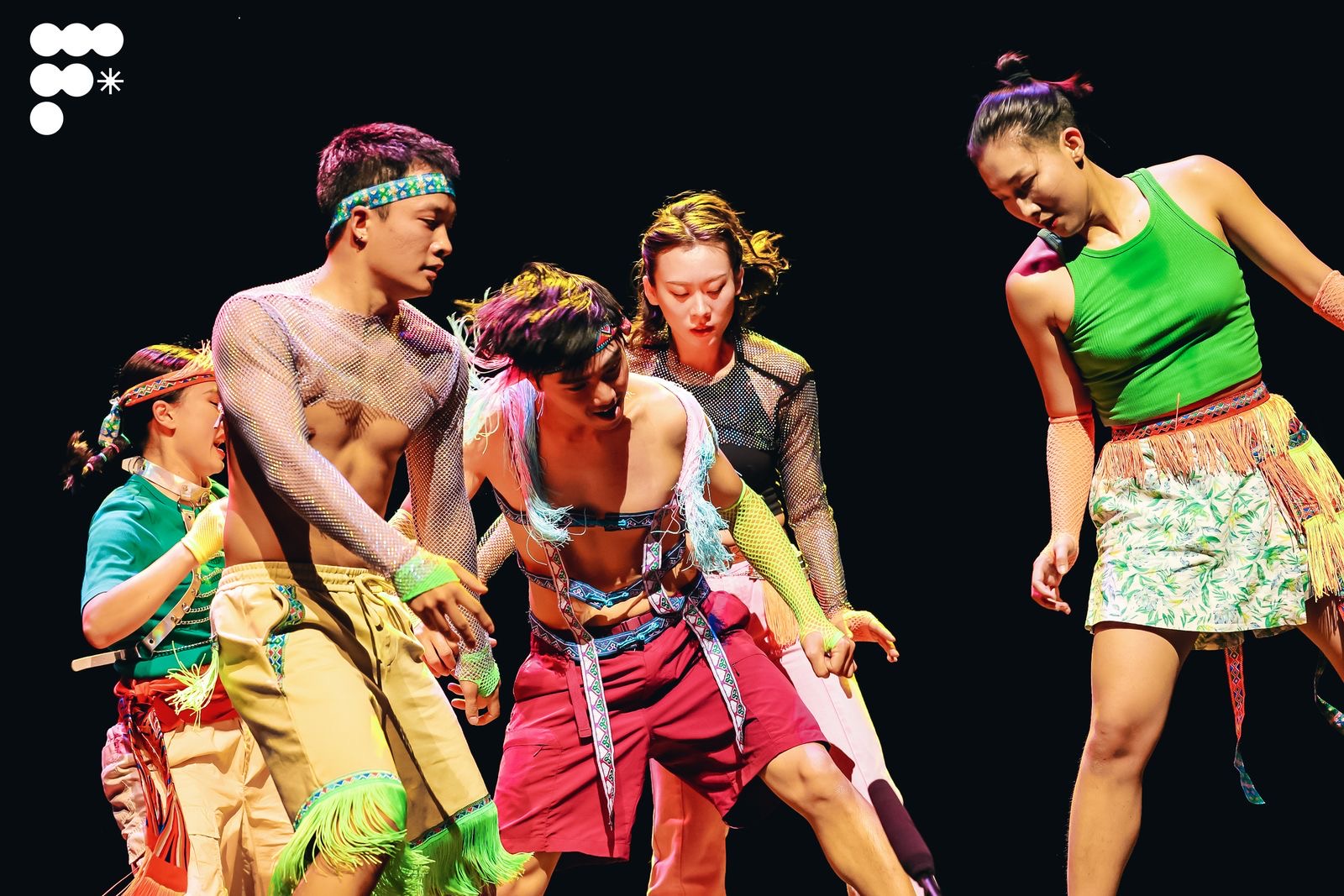
It follows that many contemporary dance works engaging with ethnic folk dance are centrally concerned with dismantling the typified movement norms that ethnic folk dance upholds, along with the collective authority of transmission those norms imply. Initiated by independent contemporary Han dance artist Guo Rui and premiered in 2023, the Reshaping Identity (民间的舞蹈) performance unfolds exactly within this tension. Performed nine times to date by two broadly overlapping casts, the work brings together dancers from different ethnic backgrounds, incorporating Yao dance (by me, Chen Yijie), Tibetan dance (by Wang Huaili), Uyghur dance (by Gunika Aniwa), and Mongolian dance (originally by Chaobuliga, later replaced with Han dancer Wu Hui). Built primarily on each performer’s life experience and incorporating extensive solos and personal monologues, the performances place the traditional bodily vocabulary of ethnic folk dance alongside the lived experience of the performers, asking what kind of ‘folk’ is represented in staged ethnic folk dance, by whom, and through what mechanisms. The Chinese title hints at this tension, as it uses ‘dance of the people’ (民间的舞蹈) to distance itself from the institutionalised category ‘folk dance’ (民间舞). Rather than attempt a literal rendering, the English title, Reshaping Identity, foregrounds the work’s reconfiguration of identity and cultural power relations.
The essay first traces the historical construction of ethnic folk dance as a stage category, clarifying the normative system that Reshaping Identity inherits and to which it responds. It then analyses the work across three dimensions: monologue, movement language, and choreographic structure. I argue that the dancers’ individual bodies—shaped simultaneously by state ethnic classification, institutionalised training, and personal biography—expose the limits of ethnic folk dance as a collective ethnic form. They point to an alternative ethnic imaginary—one capacious enough to hold queer experience, migration, and diaspora, while also resisting Han-centric ethnic logic through non-hierarchical coexistence.
The Construction of Chinese Ethnic Folk Dance as a Category
As mentioned above, folk dance in China did not emerge spontaneously from popular practice, but was gradually constructed through state policy, academic institutionalisation, and media circulation (Liu and Zhao 2015: 1–5). This process began in the 1940s, as state-directed initiatives extracted folk and ethnic minority dance movements from their original contexts and encoded them into stage forms. In 1942 Mao Zedong reframed art as serving the people in Yan’an, giving rise to the New Yangge Movement (新秧歌运动), which reworked yangge—a form of collective folk song and dance associated with rural northern China—to link folk dance to peasants’ bodily experience, staged as dramatised plays in collective plazas. In parallel, Dai Ailian, a Trinidad-born dancer often regarded as a founder of Chinese dance, and others conducted fieldwork in different regions to distil ethnic minority dances from ritual and daily life into stage language. The 1946 Frontier Music and Dance Conference (边疆音乐舞蹈大会) in Chongqing condensed this turn, constructing a ‘multi-ethnic’ bodily landscape that placed the folk body within the emerging narrative of the Chinese nation (Wilcox 2023: 35–40). After 1949, folk dance scholar Xu Shuying and others, influenced by the Soviet system, systematically ‘elementalised’ folk dance into stylistic movements and representative imagery, forming a set of teachable, reproducible bodily norms. From the mid-twentieth century, as dance became institutionalised and professionalised, the bodily movements assigned to the ‘folk’ and ethnic minorities were systematically documented and encoded and eventually transformed into recognisable stage styles (Gao 2024: 43–44).
After the Cultural Revolution, lyrical expressionism and mass-media circulation consolidated this professionalised vocabulary. Choreographers incorporated a creative path of ‘borrowing objects to express feeling, using objects to convey meaning’ (借物抒情、以物达意), employing imagery such as water, fish, green leaves, and peacocks to carry individual emotion and imagination (Xu 2006: 44, 61–66). Subsequently, national platforms such as the CCTV Spring Festival Gala combined this lyrical approach with performances by ethnic folk-dance troupes, further popularising already typified and professionalised folk dance to a mass audience. In addition, in recent decades, intangible cultural heritage protection, cultural tourism, and large-scale performance events have, on the one hand, provided platforms for various ethnic groups to rearticulate their identities and historical memories and, on the other hand, reclassified folk dance into displayable, consumable cultural signs entangled with regional branding and the construction of national image (Wu 2015; Li and Zhao 2022). Together, these developments have produced the body of ethnic folk dance as we know it today and deeply shaped how audiences understand dance and movement—for example, the nimble neck movement (脖颈) with a distinctive rhythmic pattern that is now commonly seen as ‘Uyghur’.
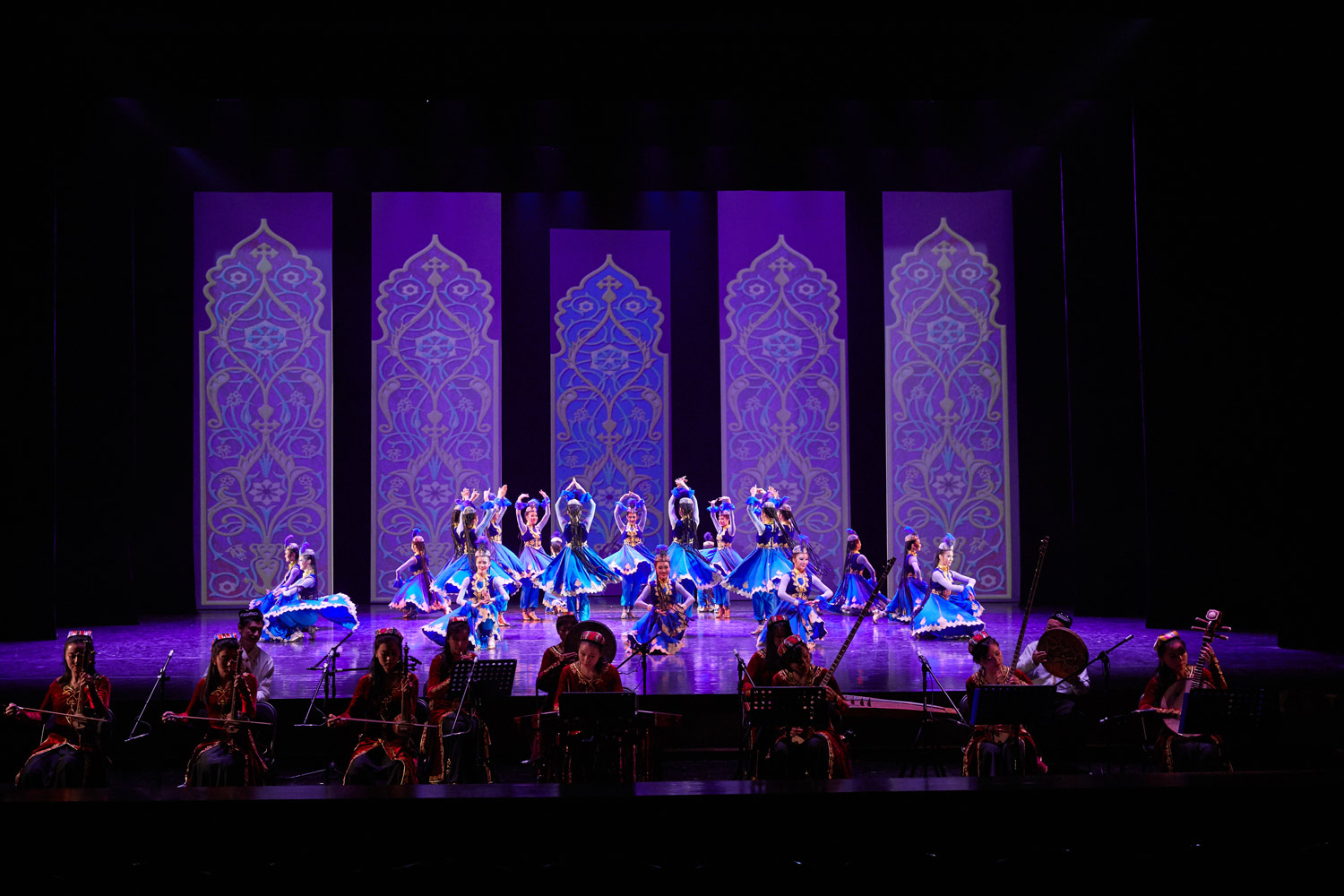

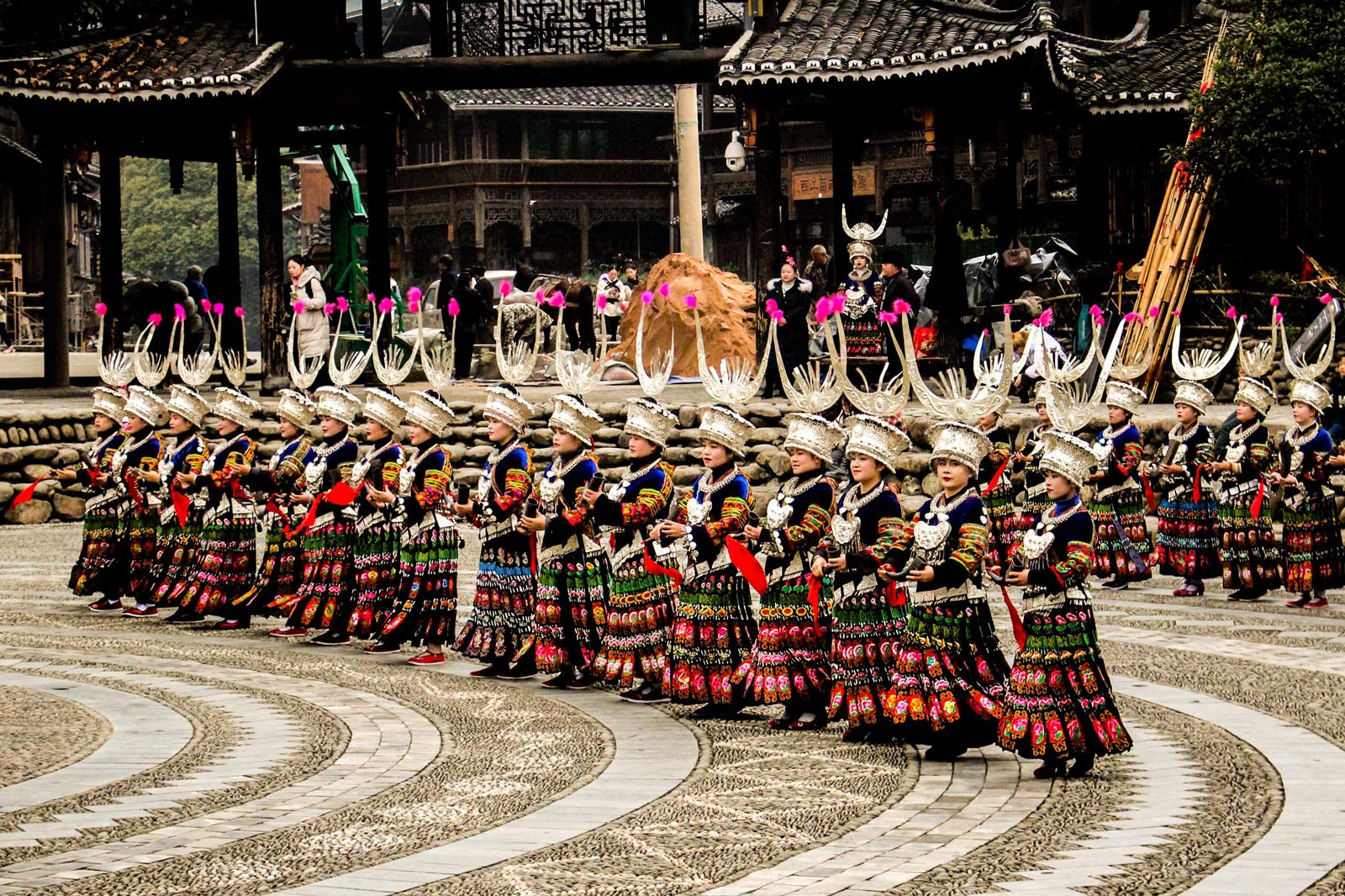
Given the trajectory traced above, Chinese ethnic folk dance can be understood not simply as a fixed representation of the people grounded in ‘tradition’, but rather as a constant negotiation of what is ‘folk’ and what is ‘ethnic’ between the establishment (the state and the professionals recognised by the state) and the folk themselves. Wu Xiaobang, ‘the father of Chinese new dance’, divided Chinese dance into ‘classical dance’ (古典舞), ‘folk dance’ (民间舞), and ‘ethnic dance’ (民族舞). For him, ‘classical’ and ‘folk’ are distinguished by the nature of the dance: forms originating in religious, court, or ritual systems are designated ‘classical’, while ‘folk’ refers to forms generated and circulated within everyday folk life, commonly seen in festivals, rituals, and everyday labour routines. ‘Ethnic dance’, however, is grouped according to ethnic identity rather than by nature. What is implicit, yet problematic, here is the Han-centric assumption that ‘classical’ is equivalent to Han, and thus the grouping of non-Han classical forms—such as the Tibetan monastic dance Gesar (格萨尔王) or the Manchu Ritual Dance (礼仪舞)—into ‘folk dance’ alongside genuinely folk forms such as the Tibetan guoxie (果谐) or the Uyghur dolan (刀郎). Combining different categories, ‘ethnic folk dance’ thus became a crowded category, defined by the establishment, subsuming all dance forms from ethnic minorities as well as those from non-classical Han folk dance (Liu and Zhao 2015: 1–5).
It is precisely this contestation that the Reshaping Identity performance stages. In what follows, I enter the work through three layers—performer monologue, movement language, and choreographic structure—to examine how different dancers respond to this establishment-defined ethnic image and what their individual bodies reveal about the limits and possibilities of ethnic identity in contemporary China.
Inside the Work
Guo Rui (Han)
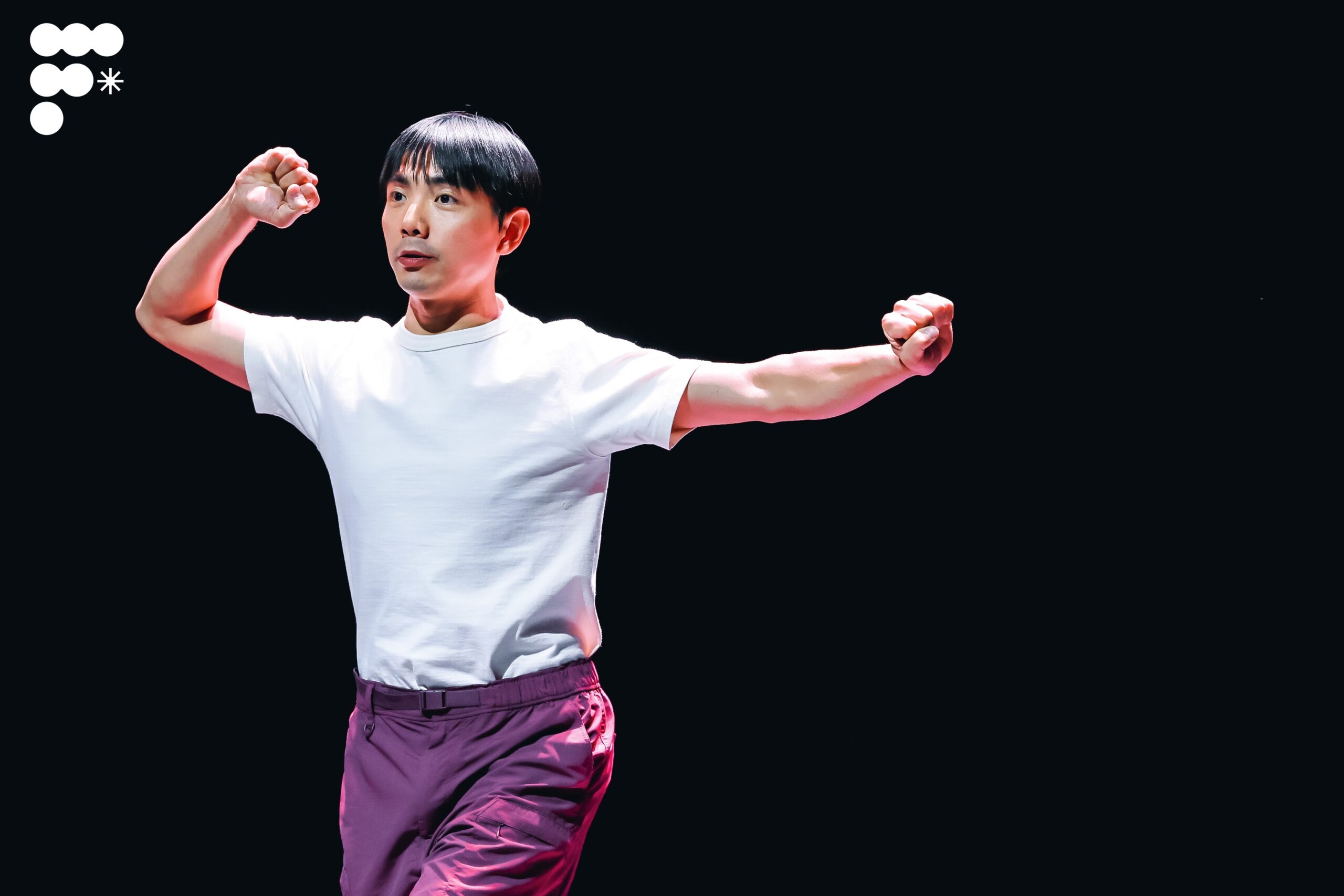
The five core subgenres of ethnic folk dance taught throughout dance academies in China are Han, Tibetan, Mongolian, Uyghur, and Korean (汉藏蒙维朝), each with its own standardised and recognisable movement vocabulary and rhythmic patterns. In his opening monologue, Han choreographer Guo Rui recounts how a folk artist was invited to teach huagudeng (花鼓灯)—a Han folk dance from Anhui Province characterised by precise, lively footwork and upright posture—at the Beijing Dance Academy, the foremost tertiary institution for dance in China, where he trained for eight years.
The folk artist—his shoulder slightly raised and his head tilted due to years of farm labour—demonstrated a movement that deviated from the standard. The students then imitated and learnt this deviation, which the instructor knew was technically ‘wrong’ but described as ‘full of flavour’ (有味道). This moment stages the question of what is right or wrong, standard or deviated for ethnic folk dance: does the dance academy instructor or the folk artist have the most say?
This opening anecdote not only situates the audience within the training context of ethnic folk dance but also establishes the work’s methodological premise. The instructor’s authority and the folk artist’s body are not really rivals for the same seat: the ‘collective form’ of ethnic folk dance is itself the accumulated, named, and legitimated trace of countless individual bodies such as the folk artist’s, even as decades of elementalisation and typification have pulled that once-fluid experience into a tightly regulated representative vocabulary.
Chen Yijie (Yao)
My monologue begins like this:
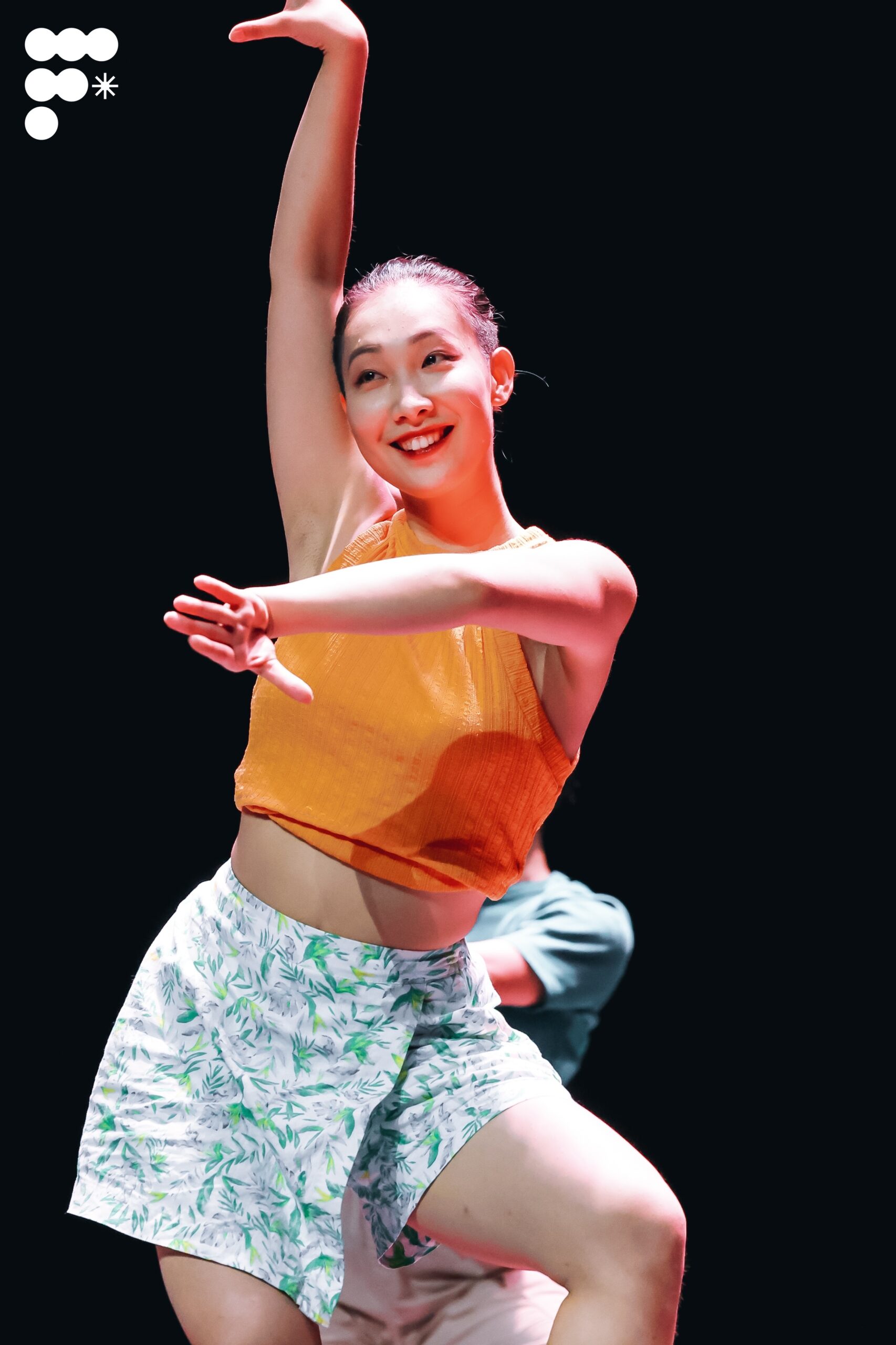
Hello everyone, my name is Chen Yijie. I am Yao, 25 per cent Yao ancestry. My grandmother is Yao; my grandfather is Han. I cannot speak the language and I’ve never been to a Yao village. I was born in Hunan and now live between Shenzhen and Guangzhou. For me, ‘Yao’ often feels more like a label on an ID card than a lived identity, and yet I still carry a quiet pride in being a minority person.
What I represent is a mixed-heritage minority individual—not uncommon in contemporary China but sitting uneasily with dominant imaginings of what ethnic minorities are supposed to be. Yet, ‘Yao’ (瑶族) as a unified ethnic category is itself a construction, produced by the state’s ethnic classification project after the founding of the People’s Republic, and the tension between that imposed identity and the individuals it names has never been fully resolved (Litzinger 2000).
This tension takes a specific form on my body. At arts school, I never learned Yao dance; the dance form in which I became most proficient was Dai. ‘Dai’ (傣族) is an umbrella term for several distinct groups in southwestern Yunnan. Dai dance is broadly associated with nature worship and folk custom—an artistic form widely recognised through Yang Liping’s performances of the Peacock Dance (雀之灵) at several Spring Festival Galas since the late 1980s. The gap between my ethnic classification and my training points to something deeper: the body labelled ‘Yao’ carries no Yao movement and the ‘ethnic character’ produced through standardised training is the result of selection and re-presentation, not inheritance. Whose past is being preserved, and for whom?
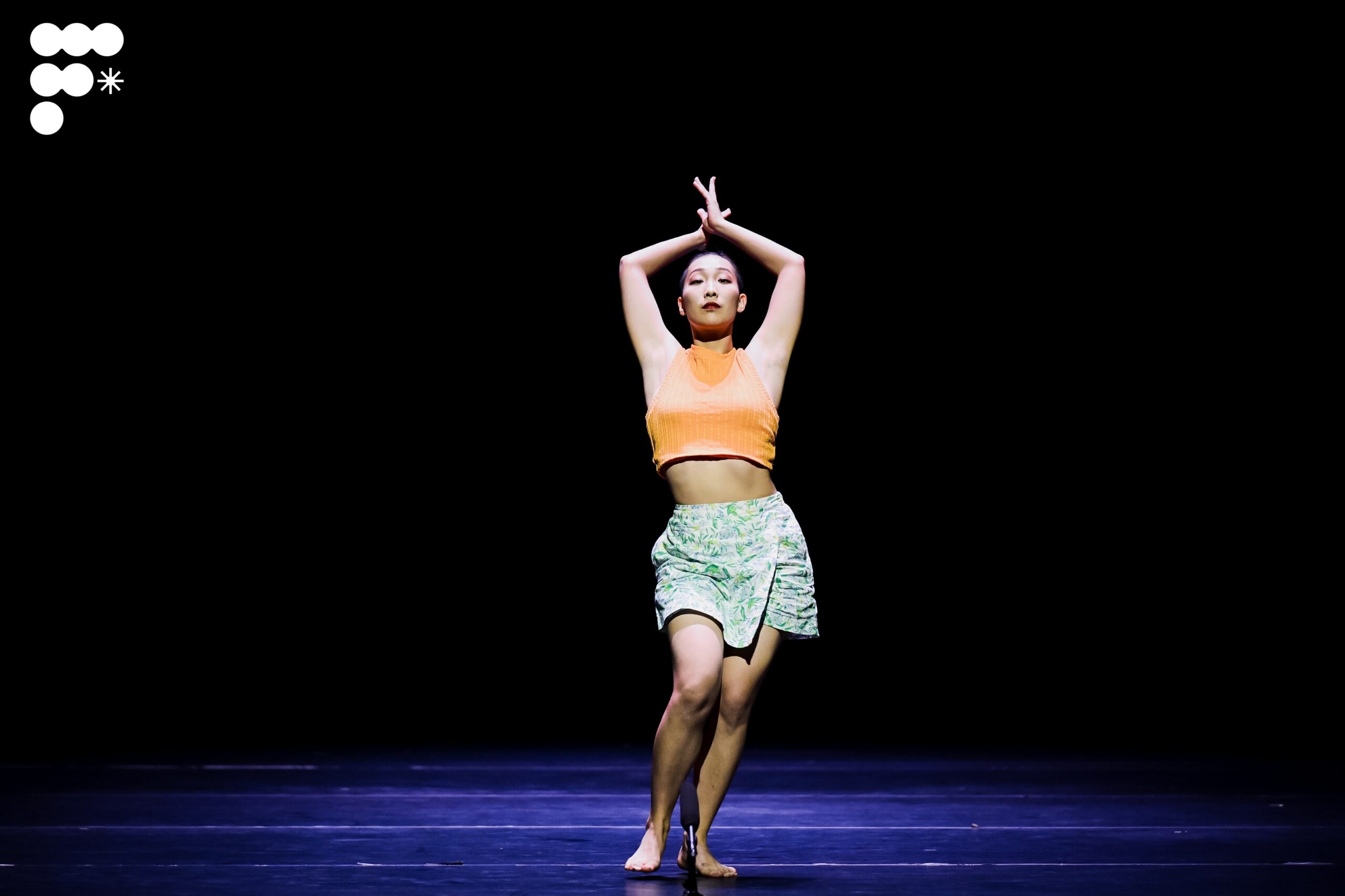
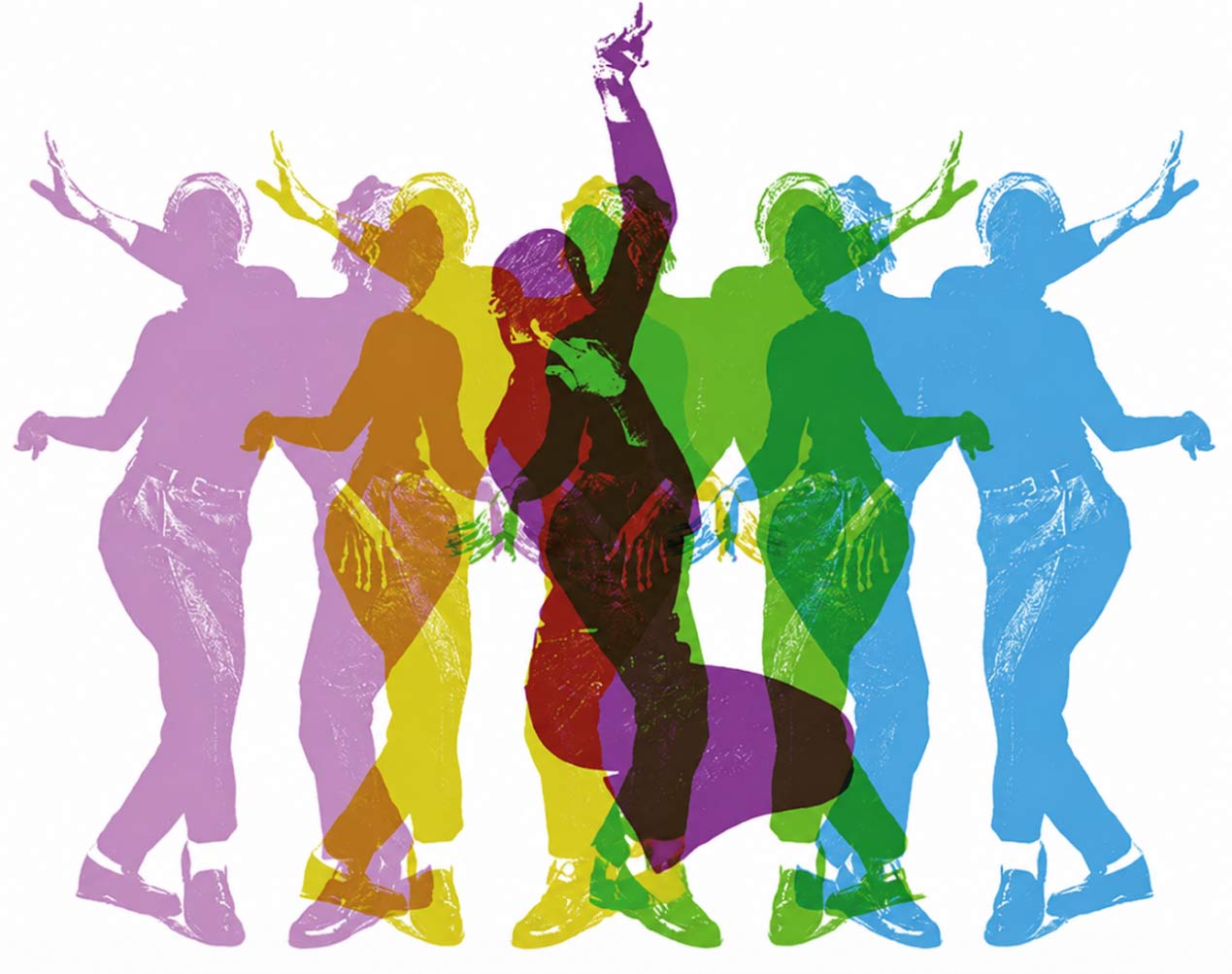
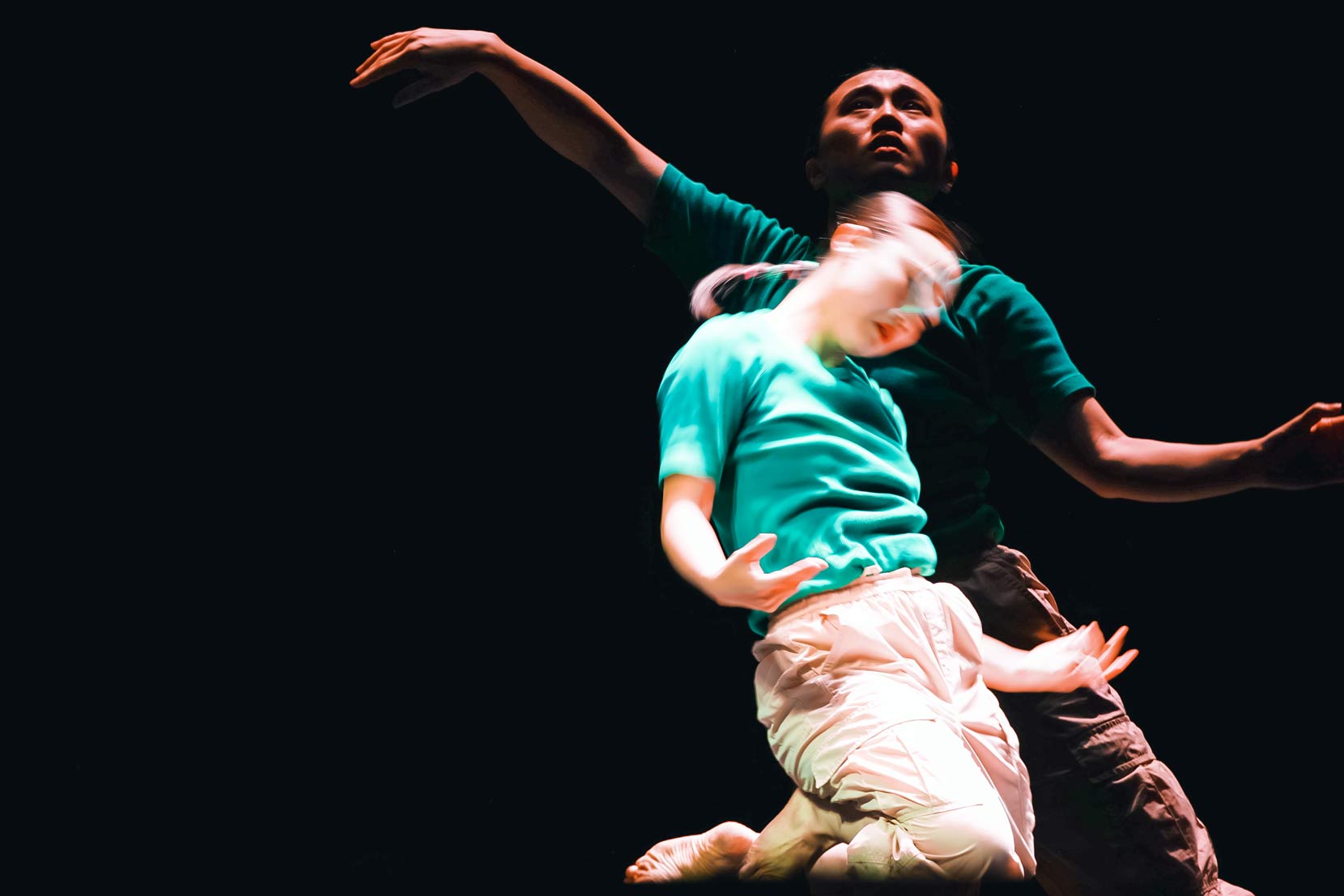
My performance for Reshaping Identity layers Vogue Femme over Dai dance. Emerging from Black and Latinx queer ballroom culture in Harlem, Vogue Femme uses highly feminised postures and hip articulation to construct femininity outside normative gender frameworks. It visually echoes the ‘three curves’ (三道弯) of Dai dance through extended lines, sustained poses, and hip articulation, yet what resembles the formal opens onto a deeper difference: the ‘three curves’ carry a collective vision of ethnic femininity and natural grace, while Vogue Femme is a marginalised community’s reclamation of femininity on its own terms. Placing both vocabularies on the same body poses the question of which bodies and desires are left out when ethnic tradition is staged and preserved.
It is with that question that I bring my queer identity into the same body. In a Dai dance overlaid with Vogue Femme in a body classified as Yao, I become something composite and stake a claim to a contemporary folk dance that is mine. Just as art has carved out an ambiguous but real space for queer politics in China (Bao et al. 2023), this dance queers both Dai dance and minority identity itself: using the otherness already inscribed in minority status, queer expression finds a way to circulate, sheltered by cultural difference, with a critical visibility that need not announce itself.
Wang Huaili (Tibetan)
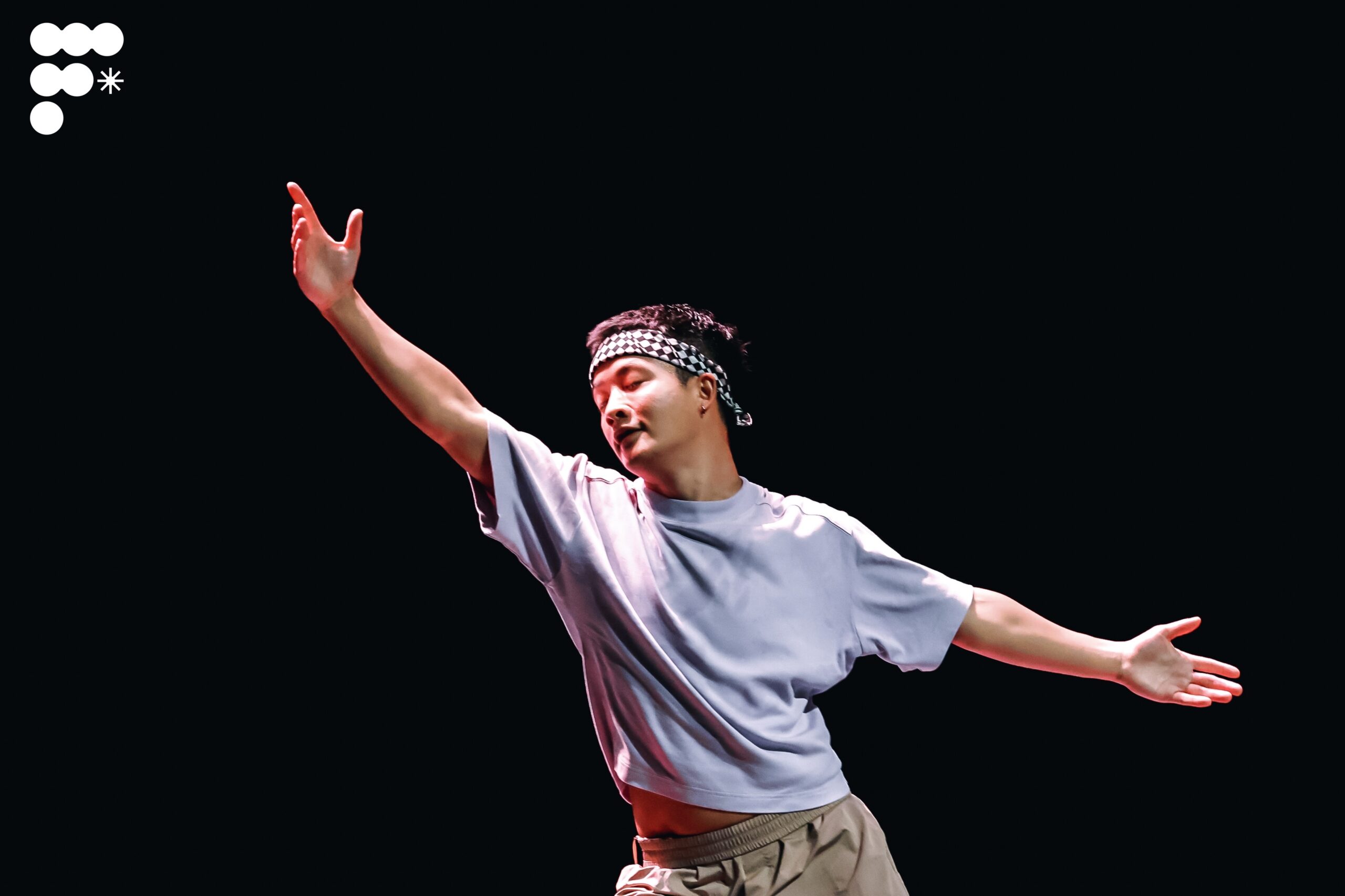
Wang Huaili grew up in Garzê Tibetan Autonomous Prefecture, Sichuan. His monologue opens describing a childhood shaped by everyday Tibetan life: butter tea, walking circuits around stupas, yaks on the grassland. As a child, he danced guozhuang (锅庄) during the midday break, after meals, and at festivals. Guozhuang is a Tibetan communal circle dance with no leader and no single codified standard governing how its shared movement patterns must be performed; people learn by showing up, watching, and joining in.
That openness, however, did not go uncontested. During professional training, Huaili recounts, a Han instructor told him the stylistic quality of his Tibetan dance was incorrect and demonstrated what an ‘authentic’ move should look like. The scene makes visible a structural irony: someone who has lived inside Tibetan culture is instructed how to perform it correctly by someone who has not. Ethnic authenticity becomes a matter not of experience but of compliance with an institutionalised aesthetic standard.
His performance then builds on this contradiction. He begins alone, dancing guozhuang according to personal memory rather than codified form. The other dancers gradually join, moving in postures that drift slightly from the academy norm and from each other. The drift is the point: it restores guozhuang to the open, leaderless structure Huaili knew growing up, when participation was voluntary and no-one was required to disappear into the whole. They gather not to execute a unified image but to share and witness a personal one.
In this guozhuang, each performer embodies the shared movements in their own way. That is itself the resistance—against the logic that takes a living, communal practice and converts it into something recognisable, reproducible, and ready for display.
Gunika Aniwa (Uyghur)
Gunika Aniwa opens her monologue with rhetorical questions: ‘What is a Uyghur supposed to look like? A high nose bridge? Brown eyes? Black hair?’ She then turns to herself: her hair is light, her irises carry a hint of green, her features are less sharply defined. By the standards of the stereotype, she does not qualify.
At the age of 12, Gunika entered an arts school for ‘precise Uyghur dance training’, holding postures for extended periods to achieve a ‘professional dance image’. The state’s intangible cultural heritage policy has gradually transformed complex Uyghur traditions into stageable ‘song and dance’ forms, producing simplification and exoticisation rather than preservation (Anonymous 2021). For Gunika, the consequence was estrangement. She gradually lost her love for Uyghur dance.
She is now a contemporary dancer, though she says that Uyghur identity still ‘flows in her body’. Since 2017, that identity on the Chinese stage has carried additional political weight (Byler et al. 2022). ‘I do not want to emphasise the “we” beneath the Uyghur identity label,’ she says. ‘I am the “I” within “us”.’ She refuses to stand as a representative of her ethnicity, resisting a collectivist logic that compresses Uyghur identity into recognisable symbols, from specific dress to everyday images such as ‘selling lamb skewers’, leaving no room for individual complexity.
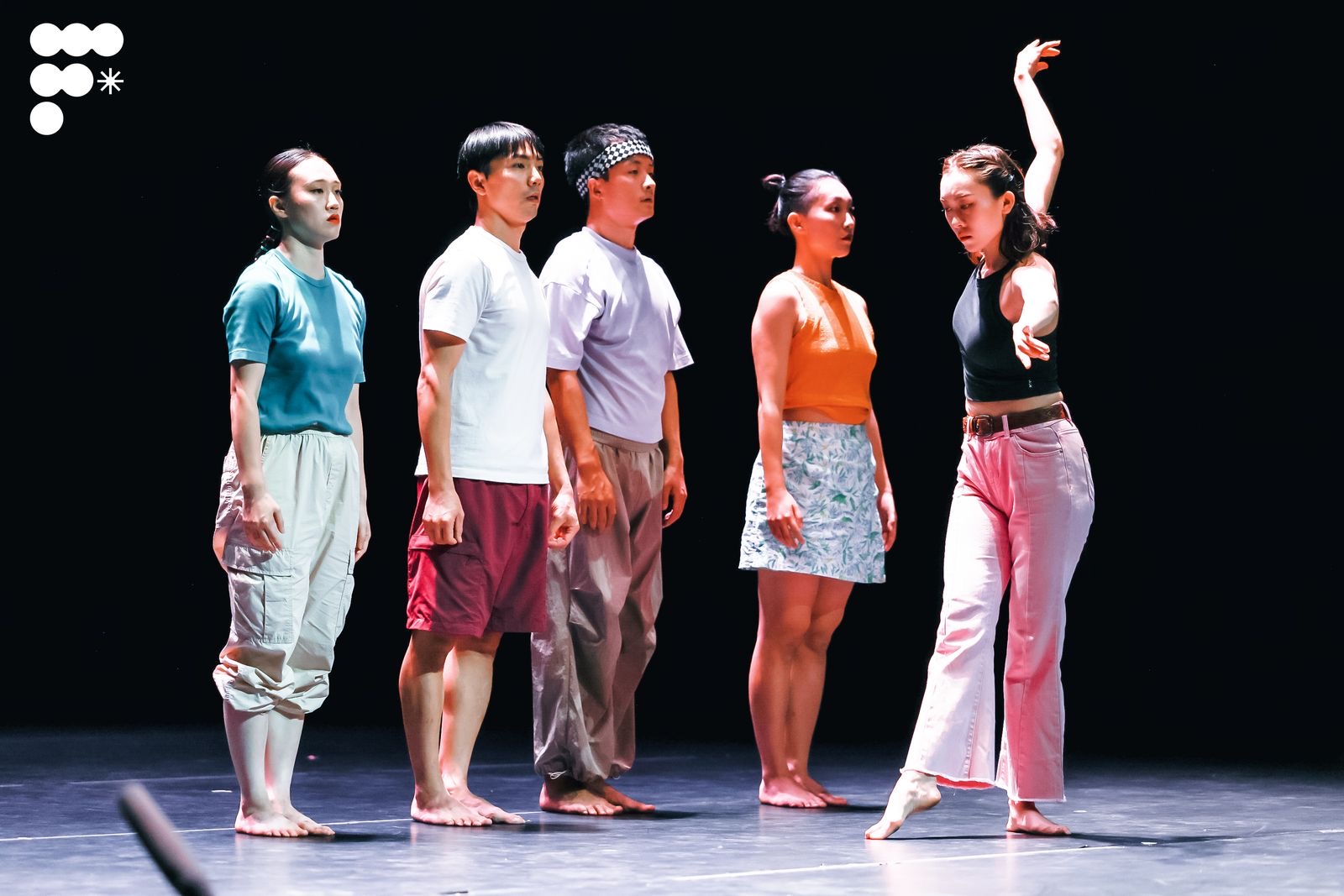
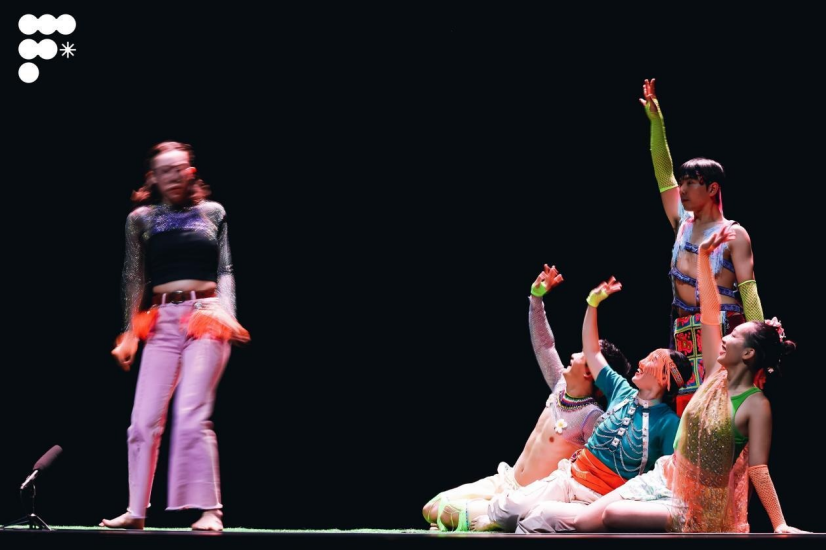
Gunika’s solo sets Uyghur movement vocabulary alongside ballet, the two not resolving into each other but layered. Ballet opened a path beyond the ethnic folk dance framework into a wider expressive space. However, as she moves, the other performers form a choreographic wall: shoulder to shoulder, expressionless, upper bodies holding Uyghur vocabulary while their lower bodies travel along a single horizontal axis in ballet bourrée. The wall tracks her. Wherever she goes, it follows on tiptoe; when she tries to break from the line, it closes in again.
The choreographer has never publicly made a political reference. Nevertheless, the dance can be read as an embodiment of constrained freedom. The wall materialises what is otherwise invisible: the systems of surveillance and discipline that regulate what Uyghur bodies can do and where they can go, on and beyond the stage. Yet, within these constraints, Gunika’s body continues to assert its individuality, insisting on being an ‘I’ within the ‘we’, refusing to be absorbed into a collective identity or displayed as part of a neatly ordered image of ethnic difference.
Chaobuliga/Wu Hui (Mongolian/Han)
The Mongolian section was originally performed by Chaobuliga (Mongolian) and later taken over by Wu Hui (Han) due to scheduling, with the monologue rewritten accordingly. The substitution reflects a common outcome of ethnic folk dance standardisation: any professionally trained body is expected to execute the major subgenres regardless of ethnic background.
Chaobuliga’s monologue opens with scenes from the Khorchin Grassland: her grandfather walking his horse beside a lake, women shearing sheep, and folk artists rising on tiptoe with silk in hand. It then turns to loss. The lake dries up, grazing land is carved up by fences, and Chaobuliga laments ‘the life that has passed’. This is not simply personal nostalgia: the enclosure of Inner Mongolian grasslands and the erosion of pastoral life point to longer histories of Han migration, agricultural expansion, and state-led transformation in Inner Mongolia (Bulag 2002).
Chaobuliga’s dance trajectory mirrors this arc: from dancing with family, to academy training, to leaving ethnic folk dance for contemporary practice. At that departure, her Mongolian mentor called her a traitor, revealing that standardised ethnic folk dance produces not only aesthetic norms but also a form of loyalty, in which deviation is read as moral failure, a betrayal not of style but of an ethnic tradition presumed to belong naturally to her body.
Wu Hui’s version begins from an outsider position. Born in Wuhan and trained across classical Chinese dance, ethnic folk dance, ballet, and contemporary dance, she is the versatile professional the academy system is designed to produce. On stage she demonstrates three sets of Mongolian movement: the expansive open posture, the horse-riding step, and the shoulder shake (抖肩), each with instructional commentary: ‘Imagine yourself on the boundless grassland … riding freely on a galloping horse.’ To perform Mongolian identity, one must first imagine it. But imagination does not settle the question of belonging. As she moves, she asks: ‘When I work hard to become another identity, I begin to ask myself: Where is my hometown? What does my grassland look like? Can my past become tradition? Is changing a form of betrayal?’
Both performers arrive at betrayal from opposite directions: for Chaobuliga it comes as an accusation from within her community; for Wu Hui it surfaces as self-doubt. Together they expose an internal contradiction in the ethnic folk dance system: it grounds its legitimacy in ethnic authenticity while training bodies that move freely across ethnic lines. The performer’s body becomes the site where this contradiction lives, at once the carrier of ethnic identity and the evidence that the identity cannot hold together on its own terms.
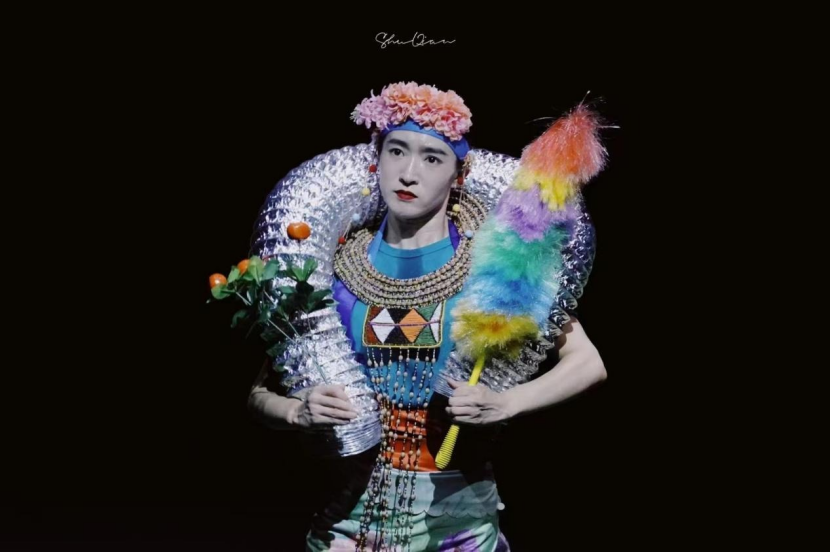
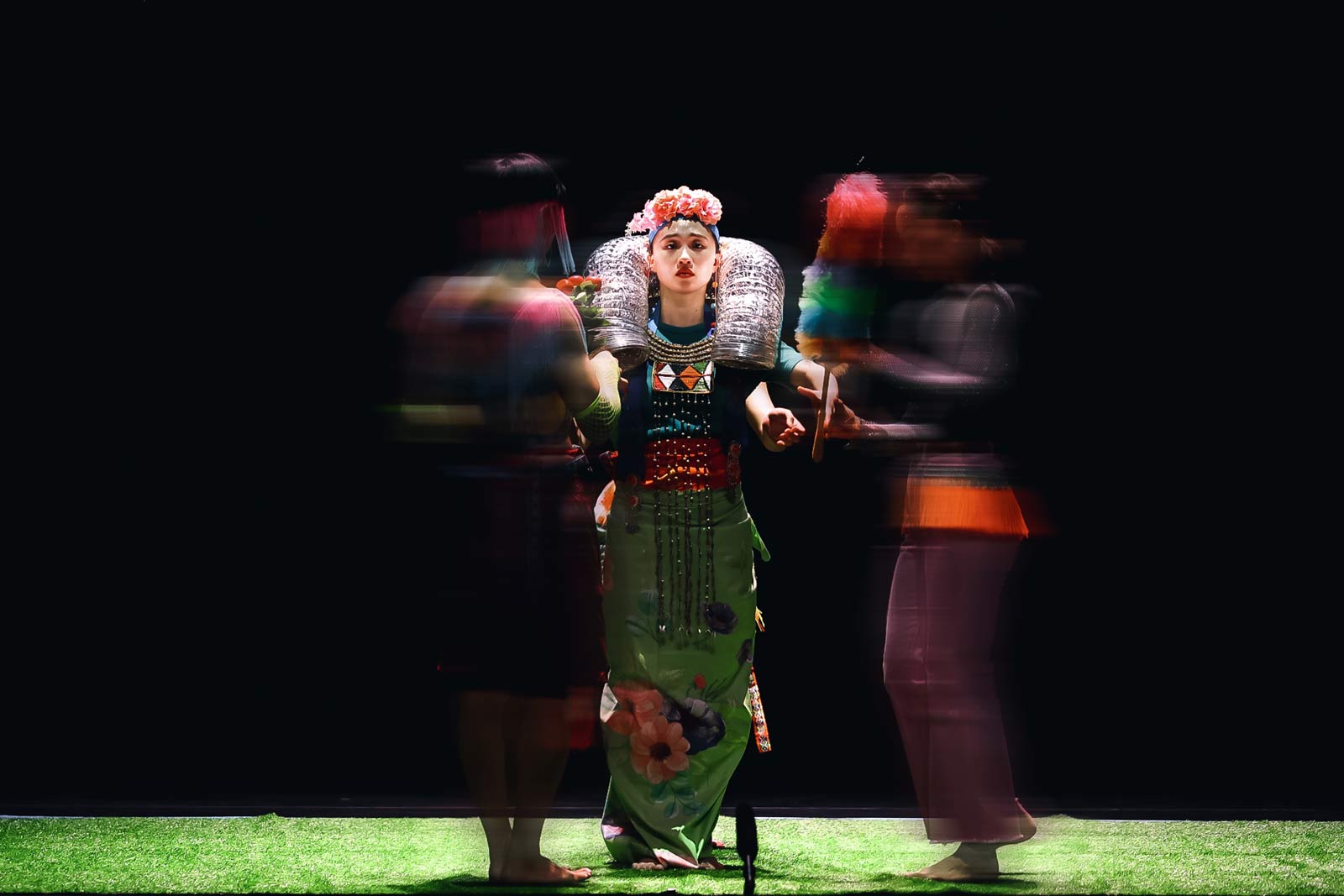
The collective section that follows makes this instability visible through absurdity. The other performers gradually replace the Mongolian elements of the dancer’s costume with mundane modern objects—a feather duster for the fan, a plastic hose for the silver collar—until the costume becomes an incongruous collage. It externalises what modernisation and standardisation have already done to ethnic tradition; living practice is converted into recognisable, reproducible cultural signs. Yet, these absurd substitutions also open a possibility. If ethnic tradition itself comprises selected and reconstructed symbols, might it be reimagined through new combinations rather than simply preserved in fixed form?
Future Ethnic Imagination
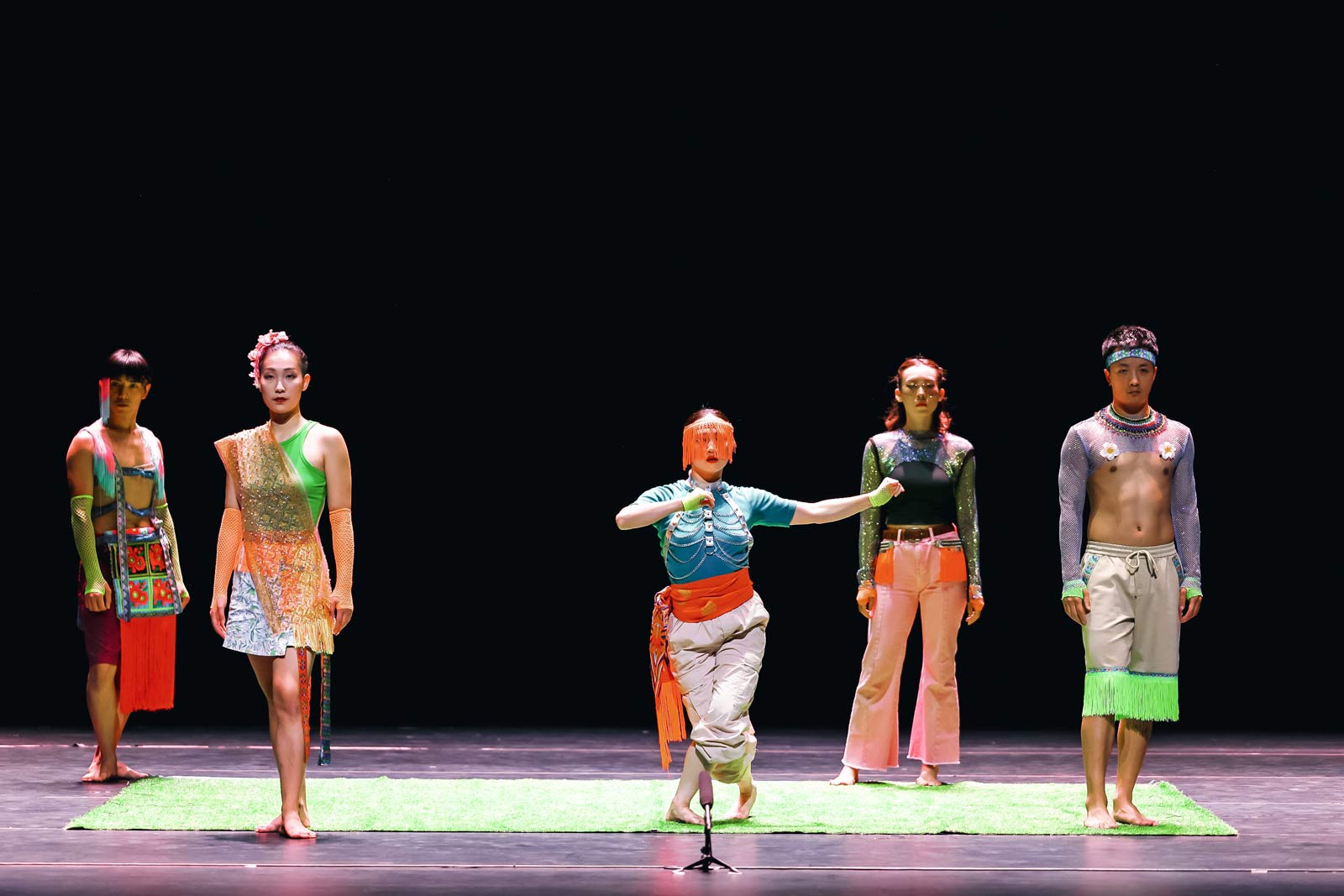
In the finale, the performers return to the stage in costumes that splice together traditional ethnic elements with neon colours and party accessories, anchored by electronic music and digital lighting. The juxtaposition challenges the binary traced earlier: ethnic folk dance has long been positioned within tradition and cultural heritage, while cities, technology, and modern life belong to an entirely different cultural order.
The dancers’ movement has shifted, too. Their bodies now resemble non-player characters in a video game: programmatic, mechanical, drained of interiority. When ethnic dance vocabularies are translated into the rhythms of a digital body, a new question opens: in an era shaped by short videos, video games, and social media, are the bodily rhythms circulating across digital platforms not themselves constitutive of a new kind of folk-ness?
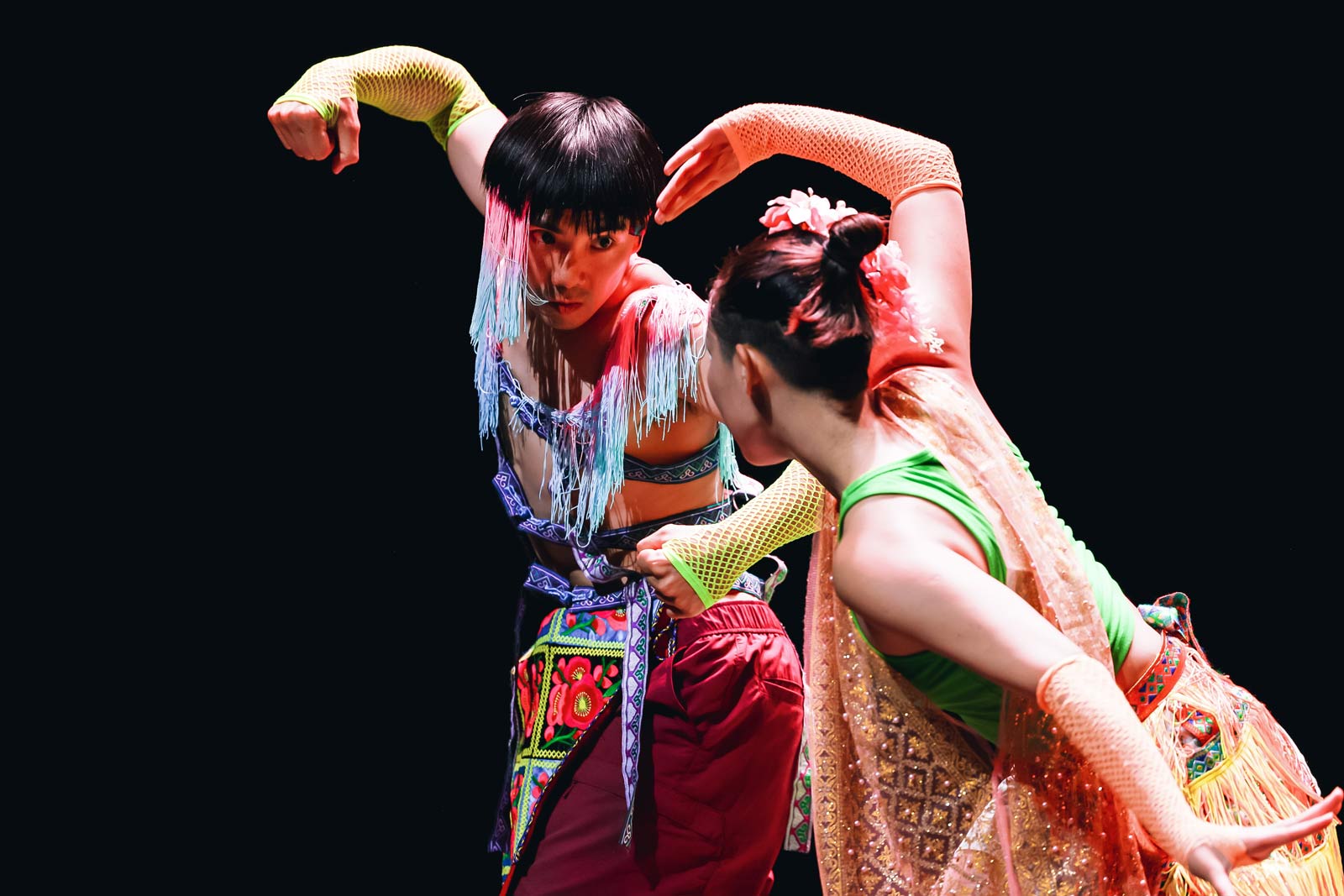
Within this digital landscape, the choreography reshuffles ethnic power relations. When Guo Rui (Han) calls out in the style of huagudeng, the other performers respond with mechanical laughter. I (Yao) then enter, and eventually win, direct physical confrontation with Guo Rui. A minority body defeats a Han one; a female body carrying queer practice defeats a male body within a heteronormative framework. Hierarchies long naturalised in social order become, under the cover of game logic, something that can be renegotiated. The point is not that the ranking is now reversed—minority over Han, queer over normative—but that it is shown to be movable at all: once a hierarchy can be inverted in play, it stops being read as natural, and the ground is cleared for a relation that does not rank at all.
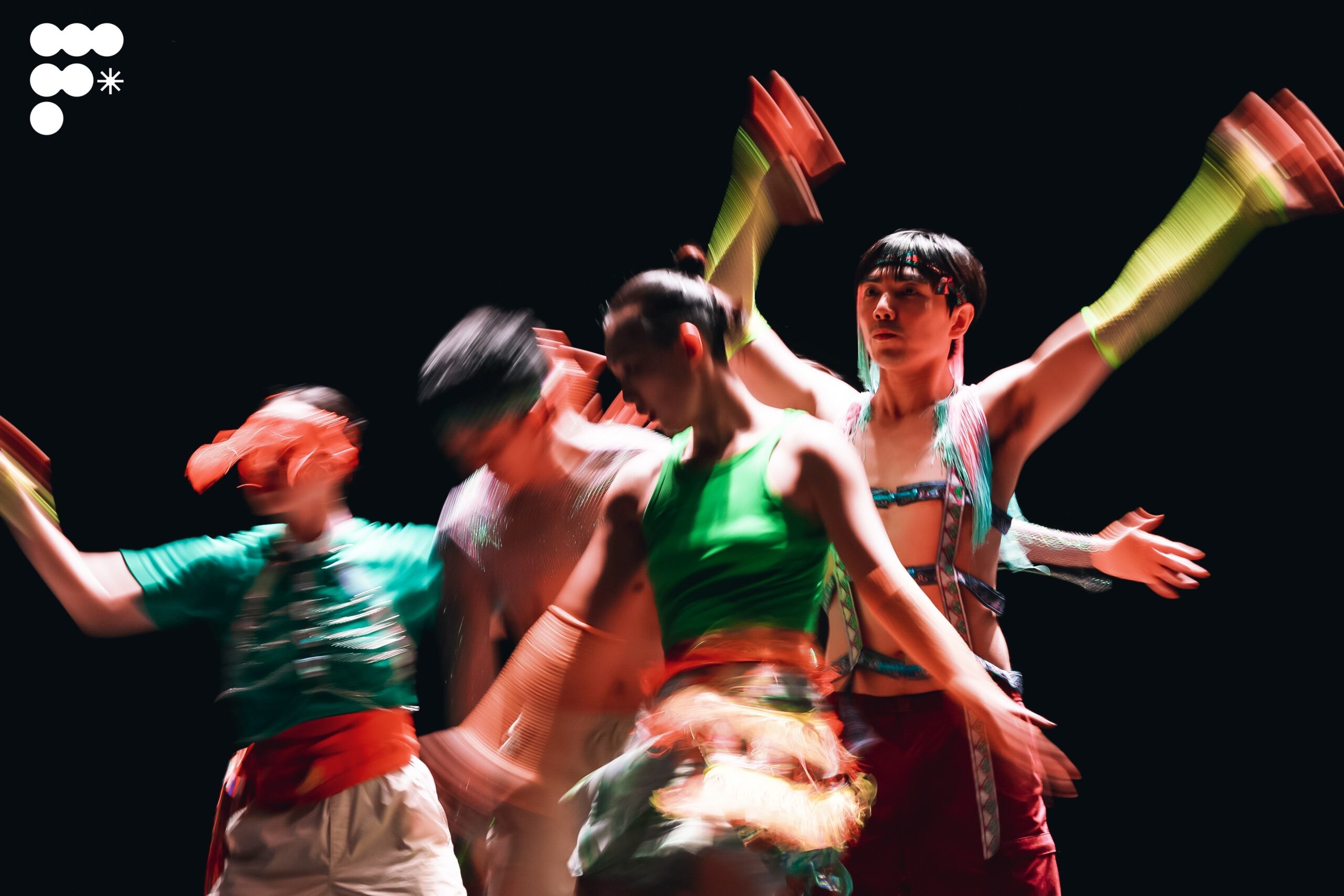
As the piece progresses, the electronic beat loosens into collective abandon. Tight formations dissolve, neon costumes blur whatever ethnic markers remain. Everything flows and recombines, until the final scene: the performers sing a cappella, weaving fragments of different ethnic music into a shared sonic space of chant, breath, and rhythm. No voice is absorbed into another and none takes the centre. If the confrontation showed that hierarchy could be overturned, this final scene shows what lies beyond its overturning: perhaps what a future ethnic imagination looks like is not a Han-centred modernity that expands and assimilates, nor a simple reversal of who dominates, but a way of being together in which no body holds a fixed position and no identity ranks above another.
Beyond the stage, what makes this vision useable is the body’s capacity for abstraction that allows it to carry multiple meanings at once without having to choose between them. As this performance shows, a single physical encounter can simultaneously invert ethnic power relations and queer normative gender frameworks. It is this same capacity that resists the artificial classification of ethnic forms on which the state’s construction of ethnic folk dance has depended. In a constrained political environment, this openness matters: critical content can circulate without declaring itself, readable as art or as politics, with no clear line between the two and no final answer as to whom the folk body belongs.
References
Anonymous. 2021. ‘You Shall Sing and Dance: Contested “Safeguarding” of Uyghur Intangible Cultural Heritage.’ Asian Ethnicity 22(1): 121–39.
Bailey, Marlon M. 2013. Butch Queens Up in Pumps: Gender, Performance, and Ballroom Culture in Detroit. Ann Arbor, MI: University of Michigan Press.
Bao, Hongwei, Diyi Mergenthaler, and Jamie J. Zhao. 2023. Contemporary Queer Chinese Art. London: Bloomsbury Professional.
Bulag, Uradyn E. 2002. The Mongols at China’s Edge: History and the Politics of National Unity. Lanham, MD: Rowman & Littlefield.
Bulag, Uradyn E. 2019. ‘Nationality.’ In Afterlives of Chinese Communism: Political Concepts from Mao to Xi, edited by Christian Sorace, Ivan Franceschini, and Nicholas Loubere, 149–54. Canberra & London: ANU Press & Verso Books.
Byler, Darren, Ivan Franceschini, and Nicholas Loubere, eds. 2022. Xinjiang Year Zero. Canberra: ANU Press.
Gao, Du 高度. 2024. ‘深植民族根性: 当代中国民族民间舞创作的集体意识与个体思维 [Deeply Rooted in Ethnic Foundations: Collective Consciousness and Individual Thinking in the Creation of Contemporary Chinese Folk Dance].’ 当代舞蹈艺术研究 [Contemporary Dance Research] 9(2): 42–52.
Kwan, SanSan. 2017. ‘When Is Contemporary Dance?’ Dance Research Journal 49(3): 38–52.
Li, Ting 李婷, and Shufeng Zhao 赵书峰. 2022. ‘仪式展演双重场域与非遗传承人身份认同: 以乳源瑶族“拜盘王”仪式乐舞为例 [Dual Fields of Ritual Performance and the Identity Recognition of Intangible Cultural Heritage Inheritors: A Case Study of the “Worship Panwang” Ritual Music and Dance of the Ruyuan Yao].’ 广西民族大学学报(哲学社会科学版) [Journal of Guangxi Minzu University (Philosophy and Social Science Edition)] 44(5): 141–47.
Litzinger, Ralph A. 2000. Other Chinas: The Yao and the Politics of National Belonging. Durham, NC: Duke University Press.
Liu, Jian 刘建, and Tiechun Zhao 赵铁春. 2015. 身份、模态与话语: 当代中国民间舞反思 [Identity, Modality, and Discourse: Reflections on Contemporary Chinese Folk Dance]. Beijing: Minzu Chubanshe.
Wilcox, Emily. 2021. ‘Concert Dance in Contemporary China: Crossing Borders While Maintaining Difference.’ In The Routledge Companion to Dance in Asia and the Pacific: Platforms for Change, edited by Stephanie Burridge, 41–56. London: Routledge.
Wilcox, Emily 魏美玲. 2023. 革命的身体: 重新认识现当代中国舞蹈文化 [Revolutionary Bodies: Re-Understanding Contemporary Chinese Dance Culture]. Translated by Hu Huamei 胡华梅. Shanghai: Fudan Daxue Chubanshe.
Wu, Da 巫达. 2015. ‘舞蹈、象征与族群身份表述: 以四川尔苏人为例 [Dance, Symbol and the Representation of Ethnic Identity: A Case Study of the Ersu People in Sichuan].’ 民族艺术研究 [Studies of Ethnic Arts] 5: 21–26.
Xu, Rui 许锐. 2006. 传承与变异、互动与创新: 当代中国民族民间舞蹈创作之审美流变与现实发展 [Inheritance and Variation, Interaction and Innovation: The Aesthetic Transformation and Contemporary Development of Contemporary Chinese Minzu Folk Dance Creation].’ PhD dissertation, China Academy of Art, Hangzhou.
Zhu, Min. 2018. ‘Contemporary Chinese Dance: The Interweaving of Tradition and Modernity.’ Critical Stages/Scènes critiques 18.