
Boom or Bust in China’s Jade Trade with Myanmar

Since 2014, declining economic growth and Xi Jinping’s anti-corruption campaign have led to decreasing demand in certain markets for jadeite—the highest valued type of jade in China. But while institutional factors may explain these short-term fluctuations, historical continuity and cultural imaginations underpinning Chinese demand suggest that the jadeite market boom in China is not quite over yet.

How China’s Environmental Crackdown Is Affecting Business Owners and Workers: The Case of Chengdu

The Nineteenth Congress of the Chinese Communist Party (CCP) has seen an outpouring of support for strengthening environmental protections—a theme which was central to Xi Jinping’s opening speech. This event comes amid an intensified environmental crackdown across the country. Beginning in late July, drawing on the vivid metaphor of ‘cutting with a single knife’ (yi […]

The Precarity of Layoffs and State Compensation: The Minimum Livelihood Guarantee

When discussing the outcomes of China’s economic development, the poverty that can still be found in Chinese cities is seldom mentioned. While the Party-state is indeed making a token effort to sustain the victims of this destitution, these people and their offspring will never be able to escape this manufactured poverty. This essay looks at the policy process that led to this outcome and at the prospects for poverty alleviation in Chinese urban areas.

From Dormitory System to Conciliatory Despotism

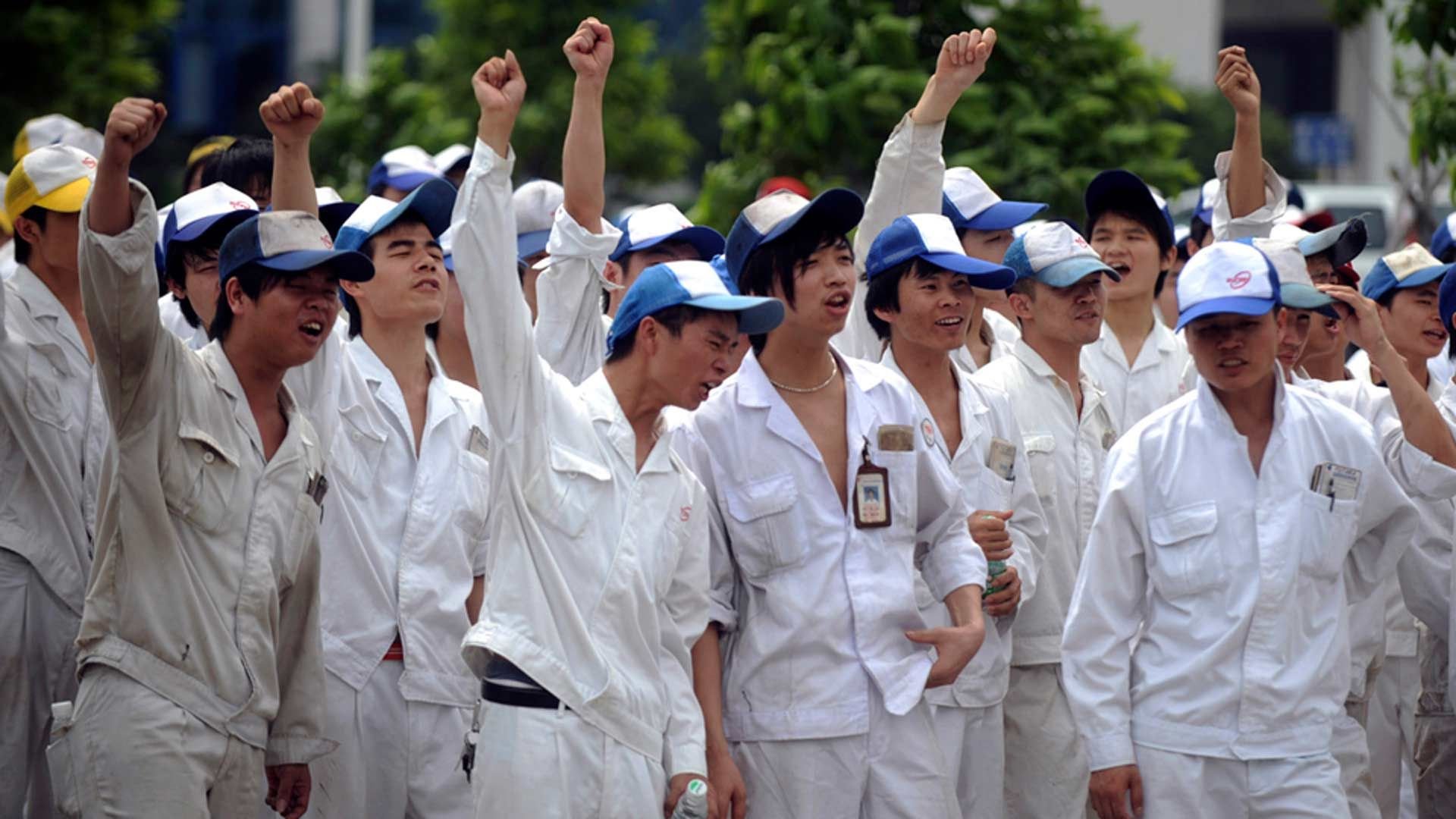
For the past three decades, China’s export-led manufacturing model has been built on extensive exploitation of its migrant workforce under a despotic labour regime. Draconian controls persist, and it is easy to view both Chinese migrant workers and the ways employers subordinate them as static and unchanging. Yet the situation of China’s migrants has undergone […]

Class and Precarity in China: A Contested Relationship

The increasing precariousness of labour forces globally has prompted some to argue that a new ‘precariat’ is emerging to challenge the privileges of the securely employed ‘salariat’. This divergence within the working class has been depicted as more significant than the traditional conflict between labour and capital. This essay examines these discussions in China, where precarity is increasingly being employed as a theoretical tool to explain the fragmentation of labour in the country.

A Genealogy of Precarity and Its Ambivalence

Focussing on the conceptual evolution of precarious labour over the past three decades, this essay provides a genealogy of the notion of precarity. On the eve of the fourth industrial revolution, when precarity has become the norm and fears of a jobless society have alimented a dystopian imaginary for the future, this historical reconstruction seeks to identify those elements that have shaped the material conditions of workers as well as influenced their capacity of endurance in times of growing uncertainty.

Counting Contention

In the past few years, a growing number of academics and activists have launched projects aimed at counting contention in the realm of Chinese labour. This essay explores the power and limitations of such efforts, detailing the inevitable data problems involved in any quantitative approach to documenting protests in China. It also examines the ethics involved in how we collect such data and the questions we ask of it.

Migrants, Mass Arrest, and Resistance in Contemporary China

In today’s China, migrant workers are commonly perceived as criminals. This essay examines how this bias is reflected in mechanisms of crime control, as well as in the judicial and correctional systems. It also looks into the strategies adopted by migrants to cope with this kind of discrimination by the law enforcement bodies.

Snapshots of China’s ‘Uncivil Society’

Under the leadership of Xi Jinping, the Chinese Communist Party has reinvigorated its attempts to eradicate detrimental ‘Western ideas’. This has resulted in the assertion that civil society is nothing more than a concept, if not a trap set by the West. In practice, however, this effort has led to the emergence of a very different—uncivil—type of society.

Media Politics in China: Improvising Power under Authoritarianism, a Conversation with Maria Repnikova

Maria Repnikova’s new book Media Politics in China: Improvising Power Under Authoritarianism (Cambridge University Press, 2017) challenges conventional understandings of the role of critical journalists in authoritarian regimes, painting a picture of reporting in China as a balancing act of creativity, experimentation, and restriction. We spoke with her.

Subscribe to Made in China

Made in China publications are open access and always available as a free download. To subscribe to email alerts for each issue of the Journal, newly published books, and information about upcoming events, please provide your contact information below.


Back to Top